


Best Calming Beds for Anxious Pets: Picking the Best Calming Bed for Anxious Dogs
Some dogs and cats just seem to run hot — they pace during storms, startle at strange noises, and never quite relax the way calmer pets do. If that sounds like your pet, finding the best calming bed for anxious dogs (and nervous cats, too) can make a real difference in their day-to-day comfort. A well-designed calming bed gives an anxious pet a defined, cozy spot that feels like a safe den, and many owners notice their pets settling faster once that spot becomes “their place.”
Calming beds aren’t magic — they won’t fix deep separation anxiety on their own — but the right bed combined with a consistent routine can noticeably reduce the small daily frictions of an anxious pet’s life. In this guide we’ll cover how calming beds work, which styles suit which pets, what features actually matter, and how to introduce the bed so your pet genuinely loves it.
Quick Tips
- Raised rims and bolster edges mimic a den — the most reliably calming feature across bed styles.
- Size the bed to your pet: too big feels exposed, too small won’t let them stretch out.
- Choose machine-washable covers or washable beds — anxious pets’ beds need washing more often.
- Place the bed in a quiet, low-traffic corner, not in the middle of household activity.
- Let the bed become a positive place: treats, chews, and calm praise near it, never punishment.
- A calming bed is a comfort tool, not a cure — pair it with routine and training, and ask your vet about persistent anxiety.
How Calming Beds Work for Nervous Pets
The core idea behind calming beds is simple: they imitate the snug, enclosed feeling of a den. In the wild, dogs and many other animals rest in sheltered spots with their backs protected, and domesticated pets seem to keep that preference. A round bed with raised sides lets an anxious dog curl up with their head on the rim and their body tucked in — a posture that many dogs naturally choose when they’re trying to settle.
There’s no strong scientific proof that a specific bed cures anxiety, and you should be skeptical of any brand claiming otherwise. What owners consistently report, though, is that a dedicated comfortable spot becomes a cue: the pet learns that going to the bed means rest time, especially when the bed is paired with a calm routine. Over weeks, that association can genuinely help a nervous dog wind down faster.
It’s worth setting expectations honestly. A calming bed is one piece of a bigger puzzle that includes predictable routines, enough exercise, and sometimes professional help. For pets whose anxiety involves destructive behavior, house-soiling, or panic, a vet or a qualified behaviorist should be part of the plan — the bed is a comfort upgrade, not a treatment.
What to Look for in the Best Calming Bed for Anxious Dogs
Start with the rim. Donut-style beds with a raised, cushioned edge are the classic calming design, and the rim height should be enough for your dog to rest their chin on it comfortably. Some dogs also love hooded or cave-style beds with a partial cover, which add an extra layer of enclosure — though nervous chewers may treat a hood as a toy.
Next, check the filling and fabric. Long-pile faux fur is popular because it’s soft and warm, but short-pile plush is easier to wash and less tempting to chew. Memory foam bases suit older or larger dogs who need joint support, while lighter polyfill works for small dogs. Whatever you pick, the bed should hold its shape after washing — a bed that goes flat in the laundry loses its den-like appeal.
Sizing deserves real attention. Measure your pet lying in their favorite sleeping position and add a few inches; the bed should let them curl up snugly without dangling off the edge, but not be so roomy that the den feeling disappears. When in doubt between sizes, anxious dogs usually do better in the smaller option, since snugness is part of the point. Our broader guide on how to choose the best dog bed covers sizing and materials in more detail.
Best Calming Bed Styles for Dogs
Donut and cuddler beds are the default recommendation for anxious dogs, and for good reason — the round shape with a bolstered edge supports the curled-up sleep position most dogs prefer. They come in every size from chihuahua to large breed, and the best ones have removable, washable covers.
Cave and hooded beds suit dogs that burrow. If your dog tries to crawl under blankets or behind the couch, a hooded bed gives them that enclosed feeling legitimately. Look for hoods that are structured enough not to collapse onto the dog’s face, and skip this style for heavy chewers who might eat the fabric.
Orthopedic calming beds pair a bolstered edge with a memory foam base, which is ideal for senior anxious dogs or large breeds. Arthritis and anxiety often travel together in older dogs — being uncomfortable makes everything scarier — so a bed that supports joints and feels secure addresses both problems at once.
Calming Beds for Cats Too
Anxious cats benefit from calming beds just as much as dogs, though they have their own preferences. Most cats prefer smaller, more enclosed options: cave beds, covered igloos, or beds with high sides. A cat that hides under the bed during storms is telling you exactly what kind of bed they’d like — give them a legitimate hiding spot and they’ll use it.
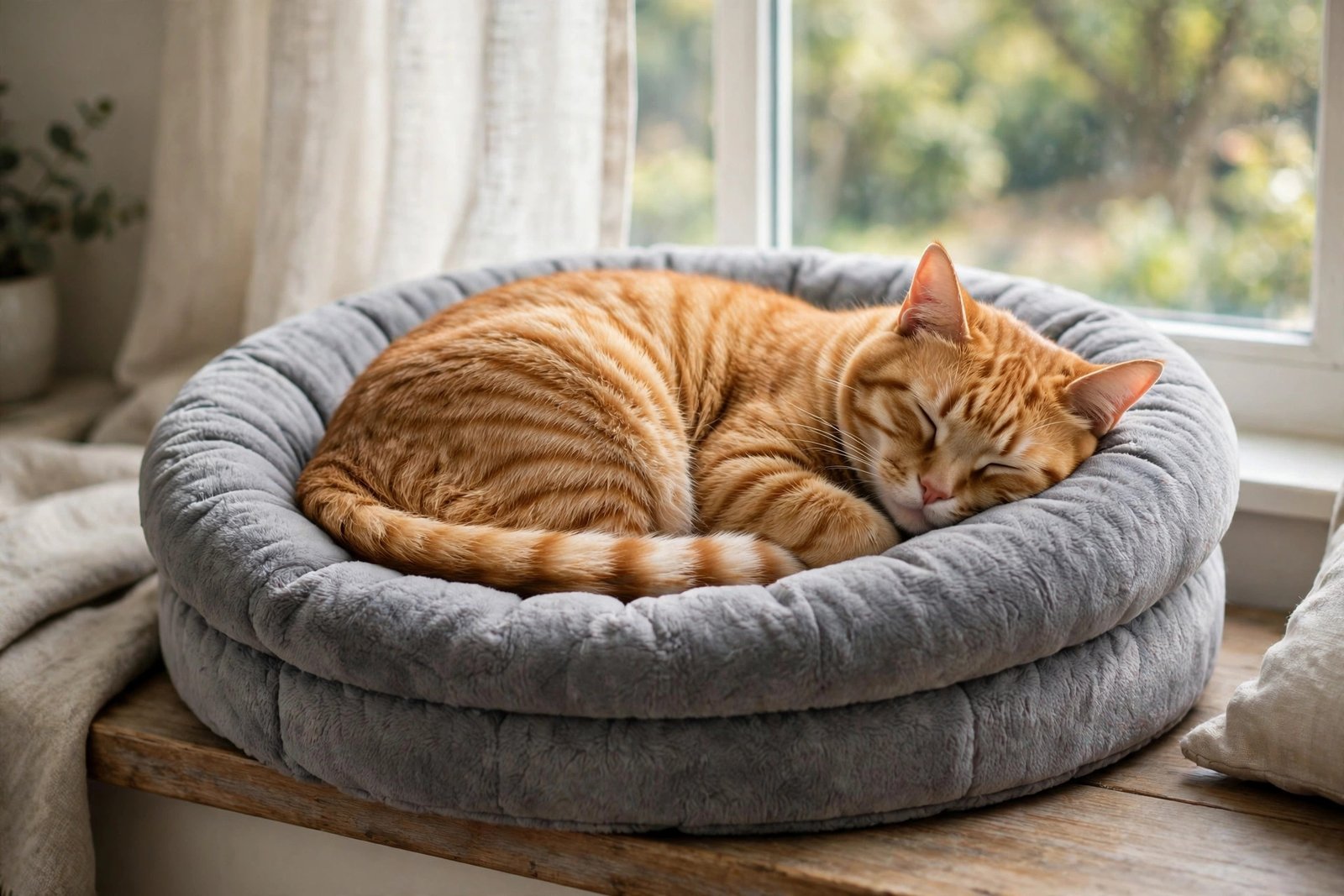
Placement matters even more for cats. Put the calming bed somewhere elevated or tucked away rather than in the open — on a quiet shelf, in a corner behind furniture, or on a windowsill in a calm room. Cats feel safest where they can observe without being approached, so a bed in the middle of the living room floor rarely becomes a favorite.
As with dogs, introduce the bed positively. Sprinkle a few treats inside, let the cat investigate on their own terms, and never force a cat into a new bed. Many cats take days to accept a new sleeping spot, and that’s completely normal.
Washability and Durability Matter More Than You’d Think
Anxious pets’ beds work harder than ordinary beds. Nervous dogs drool, sweat through their paws, and sometimes have accidents when stressed; cats knead and shed into theirs. A bed that can’t be washed properly becomes unpleasant within weeks, and a smelly bed is one your pet will avoid — defeating the whole purpose.
Look for beds that are fully machine washable, or at minimum have a removable washable cover. Check reviews specifically for how the bed survives the wash: some cheaper beds clump, flatten, or shed filling after two cycles. A slightly more expensive bed that washes well is cheaper in the long run than replacing a flattened one every few months.
For chewers, durability is a safety issue, not just a value question. An anxious dog that destroys a bed can swallow fabric or filling, which is a vet-visit risk. If your dog destroys beds, look for chew-resistant designs with hidden zippers and tough canvas, and supervise until you’re confident the bed survives unsupervised time.
How to Introduce the Bed So Your Pet Actually Uses It
Place the new bed in your pet’s favorite resting spot — not where you wish they’d sleep, but where they already go. Put a familiar-smelling blanket or an old t-shirt on it for the first few days so it smells like home rather than a warehouse.
Reward every voluntary interaction. Treats tossed onto the bed, a chew given on the bed, calm praise when they settle there — all of it builds the association that the bed is a good place. Never use the bed for time-outs or send an anxious pet there as a punishment; the moment the bed becomes associated with being in trouble, it stops being calming.
Be patient. Some pets claim a new bed in an hour; others circle it suspiciously for a week. Both are normal. If your pet ignores the bed entirely after two weeks, try moving it to a different spot — location is the most common reason a good bed goes unused.

Pairing the Bed With a Calmer Routine
The bed works best as the anchor of a calming routine. A predictable wind-down — a short walk or play session, then quiet time on the bed with a chew — teaches an anxious dog what “settle down” looks like. Consistency matters more than any single product: pets with anxiety do best when they can predict what happens next.
For specific triggers like storms and fireworks, combine the bed with other comfort strategies. Closing curtains, playing low background noise, and staying calm yourself all help. Our guide to pets and fireworks or thunderstorm anxiety walks through a full plan for noise-phobic pets, and the calming bed fits naturally into it as the designated safe spot.
Watch for signs that anxiety needs professional attention: pacing that doesn’t stop, destructive behavior, loss of appetite, or panic during routine events. Those go beyond what any bed can fix, and your vet can discuss options. There’s no shame in it — some pets, like some people, need more support, and getting it is good ownership.
Frequently Asked Questions
Do calming beds really work for anxious dogs?
Many owners report that their dogs settle faster and seem more relaxed with a proper calming bed, especially donut-style beds with raised rims. They’re a comfort tool rather than a cure — they work best alongside routine, exercise, and training, not as a standalone fix for serious anxiety.
What size calming bed should I get?
Measure your pet in their favorite sleeping position and add a few inches. The bed should be snug enough to feel den-like but roomy enough to stretch. For anxious dogs specifically, err toward the smaller size if you’re between two — snugness is part of what makes the bed calming.
Are hooded or cave beds better than donut beds?
It depends on the pet. Dogs and cats that burrow under blankets tend to love hooded beds; pets that like to sprawl with their head up usually prefer open donut beds with a bolster rim. Watch how your pet naturally sleeps and match the style to it.
How often should I wash a calming bed?
Every one to two weeks for most pets, more often for heavy shedders or dogs that drool. Anxious pets can be sensitive to strong detergent smells, so use a mild, fragrance-free detergent and make sure the bed is fully dry before putting it back.
Can a calming bed help with crate training?
Often, yes. A calming bed placed inside a crate makes the crate feel cozier and more den-like, which can help a nervous dog accept crate time. Just make sure the crate itself is introduced positively too — the bed helps, but it can’t fix a crate a dog is afraid of.
When should I talk to my vet about my pet’s anxiety?
If anxiety causes destructive behavior, house-soiling, appetite changes, self-harm like excessive licking, or panic that doesn’t respond to routine and comfort measures, it’s time for a vet visit. Your vet can rule out medical causes and discuss next steps.