
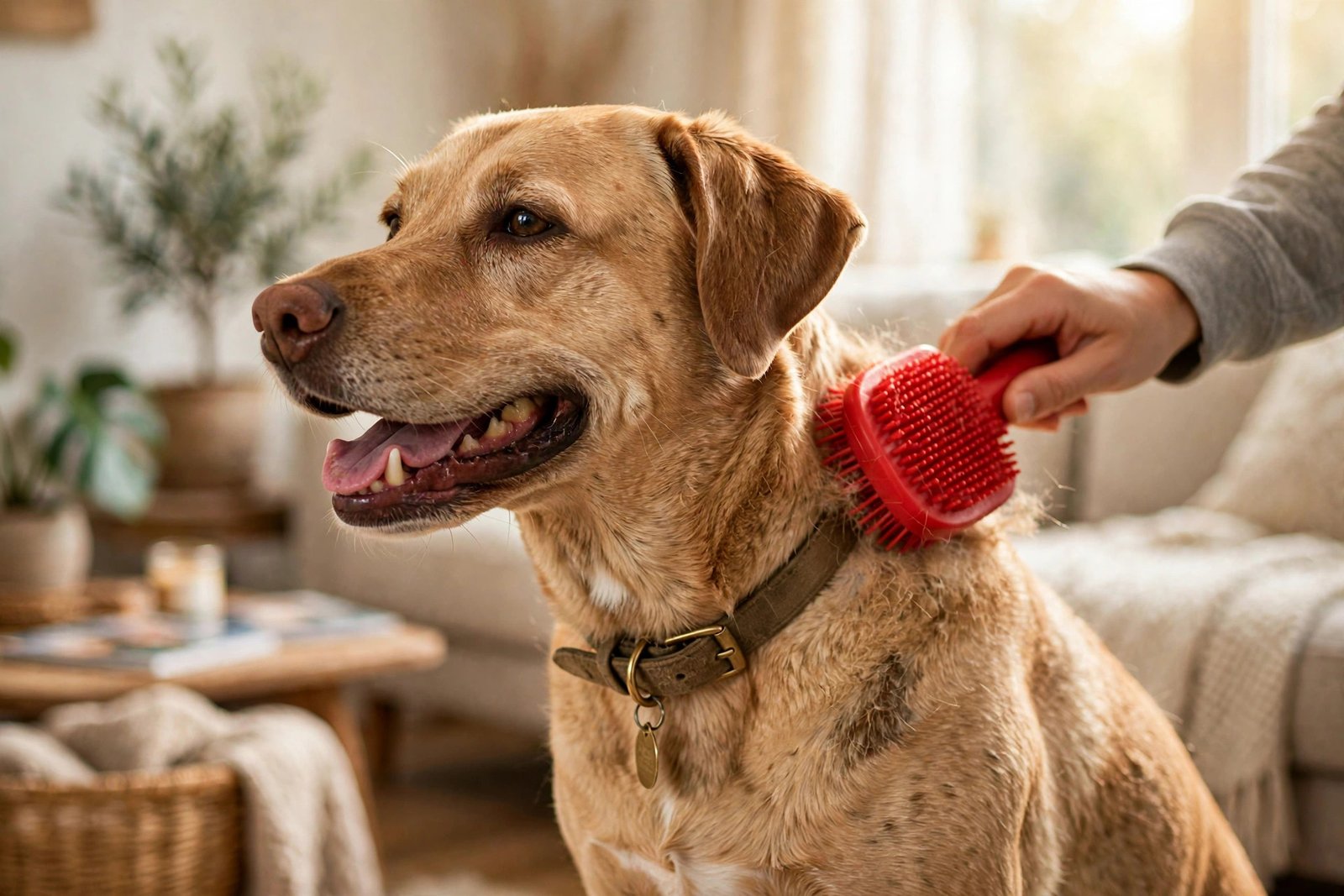

The Best Brush for Short Haired Dogs
Shopping for the best brush for short haired dogs can feel oddly confusing. Short coats look low-maintenance, yet anyone who has lived with a Lab, a Boxer, or a Beagle knows the hair still ends up everywhere — on the couch, in the car, woven into your favorite sweater. The good news is that grooming a short coat takes just a few minutes a week once you have the right tool in hand.
There is no single perfect brush for every short-haired dog. A rubber curry brush works wonders on a muscular Boxer but does little for a Dalmatian’s finer coat, and a heavy-duty deshedding tool is overkill for a Chihuahua yet a lifesaver for a shedding Labrador. In this guide, we will walk through the main brush types, help you pick the best brush for short haired dogs for your specific breed, and show you how to use it so brushing feels like bonding time instead of a chore.
Quick Tips
- For most short-haired dogs, a rubber curry brush is the everyday workhorse — gentle, effective, and great for bath time too.
- Match the brush to the coat: soft bristles for fine coats, firm rubber nubs for dense double coats, and a deshedding tool only for heavy seasonal shedding.
- Brush once or twice a week for maintenance, and bump it up to every other day during spring and fall shedding season.
- Always brush in the direction the hair grows, using light pressure — short coats rarely need you to push hard.
- Reward calm behavior with treats so your dog starts to look forward to grooming sessions.
- Replace brushes when bristles bend, crack, or lose their spring; a worn tool pulls more than it smooths.
Why Short-Haired Dogs Need Brushing Too
It is a common beginner assumption that short coats take care of themselves. In practice, short-haired breeds are often the biggest shedders in the dog world. Breeds like Labradors, Pugs, and Bulldogs have dense coats that shed steadily year-round, with heavier waves in spring and fall as their coats adjust to temperature changes. Without regular brushing, all that loose hair ends up on your furniture, your clothes, and in the air of your home.
Brushing does more than catch loose hair before it lands on the sofa. A regular session massages the skin, which encourages blood flow and helps distribute the natural oils that keep a short coat glossy. It is also your weekly early-warning system: as you run the brush over your dog, you will notice things like dry flakes, small bumps, or bald patches much sooner than you would by petting alone. If you spot anything that looks irritated or does not clear up within a few days, it is worth a quick call to your vet for guidance — brushing can reveal issues, but it cannot diagnose them.
Many owners find their dogs start to enjoy brushing within a few sessions — done gently, it feels like a long petting session. That positive association makes nail trims, ear checks, and bath time easier too.
The Best Brush for Short Haired Dogs: Our Top Picks
If you only buy one brush, make it a rubber curry brush. The flexible rubber nubs lift loose hair and dead skin from dense short coats, create a pleasant massage effect most dogs enjoy, and can even be used wet at bath time to work shampoo through the coat. They suit the majority of short-haired breeds, from muscular Bulldogs to sleek Vizslas, and they are gentle enough that you are unlikely to irritate the skin.
For fine, single-layer short coats — think Greyhounds, Dalmatians, and Italian Greyhounds — a soft to medium bristle brush is often the better everyday choice. The bristles glide over finer hair without dragging, and they add a nice finishing shine after a curry brush session. Pairing the two is a popular routine: curry brush first to loosen, bristle brush second to smooth.
During heavy shedding periods, owners of dense double-coated short-haired breeds such as Labradors and Beagles often reach for an undercoat deshedding tool. These tools have a fine-toothed metal edge that reaches past the topcoat to pull out loose undercoat. They are effective, but they should be used sparingly — once a week at most during shedding season, with light pressure — because overuse can irritate the skin or thin the coat. If your dog’s skin looks red or sore after brushing, stop and check with your vet before continuing.
Finally, a grooming mitt or glove is a handy low-pressure option for nervous beginners or dogs that are new to brushing. You simply pet the dog with the textured mitt. It will not grab as much hair as a curry brush, but for a first-timer it is an easy, non-intimidating way to start the routine. To understand how coat differences change your approach, have a look at our dog brushing guide by coat type.

What Each Brush Type Does
Walking into the grooming aisle can feel overwhelming, so here is a plain-English breakdown of what each contender for the best brush for short haired dogs actually does on a short coat.
Rubber Curry Brushes
These are oval or palm-shaped brushes covered in short rubber nubs. They work by static and friction: as you move the brush in circles, loose hairs cling to the rubber instead of flying around the room. The nubs also massage the skin, which many dogs find deeply relaxing. Rubber curry brushes are cheap, nearly indestructible, and easy to rinse clean. The one downside is that they are less useful on very fine coats, where the nubs can skim over the surface without catching much hair.
Bristle Brushes
Bristle brushes look like the classic hairbrush and come in soft, medium, and firm varieties. On short coats, soft to medium bristles work best — they smooth the topcoat, remove surface dust, and leave a polished shine. They are a good finishing step rather than the main hair-grabber. Avoid firm boar bristles on short-haired dogs unless the coat is quite coarse; too-firm bristles can scratch thin-skinned breeds like Greyhounds.
Deshedding Tools
These are specialty tools with a narrow metal-toothed edge designed to strip loose undercoat from double-coated breeds. On the right dog at the right time of year, a few gentle passes can fill a grocery bag with fur that would otherwise have become tumbleweeds in your hallway. The trade-off is the risk of overdoing it. Always use light, short strokes, limit sessions to five or ten minutes, and skip these tools entirely on single-coated or thin-coated dogs.
Grooming Mitts
Mitts and gloves have textured rubber palms with tiny nubs. They give you the least reach of any option here, but they are the gentlest introduction to grooming and double nicely as bath gloves. Many owners keep one in the bathroom for bath time even after their dog graduates to a proper brush.
How to Brush a Short-Haired Dog the Right Way
Technique matters as much as the tool. Brushing a short coat the wrong way — too hard, against the grain, or for too long — can leave the skin pink and the dog suspicious of future sessions. Here is a simple routine that takes about five minutes.
Settle Your Dog First
Pick a calm moment, not right after a walk when your dog is wired. Have treats within reach, and let your dog sniff the brush first. Start with a few gentle strokes along the back while speaking softly. The goal of the first minute is relaxation, not hair removal. If your dog is very young or new to grooming, keep the first few sessions to two or three minutes and build up gradually.
Use the Right Motion
With a rubber curry brush, work in small, gentle circles across the neck, back, sides, and haunches, always finishing with a few strokes in the direction the hair grows to smooth things down. With a bristle brush or deshedding tool, use short, light strokes that follow the lay of the coat, and go easy around the belly and inner legs where the skin is thinner. Let the tool do the work — you should not need to press hard. If you find yourself leaning in, you are pushing too much.
Finish and Reward
End each session with a smoothing pass and a treat, so the last thing your dog remembers is praise. After brushing, wipe your dog down with a slightly damp cloth or pet wipe to pick up any loosened hairs still clinging to the coat — this small step makes a surprising difference to how much hair lands on your couch later. During shedding season, pairing brushing with the rest of your dog shedding management routine keeps the fur situation under control without daily marathon sessions.

Common Brushing Mistakes to Avoid
The most frequent mistake is brushing too aggressively — short coats rarely need firm pressure, and pressing hard can leave the skin irritated. A second common error is using a deshedding tool as an everyday brush; it is a seasonal specialist, not a daily driver. Brushing a dirty coat is another pitfall: if your dog is overdue for a bath, brushing grinds dirt into the skin rather than lifting it away. And do not brush on autopilot — paying attention is how you catch the small lump or hot spot early. When in doubt about a skin reaction or a persistent sore spot, your vet is the right call, not a different brush.
Frequently Asked Questions
How often should I brush my short-haired dog?
For most short-haired breeds, once or twice a week is plenty for routine maintenance. During spring and fall shedding season, many owners brush every other day or daily to keep loose hair under control. Dogs with very fine single coats may only need a weekly session, while dense double-coated breeds like Labradors benefit from more frequent brushing when the undercoat is blowing out.
Is a rubber curry brush really enough on its own?
For the majority of short-haired dogs, yes — a rubber curry brush handles everyday loose hair, massage, and bath-time use all in one. Many owners add a bristle brush as a finishing step for extra shine, and a deshedding tool for seasonal heavy shedding, but if you are starting out, the curry brush is the one purchase that covers the most ground.
Can I use a deshedding tool on a single-coated dog?
It is best to avoid it. Deshedding tools are designed to pull loose undercoat, and single-coated dogs like Greyhounds, Boxers, and Dalmatians do not have that undercoat to begin with. On these dogs the tool can drag on the skin and cause irritation. Stick with a rubber curry brush or bristle brush instead.
My dog does not like being brushed. What should I do?
Start smaller and slower. Try a grooming mitt instead of a brush, keep sessions under two minutes, and pair every touch with a treat. Many dogs that dislike brushing are really reacting to rough technique or long sessions, so lighten your pressure, brush with the grain, and stop while your dog is still relaxed. Building the habit over a couple of weeks usually turns reluctant dogs into willing ones.
Should I brush before or after a bath?
Both, lightly. A quick brush before the bath removes loose hair and surface dirt so the shampoo can reach the skin. At bath time, a rubber curry brush works beautifully to lather and rinse. After the coat is fully dry, a finishing pass with a bristle brush smooths everything down and brings out the shine.