

How to Tell If Dog Food Is Good: 7 Signs of High Quality
Stand in any pet food aisle and you will face a wall of bags, all claiming to be natural, premium, wholesome, or vet-recommended. For a new dog owner, it is genuinely confusing: how to tell if dog food is good when every package insists that it is? The good news is that you do not need a degree in animal nutrition to make a solid choice. A few practical checks — on the label and on your dog — will tell you most of what you need to know.
This guide walks through seven signs of a high-quality dog food, the red flags that suggest a lower-quality one, and how to use your own dog’s condition as the final judge. No brand endorsements, no scare tactics — just the straightforward framework that experienced owners use when they compare bags.
Quick Tips
- A named animal protein (like chicken or salmon) should be the first ingredient, not a vague “meat meal.”
- Look for an AAFCO nutritional adequacy statement confirming the food is complete and balanced.
- Match the food to your dog’s life stage — puppies, adults, and seniors have different needs.
- Be skeptical of marketing words like “premium” and “natural”; they are not regulated quality grades.
- Your dog’s coat, energy, and stools are practical quality indicators over time.
- When in doubt about a specific food or a diet change, ask your vet — especially for puppies or dogs with health issues.
How to Tell If Dog Food Is Good: Start With the Label
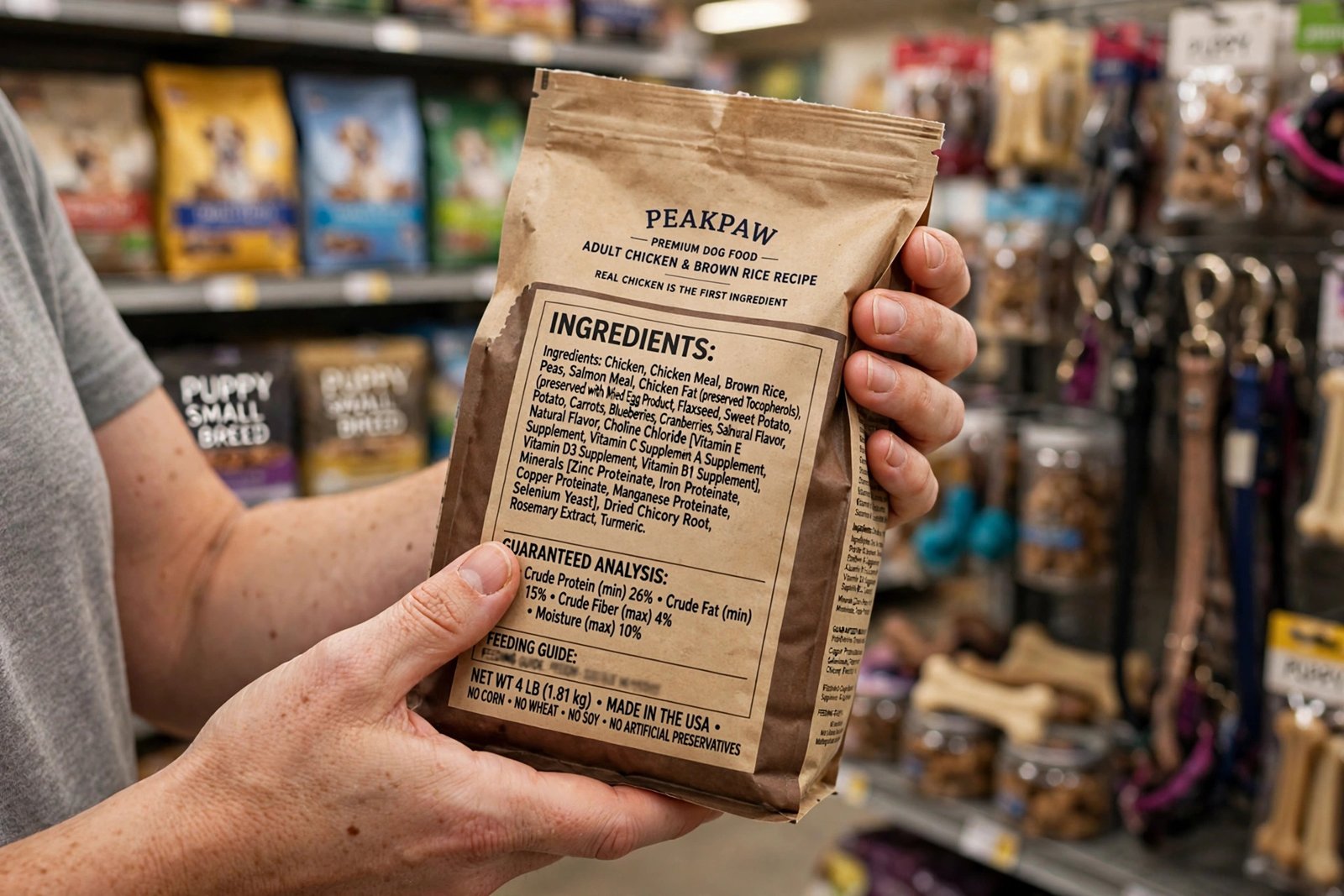
The single most useful skill in this whole process is reading a pet food label properly — and it is easier than the tiny print makes it look. Ingredients are listed in descending order by weight, so the first few items tell you what the food is mostly made of. That one fact already lets you dismiss a surprising number of bags.
Here is what to scan for in about thirty seconds: a specific animal protein in the first position, recognizable whole ingredients through most of the list, and no long parade of vague terms, fillers, or sweeteners. If the first ingredient is a named meat or meat meal (more on that distinction below), you are off to a decent start. If the first ingredient is corn, wheat middlings, or something called “animal digest,” keep walking.
Labels have their own vocabulary, though, and it is worth learning properly. Our detailed walkthrough on how to read pet food labels breaks down guaranteed analysis, ingredient splitting, and all the fine print — read it alongside this guide and you will shop like someone who has done this for years.

Signs 1–2: Protein and Nutritional Adequacy
Sign 1: A Named Animal Protein Comes First
Dogs are omnivores with a strong carnivorous lean, and quality foods reflect that: the first ingredient should be a specific animal protein such as chicken, beef, lamb, turkey, or salmon. “Specific” is the key word. “Chicken” and “chicken meal” tell you exactly what animal you are dealing with; “meat and bone meal” or “poultry by-products” do not.
A quick note on meat meals, since they sound suspicious but are not automatically bad: “chicken meal” is simply rendered chicken — concentrated protein with water removed. A named meat meal as a first ingredient is generally considered acceptable in a quality food. The red flag is vagueness, not rendering. When the label will not tell you which animal the protein came from, that is the label telling you something.
Sign 2: Complete and Balanced for the Right Life Stage
Somewhere on the bag — usually in small print — you will find a nutritional adequacy statement referencing AAFCO (in the US) or FEDIAF (in Europe) standards. It says something like “formulated to meet the nutritional levels established for adult maintenance” or “for all life stages.” This is one of the most meaningful lines on the entire package: it means the food is designed to be a complete diet, not a snack or supplement.
Pay attention to the life stage part. Puppy food, adult food, and senior food differ in calorie density and nutrient ratios for good reason — a growing puppy and a couch-loving senior have genuinely different needs. Feeding an “all life stages” food is generally considered fine for most dogs, but a large-breed puppy, for example, has specific requirements worth getting right. If you are shopping for a young dog, our guide on how to choose puppy food covers what makes puppy formulas different.
Signs 3–5: Reading the Rest of the Label
Sign 3: Recognizable Ingredients Through Most of the List
You do not need every ingredient to be something you would eat for dinner, but the bulk of the list should read like food: named meats, fish, eggs, sweet potatoes, peas, carrots, blueberries, flaxseed, fish oil. When you hit the vitamin and mineral section (usually toward the end, with chemical-sounding names like “zinc proteinate” or “vitamin E supplement”), that is normal — those are added nutrients, not red flags.
What you are really checking is proportion. A quality food is built on animal protein and wholesome supporting ingredients. A lower-quality food leans on cheap bulk: multiple grains and grain fragments high on the list, vague fats (“animal fat” instead of “chicken fat”), and sweeteners like corn syrup or sugar that exist to make the food tastier rather than more nutritious.
Sign 4: No Ingredient Splitting Tricks
Here is a labeling trick worth knowing: manufacturers can split one ingredient into fragments — “ground corn,” “corn gluten meal,” “corn flour” — so that each fragment appears lower on the list than the corn would as a single ingredient. Three corn fragments scattered through the list can quietly add up to more corn than the chicken sitting innocently at position one.
You cannot always catch this without practice, but the pattern to watch for is repetition: the same base ingredient appearing two or three times in different forms within the first ten items. A quality food generally does not need to hide what it is mostly made of.
Sign 5: Sensible Fat Sources and Omega Fatty Acids
Fat is not the enemy — dogs need it for energy, and certain fats support skin and coat health. Look for named fat sources like chicken fat or salmon oil rather than generic “animal fat.” Many quality foods also include omega-3 and omega-6 fatty acids (from fish oil, flaxseed, or similar), which are associated with healthy skin and a shiny coat.
That said, keep marketing claims in perspective. A bag shouting about omega fatty acids while listing vague proteins and fillers up top is decorating a weak foundation. Fat quality matters, but it matters as part of the whole picture, not as a single badge.
Sign 6: Your Dog Actually Thrives on It
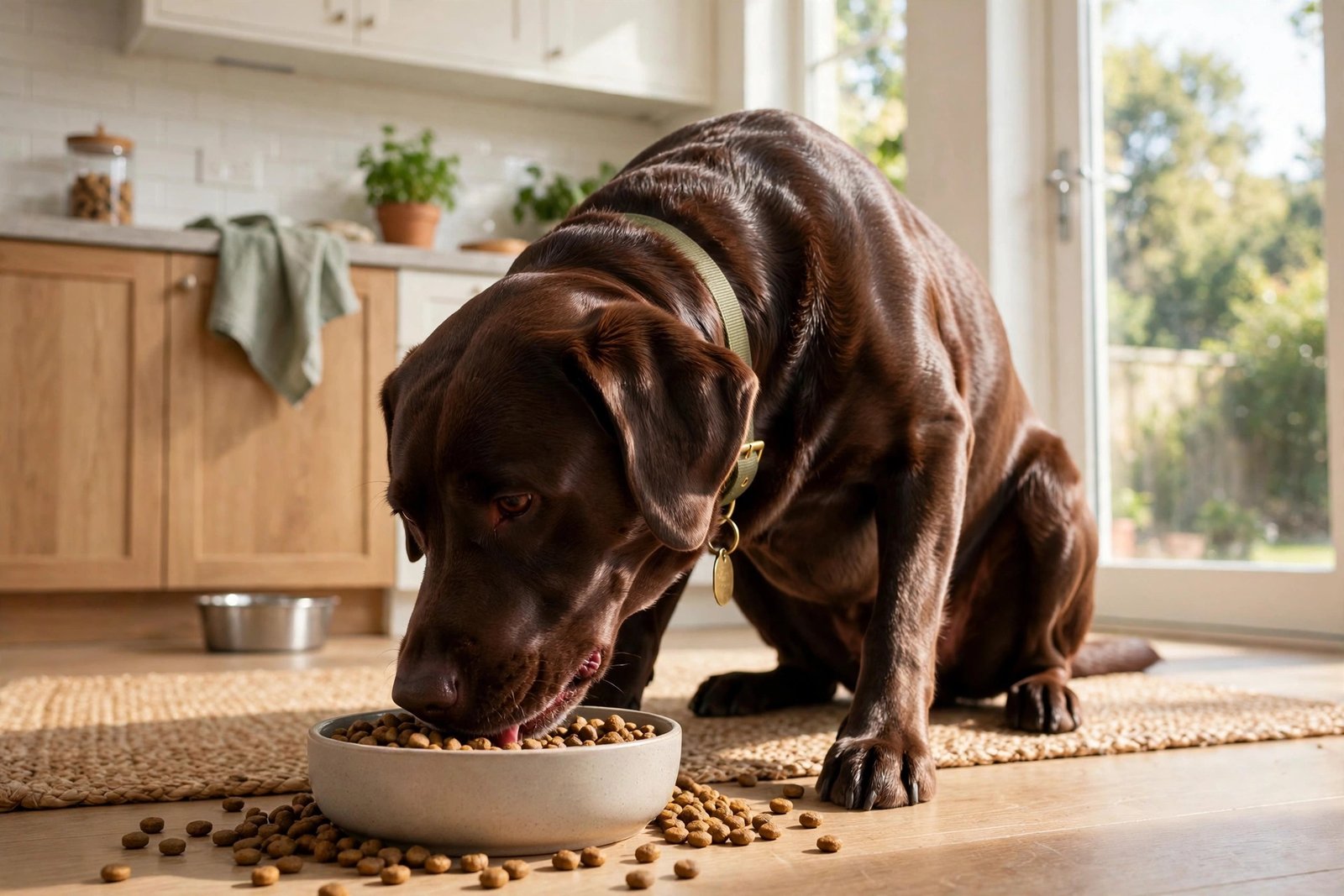
Here is the check no label can replace: the dog in front of you. Over a few weeks on a new food, look for the practical signs owners have relied on forever. A coat that looks glossy rather than dull. Solid, consistent stools (not perfect every time — dogs have off days — but generally firm and regular). Good energy for their age and breed. Healthy weight that stays stable. Clear eyes and an itch-free skin.
No single one of these proves a food is excellent, and a dull coat alone does not prove a food is bad — seasonal shedding, allergies, and plain genetics all play a role. But the overall pattern across a month or two is honest feedback. If you switched foods and everything improved, that is meaningful. Over time, that kind of real-world feedback is the most reliable way to tell if dog food is good for your individual dog.
One caution: give any new food a fair trial of several weeks, and transition gradually over 7 to 10 days by mixing increasing amounts of the new food into the old. Switching abruptly causes digestive upset in many dogs, which tells you nothing about the food’s quality — only that the change was too fast. And if your dog shows persistent vomiting, diarrhea, itching, or lethargy on any food, see your vet rather than just trying another bag.
Sign 7: Don’t Let Price and Marketing Decide for You
Price correlates with quality only loosely. Very cheap foods cut corners somewhere — that is just arithmetic — but expensive does not automatically mean excellent. Some of the priciest bags on the shelf are selling branding, boutique ingredients with thin evidence, and beautiful packaging more than demonstrably better nutrition.
Treat marketing words as what they are: unregulated adjectives. “Premium,” “gourmet,” “holistic,” “natural,” and “vet-recommended” have no legal definitions in pet food in most places, and any bag can print them. Similarly, grain-free is not automatically healthier — grains are a fine energy source for most dogs, and the grain-free trend was driven more by human diet fashions than by canine nutritional science. If a specific diet direction like grain-free interests you, it is worth a conversation with your vet first, since individual dogs vary.
The most reliable value signal is boring: a mid-priced or higher food from an established manufacturer with feeding trials or strong formulation credentials, a named protein first, a clear adequacy statement, and a dog that thrives on it. That combination beats a beautiful bag every time.
Frequently Asked Questions
What is the first thing to check on a dog food label?
The first ingredient. It should be a named animal protein — chicken, beef, salmon, lamb — rather than a vague term like “meat meal” or a grain. Ingredients are listed by weight, so position one tells you what the food is mostly made of.
Is expensive dog food always better?
Not necessarily. Very cheap foods usually cut corners, but high prices often reflect branding and marketing more than nutrition. Judge the food by its ingredient list, adequacy statement, and how your dog does on it — not by the price tag or the packaging design.
Should I choose grain-free dog food?
Grain-free is not automatically better or worse for most dogs — grains are a normal, digestible energy source for canines, and the trend came largely from human diet fashions. Some individual dogs do better without certain grains, but that is a question for your vet, not a default upgrade.
How long should I try a new dog food before judging it?
Give it several weeks, after a gradual 7-to-10-day transition mixing the new food into the old. That is enough time for coat, stool, and energy patterns to settle. Judging a food after three days — especially after an abrupt switch — mostly measures the transition, not the food.
Can I trust “complete and balanced” on the label?
The AAFCO or FEDIAF adequacy statement is one of the most meaningful claims a bag can make, because it ties the food to established nutritional standards for a specific life stage. It does not guarantee your individual dog will thrive on it, but it is a far stronger signal than words like “premium” or “natural.”
My dog’s coat looks dull — is the food to blame?
It could be a factor, but dull coat has many possible causes: seasonal shedding, allergies, parasites, or simply genetics. If the dullness appeared alongside a food change, the food is a reasonable suspect — but persistent skin or coat problems deserve a vet visit to rule out medical causes before you start swapping bags.