

Best Interactive Toys for Dogs: Puzzles, Tugs & Fetch Games That Beat Boredom
A bored dog is a dog who starts inventing their own entertainment, and that’s almost never the kind you enjoy. Chewed shoes, shredded cushions, and nonstop barking usually aren’t a sign of a “bad dog” — they’re a sign of a dog whose brain isn’t getting enough to do. The best interactive toys for dogs solve that exact problem: they give your pup a job, a puzzle, and a reason to engage with something other than your furniture.
Unlike a simple squeaky ball that gets tossed in a corner after five minutes, interactive toys ask your dog to think, sniff, problem-solve, or play together with you. Mental stimulation tires dogs out just as reliably as a long walk, and many owners find that fifteen minutes with a good puzzle toy leaves their dog calmer than an hour of aimless fetch. If you’re looking for ways to keep a bored indoor dog busy, this guide rounds up the best interactive toys for dogs across every category — from treat puzzles to tug toys to high-tech fetch gadgets.
Quick Tips
- Match the toy to your dog’s play style: sniffers love nose-work games, chewers need tough rubber, and retrievers want fetch toys.
- Start with easy puzzles and increase difficulty gradually — a toy that’s too hard at first will just frustrate your dog.
- Supervise play with any toy that has small parts, squeakers, or stuffing, especially with heavy chewers.
- Rotate toys every few days so they stay novel; a toy shelf of five looks “new” again after a week in storage.
- Use part of your dog’s daily food ration in puzzle feeders instead of extra treats to avoid overfeeding.
- Inspect toys weekly for cracks, torn seams, or loose pieces and replace anything that could be swallowed.
What Makes the Best Interactive Toys for Dogs Actually Work
An interactive toy does something a plain chew toy doesn’t: it responds to what your dog does. Maybe it dispenses a treat when rolled the right way, hides food that has to be sniffed out, or squeaks in a pattern that invites a tug game. That feedback loop is what keeps a dog engaged, and it’s the single most important thing to look for when shopping.
The second thing to look for is durability matched to your dog. A soft plush puzzle that delights a gentle terrier can be a twenty-minute shredding session for a determined pit bull mix. Manufacturers usually rate toys by chewer strength, and taking those ratings seriously saves money in the long run. For power chewers, solid rubber and thick rope tend to hold up best, while softer fabrics work fine for dogs who investigate toys with their noses rather than their jaws.
Finally, think about whether you want a solo toy or a together toy. Puzzle feeders and snuffle mats are brilliant for the hours you’re away or busy — they let your dog self-entertain safely. Tug toys, flirt poles, and fetch launchers are for shared playtime, and they double as bonding time. Most happy dogs need a mix of both. If your dog spends a lot of time inside, pair these toys with the ideas in our guide to indoor exercise ideas for dogs to build a full enrichment routine.
Treat-Dispensing Puzzle Toys
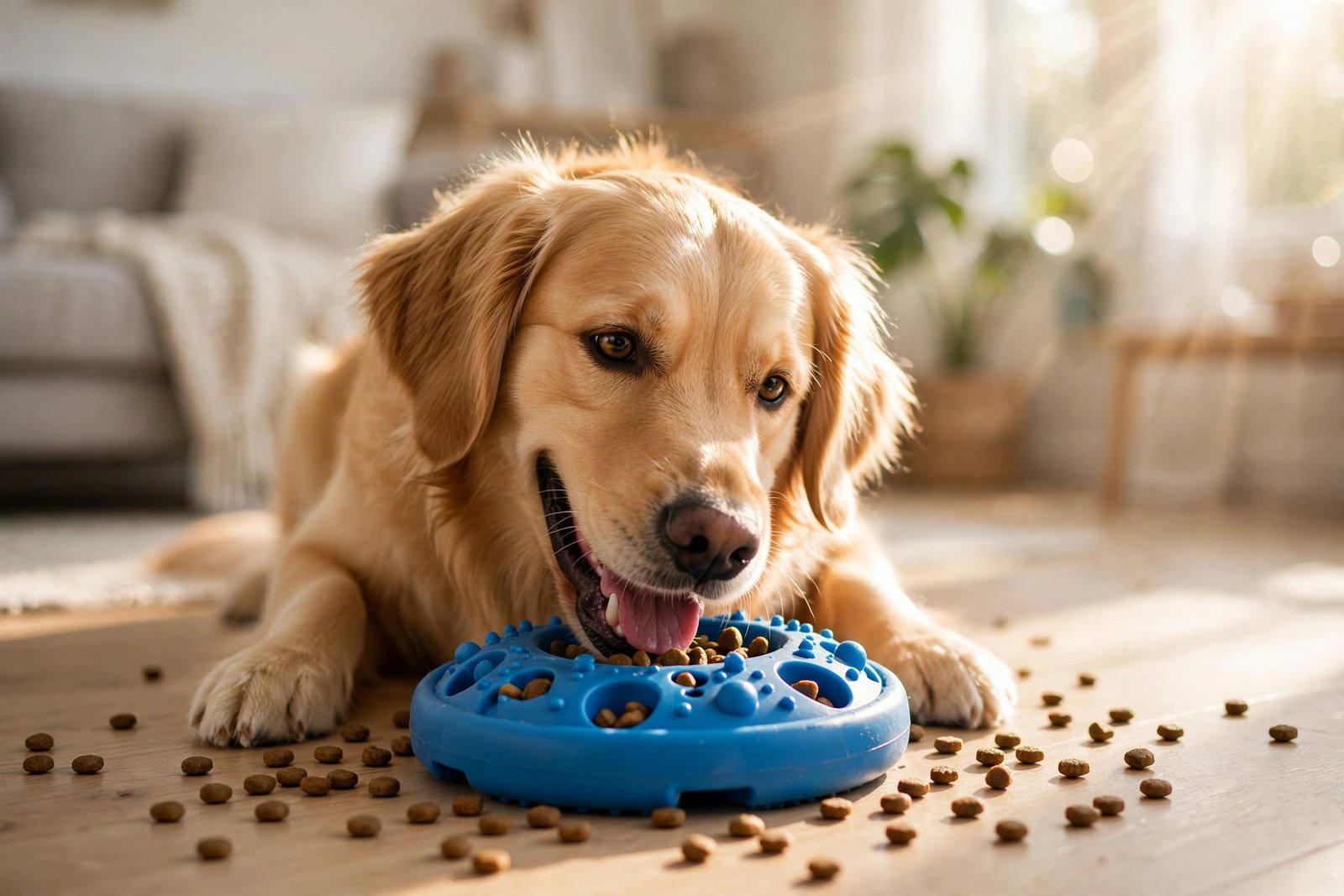
Puzzle toys are the heavy hitters of interactive play, and they deserve the first spot on any list of the best interactive toys for dogs. The classic design is a hollow rubber shape — think the familiar snowman-style toy — that you fill with kibble, peanut butter, or a frozen mash. Your dog has to lick, roll, and chew to work the food out, which can occupy them for twenty to forty minutes depending on the difficulty level.
Sliding-panel puzzles and flip-lid games take it a step further. These flat plastic boards have compartments covered by doors, knobs, and sliders that your dog must nose or paw open in sequence. They come in beginner to advanced levels, which makes them great for dogs who figure things out fast. Start at level one: most dogs get the idea within a session or two, and rushing to advanced puzzles too early is the most common reason owners say “my dog didn’t like puzzle toys.”
One practical tip many owners swear by is freezing stuffed puzzles overnight. A frozen puzzle filled with soaked kibble, yogurt, or pumpkin puree lasts far longer than a dry-filled one, and it turns an ordinary toy into a genuine rainy-day lifesaver. Just remember the toy should match your dog’s jaw strength — a frozen solid toy is harder to damage, but a heavy chewer can still crack cheaper plastics.
Snuffle Mats and Nose-Work Games
Sniffing is calming for dogs in a way that surprises a lot of first-time owners. A snuffle mat — a rubber base with hundreds of fabric strips woven through it — turns mealtime into a foraging session. You scatter kibble through the strips, and your dog has to nose their way through to find every piece. Ten minutes of snuffling can settle an excited dog noticeably, which is why trainers often recommend them for anxious or high-energy pups.
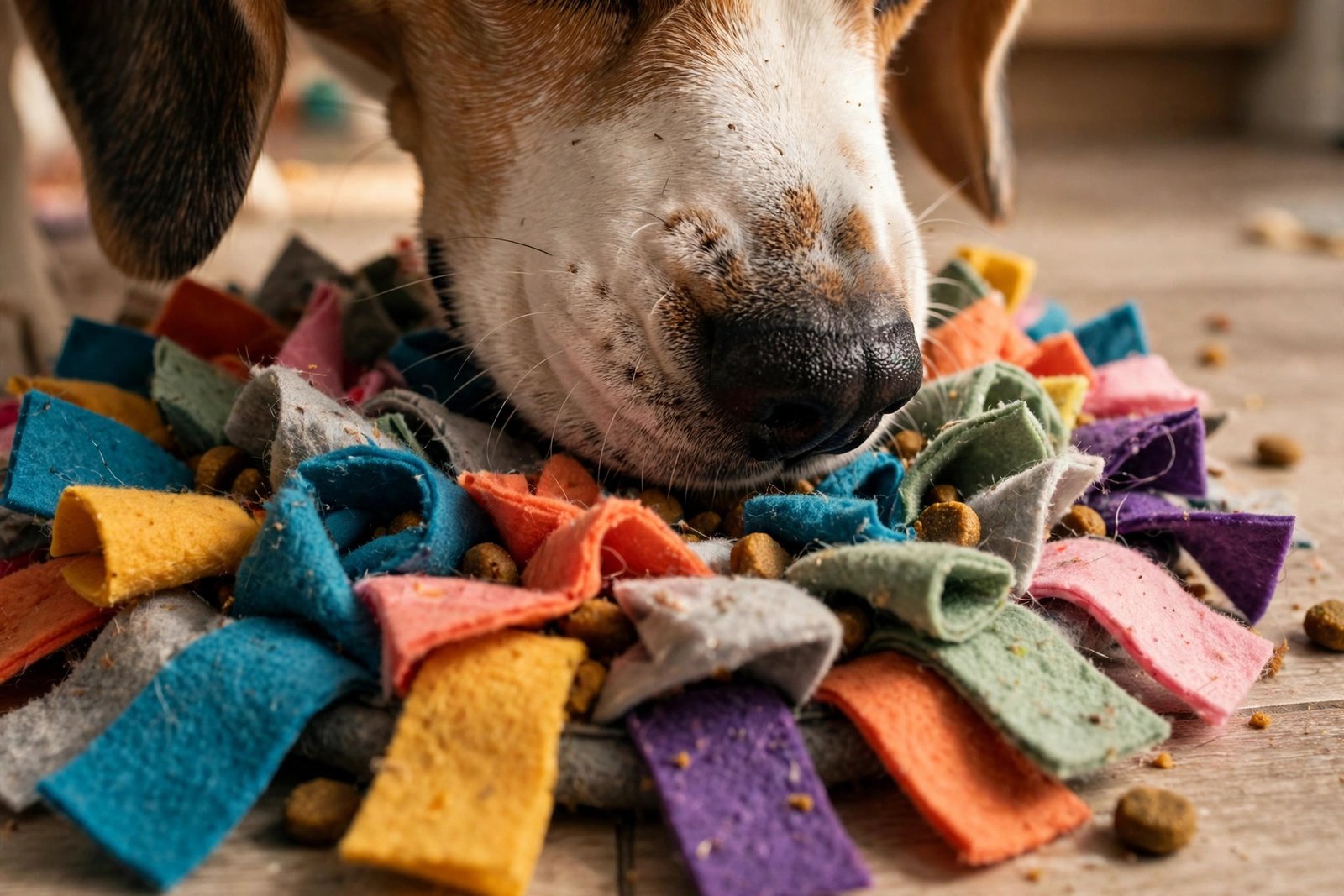
Snuffle mats also help fast eaters. A dog that inhales dinner in ninety seconds gets little mental work out of the bowl; the same meal in a snuffle mat becomes fifteen minutes of engagement. Look for a non-slip backing and machine-washable fabric, and consider keeping two so one can be in the wash.
If you want to go further, scatter feeding is the zero-cost version of the same idea: toss your dog’s kibble across a clean patch of lawn or a rug and let them hunt for it. It exercises the same nose-brain connection, and it’s a nice backup for days when the snuffle mat is in the laundry.
Fetch Toys With a Twist
Plain fetch is great exercise, but it doesn’t ask much of your dog’s brain — which is why some dogs bring the ball back at full sprint for the hundredth time and still look restless. Interactive fetch toys add a thinking element. Ball launchers with adjustable distances let you vary the game, and some electronic launchers let dogs learn to drop the ball in themselves, which adds a problem-solving layer.
Chuck-it-style throwing sticks are a simpler upgrade: they let you throw farther with less effort, and the rubber balls are easier on teeth than tennis balls (whose abrasive fuzz wears down enamel over time). For water-loving dogs, floating fetch toys that stay visible on the surface turn a lake or pool into a fetch arena.
A word of caution: repetitive sprinting fetch is hard on joints, especially for puppies and large breeds. Mix fetch sessions with sniffing breaks, and pair them with the low-impact games in our indoor exercise ideas for dogs.
Tug Toys and Flirt Poles for Together Time
Tug is one of the best games you can play with your dog, despite the old myth that it causes aggression. In reality, tug with rules — “take it,” “drop it,” short rounds, and pauses — teaches impulse control while burning energy. The best tug toys have some give to protect teeth and necks: braided fleece, thick rope, or bungee-style handles that absorb the shock of a hard pull.
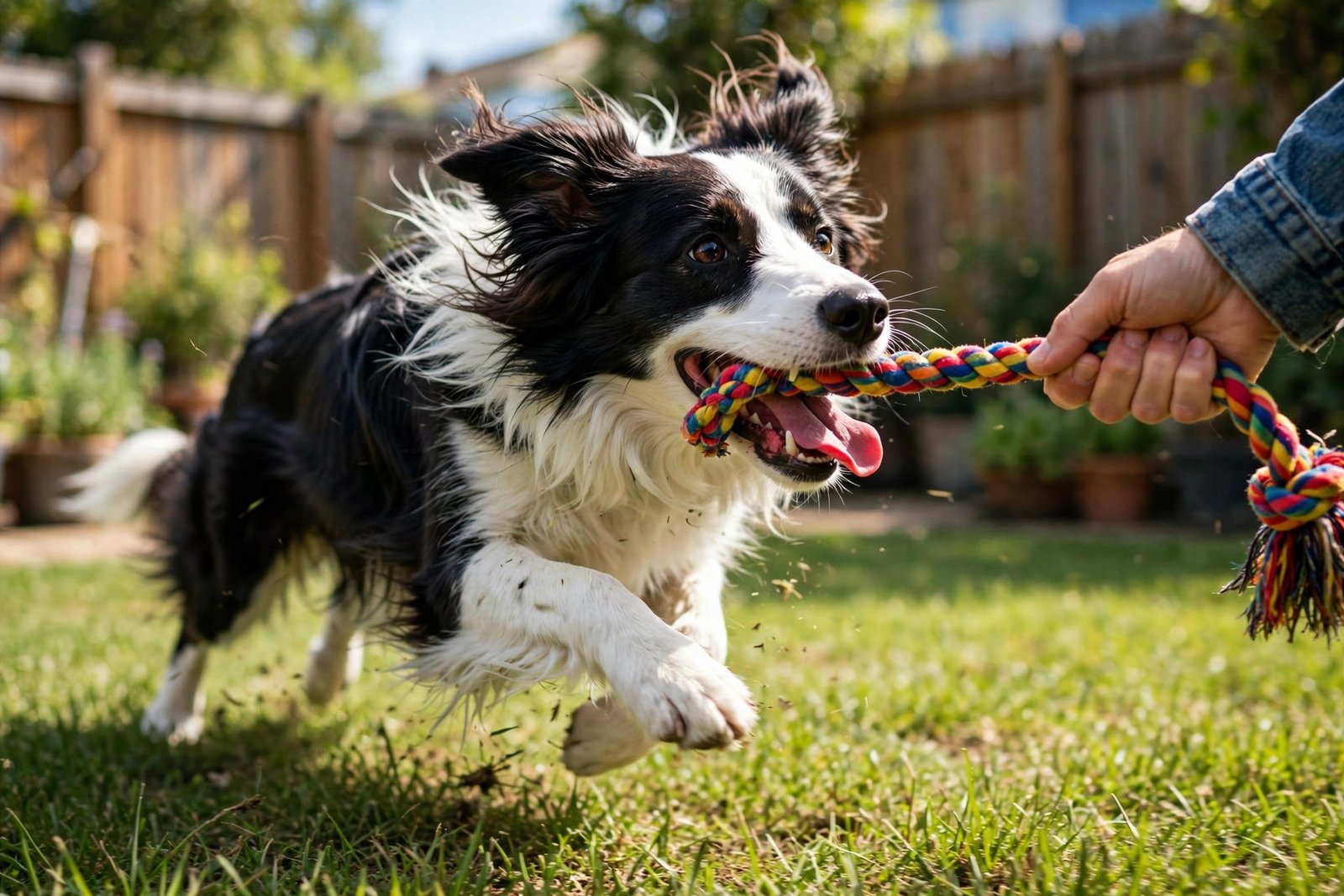
Flirt poles are the underrated star of interactive dog toys. It’s essentially a giant cat teaser: a long pole with a rope and a lure at the end. You drag the lure in circles and your dog chases, pounces, and tugs. Five minutes of flirt pole play can tire out a dog who would need a thirty-minute walk to reach the same state, and it’s fantastic for dogs with strong prey drive because it channels the chase instinct into a game with rules.
The key with any together toy is that you control the game. Teach a reliable “drop it” before the toy becomes a favorite, end the game while your dog still wants more, and store tug toys between sessions so they stay special. Many owners find that a scheduled ten-minute evening tug session becomes the highlight of their dog’s day.
How to Choose the Right Toy for Your Dog
Start by watching how your dog naturally plays. Does your dog carry toys around proudly? Look at plush fetch toys and comfort toys. Does your dog shred everything? Skip the plush and go straight to tough rubber and rope. Does your dog ignore toys but lose their mind over food? Puzzles and snuffle mats are your lane. There’s no universally “best” toy — only the best match for your individual dog.
Size matters more than people think. A toy too small for a big dog is a choking risk; a toy too large for a small dog is just ignored. Check the manufacturer’s size guidance and err larger for heavy chewers. For households with multiple dogs, buy duplicates of favorites when you find them — toy guarding is often really “novelty guarding,” and a second identical toy defuses it.
Budget-wise, you don’t need to buy everything at once. A starter kit of one treat puzzle, one tug toy, and one snuffle mat covers most dogs’ needs for under the cost of a single destroyed couch cushion. And if you share your home with a cat too, our roundup of the best toys for bored indoor cats covers the other side of the household.
Safety Notes Worth Remembering
No toy is truly indestructible, and that word on packaging is a marketing claim, not a promise. Supervise new toys until you know how your dog plays with them, and retire anything that starts coming apart — squeakers and stuffing are the most common things dogs swallow. Wash fabric toys regularly and soak rubber ones in warm soapy water. If your dog swallows a piece of a toy and seems uncomfortable, contact your vet rather than waiting.
Frequently Asked Questions
How many interactive toys does a dog actually need?
Most dogs do well with a small rotation of four to six toys: one or two puzzles, one tug toy, one fetch toy, and maybe a snuffle mat or comfort toy. Fewer toys in active rotation actually works better, because novelty keeps old toys interesting when they come back out of storage.
Are puzzle toys good for puppies?
Yes, with supervision and age-appropriate difficulty. Puppies take to beginner puzzles quickly, and the mental work helps settle them. Choose puppy-sized toys, avoid tiny pieces, and keep sessions short since young puppies tire fast.
My dog destroys every toy in minutes. What should I buy?
Look for toys rated for power chewers — solid rubber and thick rope construction. Puzzle toys made from hard plastic with no removable small parts also last longer. And accept that some dogs are simply shredders: for them, cheap fleece tugs you can replace are more economical than premium toys that meet the same fate.
Can interactive toys replace walks?
Not entirely. Mental stimulation complements physical exercise but doesn’t replace it — dogs need movement, fresh air, and new environments to sniff. On days when a full walk isn’t possible, a solid puzzle and play session can absolutely bridge the gap.
How do I teach my dog to use a puzzle toy?
Make the first session easy: leave compartments partly open, use high-value treats, and let your dog watch you load it. Praise any interaction with the toy. Most dogs figure out the basics within one or two sessions, and you can increase the difficulty once they’re confident.