


Pet GPS Trackers: Are They Worth It?
The classic scenario: a terrier bolts through a gate someone left open, and for four hours the whole neighborhood is out looking. They find him eventually — muddy, thrilled with himself, utterly unaware of the crisis — but those four hours age the owner about a year. A week later there is a GPS tracker on his collar. Fear is a powerful sales pitch, and every owner who has chased a dog near a busy road understands completely.
Pet GPS trackers promise something every pet owner wants: knowing where your animal is, always. But between the hardware cost, the monthly subscription, the battery charging, and the fine print about how they actually locate your pet, the reality is more complicated than the ads suggest. This article digs into how these things work, what they do well, and where they quietly fall short — so you can decide whether one deserves a place on your pet’s collar.
Quick Tips
- Most GPS trackers need a monthly or yearly subscription — factor that into the real price.
- They work best in open areas; dense woods, buildings, and rural dead zones weaken tracking.
- A tracker helps you find a lost pet — it does not prevent them getting lost.
- Check battery life in real-world use, not just the marketing claim; live tracking drains it fast.
- Make sure the device is light enough for your pet — bulky units are miserable on cats and small dogs.
- A tracker is a backup to a collar tag and microchip, never a replacement for either.
How Pet GPS Trackers Actually Work
There are three different technologies sold under the “pet tracker” umbrella, and they are not interchangeable. Knowing which one you are looking at explains half the confusing reviews online.
Cellular GPS trackers
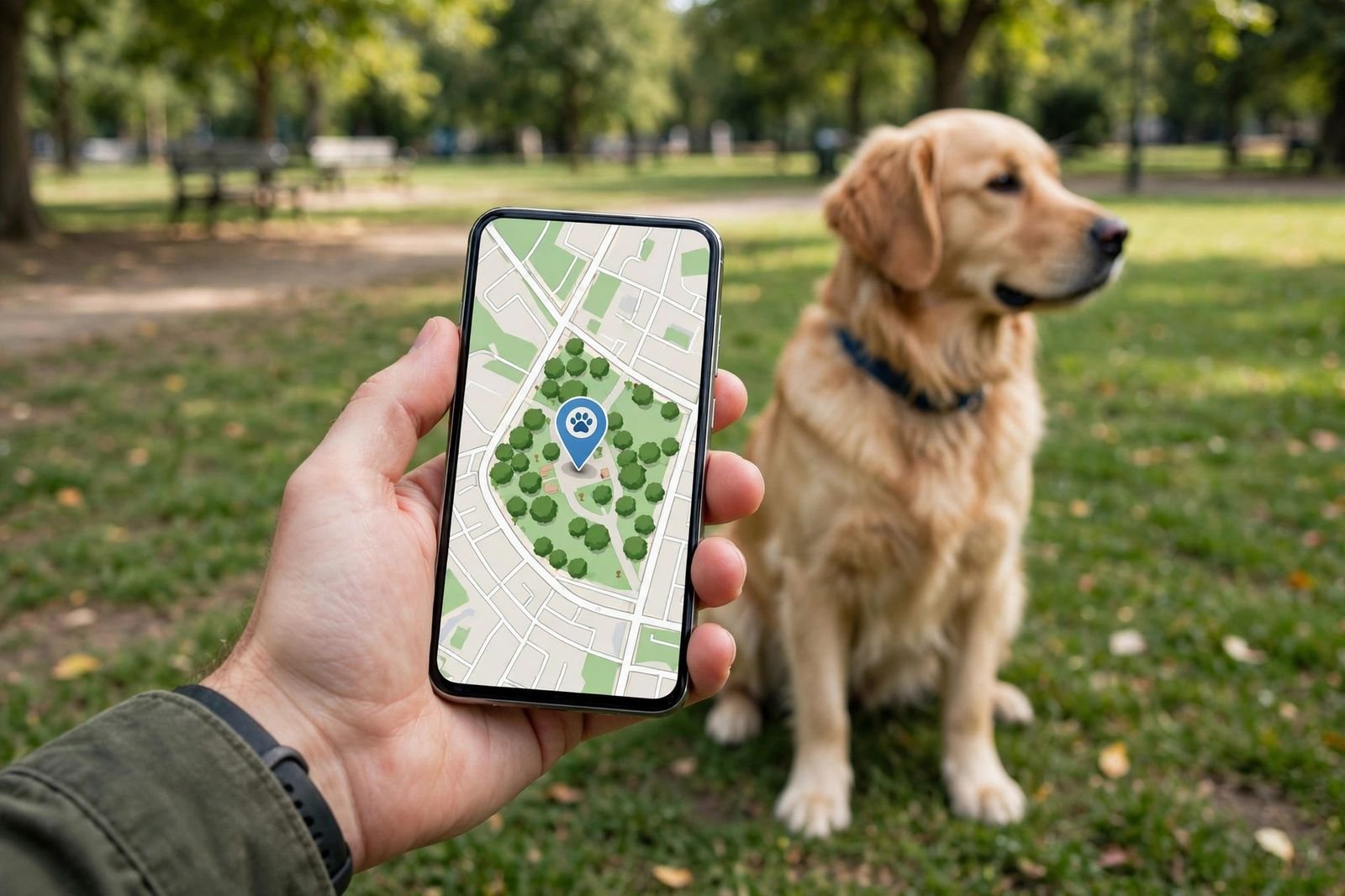
The most common type. The device picks up GPS satellite signals to find its position, then sends that position to your phone over the cellular network — the same networks phones use. This is why they need a subscription: you are essentially paying for a tiny phone plan for the tracker. Range is effectively unlimited as long as there is cell coverage. The catch is obvious: no cell signal, no live tracking. They also tend to be the bulkiest and thirstiest for battery.
Bluetooth trackers
These do not use GPS at all — they ping nearby phones over Bluetooth, and you get an update when a stranger’s phone with the right app walks past your pet. In cities that crowdsourced network can work well; in the countryside your pet could be fifty feet into a field and invisible. Think “lost item finder,” not true GPS.
Radio-frequency trackers
A handheld receiver you sweep like a dowsing rod to home in on a collar tag. No subscription, no cell network, and they work in deep woods where cellular trackers die. Range is a few miles at best, and you do the searching yourself — popular with hikers and hunting-dog owners.
When this article talks about pet GPS trackers, it mostly means the cellular kind — that is what most people buy, and it is where the “worth it?” question gets interesting.
What They Do Well
Let us give credit where it is due, because the core use case is genuinely compelling.
Finding an escaped pet fast
Speed matters when a pet bolts — a dog near traffic gets harder to find with every hour. A live dot on a map turns a frantic neighborhood search into a directed walk. For a dog that has bolted before, the value is not theoretical.
Safe zones and escape alerts
Most cellular trackers let you draw a virtual fence around your home. When the tracker leaves the zone, your phone buzzes — arguably more useful than the map itself, because it tells you the moment something is wrong. For known bolters, this feature alone justifies the device.
Activity tracking
Many trackers double as fitness monitors, logging how much your pet moves each day. Take the numbers with a grain of salt — they are estimates, not lab measurements — but they are useful for spotting trends. A dog whose activity quietly drops over two weeks might be worth watching, and the data gives your vet something concrete to look at. It is a nice bonus, not a reason to buy.
The Honest Limitations
Now the part the ads skip.
The subscription never ends
The device might cost $30 to $100, but nearly all cellular models need a plan at roughly $8 to $15 a month. Over three years the subscription dwarfs the device cost, and some brands lock basic features behind higher tiers. Price the subscription first, the device second.
Battery life is a chore
Marketing claims of “up to 20 days” usually mean the tracker sitting mostly idle in power-saving mode. Turn on live tracking during an actual search and some units drain in hours. In practice, most owners charge every few days to weekly. That is fine until it is not — a dead tracker on the day your dog bolts is just an expensive collar charm. If you are forgetful about charging things, be honest with yourself about this.
Signal gaps are real
GPS needs a view of the sky and the cellular network needs towers. Dense forest, deep valleys, concrete buildings, and rural dead zones all degrade tracking. The location dot can lag, jump, or freeze — reviews are full of “it said he was two streets over” stories. In cities the trackers work best, which is convenient since that is where most buyers live, but it is not the flawless blue dot from the commercial.
Size and comfort
The smaller trackers weigh around 25–30 grams, which most medium and large dogs ignore completely. On cats and toy breeds, though, even the light ones are noticeable — dangling, catching on things, changing how the collar sits. A tracker your pet hates and scratches at constantly is a tracker that ends up in a drawer. If your cat is small, look specifically at models marketed for cats and check real weight figures, not adjectives.
Who Should Buy One — and Who Can Skip It
Worth it if…
Your dog has escaped before, or is the type that would — huskies, terriers, scent hounds, any dog with a history of door-dashing. You hike or camp with your dog off-leash. Your cat goes outdoors, especially in an area with traffic nearby. You live somewhere a lost pet would be hard to search on foot. Someone in the household is anxious about the pet, and the safe-zone alert would genuinely improve everyone’s quality of life. In all these cases, the tracker is cheap insurance against a specific, plausible bad day.
Probably skip if…
Your pet is strictly indoors with no escape history, and your home is secure. A strictly indoor cat in a careful household gains little from a tracker — the money is better spent on enrichment, like the ideas in my toys for indoor cats guide. Likewise, a senior dog that never leaves the yard and a cat that hides under the bed at the sound of the doorbell are low-risk cases. And if you know you will never remember to charge it, skip it — an uncharged tracker provides exactly zero protection while still costing you the subscription.
What to Compare Before Buying
If you decide a tracker fits your situation, here is how to pick between them without drowning in spec sheets.
Battery life in real conditions. Ignore the headline number and look for reviews mentioning how often they actually charge. Anything needing a charge every day or two becomes a burden fast.
Total cost over two years. Device price plus 24 months of the plan tier you would actually use. This is the only price comparison that means anything.
Weight and size for your pet. Check grams, not “lightweight.” Under 30g is comfortable for most cats and small dogs; over 50g belongs on medium dogs and up.
Waterproofing. Your pet will get rained on, swim, or roll in something. Look for a genuine waterproof rating, not “water-resistant,” and check whether the charging port needs a fiddly cover.
App quality. You will live in this app. Read recent app-store reviews, not the product page — a tracker with a crashing app is useless in the moment you need it most. Check that safe-zone alerts are prompt and that location history is included, not paywalled.
Attachment security. How does it fix to the collar? Units that thread onto the collar band are more secure than clip-ons that can snag off. A tracker that falls off in the bushes is a very expensive lost item itself.
Using One Well: The Unsexy Part
Buying the tracker is step one. These habits are what make it actually work when it counts.
Charge on a schedule — same day each week, phone reminder, whatever it takes. Test the safe zone at setup: walk the boundary and confirm the alert fires and the map follows you. And keep the collar itself in good shape — the tracker is only as secure as what it hangs from. If you are still deciding on collars, my collar vs harness breakdown covers the options.
And keep perspective: the tracker is one layer. A visible ID tag gets a found pet home faster than any tech, and a microchip is the permanent backup that cannot fall off. Think of it as a stack — tag, chip, tracker — each covering the others’ weak spots.
One caution: a tracker can make you subtly less careful. “He has the tracker on” is not a reason to be casual about gates and leashes. Technology fails right when you need it — the tracker is a safety net for the fall you did not plan, not the one you allowed.

Frequently Asked Questions
Do pet GPS trackers require a subscription?
Cellular GPS trackers almost always do — typically $8–15 per month — because they use the mobile network. Bluetooth and radio models usually have no subscription but much shorter range. Price the subscription over two years before comparing devices.
Do GPS trackers work for cats?
Yes, but size matters more — look for cat-specific models under about 30 grams with a secure collar attachment. For a strictly indoor cat with no escape history, a tracker is usually unnecessary.
Can a GPS tracker replace a microchip?
No — they do completely different jobs. A tracker helps you find a lost pet in the moment, but it can fall off, run out of battery, or lose signal. A microchip is permanent identification that any vet or shelter can read if someone finds your pet. Use both; they are complements, not substitutes.
How accurate are pet GPS trackers?
In open areas with good coverage, typically within a few dozen feet — enough to find a pet, not which bush. Accuracy degrades in woods, valleys, and buildings, and live locations can lag by a minute or more.
Will a tracker work where there is no cell signal?
Cellular trackers will not send live updates without cell coverage, though most store locations and upload them once back in range. If you hike in remote areas with no signal, a radio-frequency tracker designed for that purpose is the more honest choice.
Are GPS trackers safe for pets to wear?
Generally safe — they emit far less radio energy than a phone. The practical concerns are weight and fit: too heavy irritates the neck, too loose snags. Check fit like any collar — no swinging, room for two fingers underneath.
[…] peace of mind, GPS trackers have become practical and affordable. Our breakdown of whether pet GPS trackers are worth it covers battery life, subscription costs, and which situations they suit […]