

Best Cat Scratching Posts (and How to Get Your Cat to Use One)
Every cat owner knows the sound. That rhythmic scritch-scritch-scritch from the living room that makes your stomach drop, because you already know what you will find: your cat, claws deep in the arm of the sofa, wearing the expression of someone doing important, legitimate work. Here is the thing most new owners get wrong — the cat is not misbehaving. Scratching is as natural to a cat as stretching is to you in the morning. The problem is never that the cat scratches. The problem is always that the cat has not been given anything better to scratch.
That is what a good scratching post fixes — not by stopping the scratching, but by redirecting it. But here is the part nobody tells you at the pet store: most scratching posts fail. They are too short, too wobbly, wrapped in the wrong material, or parked in a corner the cat never visits. Then the owner concludes “my cat just won’t use a post,” which is almost never true. This guide covers what actually makes a post work, the types worth buying, and — the part that matters most — how to get your cat to choose it over your furniture.
Quick Tips
- Cats scratch to stretch, maintain claws, and mark territory — it is normal, healthy behavior.
- A good post is tall enough for a full stretch, heavy enough not to wobble, and wrapped in sisal.
- Place the post where your cat already scratches or sleeps — not hidden in a spare room.
- Never punish scratching; redirect it with play, catnip, and treats near the post.
- One post per cat is the minimum; multi-cat homes need more, in different rooms.
- If your cat ignores the post, the problem is usually the post, the placement, or both — not the cat.
Why Cats Scratch (It Is Not Spite)
Before buying anything, it helps to understand what scratching actually does for a cat, because the answer explains every buying decision below.
First, it is exercise. Watch a cat scratch and you will see the full-body stretch — front legs extended, back arched, claws dug in. That motion flexes the muscles of the shoulders, back, and legs. Cats that do not get to do it properly are like people who never get to stretch after sitting all day: stiff and cranky.
Second, claw maintenance. Scratching peels away the worn outer sheath of the claw, keeping the sharp new claw underneath exposed and healthy. You will sometimes find little claw-sheath husks near a well-used post — that is a sign it is working, not a sign of damage.
Third: marking. Cats have scent glands in their paw pads, so scratching leaves a visual and scent mark. That is why cats target the most socially important furniture — the sofa everyone sits on. They are putting their signature where it counts, so place the post somewhere socially significant too.
None of this can be trained out of a cat, and it should not be. The goal was never a cat that does not scratch. The goal is a cat that scratches the post.
What Makes a Good Scratching Post
Forget brand names for a minute. Every good scratching post, regardless of style, nails the same four fundamentals. If a post fails any of these, the price and the pretty fabric do not matter.
Tall enough for a full stretch
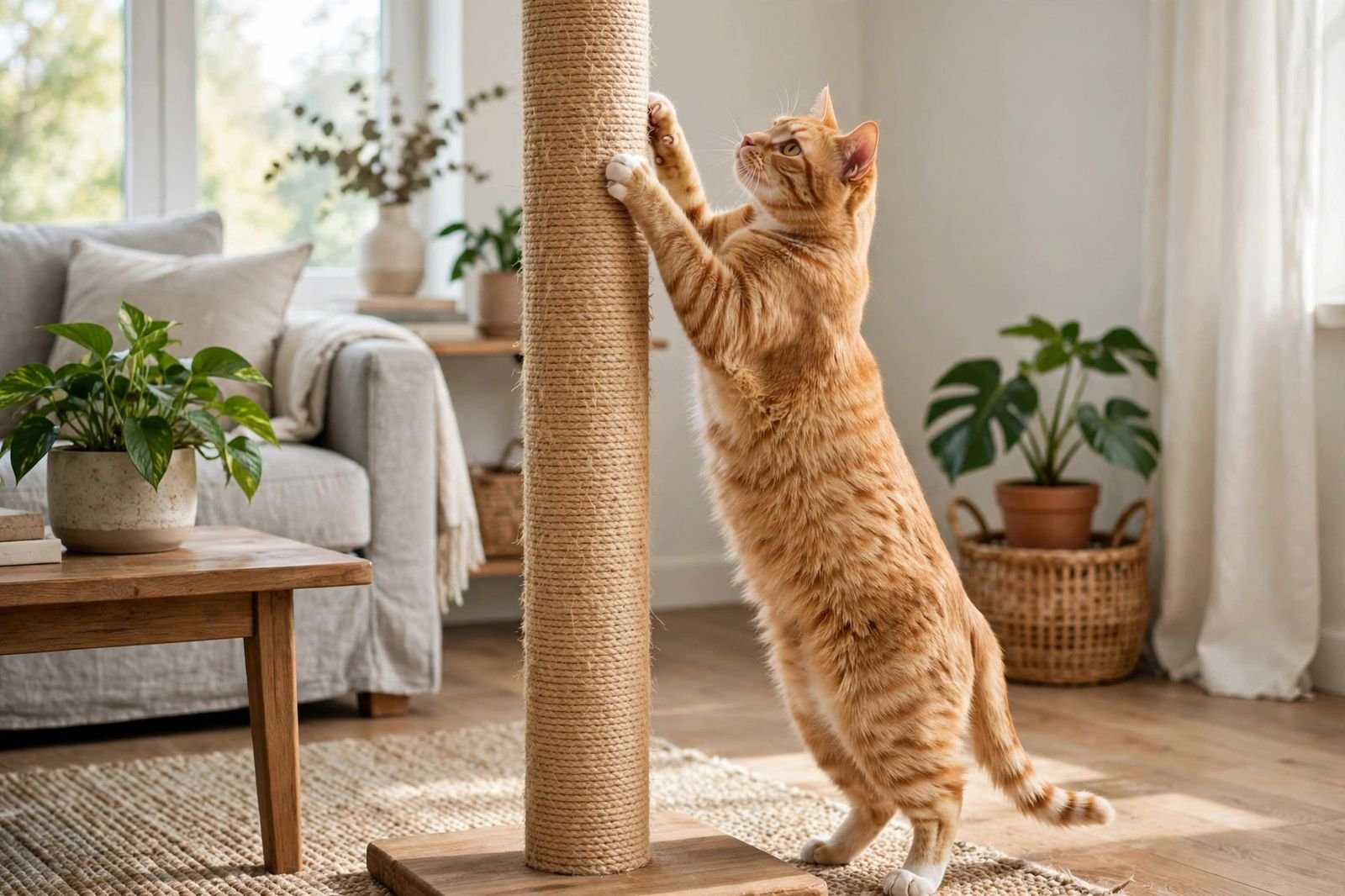
This is the number-one reason posts fail. A cat needs to reach up with front paws extended and pull down — the scratching surface should be at least 28 to 32 inches tall for an average cat, taller for big breeds. Those cute 18-inch mini posts are decoration. Measure your cat stretched upright against a wall if you want to be precise, but “noticeably taller than you think” is a reliable rule.
Stable enough to lean on hard
A post that wobbles or tips when the cat pulls on it will be used exactly once. Cats do not trust unstable surfaces — would you? The base should be wide and heavy relative to the height. If you can rock it with one hand in the store, imagine what a determined 12-pound cat does to it. Wall-mounted options solve this completely and are underrated.
Wrapped in the right material
Sisal rope or sisal fabric is the gold standard. It has the right texture — rough enough to catch claws satisfyingly, tough enough to survive months of use. Carpet-wrapped posts are the classic mistake: many cats cannot tell the difference between the post carpet and the living room carpet, and you have just taught them that scratching carpet-textured things is fine. Cardboard scratchers are cheap, cats love the texture, and they are replaceable — great as a supplement, less good as the only post since they shred fast.
The right orientation for your cat
Most cats prefer vertical scratching, but a meaningful minority are horizontal scratchers — the ones who claw at rugs. Watch what your cat targets now. If it is chair legs and door frames, go vertical. If it is the rug, get a horizontal or angled scratcher. Buying against your cat’s natural preference is the fastest route to an ignored post.
The Main Types, Compared Honestly
Single vertical post
The classic: a heavy base, one tall sisal column. Simple, effective, easy to place exactly where the cat already scratches. Boring and stable beats exciting and wobbly.
Cat trees and towers
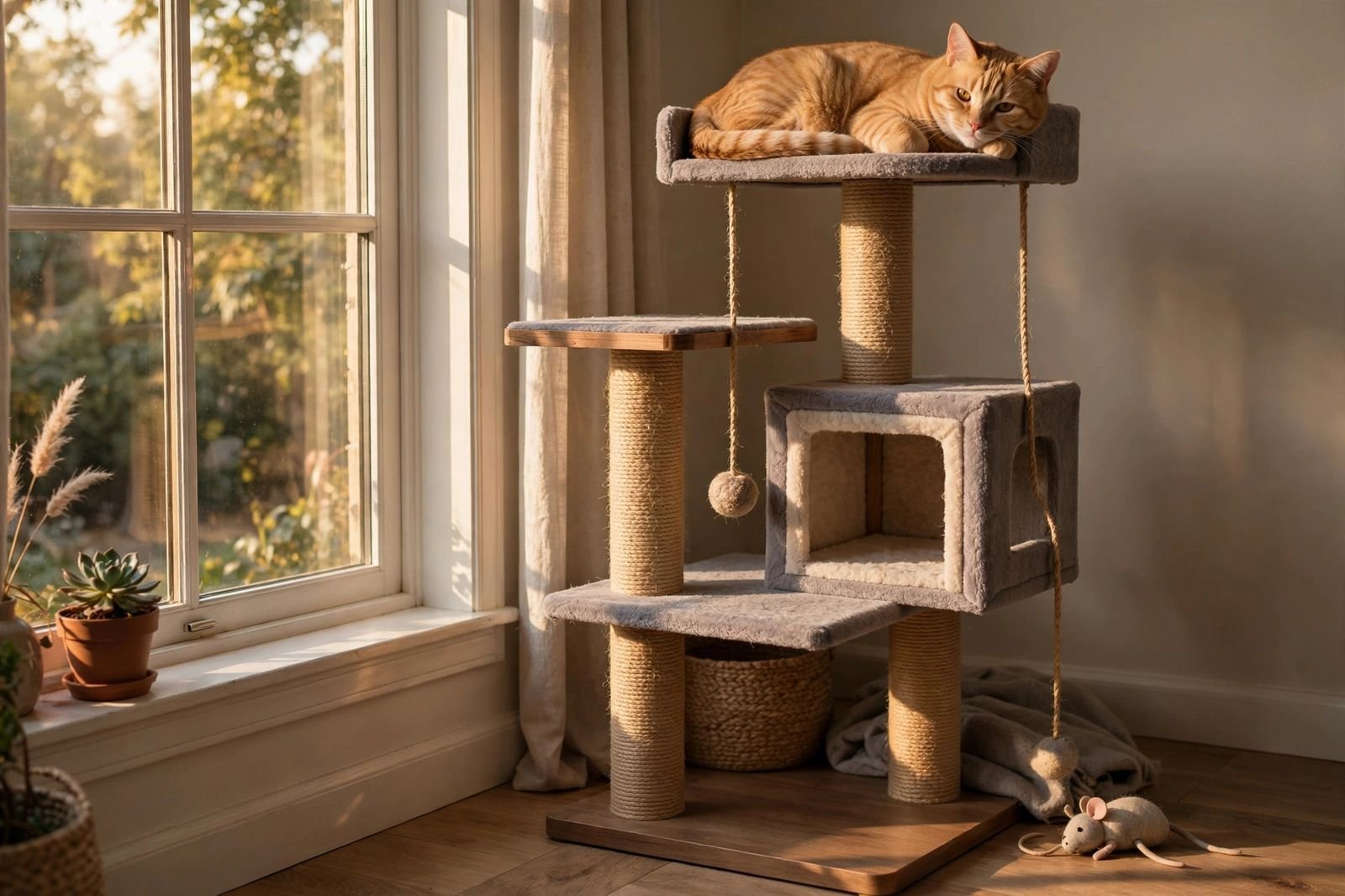
Multi-level structures with posts, platforms, and often a hideaway. These combine scratching with climbing and perching, which matches how cats actually like to live — up high, surveying their kingdom. A good tower can replace two or three separate items. The catch: cheap towers are notoriously wobbly, and a wobbly tower fails as both furniture and scratcher. If you buy one, buy for stability first and features second. For more on keeping indoor cats happy overall, my indoor cat toy guide pairs well with this.
Angled and ramp scratchers
Scratchers set at an incline. Some cats love these, especially kittens and seniors who find full vertical stretches harder. They take up more floor space than they look like they should, so measure before buying.
Horizontal cardboard scratchers
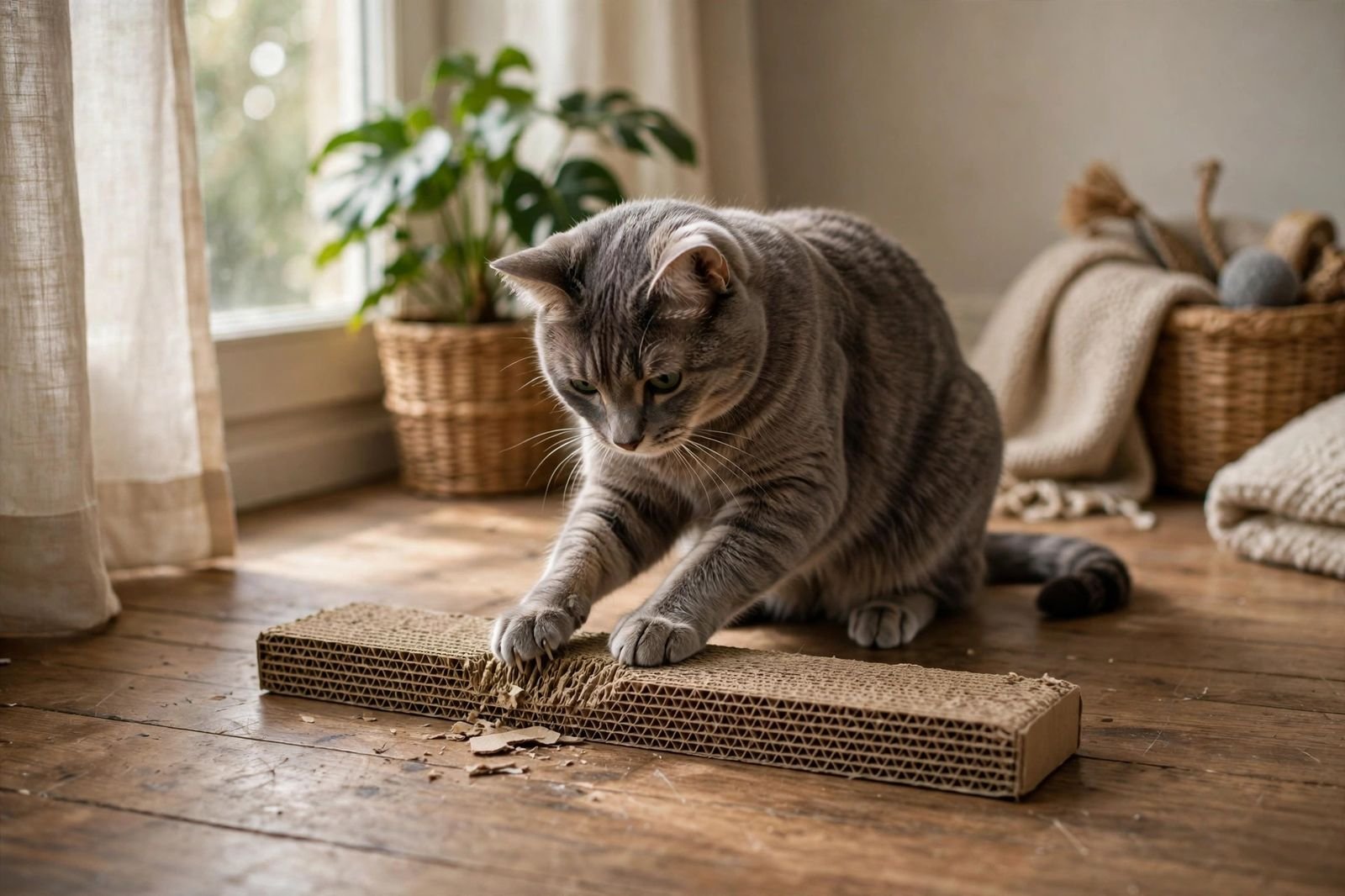
Cheap, beloved by cats, and essentially disposable. Great for discovering whether your cat is a horizontal scratcher before you invest in something permanent. Keep one around even after you buy the main post — many cats use both. The shredded cardboard mess is the price of admission; put it on a mat.
Wall-mounted scratchers
Sisal panels that screw to the wall. Zero floor space, perfectly stable, and you can mount them exactly at scratching height in the exact spot the cat already uses. The downside is commitment — you are putting holes in the wall. Renters, check your lease or use the heavy-duty removable kind and hope.
How to Get Your Cat to Actually Use It
Here is the truth the product pages never mention: buying the post is maybe 30 percent of the job. Placement and introduction are the other 70. I have seen perfect posts ignored for months because they were put in the wrong room, and mediocre posts loved because they landed in the right spot.
Put it where the cat already is
Cats scratch most right after waking up and during social moments. So the post belongs near where the cat sleeps and where the family hangs out — not exiled to a laundry room. If the cat is currently destroying the sofa arm, put the post directly next to the sofa arm. Yes, it looks odd for a while. It works.
Make the post rewarding, make the sofa boring
Rub dried catnip into the sisal or use a catnip spray. Play with a wand toy around and up the post so the cat’s paws land on it mid-game — cats often “discover” scratching this way and then keep doing it. Drop treats on the base when the cat investigates. Meanwhile, make the forbidden furniture temporarily unappealing: drape a throw over the scratched spot, or use double-sided sticky tape made for furniture training. You are not punishing the sofa-scratching; you are making the post the obviously better deal.
Never punish scratching
Yelling, squirting water, or shoving the cat away teaches the cat to scratch when you are not watching — which is worse. It also damages trust, and a cat that does not trust you is harder to guide in every other way. Behaviorists overwhelmingly recommend the same approach: redirect, do not punish. If you are dealing with broader behavior puzzles, the same patience-first approach in the new cat introduction guide applies here too.
Trim claws to take the edge off
Regular nail trims do not stop scratching, but they reduce the damage while the retraining is in progress. Shorter claws, less shredded upholstery. It is a holding action, not a solution — the post is the solution.
Mistakes That Doom the Post
Buying too short. The most common failure — if the cat cannot fully stretch, it is not a scratching post, it is a suggestion.
Tolerating wobble. Tighten it, weigh the base down, or wall-anchor it. A post the cat does not trust is furniture.
One post, wrong room. Cats will not commute to scratch — put scratching opportunities where the scratching happens.
Giving up after three days. Some cats need two to three weeks of consistent redirection. Keep the catnip fresh and the treats coming for a full fortnight.
Replacing it too eagerly. A shredded-looking post is a used post — it smells like them and has the perfect broken-in texture. Replace it when it is structurally failing, or when the sisal is shredded down to bare wood.
Frequently Asked Questions
Why does my cat ignore the scratching post?
Almost always one of three things: too short for a full stretch, wobbly, or in a room the cat does not care about. Also check the material — a carpet-covered post confuses cats that love the sofa; switch to sisal.
Is sisal or carpet better for a scratching post?
Sisal, by a wide margin. It has the right claw-catching texture, lasts longer, and — critically — does not teach the cat that carpet-textured things are for scratching. Carpet posts are the most common cause of “he uses the post AND the rug” complaints.
How tall should a cat scratching post be?
At least 28–32 inches of scratchable surface for an average-sized cat, so they can stretch fully upright. Large breeds need taller. When in doubt, go taller — no cat has ever rejected a post for being too tall, but plenty reject short ones.
How many scratching posts does one cat need?
One good tall post is the minimum. Two is better for most homes — one near the sleeping spot, one near the main living area. Multi-cat households should have at least one per cat plus one extra, spread across rooms, since cats can be territorial about scratching spots.
Can I stop my cat from scratching entirely?
No — and you should not try. Scratching is healthy, necessary behavior. The realistic goal is 100 percent of scratching on appropriate surfaces, and most cats get there within a few weeks with the right post and consistent redirection.
Do kittens need a different kind of scratching post?
Not really — kittens take to standard posts quickly, and starting young means the habit forms before furniture damage does. An angled or shorter scratcher can help very small kittens reach, but they grow into a full-size post within months, so buy the real thing from the start.
[…] sisal one from the start — the cheap short one is money thrown away when the cat ignores it. My scratching post guide explains exactly what to look […]