

How Much Does a Cat Cost in the First Year?
The classic beginner budget goes like this: price the cat — adoption fee, a bag of food, a litter box — a few hundred dollars, done. Then the actual first year happens, and the smug spreadsheet turns out to be missing roughly half the lines. The first year has a shape nobody warns you about: one-time setup costs, a cluster of first-year vet visits, and the quiet monthly drip of food and litter.
So here is the honest answer to how much a cat costs in the first year: for most owners in the US, UK, or Europe, somewhere between $800 and $2,000 (roughly £650–£1,600), depending on where you live, where the cat comes from, and how you shop. That range is wide because the choices genuinely change the math. This guide breaks down every category — the upfront costs, the vet bills, the food, the forgotten expenses — so you can plan with real numbers instead of a fantasy spreadsheet.
Quick Tips
- Budget roughly $800–$2,000 for the first year, depending on your area and choices.
- Adoption fees ($50–$200) usually include spay/neuter and first vaccines — a genuine bargain.
- First-year vet costs are the biggest variable; kittens need more visits than adult cats.
- Food and litter run about $40–$70 a month combined for one cat.
- Keep a $500 emergency buffer — first-year surprises are common, not rare.
- Year two is cheaper: the setup costs are done and vet visits drop to annual.
The Upfront Costs: Getting Set Up
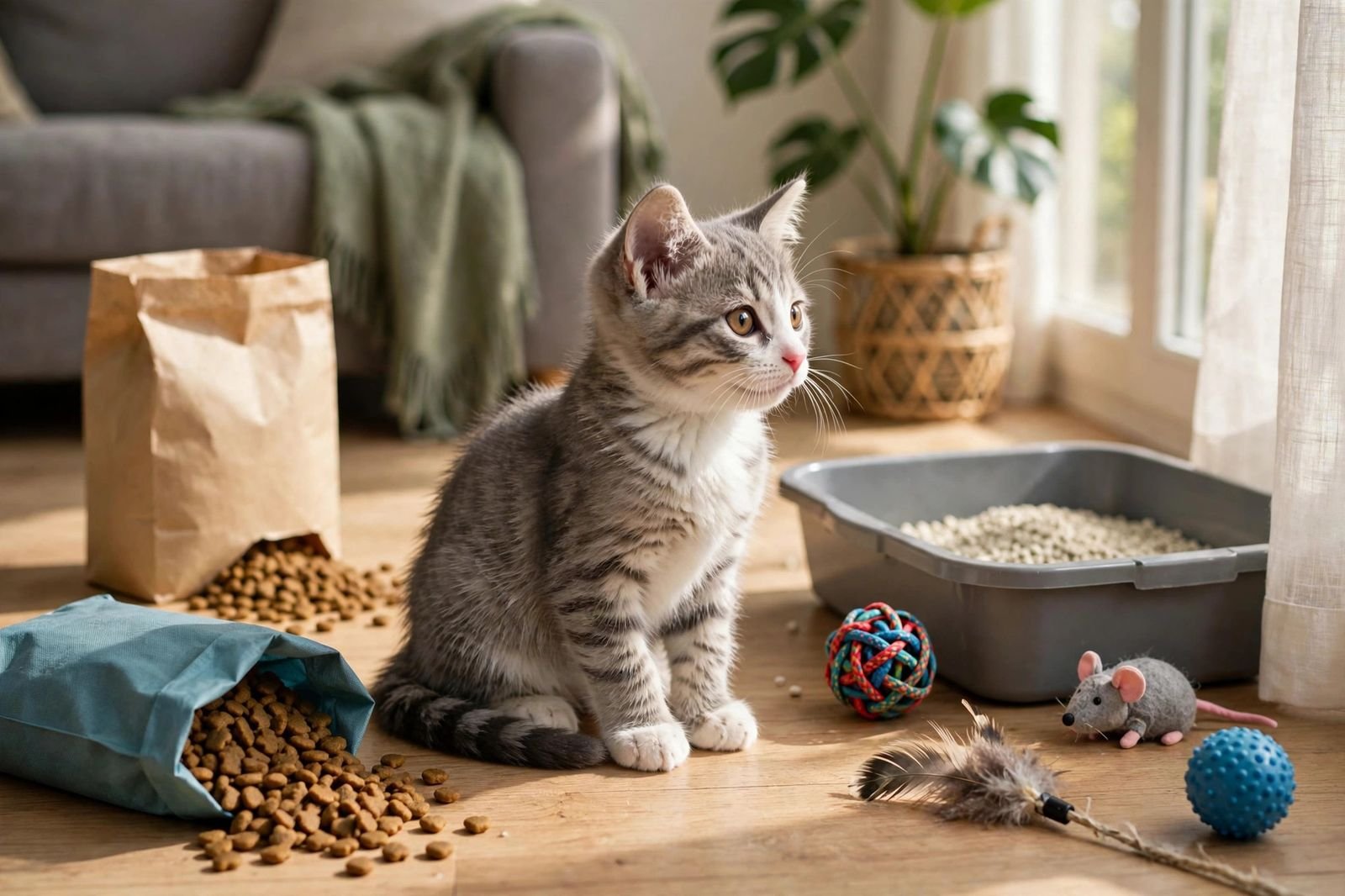
Before the cat even comes home, you will spend money on stuff. Here is what a sensible starter kit looks like, with realistic price ranges:
Adoption fee: $50–$200. Shelter adoption fees vary by region and by the cat — kittens cost more than seniors, purebreds more than moggies. What people miss is how much is bundled in: most shelters include spaying or neutering, first vaccinations, microchipping, and a health check. Buying those services separately would cost several times the fee. It is the best deal in pet ownership, full stop. (Getting a cat from a breeder is a different budget conversation entirely — often $500–$2,000+ for the cat alone — and this guide assumes the shelter route most beginners take.)
Carrier: $25–$50. Non-negotiable; you need it on day one and for every vet visit after. A hard-sided carrier lasts years.
Litter box and scoop: $15–$40. Start simple — an uncovered, low-sided box. You can upgrade to the fancy self-cleaning models later if you want, but do not buy the expensive box before you know your cat’s preferences.
Food and water bowls: $10–$25. Ceramic or stainless steel; avoid plastic, which can cause chin acne in some cats.
Scratching post: $30–$80. Buy the tall, stable, sisal one from the start — the cheap short one is money thrown away when the cat ignores it. My scratching post guide explains exactly what to look for.
Bed, toys, brush, nail clippers: $30–$60 combined. Cats are refreshingly cheap to entertain — a $3 crinkle ball often beats the $25 electronic toy. Do not overbuy before you learn what your cat likes.
Total setup: roughly $160–$455 on top of the adoption fee. Call it $200–$650 all in, depending on how premium you go.
The Vet Bill: The Biggest First-Year Variable
Veterinary costs are where first-year budgets succeed or fail, and they vary more than any other category — by region, by the cat’s age, and by what the shelter already covered.
First checkup: $50–$100. Book it within the first week. Even with shelter records in hand, your own vet needs a baseline. If you have never done this before, my first vet visit guide covers what to bring and what to ask so the appointment is worth the fee.
Vaccines: $75–$200 for the first-year series. Kittens need a series of boosters over several visits; an adult shelter cat may arrive already covered, needing only a booster. Prices vary a lot by area — city clinics charge more than rural ones, and low-cost vaccine clinics can cut this dramatically.
Spay/neuter: $0–$300. Usually $0 because the shelter did it before adoption — another reason the adoption fee is a bargain. If you adopt an intact kitten too young for surgery, budget for it within the first year; many areas have low-cost spay/neuter programs that bring this under $100.
Parasite prevention: $100–$250/year. Flea treatment and deworming, per your vet’s recommendation for your area. Indoor-only cats need less than outdoor cats, but “indoor” does not mean “zero risk” — fleas ride in on humans and other pets.
Microchip: $0–$50. Often included in the adoption fee. If not, it is cheap and permanent — do not skip it.
Total first-year vet: roughly $225–$900. The low end is an adult cat adopted fully vetted in a low-cost area; the high end is a young kitten needing the full series in an expensive city. This is the category most likely to surprise you, which is why the emergency buffer below matters.
Food: What It Really Adds Up To
Food is the expense everyone underestimates, because no single bag feels expensive. The math only bites when you multiply by twelve.
Reasonable-quality cat food runs about $25–$50 a month for one cat, depending on wet, dry, or a mix. Wet costs more per calorie but most cats prefer it; many owners do a mix. Kittens eat more relative to their size and need kitten-formulated food.
That puts first-year food at roughly $300–$600. Food is the one category I would not economize aggressively — nutrition affects coat, digestion, and long-term health. Buy the best you can comfortably afford; “complete and balanced” on the label matters more than the brand story.
Treats add another $5–$10 a month if you are generous — and you will be, because those eyes. Budget $60–$120 a year and consider it a happiness tax.
Litter and the Monthly Recurring Costs
Litter: $15–$25 a month, or $180–$300 a year. Clumping clay litter is the economical default; crystal, paper, and wood pellet litters cost more with various trade-offs. One cat, one-and-a-bit boxes, scooped daily — a bag lasts a predictable while, and buying in bulk helps. Whatever type you choose, keep it consistent at first; cats are opinionated about litter changes.
Small recurring bits add up: replacement toys, a new scratching insert every few months, the occasional broken bowl. Call it $50–$100 a year of miscellaneous. It is never one big purchase — it is the slow drip of pet-store visits.
Total monthly recurring (food + litter + treats + bits): roughly $45–$85, or $540–$1,020 over the year. This is the number to check against your actual monthly budget, because unlike the one-time costs, it never stops.
The Costs People Forget
Every first-year budget has blind spots. Here are the ones that ambush new owners:
The emergency vet visit. Not if but when — the swallowed string, the mysterious limp, the 2 a.m. vomiting. A single emergency visit easily runs $200–$800. Keep a $500 buffer or look into insurance before you need it.
Pet insurance: $15–$40/month ($180–$480/year). It depends on your risk tolerance and the policy’s fine print — deductibles, exclusions, reimbursement rates. Many owners of young healthy cats self-insure with a savings buffer instead. Either way, decide deliberately rather than discovering the question during an emergency.
Furniture and damage. Even a good scratching post does not prevent 100 percent of incidents in month one. A scratched chair arm, a knocked-over plant, a chewed phone charger — budget a token $50–$100 for the learning curve, or at least emotionally prepare.
Pet deposits and rent. Renters often face a pet deposit ($200–$500, sometimes refundable) or monthly pet rent ($25–$50). Check your lease before adoption day — this one has derailed adoptions.
Boarding or sitting. Your first trip away from home means a sitter or boarder: $25–$75 a day depending on your area. Even one week away adds $175–$525 to the year’s total. Line up your plan before you need it.
What the First Year Typically Totals
Putting it together, here are three realistic scenarios for one cat’s first year (US dollars; UK/Europe readers can treat the proportions as the guide):
Budget-conscious: ~$800–$1,100. Adult shelter cat, already vetted, budget-friendly food and litter, DIY everything, no emergencies, no pet rent. Entirely achievable and the cat is just as happy.
Typical middle: ~$1,200–$1,600. Kitten or young cat needing the vaccine series, mid-range food, a proper scratching post and setup, one minor vet surprise, normal monthly costs. This is where most first-time owners land.
Premium/complex: ~$1,800–$2,500+. Expensive city vet prices, premium food, pet insurance, pet deposit, a boarding week, and one real emergency. Not extravagant — just how the numbers stack when several variables run high at once.
For comparison, if you are weighing cats against dogs, my first-year dog cost breakdown runs the same exercise for the canine side — spoiler: dogs cost more, mostly on food and vet size-scaling.
The genuinely good news: year two is much cheaper. The setup is bought, the vaccine series is done, and costs settle into the monthly rhythm of food, litter, and one annual checkup — typically $600–$1,000 a year ongoing. The first year is the hump. Get through it with a buffer intact, and cat ownership becomes one of the most affordable companionships there is.
Frequently Asked Questions
What is the cheapest responsible way to get a cat?
Adopt an adult cat from a shelter. The fee ($50–$200) bundles spay/neuter, vaccines, and microchipping — worth several times that separately — and adults have lower first-year vet needs than kittens. A “free kitten” is rarely free once you price the vet work.
Is pet insurance worth it for a cat?
It depends on your finances more than the cat. If a surprise $1,000 vet bill would be a crisis, insurance ($15–$40/month) buys real peace of mind — read the exclusions carefully first. If you can comfortably keep a $500–$1,000 emergency buffer in savings, self-insuring is often cheaper over the cat’s lifetime. Decide before an emergency forces the question.
Do indoor cats cost less than outdoor cats?
Generally yes — less parasite prevention, fewer injuries, fewer emergency bills. The savings are real but not enormous; food, litter, and routine vet care cost the same either way.
Is it cheaper to adopt two kittens instead of one?
Not cheaper — nearly everything doubles except a few shared items (carrier, some toys). But two kittens are often easier: they entertain each other, learn social skills together, and are less likely to develop single-kitten behavior issues. Many shelters discount the second adoption fee. Budget for two properly rather than hoping for economies of scale.
When do cat costs go down?
After the first year. Setup purchases are done, the kitten vaccine series is complete, and spay/neuter is behind you. Ongoing costs settle to food, litter, treats, and one annual vet visit — typically $600–$1,000 a year. Costs rise again only in the senior years with age-related vet care.
Can I spread the first-year costs out?
Yes — and you should plan to. Only the adoption fee, carrier, litter box, and first food bag are truly day-one costs. Vet visits spread naturally across months, and setup items can be bought over the first few weeks. The danger is not the total; it is being surprised by it. A month-by-month plan beats a single scary number.
[…] Budget for the first year realistically — adoption fees, vet care, and setup costs add up; see our breakdown of how much a cat costs in the first year. […]