


Tear Stains in Dogs: Causes and Safe Cleaning
Those reddish-brown streaks running down from the inner corners of a dog’s eyes — tear stains — are one of the most common cosmetic complaints in dog ownership, especially among owners of white and light-colored dogs. On a white Maltese or Poodle, they are impossible to miss. On a dark-coated dog, they may be invisible. Either way, owners want to know the same things: what causes them, whether they signal a health problem, and how to clean them without hurting the eyes.
Here is the full picture on tear stains in dogs: the biology behind the staining, the difference between normal tearing and a problem worth investigating, safe daily cleaning routines, and the products and home remedies to avoid.
Quick Tips
- Tear stains come from porphyrins — iron-containing pigments in tears.
- Daily gentle wiping prevents stains from setting; weekly deep cleans are not enough.
- Use damp cotton pads or vet-approved wipes; keep all products away from the eyeball.
- Light-colored dogs show stains most; the cause is the same on dark coats.
- Sudden worsening, odor, swelling, or squinting means vet visit, not more cleaning.
- Never use hydrogen peroxide, bleach, or antibiotics near the eyes without vet guidance.
What Tear Stains Actually Are
Tears are not just water. They contain proteins, oils, mucus — and pigments called porphyrins. Porphyrins are iron-containing molecules produced when red blood cells break down, and they are excreted partly through tears, saliva, and urine. When tears sit on fur and are exposed to air and light, porphyrins oxidize and turn that characteristic reddish-brown color. It is essentially a tiny rust stain, and like rust, it sets in over time.
This is why tear staining is most dramatic on white and light-colored dogs: the pigment is the same on every dog, but it only shows on pale fur. A black Labrador may produce exactly as much porphyrin as a white Maltese — you just cannot see it. The staining is cosmetic, not a measure of health, and the underlying tearing volume matters far more than the color it leaves behind.
Normal tearing keeps the eye surface moist and washes away debris — it is a healthy function. The drainage system (tiny ducts at the inner corner of the eye) carries excess tears into the nasal cavity. Staining happens when tears overflow onto the fur instead of draining properly, or when the volume of tearing is high enough that the drainage cannot keep up. Some overflow is normal, particularly in certain breeds. A lot of overflow deserves a look at why.
Why Some Dogs Stain More Than Others
Breed anatomy. Flat-faced (brachycephalic) breeds — Shih Tzus, Pugs, Bulldogs, Maltese, Poodles — are the classic tear-stain breeds. Their shallow eye sockets and compressed facial structure often mean the tear drainage ducts are narrow, kinked, or poorly aligned. Tears that cannot drain properly spill onto the fur. This is structural, not a disease, and it is why these breeds need lifelong eye-area maintenance.
Hair around the eyes. Long facial hair wicks tears outward and holds moisture against the skin, worsening both staining and the skin irritation underneath. This is a grooming issue with a grooming solution — careful trimming of the hair around the eyes (more below).
Allergies and irritants. Dogs with environmental allergies often tear more — the same way human eyes water during pollen season. Dust, smoke, scented candles, and air fresheners can all increase tearing in sensitive dogs. If staining worsens seasonally, allergies are a plausible contributor worth discussing with your vet.
Diet and water. This one is debated, but many owners and some vets report that staining improves with high-quality food and filtered or distilled drinking water. The theory: minerals and additives in tap water and lower-quality foods increase porphyrin excretion. The evidence is anecdotal rather than rigorous, but switching water is harmless to try — and a good diet is worth feeding anyway. If you are rethinking food generally, learning how to read pet food labels is the skill that pays off across every bag you will ever buy.
Teething (in puppies). Puppies often tear more while teething — pressure and inflammation around the developing teeth can affect the nearby tear ducts. Puppy tear staining frequently improves on its own once the adult teeth are in. If your puppy’s face looks dramatically stained at five months, patience plus gentle cleaning is usually the right prescription.
Blocked or infected tear ducts, eye injuries, ingrown eyelashes. These are the medical causes, and they come with additional symptoms: sudden onset, one-sided staining that is new, swelling, squinting, pawing at the eye, discharge that is yellow or green rather than clear, or a bad smell. Tear staining alone is cosmetic; tear staining plus any of these is a vet visit.
Safe Daily Cleaning: The Routine That Works
Tear stains are a maintenance problem, not a one-time fix. The stains set because tears sit on the fur for hours; the countermeasure is removing the moisture before the porphyrins oxidize. Here is the routine that actually keeps faces clean:
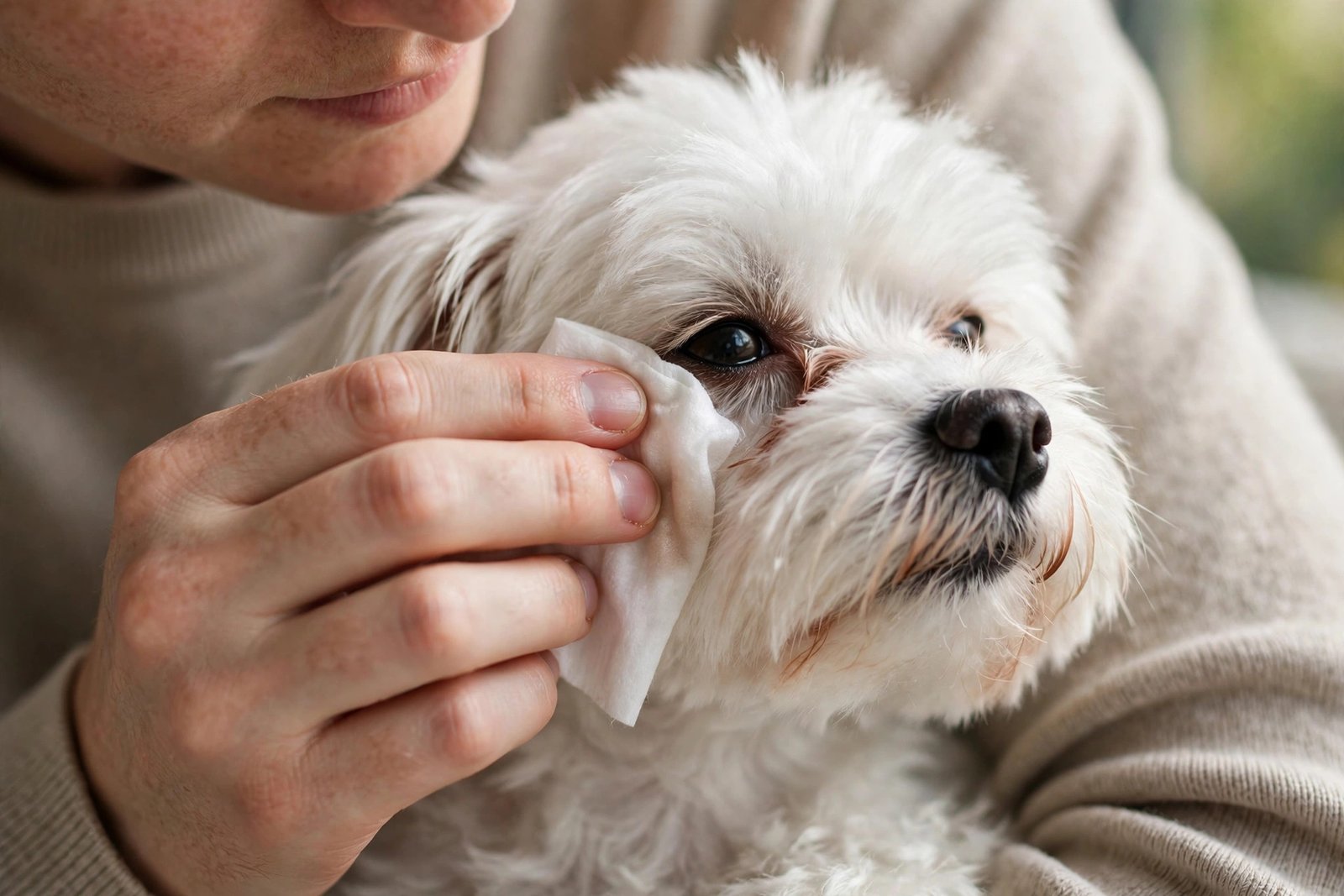
Daily wipe-down. Once a day — morning works well — gently wipe the area under each eye with a soft cotton pad dampened with warm water, or a vet-approved eye wipe. Wipe outward and downward, away from the eye. Use a fresh pad per eye. This single habit prevents most staining from ever setting.
Keep the area dry. After wiping, pat the fur dry with a soft dry cloth. Moisture left sitting on the fur is what feeds both staining and the mild skin irritation that can develop in constantly damp fur. For dogs with heavy tearing, a midday touch-up wipe helps.
Trim the eye-area hair. Carefully trim the hair around the inner corners of the eyes so it does not wick tears across the face. Use blunt-tipped scissors, work in good light, and have someone steady the dog’s head — or leave this to the groomer if you are nervous. One slip near the eye is not worth the savings. Many owners have this done as part of regular grooming; it is a two-minute job for a professional.
Keep the face clean overall. Food debris and general grime around the muzzle migrate toward the eyes. A quick face wipe after meals, especially for messy eaters, reduces the total load.
What you are doing here is the facial equivalent of the routine maintenance in my seasonal paw care guide — small, regular, boring care that prevents problems from developing, rather than dramatic interventions after the fact.
Stain Removal: What Works and What to Avoid
For stains that have already set, gentle and gradual beats aggressive:
What works: consistent daily wiping (existing stains fade over weeks as stained hair grows out and is replaced), vet-approved tear stain wipes and solutions, and keeping the area dry. Patience is the active ingredient — you cannot scrub out oxidation, but you can stop new staining while old stained hair sheds naturally.
Cornstarch paste (use cautiously). A paste of cornstarch and water, applied to the stained fur (never near the eye itself), left to dry, then brushed out, can lighten staining mildly. It is a cosmetic trick, not a treatment. Keep it strictly on the fur below the eye, and skip it if the skin underneath looks irritated.
What to avoid: hydrogen peroxide near the eyes (irritating and potentially damaging), bleach or whitening products (obviously dangerous near eyes), makeup removers and human facial products (wrong pH, fragrances, irritants), and any oral “tear stain supplement” containing antibiotics — some products historically contained low-dose antibiotics, which is not something to give a dog without veterinary supervision for a cosmetic issue. If a product promises overnight stain removal, read its ingredients with deep suspicion.
The antibiotic question. Occasionally vets prescribe short courses of specific antibiotics for severe staining, because they reduce porphyrin-producing bacteria. This is a veterinary decision for genuine cases, not a DIY supplement purchase. Do not put your dog on antibiotics for cosmetic staining without a vet’s direction.
When Tear Stains Mean “See the Vet”
Most tear staining is a cosmetic maintenance issue. These signs shift it into medical territory:
Sudden change. A dog that never stained before and suddenly does — especially on one side only — may have a blocked duct, a scratched cornea, or something lodged in the eye.
Colored discharge. Clear watery tearing is one thing; yellow, green, or bloody discharge is another. That is infection or injury until proven otherwise.
Squinting, pawing, or light sensitivity. Pain signs. Eyes are not a “wait and see” organ — discomfort warrants prompt attention.
Swelling, redness, or odor. Inflammation around the eye or a bad smell from the stained area suggests infection, possibly in the skin folds kept damp by constant tearing.
Staining plus other symptoms. Tearing combined with sneezing, coughing, or skin issues points toward allergies or systemic causes worth working up properly.
The threshold is the same one I describe in my first vet visit guide: when in doubt, the visit is cheap insurance. Eyes in particular reward early attention — most eye problems are simple when caught early and complicated when ignored.
Frequently Asked Questions
Are tear stains painful for dogs?
The stains themselves are not painful — they are just pigment on fur. But the underlying causes sometimes are (eye irritation, infection), and constantly damp skin under heavy staining can get sore. If the dog seems bothered by the eye area, that is about the cause, not the stain.
Will tear stains go away on their own?
Existing stains fade gradually as stained hair grows out and sheds — usually over several weeks — provided new staining is prevented with daily cleaning. Without the cleaning routine, they persist indefinitely. Puppy teething-related staining often improves on its own once adult teeth are in.
Does distilled water really help tear stains?
Many owners report improvement, and the theory (fewer minerals, less porphyrin excretion) is plausible, but rigorous evidence is thin. It is harmless to try — filtered or distilled water has no downside. Just do not expect it to fix staining caused by anatomy or medical issues.
Are tear stain removers safe?
Vet-approved wipes and solutions used as directed are generally safe. Be skeptical of products promising dramatic overnight results, and avoid anything containing undeclared antibiotics or harsh chemicals. When in doubt, plain warm water on a cotton pad plus consistency outperforms most products.
Why does only one eye stain?
One-sided staining that is new deserves attention — it can indicate a blocked tear duct, an eyelash problem, or a minor injury on that side. Long-standing mild one-sided staining in a breed prone to it is less concerning, but a sudden change on one side is worth a vet check.
Can diet change fix tear stains?
Sometimes partially. Dogs staining heavily on lower-quality food occasionally improve on a better diet, possibly because of fewer additives and better overall health. But diet will not fix structural causes (breed anatomy, blocked ducts). Treat food as one lever among several, not a cure.
[…] near where you do grooming so the routine stays easy. A visual of the kit is helpful, and our guide to tear stains in dogs covers the eye-area products that pair well with wrinkle […]