
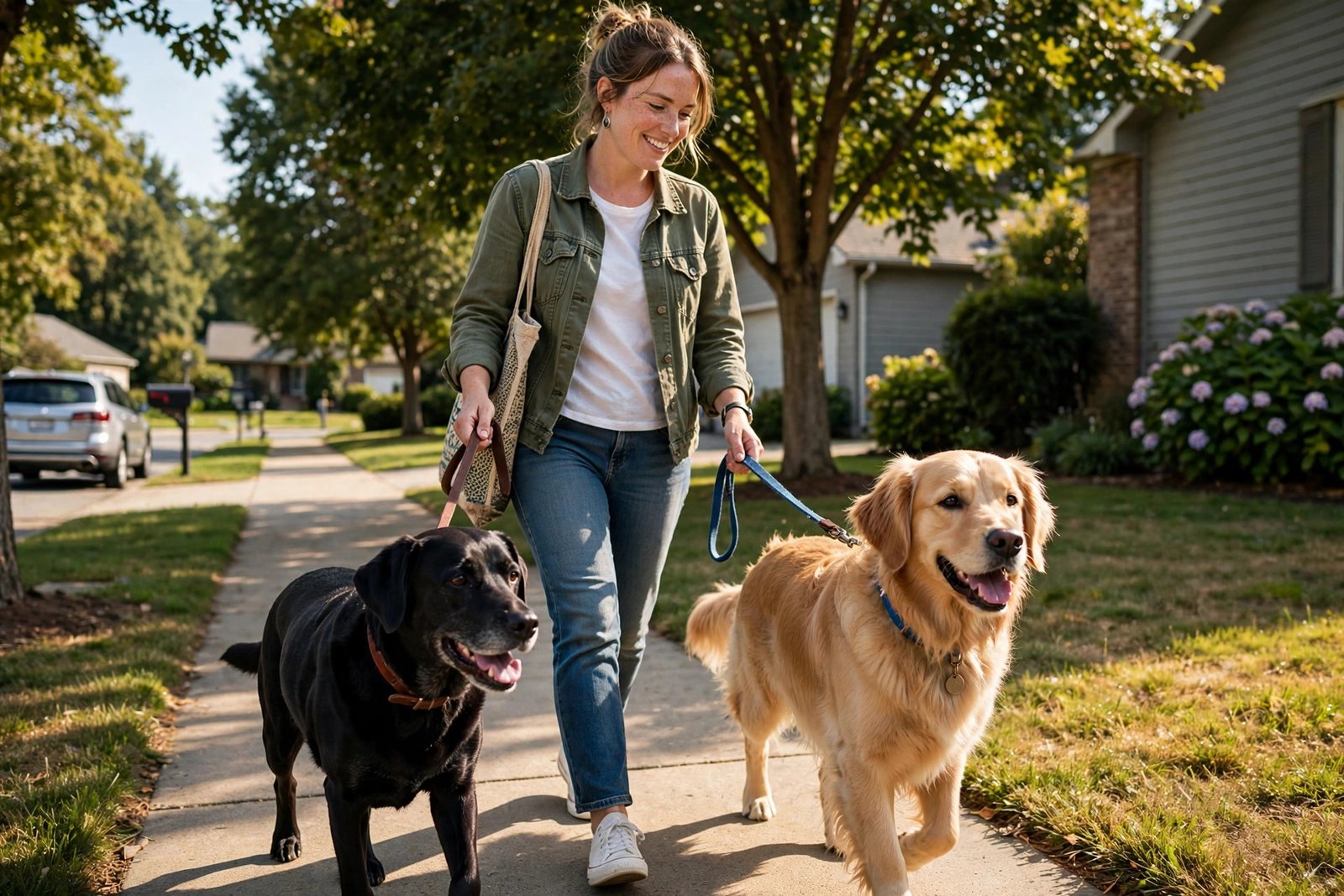

How to Walk Two Dogs at Once (Without the Tangles)
Walking one dog can be a peaceful part of the day. Walking two dogs can feel like trying to untie a knot while the knot keeps moving. If you’ve ever come home from a two-dog walk more stressed than when you left, you’re not alone — nearly every multi-dog household goes through an adjustment period before walks become enjoyable for everyone.
Walking two dogs at once is a skill, and it gets easier with the right setup and a little practice. You don’t need unusually obedient dogs — just gear that makes sense, a handling technique that keeps leashes from crossing, and a realistic plan for the first few outings.
Quick Tips
- Master each dog solo first — a dog that pulls alone will pull twice as hard in a pair.
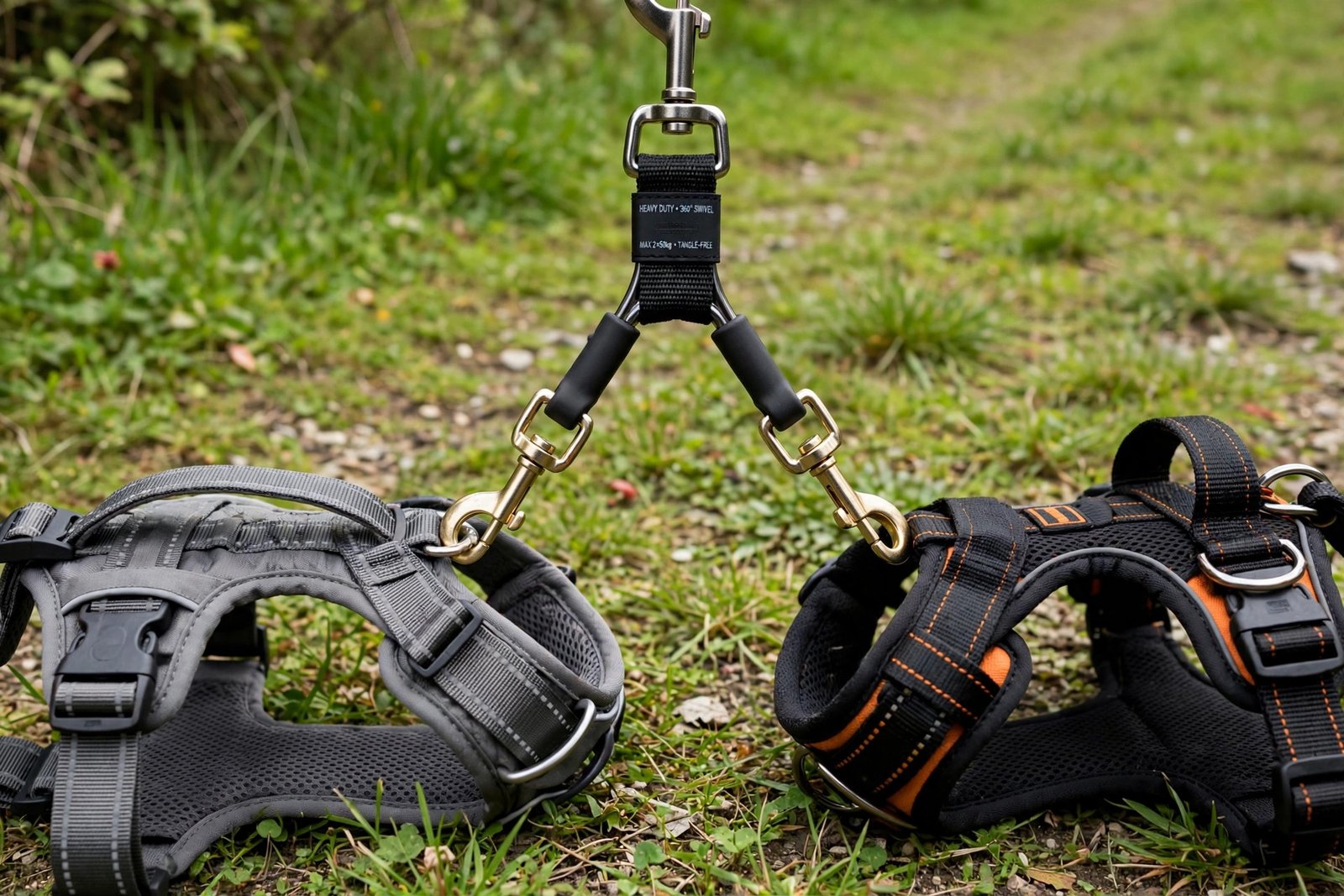
- Use two separate leashes rather than a coupler while you’re learning; it gives you independent control of each dog.
- Keep the stronger or faster dog on the outside hand and the calmer dog closer to your body.
- Start with short, boring routes — the first goal is calm walking, not distance.
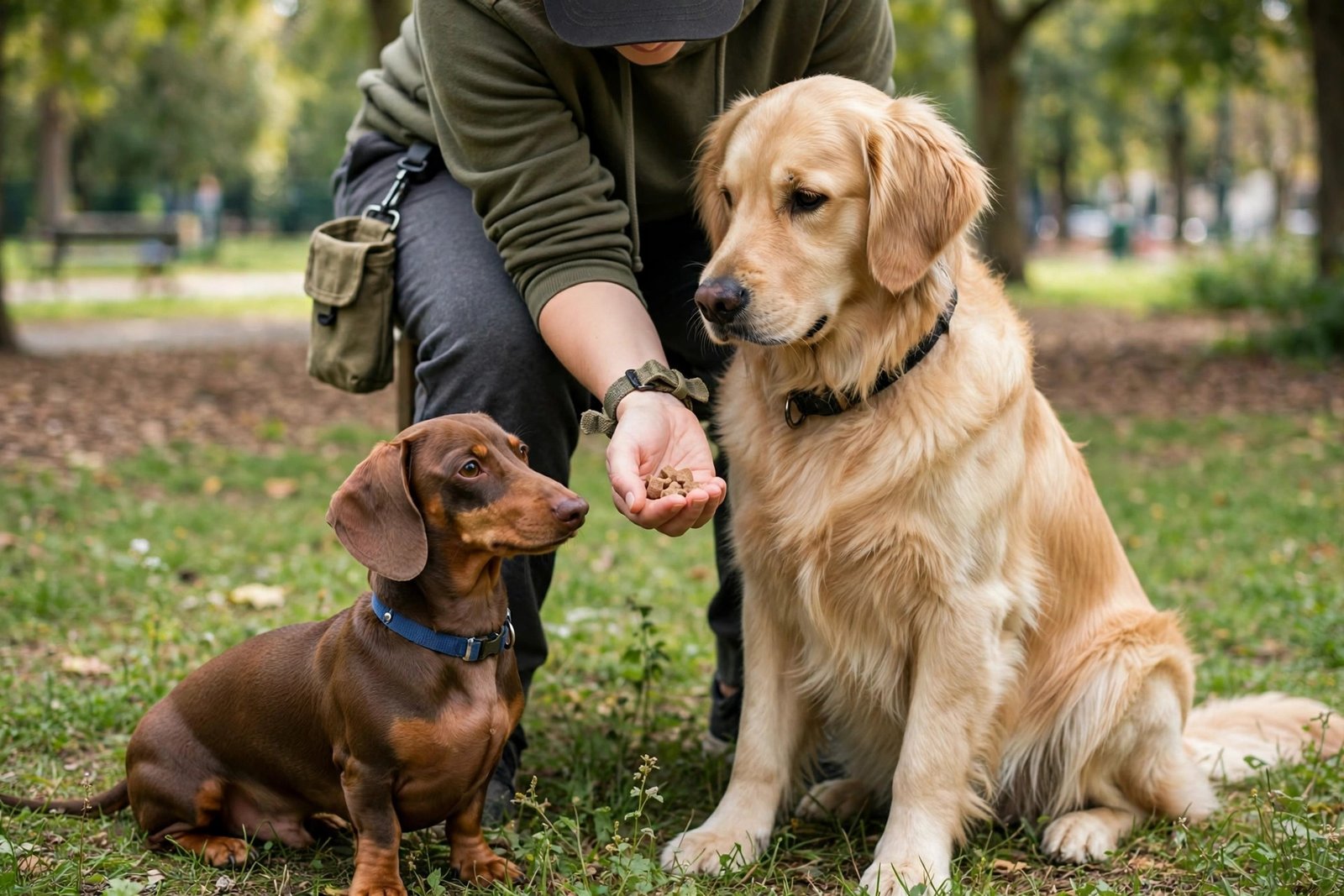
- Carry treats and reward both dogs often in the early weeks for staying in position.
- If things go sideways, shorten both leashes, pause, and reset rather than wrestling your way through it.
Step One: Make Sure Each Dog Walks Well Alone
This is the step people are most tempted to skip, and it’s the one that matters most. Walking two dogs together works only when each dog already knows the basics of loose-leash walking on their own. If one of your dogs lunges at squirrels when solo, imagine what happens when a second dog adds momentum and excitement to that lunge.
Spend a week or two walking each dog separately and polishing the fundamentals: walking without constant leash tension, checking in with you, and slowing when asked. You’re not aiming for perfection — just a manageable baseline. If one dog is newer to the household, give them extra solo walks first. For a refresher, our guide on how to leash train a puppy covers core techniques that work for dogs of any age.
Choosing the Right Gear
You don’t need fancy equipment, but a couple of smart choices make tandem walking much easier.
Two leashes vs. a coupler
A coupler (a short strap that fans one leash handle into two clips) is compact and works well once your dogs walk at the same pace. But for beginners, two separate leashes are better: when one dog lunges, you can shorten just that leash while the other dog keeps walking calmly. Once both dogs are reliable together, you can try a coupler if you’d like a free hand.
Leash length and type
Standard 4-to-6-foot flat leashes are the best choice for walking two dogs. Avoid retractable leashes entirely for tandem walking — the constant tension and unpredictable length make tangles almost guaranteed, and you lose the precise control you need when two dogs veer in different directions at once.
Harnesses over collars
A well-fitted harness (front-clip or back-clip) gives you safer, more comfortable control of each dog. When two dogs cross paths, harnesses keep the pulling forces on the body rather than the neck, which matters a lot when you’re managing double the pulling power. Make sure each harness fits snugly — two fingers’ width between harness and body is the usual guideline — because a loose harness twists when dogs change direction suddenly.
The Hand Position That Prevents Most Tangles
Tangles happen when the two leashes cross each other, which usually happens when the two dogs cross in front of you or when you let both leashes drape loosely in the same hand. The fix is surprisingly simple: keep one dog on each side.
Assign each dog a side — say, the older or calmer dog on your left, the younger or more excitable one on your right — and stick with it. Dogs are creatures of habit, and once each dog learns “my place is on this side,” they’ll stop trying to swap positions, which is what causes most of the criss-crossing.
Hold each leash in the hand on that dog’s side: left dog, left hand. Keep your hands slightly separated. When a dog drifts toward the other side, gently guide them back — once each dog learns “my place is on this side,” most criss-crossing stops.
If the dogs do cross and the leashes tangle, don’t panic and don’t yank. Stop walking, ask both dogs to sit if they’ll listen, and simply step over or around the leash twist to unwind it. It takes ten seconds and beats fighting a moving tangle.
What the First Few Walks Should Look Like
Set yourself up for success by making the first several tandem walks deliberately easy. Shorter is better — fifteen to twenty minutes is plenty at the start. Choose a quiet, familiar route with few distractions: your own street or a calm path you know well, not the busy park where every dog in the neighborhood gathers.
Walk at a pace that works for the slower dog. If one dog naturally ambles and the other wants to sprint, the faster dog will spend the whole walk frustrated, pulling, and getting tangled. A comfortable middle pace, with frequent treat rewards for both dogs when they walk in position, teaches them that walking together calmly pays off.
Bring high-value treats and reward generously in the first couple of weeks. The goal is to build an association: walking next to you, in position, while another dog is right there, earns good things. Treat both dogs — rewarding only one creates resentment and jostling for position. If you’re working with a younger dog, the reward techniques in our leash training guide transfer directly to tandem walking.
Handling Different Speeds and Sizes
Two dogs rarely walk at exactly the same pace, and that’s okay — you just need a system for the mismatch.
When one dog is much faster, try letting the faster dog take the outside position (away from curbs and traffic) with a slightly shorter leash, which naturally slows them down. Give the slower dog the inside position with a little more slack so they don’t feel rushed. Some owners also find that a brief jog interval satisfies the speedy dog, after which both dogs settle into a calmer rhythm.
With a big size difference, put the bigger dog on the side away from traffic with a slightly shorter leash, and give the smaller dog the inside with more freedom. Watch that the big dog doesn’t accidentally body-check the little one when changing direction; a quick verbal cue before turns helps both dogs anticipate the move.
If the pace mismatch is extreme and one dog is clearly miserable, there’s no shame in continuing to walk them separately. Not every pair is a good tandem-walking pair.
Dealing with Lunging, Pulling, and Distractions
Two dogs amplifying each other’s excitement is the hardest part of tandem walking. The moment you feel one dog tense up, shorten both leashes calmly and increase the distance from the distraction — cross the street or turn around. Don’t wait until both dogs are already lunging. Early management beats late correction every time.
For a dog that pulls relentlessly in the pair but walks fine alone, the issue is often pure excitement rather than a training failure. Extra exercise before the walk — a quick game of fetch in the yard — can take the edge off. A tired dog is a calmer walking partner.
Training Commands That Make Tandem Walks Easier
A few simple cues go a long way when you’re managing two dogs at once:
- “This way” or a turn cue: teaches both dogs to follow your direction changes without leash tangles at every corner.
- “Wait” or “stay”: useful at curbs, crossings, and when you need to untangle leashes or pick up after one dog.
- “Leave it”: essential when one dog fixates on something and you need both dogs to keep moving.
- “Heel” or a position cue: brings a wandering dog back to their side without a leash tug-of-war.
Teach each cue to each dog individually first, then practice with both dogs together. Expect the pair practice to be messier — that’s normal. Keep sessions short and end on a good note.
Common Mistakes to Avoid
Wrapping leashes around your hands. It’s tempting when you’re managing two leashes, but if a dog lunges suddenly, a wrapped leash can injure your hand or drag you. Use a relaxed grip with the leash looped once over your thumb.
Walking both dogs before they’re ready. The number one cause of miserable tandem walks is starting before each dog walks well alone. A week of solo practice saves a month of frustration.
Letting the dogs greet every dog they see. On-leash greetings with two dogs are chaotic at best. It’s fine to allow the occasional controlled greeting, but make most walks about walking. (See how to introduce dogs properly for the right way to handle the greetings you do allow.)
Uneven attention. It’s easy to focus on the “problem” dog and ignore the good one. Both dogs need your attention and treats — noticing good behavior in both keeps the walk positive.
Building the Habit Over Time
The first week of tandem walking is usually the roughest — the dogs are excited, you’re figuring out the hand positions, and everything feels clumsy. Most owners find that by the second or third week of consistent practice, the dogs settle into their sides and the walks start feeling routine. Gradually increase the challenge with longer walks and busier routes, and celebrate the wins: the first tangle-free walk, the first calm pass of another dog. Tandem walking feels impossible until suddenly it isn’t.
Frequently Asked Questions
Is it better to use one leash with a coupler or two separate leashes?
Two separate leashes are better for beginners because they give you independent control of each dog. A coupler is more convenient once both dogs walk calmly together, since it frees up a hand. Start with two leashes and switch later if you want to.
How do I stop the leashes from tangling?
Keep one dog on each side of you and stick with those positions every walk. Hold each leash in the hand on that dog’s side, keep your hands slightly separated, and guide dogs back to their side when they drift. If they do tangle, stop, have both dogs sit, and step around the twist to unwind it.
What if one dog is much stronger than the other?
Put the stronger dog on your outside hand with a slightly shorter leash, and give the calmer dog the inside position with a bit more slack. A well-fitted harness on the stronger dog also helps you manage pulling more comfortably. If the strength gap makes walks unsafe, keep walking them separately until training improves.
Can I walk two dogs if one is reactive?
It depends on the severity. A mildly reactive dog may do okay with careful trigger management, but a strongly reactive dog usually needs solo training walks first. Adding a second dog adds arousal and makes counter-conditioning harder. When in doubt, walk them separately and consider asking your vet or a trainer for guidance.
How long should tandem walks be at first?
Fifteen to twenty minutes is plenty for the first week or two. The goal early on is calm, successful practice, not distance. Gradually extend the walks as both dogs get comfortable with the routine.