


What to Do If Your Pet Gets Lost: A Calm Action Plan
Your heart drops. The gate was ajar, the leash slipped, the front door opened at the wrong moment — and now your pet is gone. Every pet owner’s nightmare, and it happens far more often than most people think. The minutes after you realize your pet is missing are scary, but they are also the most important. What you do right now dramatically affects your chances of a happy reunion.
This is your calm, step-by-step action plan. Read it now if you can, before you ever need it — and if you are reading this with a missing pet, start at step one and work through it. Panic wastes time; a plan gets your pet home.
Quick Tips
- Act immediately — the first hours matter most. Search nearby first: most lost pets are found close to home.
- For lost dogs: check the immediate area on foot, then expand outward; leave familiar scents at home.
- For lost indoor cats: search hiding spots within a few houses — they rarely travel far.
- Call local shelters, vets, and animal control within the first day, and visit shelters in person.
- Post clear online listings with a recent photo, location lost, date, and your contact number.
- Prevention is everything: ID tags, updated microchip registration, and secure doors, gates, and leashes.
Step 1: Search Immediately (First 30–60 Minutes)
Do not wait to see if they come back on their own. Start searching right away, and start close — most lost pets, especially cats and small dogs, are found surprisingly near home.
For dogs: Walk or slowly drive the immediate neighborhood, calling their name in a calm, upbeat voice (not frantic — a panicked tone can make a scared dog hide). Bring their favorite squeaky toy, a bag of treats that rustles, and their leash. Check places dogs gravitate toward: parks, other dogs’ yards, dumpsters and food smells, water sources. Ask everyone you pass — dog walkers, joggers, delivery drivers — whether they have seen your dog, and in which direction it was heading.
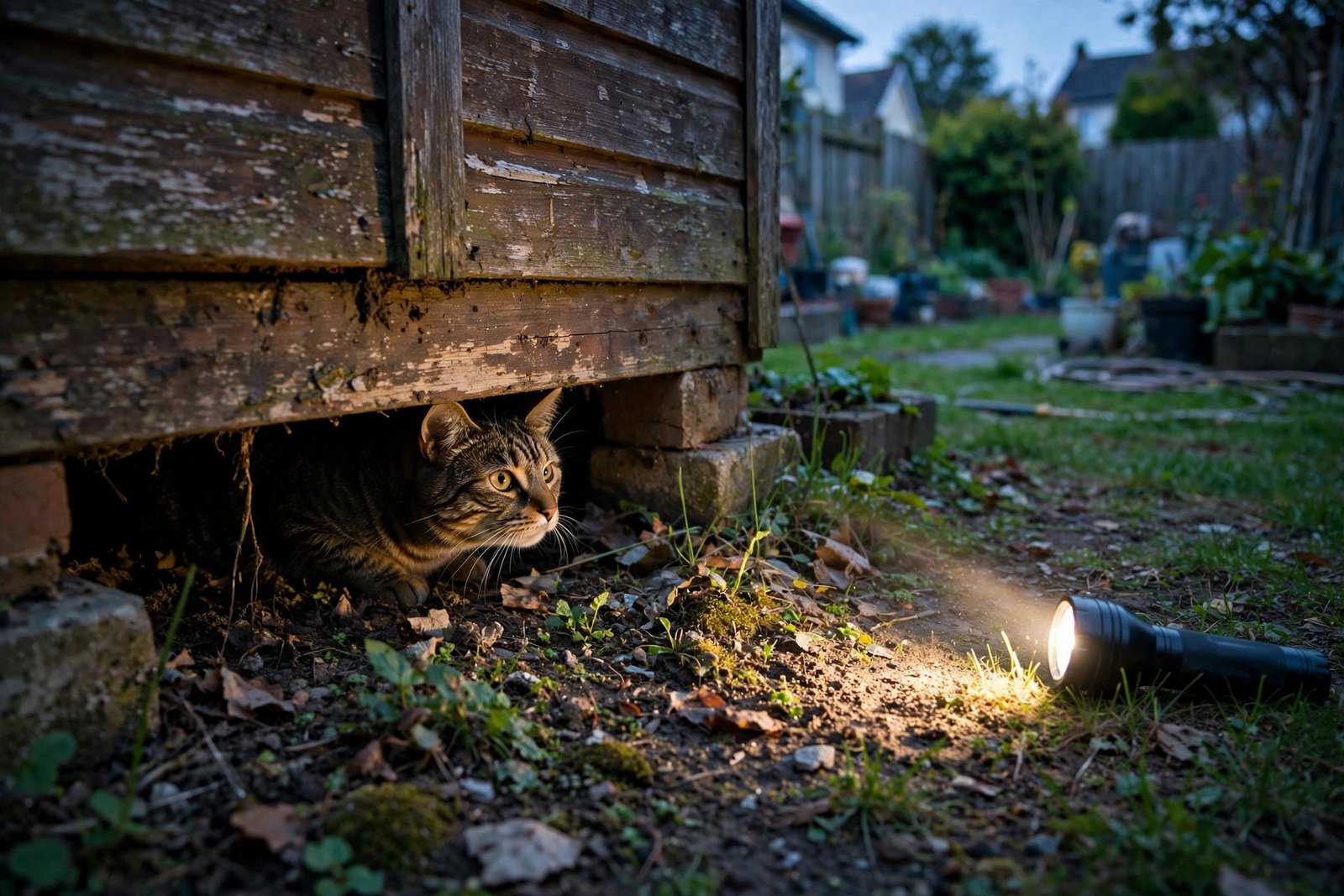
For indoor cats: Search as if your cat is hiding, because they almost certainly are. Indoor cats who get outside typically do not run far — they find the nearest good hiding spot and freeze. Check under porches, decks, sheds, bushes, parked cars, and inside garages (ask neighbors to check theirs). Look low and look thoroughly: a terrified cat can squeeze into astonishingly small spaces. Search at dusk and dawn with a flashlight — the light catches their eyes. Bring their favorite food and shake the treat bag, but keep your voice calm.
Leave the way home obvious. Put your pet’s bed, a piece of your worn clothing, and some strong-smelling food (tuna for cats, for example) by your front door or in the yard. Familiar scents can guide a disoriented pet back. If you have a garage, leave it cracked open with bedding inside.
Step 2: Alert the Network (First Few Hours)
Once you have covered the immediate area, widen the net. The more eyes looking, the better.
Call local shelters and animal control. File a lost-pet report with every shelter, humane society, and animal control agency in your area. Give a clear description: breed or appearance, size, color, age, collar, and any distinguishing marks. Then go visit the shelters in person — descriptions get misinterpreted over the phone, and only you will reliably recognize your pet. Check back every couple of days; shelter populations turn over fast.
Call nearby vet clinics. If someone finds your pet injured, a vet clinic is a likely first stop. This is also where your pet’s microchip pays off — a quick scan identifies them instantly, which is why keeping your chip registration current matters so much.
Post online. Lost-and-found pet groups on social media are remarkably effective. Post a clear, recent photo, the exact location and date lost, your pet’s name, and your phone number. Include “DO NOT CHASE” if your pet is skittish — well-meaning strangers chasing a scared animal often drives it further away. Also check the “found” listings; someone may have already posted your pet.
Make flyers. A simple, bold flyer still works: big photo, “LOST,” key details, your number. Post at vet offices, pet stores, grocery store boards, parks, and intersections near where your pet went missing. Offer a reward if you can — it motivates people to actually look rather than just glance.
Step 3: Keep Up the Search (Days 1–7)
Most reunions happen within the first few days, but do not lose heart if yours takes longer. Pets have been found weeks later. Keep the effort steady:
Refresh your online posts every couple of days so they stay visible, and expand to a wider radius.
Revisit shelters in person — do not rely on phone descriptions alone, and check neighboring towns’ shelters too.
Search at quiet times. Early morning and late evening are when lost pets are most likely to be moving. A scared cat may only emerge when the neighborhood goes quiet.
Talk to the regulars. Mail carriers, dog walkers, joggers, and kids playing outside cover a lot of ground daily. Give them flyers.
Consider a humane trap for cats. If you have sightings of your cat but cannot catch them, many shelters and rescue groups lend humane traps. Your vet or local shelter can advise on safe trapping.
Stay scam-aware. Sadly, lost-pet listings attract scammers who claim to have your pet and demand money or codes. Never send money or verification codes to someone you have not met. Ask for a photo of the found pet before engaging further, and meet in a public place.
Why Prevention Matters More Than Anything
The best lost-pet plan is the one you never need. A few boring precautions make an enormous difference:
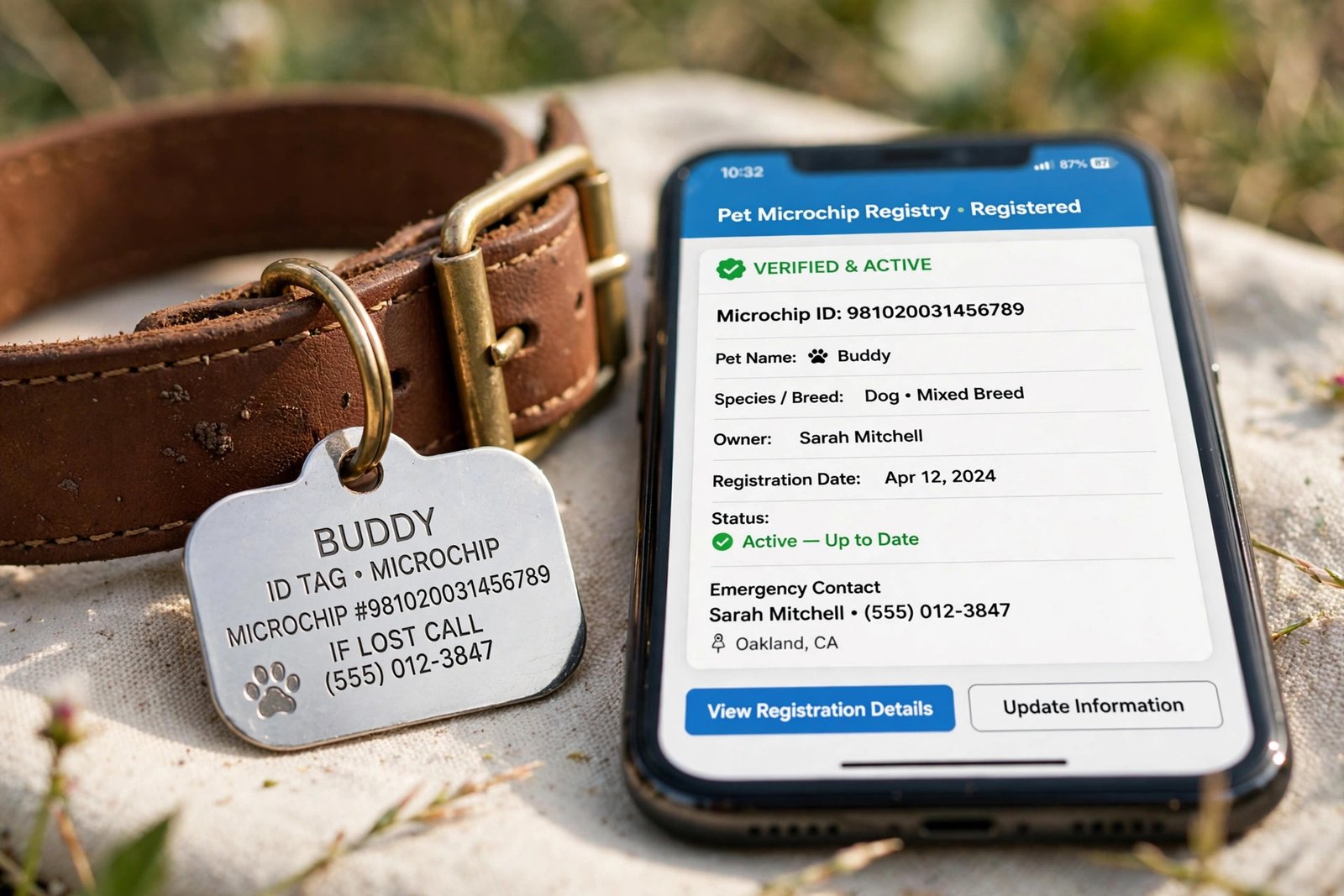
ID tags, always. A collar with a current phone number is the fastest ticket home — faster than a microchip, because no scanner is needed. Check that the tag is legible and the number is current. For guidance on choosing the right setup, see our comparison of collar vs. harness options for everyday wear.
Microchip and keep it registered. Collars come off; microchips do not. But a chip is only as good as its registration — if you moved or changed numbers and never updated it, the chip leads to a dead end. Log in to your chip registry today and confirm your details. It takes five minutes.
Consider a GPS tracker. For escape artists, hikers, or anyone who wants real-time peace of mind, GPS trackers have become practical and affordable. Our breakdown of whether pet GPS trackers are worth it covers battery life, subscription costs, and which situations they suit best.
Secure the exits. Most escapes happen through doors, gates, and fences. Check your fence for gaps and dig spots, keep gates latched, and build a “door routine” — pet secured in another room before the front door opens for guests, deliveries, or kids running in and out.
Leash skills. A dog who pulls hard on leash is a dog whose owner might lose their grip at the worst moment. Solid leash manners are a safety issue, not just a manners issue — which is one more reason good walking equipment matters.
Special Cases: New Pets, Shy Pets, and Cats New to Outdoors
Recently adopted pets are at higher risk of bolting — everything is unfamiliar and frightening. Keep new pets on a secure leash or in a safe room for the first weeks, and be extra careful with doors. Many rescues recommend a two-week “decompression” period with limited new experiences.
Shy or fearful pets will hide rather than approach strangers, which means your search strategy should focus on quiet, thorough ground searches and humane traps rather than expecting someone to catch them and call you.
Indoor/outdoor cats who vanish sometimes get trapped in sheds, garages, or crawl spaces. Ask neighbors to check outbuildings, and listen at quiet times for meowing. A cat who is normally punctual about meals and suddenly is not warrants prompt searching.
When Your Pet Comes Home
First: celebrate. Then take care of business. Check your pet for injuries, ticks, and burrs. Offer water and a small meal — do not let a starving pet gorge, as too much food too fast can cause stomach upset. A vet checkup within a day or two is wise, especially if they were gone long or seem off.
Then do the debrief: how did they get out? Fix it. Update anything the experience exposed — a chewed leash, a gap in the fence, an unregistered microchip. And update your lost-pet posts and tell the shelters the good news; people who helped search will want to know.
The Bottom Line
Losing a pet is terrifying, but a calm, methodical response gives you the best possible odds. Search immediately and search close. Alert shelters, vets, and your online community within hours. Keep at it for days, not hours. And when your pet is home safe, invest in the prevention — tags, chip, secure exits — that makes a repeat far less likely. The owners who get their pets back fastest are almost always the ones who acted fastest. Be one of them.
Frequently Asked Questions
What is the first thing to do when your pet goes missing?
Search the immediate area right away — most lost pets are found close to home. For dogs, walk the neighborhood calling calmly; for indoor cats, check hiding spots like under porches, sheds, and bushes. At the same time, leave familiar scents (bedding, your worn clothing, strong-smelling food) by your door to help guide them back.
How far do lost cats usually go?
Lost indoor cats typically stay very close — often within a few houses — hiding in the nearest sheltered spot. They tend to freeze rather than run. This is why thorough, close-range searching (under decks, in garages, beneath bushes) at quiet times of day is more effective than searching far afield.
Should I put my cat’s litter box outside?
This is debated. Some owners report it helps; others note it can attract territorial neighborhood cats or predators that may keep your cat away. Familiar bedding or your worn clothing provides scent without the same risk, and most experts now recommend those instead.
How long should I keep searching for a lost pet?
Do not give up after a few days — pets are regularly reunited after a week or more. Keep online posts refreshed, revisit shelters in person every few days, and keep flyers up. Many shelters hold strays for a set period before adoption, so ongoing checking matters.
Are microchips enough, or do I need ID tags too?
Use both. A visible ID tag gets your pet home fastest because any finder can read it immediately, no scanner needed. A microchip is the backup that works even if the collar comes off. And neither helps if the information is outdated — verify your tag and chip registration details regularly.
What should I do if someone claims to have found my pet?
Ask for a photo first to confirm it is your pet. Do not send money, gift cards, or verification codes — scammers target lost-pet listings. Arrange to meet in a public place, ideally with someone accompanying you, and bring proof of ownership such as vet records or additional photos.