

Dog Park Etiquette: A Beginner’s Guide
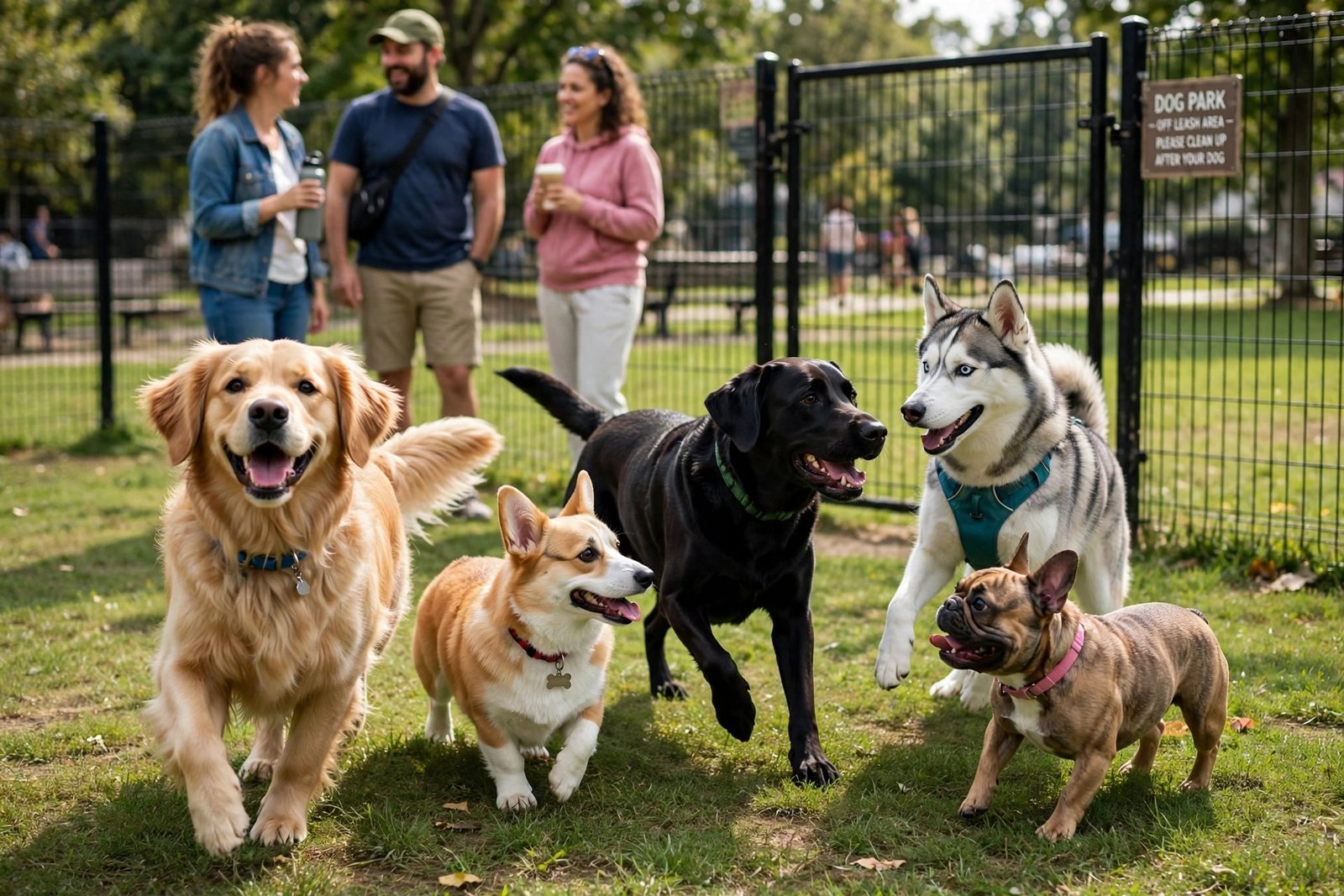
The dog park can be one of the best parts of dog ownership — a place where your dog runs, plays, and socializes while you get some fresh air and maybe chat with fellow dog people. It can also be stressful, chaotic, and occasionally the site of conflicts that leave everyone rattled. The difference usually comes down to etiquette.
Most dog park problems aren’t caused by “bad dogs.” They’re caused by owners who don’t know the unwritten rules — or who know them and ignore them. The good news: the rules are simple, and following them makes the park better for your dog, for other dogs, and for you. Whether this is your first visit or your fiftieth, this guide covers what to do before you go, how to behave while you’re there, and how to handle the situations that trip beginners up.
Quick Tips
- Visit during off-peak hours the first few times so your dog can explore without a crowd.
- Always use the double-gated entry area — never open the outer gate while the inner gate is open.
- Keep your eyes on your dog, not your phone; supervision is the core of dog park etiquette.
- Pick up after your dog immediately, every time — no exceptions.
- Leave toys and treats at home; they cause guarding and conflicts between dogs.
- If your dog is overwhelmed, bullying, or being bullied, leave early — there’s no shame in it.
Before You Go: Is Your Dog Ready for the Dog Park?
Not every dog is a dog park dog, and that’s okay. Dog parks suit social, playful dogs that enjoy the company of other dogs. They don’t suit every temperament, and forcing a dog that hates the park to keep going helps nobody.
Before your first visit, honestly assess your dog. Does your dog generally enjoy meeting other dogs, or do they get tense, fearful, or aggressive? A dog that plays well one-on-one with familiar dogs may still find a chaotic park overwhelming. Dogs that resource-guard (toys, food, even their owner), dogs with a history of fights, and dogs that are fearful of strangers often do better with alternatives like playdates with known dogs, which you can arrange more carefully.
Age and health matter too. Puppies should be fully vaccinated before visiting — check with your vet about timing. Very young puppies can be overwhelmed by a pack of adult dogs; smaller, controlled settings are usually better at first. Our guide on how to socialize a puppy walks through safer early options.
And if your female dog is in heat, skip the park entirely until the cycle is over. It creates a magnet for intact males and a recipe for conflict — this one is non-negotiable.
Timing Your First Visits
For your first few visits, go at off-peak times: mid-morning on a weekday or early afternoon. Fewer dogs means less chaos, so your dog can explore and meet one or two dogs at a time instead of being mobbed by ten.
Before entering, observe from outside the fence. Is the play rough but loose and bouncy (good), or tense with hard staring and owners shouting (bad)? If the vibe feels off, come back another time.
Entering the Park the Right Way
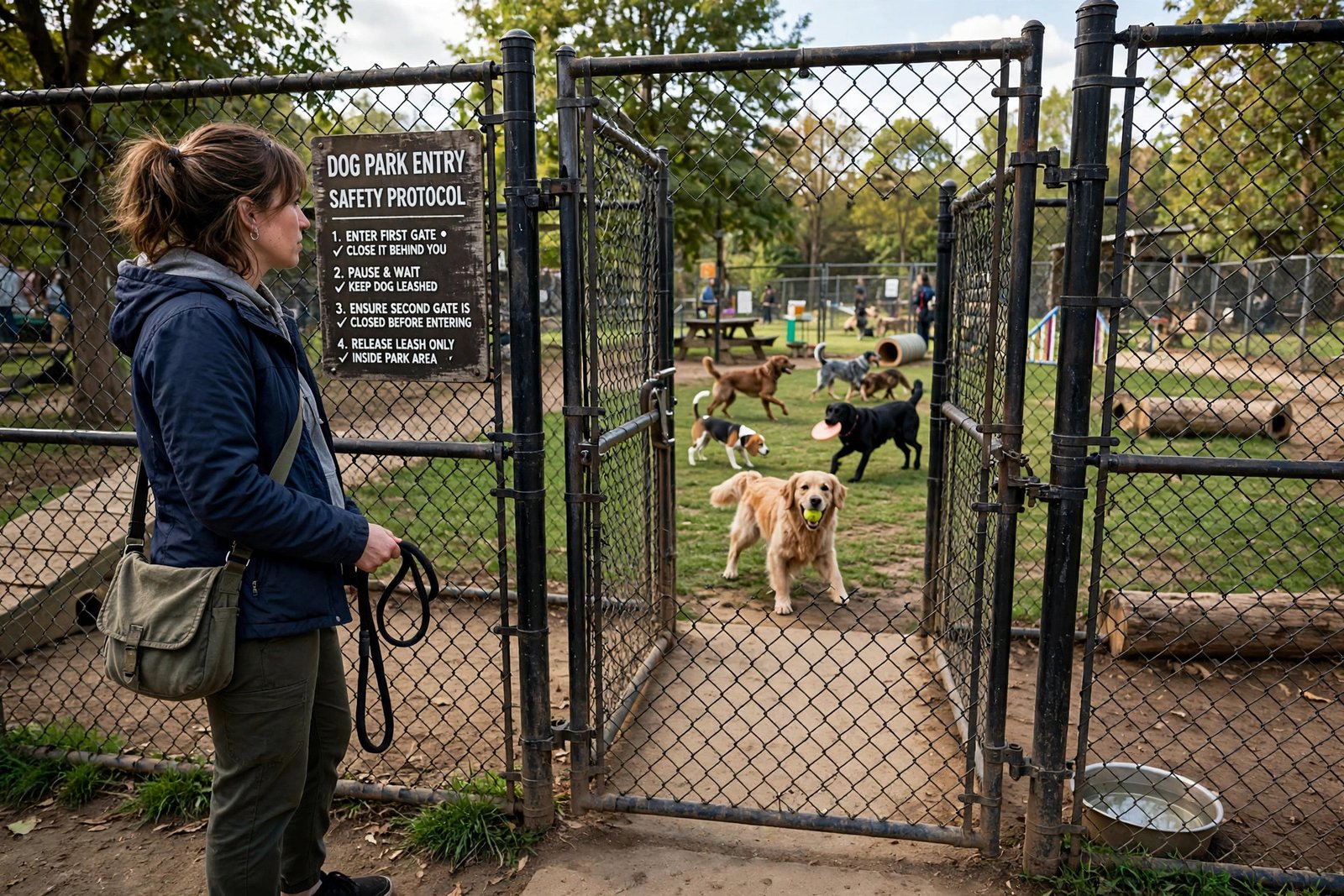
Most dog parks have a double-gated entry: an outer gate, a small holding area, then an inner gate into the park. This airlock system exists so no dog slips out while another comes in. Use it properly every single time: enter the holding area, close the outer gate behind you, unleash your dog, then open the inner gate.
Unleashing in the holding area matters more than people think. A leashed dog entering a group of off-leash dogs is at a real disadvantage — they can’t move freely, they feel restrained, and the tension on the leash can make greetings tense. Letting your dog enter off-leash (once the outer gate is closed) gives them the freedom to greet and move naturally.
Don’t linger in the entry area. New arrivals draw a crowd — every dog in the park will come to investigate the newcomer. Move into the park promptly so the greeting scrum disperses and your dog can settle in. Standing frozen in the entry while ten dogs circle yours is stressful for everyone.
The Golden Rule: Watch Your Dog
If there’s one rule that covers 90% of dog park etiquette, it’s this: supervise your dog actively. That means eyes on your dog, not on your phone. Dog park regulars can spot the phone-starers from across the field — they’re the ones whose dogs are starting trouble or getting bullied while the owner scrolls obliviously.
Active supervision doesn’t mean hovering anxiously. It means knowing where your dog is, who they’re playing with, and how the energy is shifting. Play that was fun five minutes ago can tip into something tenser — the owner who’s watching catches it early, before it becomes a problem.
Stay within a reasonable distance of your dog. You don’t need to shadow them every second, but you should be able to reach them within a few seconds if you need to intervene. The far corner of a large park, out of sight behind the hill, is too far.
Reading Play: What’s Normal and What’s Not
Dog play can look alarming to beginners. Growling, mouthing, body-slamming, and chasing are all normal parts of how many dogs play. The key is learning to tell happy-rough play from genuinely tense interaction.
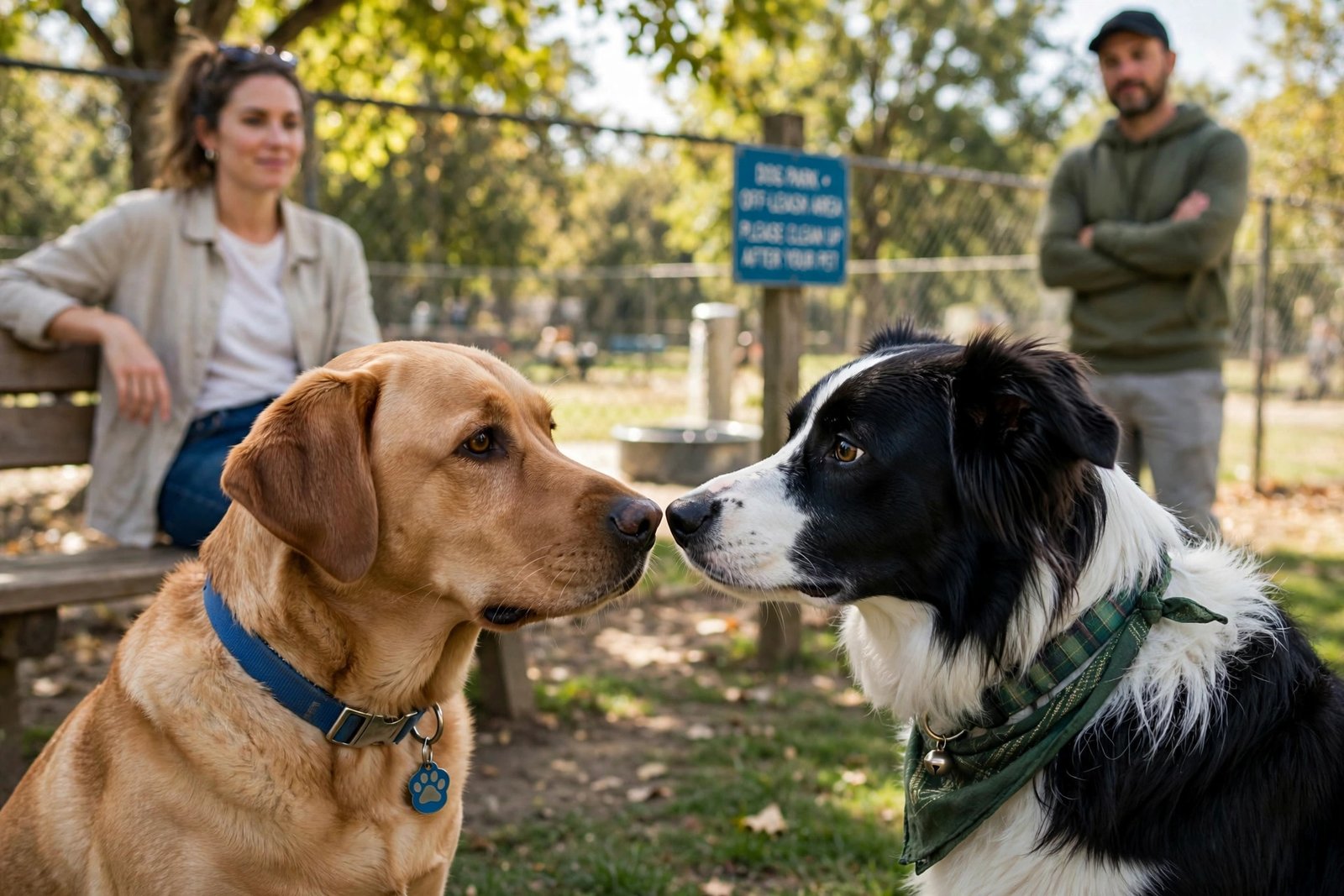
Signs of healthy play: loose, bouncy body language; play bows; taking turns chasing and being chased; voluntary pauses where dogs disengage and re-engage. If both dogs keep choosing to come back for more, they’re having fun.
Signs play is tipping over: one dog trying to disengage while the other won’t let them; stiff, still body posture; hard staring; one dog pinning another repeatedly without role reversal; escalating vocalization that sounds serious rather than playful; a dog hiding behind you or trying to leave.
When in doubt, do a quick consent test: gently hold or call your dog back for a few seconds, then let them go. If both dogs immediately re-engage happily, all is well. If one dog uses the break to move away and doesn’t come back, they were done — help them out by redirecting your dog elsewhere.
What to Bring (and What to Leave at Home)
Bring: poop bags (even if the park provides them — dispensers run out), fresh water and a bowl (communal bowls can spread illness; many owners prefer their own), your leash, and your phone for emergencies (kept in your pocket, not in your hand).
Leave at home: toys and treats. High-value toys trigger guarding and stealing conflicts between dogs. Treats create a swarm — every dog in the park will mob you, and food-related scuffles are common. Do treat-based training outside the park.
Think twice about: small children. This is a debated topic, but many parks discourage or prohibit young kids, and for good reason — running, squealing children trigger chase instincts in some dogs, and a knocked-over toddler in a pack of large dogs is a genuine safety concern. If you bring kids, keep them close, calm, and seated, and be honest about whether your park visits are really working with them along.
Picking Up: The Non-Negotiable
Pick up after your dog. Immediately. Every time. This is the simplest rule in dog park etiquette and the one that generates the most resentment when ignored. Nobody wants their dog rolling in or stepping in someone else’s dog’s mess, and accumulated waste is a health concern for every dog using the park.
Watch your dog — in a big park, it’s easy to miss when they slip off behind a bush. If you didn’t see it happen, do a quick scan of the area periodically. And if you see someone else’s dog’s mess and have a bag handy, picking it up is a small act of park citizenship that regulars notice and appreciate.
Handling Common Tricky Situations
Your dog is bullying another dog. Intervene early and cheerfully — call your dog away, give them a brief time-out on leash, or move to another part of the park. Don’t punish harshly; just manage. If it keeps happening, it’s time to leave. A dog that repeatedly overwhelms others isn’t having a good park day.
Another dog is bullying yours. First, try moving away with your dog — often that’s enough. If the other dog follows persistently and its owner isn’t intervening, it’s okay to speak up politely: “Could you please call your dog?” Most owners respond fine to a direct, friendly request. If the owner is unresponsive or hostile, leave. Your dog’s safety beats your pride every time.
A scuffle breaks out. Don’t reach in with your hands — that’s how people get bitten. Loud noise (a sharp clap, a loud “hey!”) breaks up many scuffles. Afterwards, check both dogs for injuries and exchange information with the other owner if there’s any damage.
Your dog won’t come when called. Don’t chase — it becomes a game. Turn and walk the other way, crouch down excitedly, or produce a high-value reward. Practice recall in low-distraction settings first. For foundational social skills, puppy socialization basics apply to adolescent and adult dogs too.
Knowing When to Leave
Leaving early is not failure — it’s good judgment. Leave when your dog is getting tired, when the energy is turning tense, when your dog is being bullied, or when your dog is doing the bullying. Also leave if you can’t supervise properly. End on a good note when you can — a short, positive visit beats a long one that ends badly.
Alternatives If the Dog Park Isn’t Working
Some dogs simply don’t enjoy dog parks. Good alternatives include playdates with one or two known dogs, sniff walks and hikes, training classes for structured socialization, and well-run daycare. Knowing your dog well enough to choose the right social setting is one of the best things you can do as an owner. If you’re still learning how your dog interacts with unfamiliar dogs, our guide on introducing your dog to other dogs covers the body language basics.
Frequently Asked Questions
How old should my puppy be before going to a dog park?
Most vets recommend waiting until vaccinations are complete, which is often around 16 weeks, but schedules vary — check with your vet. Even then, consider whether your puppy is socially ready; smaller, controlled socialization settings are often better for young puppies than a chaotic park.
Should I bring toys to the dog park?
It’s best not to. Toys commonly trigger guarding, stealing, and conflicts between dogs. If your dog loves fetch, play it in an open field or empty area instead, where there are no other dogs competing for the toy.
What should I do if my dog gets into a fight?
Stay as calm as you can, make loud noise to break it up, and avoid reaching in with your hands. Once separated, check your dog for injuries and exchange contact information with the other owner. If there are puncture wounds or your dog seems off afterward, see your vet. It’s also worth skipping the park for a few days to let everyone decompress.
Can I bring my dog to the park if they’re not spayed/neutered?
Check your park’s rules — many require it. Females in heat should never go to the dog park. Unneutered males can be fine in some parks but may attract extra attention from other males; know your dog and be ready to leave if tensions rise.