


How to Crate Train an Older Dog
“You can’t teach an old dog new tricks” is one of those sayings that sounds wise and is mostly wrong. Older dogs learn new things all the time — including crate training. Whether you’ve adopted an adult rescue who’s never seen a crate or your senior dog needs one for vet-ordered rest, it’s doable. It just takes a slightly different approach than with a puppy.
This guide walks through the whole process: choosing the right crate, introducing it without stress, building up time gradually, and handling the quirks that come with adult and senior dogs. No rushing, no forcing — just a patient method that works.
Quick Tips
- Older dogs can learn crate training — go slower than with a puppy and let the dog set the pace.
- Choose a roomy crate with thick, supportive bedding — comfort matters more for seniors.
- Never use the crate as punishment; it should always predict good things.
- Build duration gradually: seconds first, then minutes, then longer stretches.
- Senior dogs need more frequent potty breaks — plan the schedule around the dog.
- If your dog panics in the crate (drooling, escape attempts), stop and consult a professional.
Why Crate Train an Older Dog?
People usually associate crates with puppies, but there are plenty of reasons an adult or senior dog might need one: a newly adopted dog settling in, post-surgery rest ordered by a vet, travel, or giving a nervous dog a den-like safe space during fireworks or house guests.
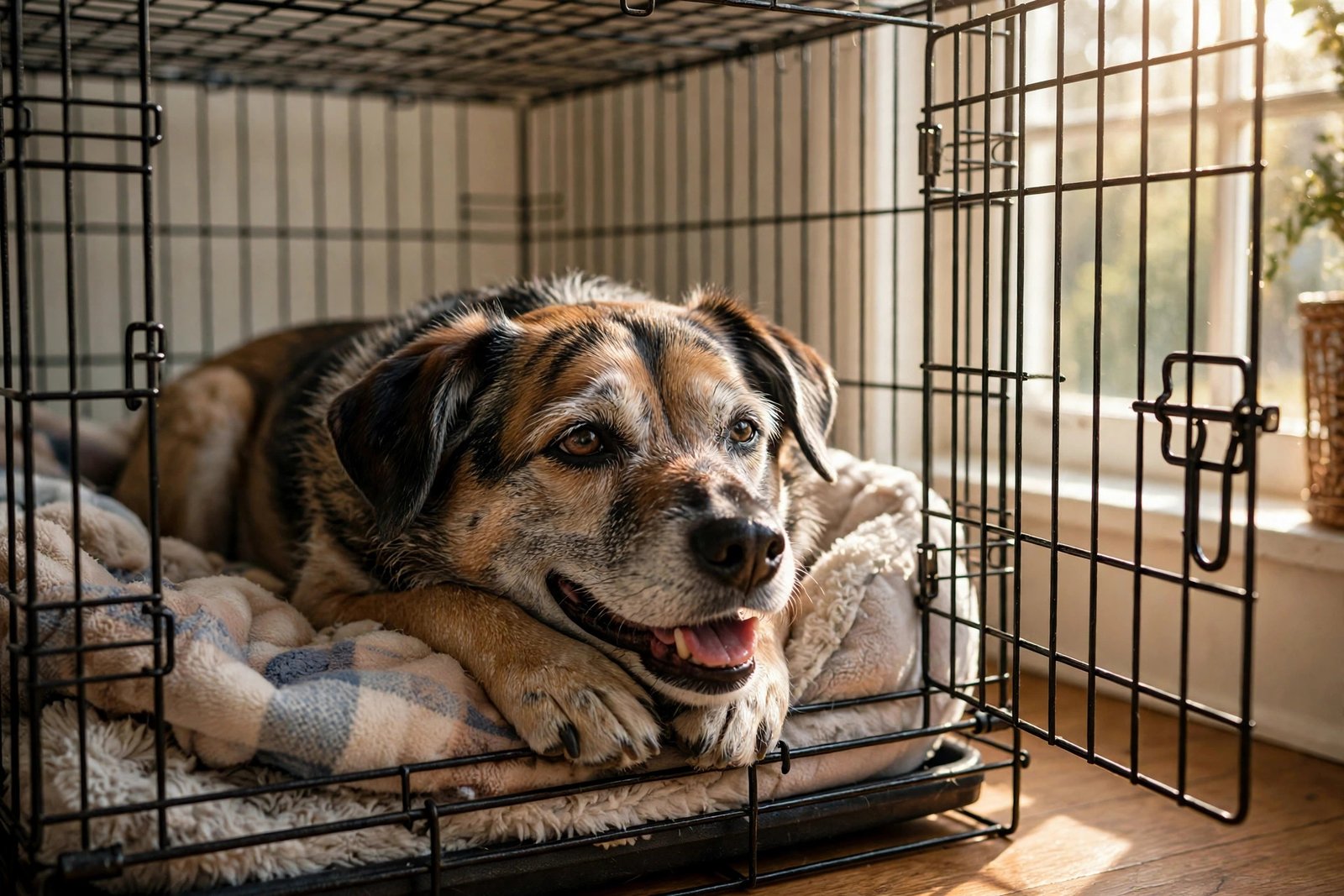
For senior dogs specifically, a crate can become a genuinely comforting retreat. Many older dogs, once they accept the crate, choose to nap in it with the door open. That’s the goal: not a cage the dog tolerates, but a den the dog likes.
One honest note: crate training an older dog often takes longer than with a puppy. Adult dogs come with history — a rescue may have negative associations with confinement, a senior may find it physically uncomfortable at first. None of these are deal-breakers; they just mean a slower timeline.
Choosing the Right Crate
The crate itself matters more for older dogs, because comfort is a bigger factor. Here’s what to look for:
Size. Big enough to stand up, turn around, and lie down stretched out — for seniors, err on the roomy side. An older dog with stiff joints doesn’t want to fold into a tight space. If you’re between sizes, go up.
Type. Wire crates are the most popular: good ventilation, foldable, and the dog can see out — which many anxious dogs prefer. Plastic airline-style crates feel more den-like. Soft-sided crates are a poor choice for a dog who might chew through them.
Bedding. Invest in thick, supportive bedding — orthopedic foam pads made for crates are worth it for older dogs. Make sure it’s washable, because accidents during training are normal.
Location. Put the crate where the family spends time — the living room, not the garage. An older dog settles far faster if they can see and hear their people.
Step 1: Make the Crate the Best Place in the House
Before the dog ever spends a moment inside with the door closed, the crate needs to become associated with wonderful things. Set it up with the door removed or tied open, put the comfy bedding in, and start feeding meals inside the crate. Toss high-value treats in there randomly throughout the day so the dog keeps discovering good surprises.
Don’t lure, push, or coax the dog in — just let the treats do the talking. Most dogs will start wandering in on their own within a day or two. Every voluntary entry builds the positive association.
For a nervous rescue who won’t go near the crate, start smaller: treats near the crate, then at the entrance, then just inside the door. This might take several days. Rushing a fearful dog into a crate is how you create a dog who hates crates permanently.
If you’ve crate trained a puppy before, this phase mirrors puppy crate training — same principles, just a slower pace.
Step 2: Closing the Door (Briefly)
Once your dog is happily going in and out of the open crate — eating meals in there, napping in there voluntarily — you’re ready for the door. The key word is briefly. We’re talking seconds at first, not minutes.
While your dog is inside eating or chewing something good, gently close the door. Treat through the bars. Then open it again before the dog has any reason to fuss — ten seconds, thirty seconds, a minute. Repeat many times, gradually extending the duration.
The most common mistake at this stage is jumping ahead too fast. The dog was fine for two minutes, so you try twenty — and the dog panics. Every panic sets you back. Slow, boring progress beats dramatic leaps every time. If the dog starts whining, go back to a duration where they were comfortable and rebuild from there.

Step 3: Building Duration and Adding Distance
Once the dog is comfortable with the door closed for several minutes while you’re nearby, start building two things: longer durations and your absence.
Duration. Extend crate time gradually — five minutes, ten, twenty, then longer. Vary it: sometimes short, sometimes longer, so the dog can’t predict when it ends.
Distance. Start leaving the room briefly while the dog is crated — first for seconds, then minutes. Practice casual departures: step out, come back, no big hellos or goodbyes.
Overnight. Don’t start here — build up to it. When daytime sessions are solid at an hour or more, try the crate overnight with the crate in your bedroom at first. Being able to hear you helps an anxious dog enormously.
Senior-Specific Considerations
Older dogs bring a few special factors worth planning around.
Potty breaks. Senior dogs often can’t hold it as long. Plan on more frequent breaks — a midday break isn’t optional for many older dogs. If accidents happen, don’t scold; adjust the schedule. If housetraining is going backward in a senior, mention it to your vet.
Joint comfort. For a dog with arthritis, a crate with a low entry beats one the dog has to step up into, and thick orthopedic bedding is the difference between restful and painful.
Medication timing. If your senior takes medication on a schedule, factor crate time around it.
Cognitive changes. Some very senior dogs experience cognitive decline, showing up as anxiety or restlessness in the crate. A dog who was fine for years and suddenly isn’t may be telling you something changed — patience and a vet check are the right responses.
What NOT to Do
A few hard rules, because getting these wrong can undo weeks of work:
- Never use the crate as punishment. The crate must predict good things, always.
- Don’t crate for excessive stretches. A crate is a management tool, not a storage unit. Long hours day after day lead to frustration and stiffness, especially in seniors.
- Don’t force the dog in. Pushing or dragging a dog into a crate teaches them it’s a trap. Every entry should be voluntary or lured with something positive.
- Don’t ignore genuine panic. There’s a difference between mild protest whining and true panic — drooling, howling, bent crate bars, injured paws from escape attempts. Panic means the plan needs to change: back up several steps and consider professional guidance.
- Don’t skip the exercise. A dog who’s been walked and played with settles in a crate far more easily than one bursting with energy.
Adopted an Older Rescue? Special Notes
Rescue dogs deserve a special mention because they’re the most common “older dog, first crate” scenario. A rescue is dealing with a new home, new people, new routines, and possibly a stressful shelter history — all at once. The crate should be introduced as a safe haven within that storm, not another demand. If you’ve recently adopted, the senior rescue adoption guide covers the settling-in period in more detail.
Give it time. Many rescues need a couple of weeks just to decompress before they’re ready for structured training.
Also note: some rescues have crate trauma from long shelter stays. If your dog reacts to the crate itself with intense fear, you may need a much longer desensitization process, a different setup like an exercise pen, or professional help.
A Realistic Timeline
So how long does this take? For a reasonably confident adult dog, many owners reach a couple of relaxed hours within two to three weeks. For a nervous rescue or a senior with complications, a month or two is a more honest estimate — and that’s perfectly fine.
The timeline that matters is the dog’s, not yours. If you have a hard deadline (a trip, houseguests), start earlier than you think you need to, and have a backup plan. A dog who’s 80% comfortable in the crate is not ready to be left in it for six hours.
And remember the real goalpost: a dog who walks into the crate voluntarily, settles with a sigh, and naps. When you see that — door open, dog choosing to be in there — you’ve won.
Frequently Asked Questions
Is my dog too old to be crate trained?
No. Dogs of any age can learn — seniors included. Older dogs may need a slower pace, softer bedding, and more frequent potty breaks, but the learning ability is absolutely there.
How long can an older dog stay in a crate?
It depends on the dog’s age, health, and comfort level. Healthy adults generally handle a few hours; seniors often need shorter stretches with more frequent potty breaks. When in doubt, shorter is kinder.
My rescue dog panics in the crate. What should I do?
Stop pushing the crate and go back to basics — or pause entirely. True panic (drooling, escape attempts, self-injury) is not something the dog will “get used to.” Slow way down, try a different setup like an exercise pen, and consider a professional trainer experienced with fearful dogs.
Should the crate door be open or closed at night?
While training, closed — that’s the skill you’re building. Once the dog is fully comfortable, many owners leave the door open and let the dog choose. Plenty of crate-trained dogs keep sleeping in their open crate for years because it’s their favorite spot.
Can I crate train two older dogs at the same time?
You can, but train them separately — each dog in their own crate, at their own pace. One dog’s anxiety can feed the other’s. They can share a room once both are comfortable.
What if my older dog never takes to the crate?
Some dogs genuinely don’t, especially those with past trauma around confinement — and that’s okay. A gated room, an exercise pen, or a well dog-proofed space can serve the same purpose. The goal was always a safe, comfortable dog.