
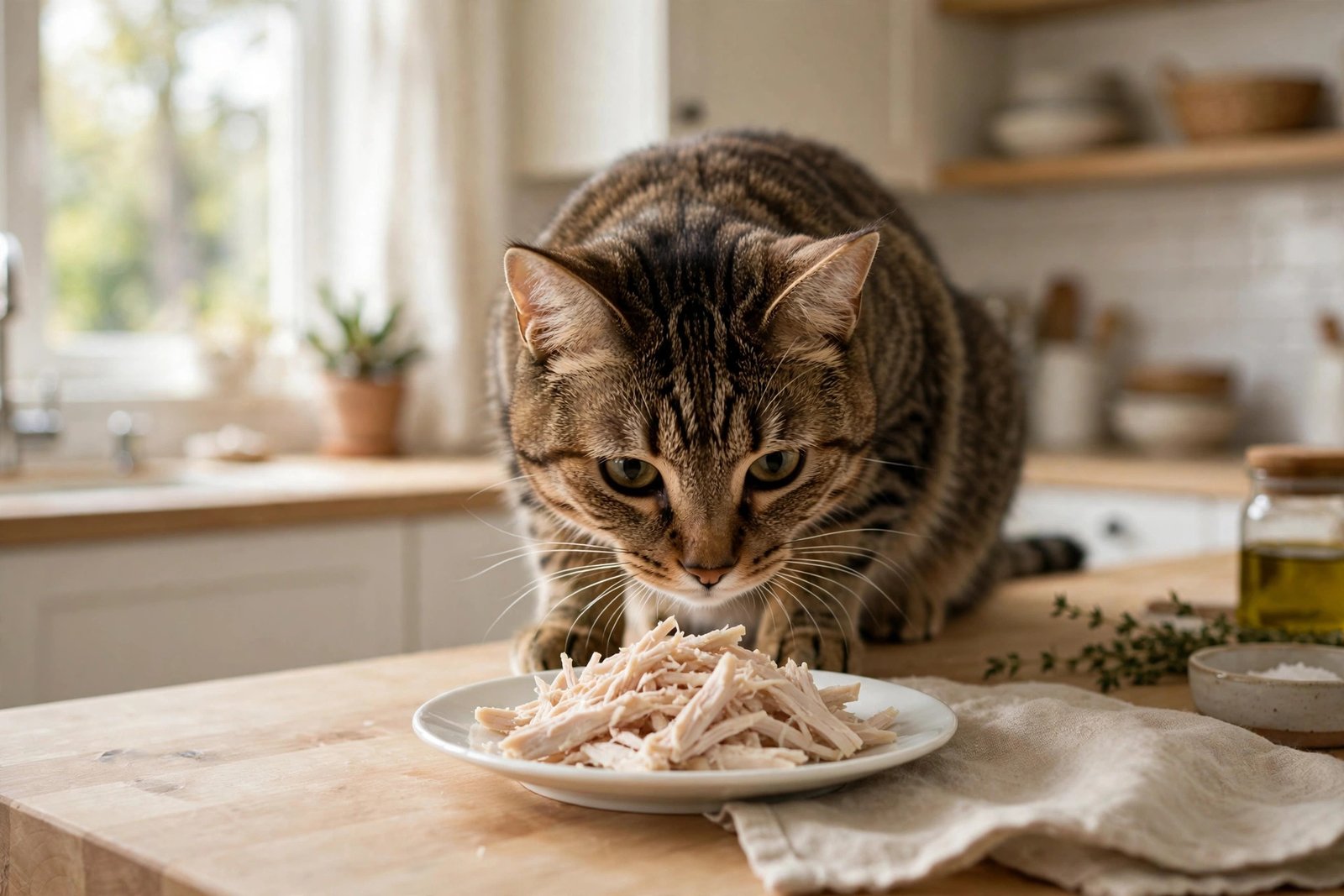

Can Cats Eat Chicken? What Owners Should Know
Cats and chicken go together like few other things in the pet world. The smell of cooking chicken can summon a cat from three rooms away, and plenty of owners have caught their cat eyeing the cutting board with intense professional interest. So let’s answer the question properly: can cats eat chicken? Generally, yes — plain, cooked chicken is considered safe for most cats as an occasional treat. But the details matter a lot here: how it’s cooked, which parts, how much, and what to never serve. Let’s go through it all.
Quick Tips
- Plain, cooked chicken (no seasoning, no skin, no bones) is generally safe as an occasional treat for most cats.
- Never feed raw chicken — it can carry bacteria like salmonella that can make cats (and you) sick.
- Remove all bones: cooked bones can splinter and are a choking and injury risk.
- Keep chicken as a small extra, not a meal replacement — ask your vet about portions for your cat.
- Skip fried chicken, rotisserie chicken skin, and anything with garlic or onion seasoning.
- Cats with health conditions or on prescription diets should get vet approval before dietary extras.
The Short Answer: Yes, With Conditions
Cats are obligate carnivores, which means meat isn’t just a treat for them — it’s the foundation of their nutrition. Chicken is a high-quality animal protein, and it’s no coincidence that it’s one of the most common ingredients in commercial cat foods. So when your cat begs for a piece of your chicken breast, they’re asking for something their body is built to eat.
The key word in that first paragraph is “plain.” The chicken your cat can have and the chicken on your dinner plate are often two different things. Your dinner chicken probably has salt, pepper, garlic, oil, or a marinade — and several of those are problematic for cats. The safe version is almost boring by human standards: cooked through, unseasoned, boneless, skinless. If you keep that formula in mind, you’re in good shape.
How to Prepare Chicken for Your Cat
If you want to share chicken with your cat, the preparation is simple — arguably simpler than cooking for yourself:
Cook it plain. Boiling, baking, or steaming a chicken breast with absolutely nothing added is the safest approach. No salt, no pepper, no garlic, no onion, no butter, no oil. Garlic and onion (including powders) are genuinely toxic to cats — they can damage red blood cells — so this isn’t a “small amount is fine” situation. Plain means plain.
Cook it thoroughly. Raw or undercooked chicken can carry salmonella and campylobacter, bacteria that can make your cat sick — and can also spread to you through handling or the litter box. Cook chicken to a safe internal temperature, the same standard you’d use for yourself, and let it cool before serving.
Remove skin and bones. The skin is mostly fat, which isn’t ideal as a regular extra, and cooked bones are the real hazard — they can splinter into sharp fragments that may injure the mouth, throat, or digestive tract. Strip the meat off the bone completely, and double-check for small fragments. This is non-negotiable: no cooked bones, ever.
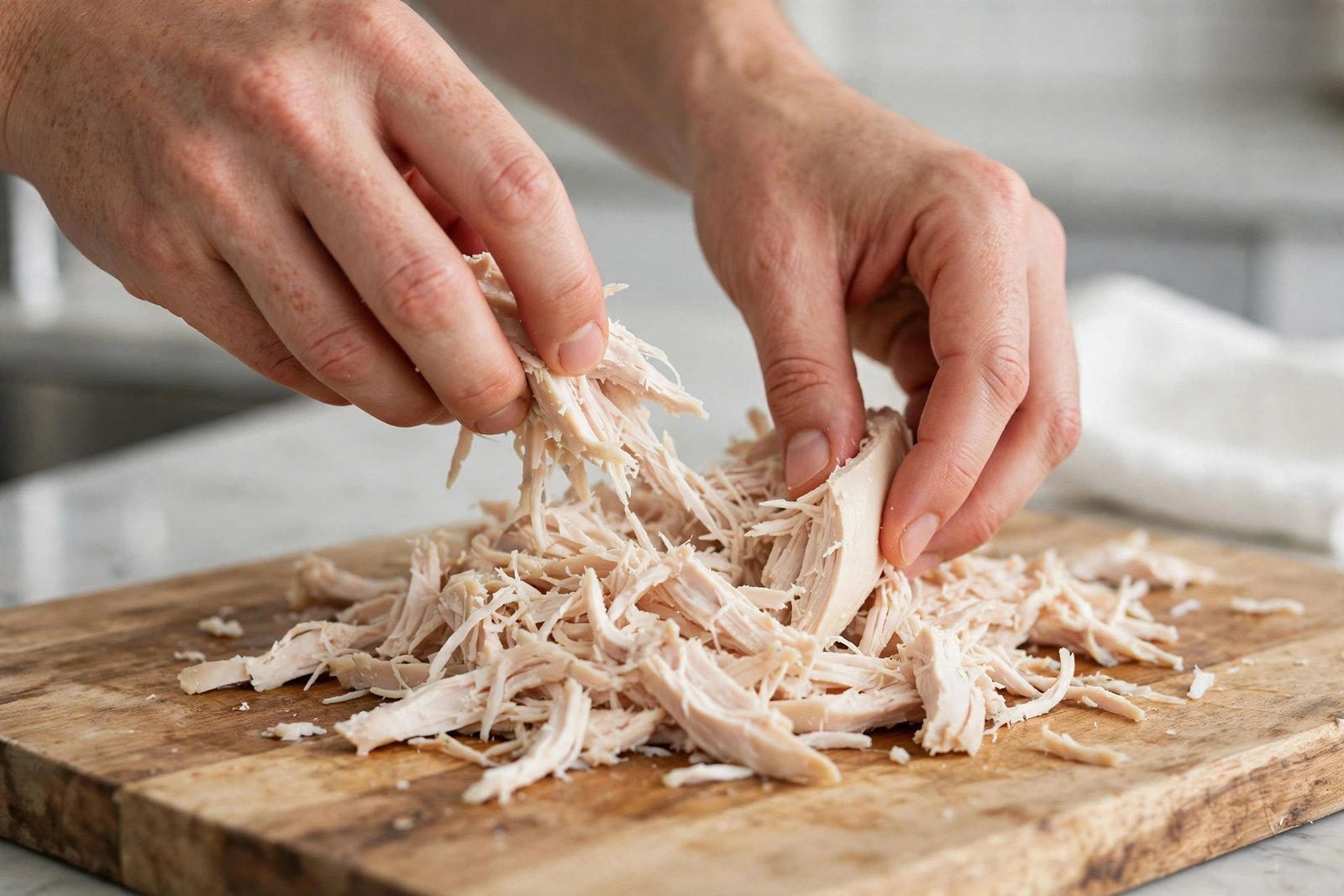
Cut it small. Shred or dice the chicken into small, cat-bite-size pieces. Cats don’t chew the way we do — they shear and gulp — so small pieces are easier and safer for them to handle.
Serve it at a safe temperature. Lukewarm or room temperature is perfect. Straight-from-the-oven hot is an obvious no, and fridge-cold is fine for most cats, though some prefer it warmed slightly.
What About Raw Chicken?
You might have heard that raw feeding is “natural” for cats since they’re carnivores. It’s true that cats’ digestive systems handle raw meat better than ours do — but “better” doesn’t mean “risk-free.” Raw chicken can carry salmonella, campylobacter, and other pathogens. Cats can get sick from these, and perhaps more importantly for a household pet, they can shed the bacteria in their stool and saliva, potentially exposing the humans they cuddle with — including kids, seniors, and anyone immunocompromised.
Most veterinary organizations advise against raw meat diets for pet cats because of these risks. If you’re curious about raw feeding, that’s a conversation to have directly with your vet, who can walk you through the actual risks and the strict hygiene protocols involved. For the average owner sharing a bit of chicken as a treat, cooked is the straightforward, low-risk choice.
How Much Chicken Is Appropriate?
Here’s the honest answer: it depends on your cat. A widely used general guideline is that treats and extras should make up only a small fraction of a cat’s daily calories, with complete, balanced cat food providing the rest. Many vets reference roughly 10% as a sensible ceiling for all extras combined — but your vet can give you guidance that fits your specific cat’s size, weight, age, and health.
There’s an important reason not to go overboard, beyond just calories. Plain chicken breast is almost pure protein — great as a treat, but not a complete diet. A cat fed mostly on chicken breast (even with the best intentions) would miss out on essential nutrients like taurine, certain vitamins, and minerals that complete cat foods are formulated to provide. That’s why chicken works as an extra, not a meal plan. If you’re ever considering a homemade diet for your cat, that needs to be designed with a vet or veterinary nutritionist — it’s genuinely tricky to get right.
Start small when introducing chicken, especially if your cat hasn’t had it before: a few small pieces, then watch for any digestive upset over the next day. Most cats handle it beautifully, but every cat is an individual.
Chicken Parts: What’s Fine and What’s Not
Chicken breast: The best choice — lean, easy to cook plain, easy to shred. This is the default “cat chicken.”
Thighs and drumsticks: Fine once cooked plain and fully deboned, though fattier than breast. Trim visible fat and remove every trace of bone.
Skin: Best avoided as a regular thing. It’s high in fat, and rich, fatty extras can cause digestive upset in some cats. A tiny accidental nibble isn’t an emergency, but don’t make it a habit.
Bones (especially cooked): Never. Cooked bones splinter; raw bones carry their own risks and aren’t worth it for a treat. Strip all meat off bones before serving.
Organ meats (liver, heart): Often asked about. Small amounts of cooked plain liver or heart are generally considered okay as very occasional treats, but organ meats are rich in vitamin A and other compounds that can cause problems in excess — so “tiny and rare” is the framing, and your vet is the right person to ask before making it routine.
Deli chicken / processed chicken: Skip it. Deli meats are typically high in sodium and often contain garlic, onion powder, or preservatives. Rotisserie chicken from the store falls in the same bucket — the seasoning blends used are rarely cat-safe, and the skin is fatty and salty.

Chicken for Kittens, Seniors, and Cats With Health Issues
Kittens: Kittens can have small amounts of plain cooked chicken as a treat, but their growth demands precise nutrition — kitten-formulated food should be doing the heavy lifting. Keep chicken extras minimal and mention them to your vet at checkups.
Senior cats: Plain chicken is often appreciated by older cats, including those with reduced appetite — the smell alone can tempt a picky senior. But seniors are also the group most likely to have kidney issues, dental problems, or other conditions where diet matters a lot. Check with your vet before adding regular extras to a senior cat’s diet.
Cats with health conditions: This is the firmest “ask your vet first” of the bunch. Cats with kidney disease, pancreatitis, food allergies, or those on prescription diets may need to avoid chicken extras entirely — or the vet may be fine with it. Don’t guess with a medical diet; the prescription food is doing a specific job.
Cats who’ve never had it: Most cats take to chicken immediately (the smell does the selling), but a few turn up their noses. No problem — it’s optional. Never force a new food; offer it once or twice and move on if there’s no interest.
Other Human Foods Cat Owners Ask About
Chicken tends to open the floodgates — once owners realize plain chicken is fine, the next questions are usually about the other proteins in the kitchen. Two of the most common:
Tuna: the classic cat temptation. Small amounts of plain tuna as an occasional treat are generally considered okay by many vets, but it’s not ideal as a regular thing — details matter here too. Our full breakdown on whether cats can eat tuna covers the mercury question and how often is reasonable.
Cheese: many cats love it, most cats are at least mildly lactose intolerant, and the two facts collide. Tiny amounts are usually tolerated, but it’s firmly treat territory. See our guide on cats and cheese for the full picture.
The pattern across all of these is the same: plain, small, occasional, and vet-approved if your cat has any health conditions. Cats are wonderfully enthusiastic eaters, which is exactly why the portion judgment has to come from us.
Frequently Asked Questions
Can cats eat chicken every day?
Small amounts as a daily treat are fine for most healthy cats, within their overall treat allowance — but chicken shouldn’t displace balanced cat food, which provides nutrients plain chicken lacks (like taurine). If you want it to be a daily ritual, run it by your vet so they can confirm it fits your cat’s complete diet.
Can cats eat chicken skin?
It’s best avoided. The skin is high in fat and often carries seasoning, and rich fatty foods can cause digestive upset in some cats. Stick to the lean meat. An accidental tiny nibble of plain skin isn’t cause for panic, but don’t offer it deliberately.
Can cats eat fried chicken?
No — fried chicken is a bad idea for cats. The breading, frying oil, salt, and typical seasonings (often including garlic and onion powder) are all wrong for a cat’s system. If your cat snags a small piece, watch for digestive upset and don’t make it a habit. Offer plain cooked chicken instead.
Can cats eat chicken bones?
No cooked bones, ever — they can splinter and injure the mouth, throat, or digestive tract. Always strip meat completely off the bone and check for fragments before serving. If your cat does swallow a cooked bone fragment, watch closely for choking, drooling, vomiting, or appetite loss, and contact your vet promptly if anything seems off.
My cat only wants chicken and ignores cat food. What do I do?
This usually happens when treats have gradually become meals. The fix is to scale the chicken back to true treat size and make the balanced cat food the only full-meal option — most cats come around within a few days when the alternative is genuinely unavailable. If your cat refuses balanced food for more than a day or two, though, check with your vet rather than waiting it out, since appetite loss can signal other issues.
Is rotisserie chicken safe for cats?
Generally no — store rotisserie chicken is seasoned with salt-heavy spice blends that often include garlic and onion, and the skin is fatty. Even picking the meat off, it’s hard to be sure it’s clean of seasoning. Plain chicken you cook yourself is the safe alternative.