

How to Teach Dog Down Command: A Beginner’s Step-by-Step Guide
If your dog already knows “sit,” congratulations — “down” is the perfect next step, and it’s one of the most useful cues you’ll ever teach. Learning how to teach dog down command properly gives you a reliable way to settle your pup at the vet’s office, at a café, or when guests walk through your front door. It’s also the foundation for fancier stuff later, like down-stay, settle on a mat, and polite greetings.
The good news? Most dogs pick up “down” faster than their owners expect. With the right lure technique and short sessions, many pups understand the basics within days. This guide walks you through it all — from the first lure to fading the treat so your dog responds to just your voice and hand signal.
Quick Tips
- Keep training sessions to 3–5 minutes so your dog stays engaged and happy.
- Use soft, pea-sized treats your dog can eat quickly — training isn’t a mealtime.
- Lure the treat slowly toward the floor between your dog’s front paws.
- Reward the instant your dog’s elbows touch the ground, even if they pop right back up.
- Don’t add the word “down” until your dog is following the lure reliably.
- Train on a non-slippery surface so lying down feels comfortable, not scary.
Why “Down” Is Such a Useful Cue
“Sit” is great, but “down” is the calmer, more settled sibling. A dog in a down position is physically committed to staying put — it’s hard to bolt, jump, or mug a visitor’s hand when your elbows and belly are on the floor. That’s why trainers reach for “down” in busy, exciting situations where “sit” just isn’t quite enough.
Think of the everyday moments: holding a down while you clip on the leash, waiting calmly while a neighbor chats, or settling under the table at an outdoor café. A solid “down” is a portable off-switch, and it pairs beautifully with teaching your dog to stay, which gets much easier once down is reliable.
What You Need Before You Start
You don’t need fancy equipment — just a little prep. Set up these three things before your first session.
High-value treats
Grab something genuinely exciting: tiny bits of cooked chicken, cheese, or a soft treat. The lure must be worth following, and kibble often isn’t exciting enough for a new skill. Keep treats pea-sized so your dog can gulp them without losing focus.
A quiet, non-slippery training spot
Hardwood and tile can make dogs reluctant to lie down — the surface feels unstable and cold on their elbows. Start on carpet, a rug, grass, or a training mat. Pick a room with minimal distractions so your dog can actually concentrate.
Good timing and patience
Your marker — a clicker or a cheerful “yes!” — needs to land the exact moment your dog’s body hits the floor. That split-second timing is what teaches your dog which movement earned the treat. And if your dog is confused, don’t worry: confusion is just information. Adjust your lure and try again.
How to Teach Dog Down Command: The Lure Method
This beginner-friendly way to teach dog down command works for the vast majority of dogs. You’ll use a treat to guide (lure) your dog’s body into the down position, then reward. Most owners see their first success within a session or two.
Step 1: Start from a sit
Ask your dog to sit (new to sit? Start with our guide to teaching your dog to sit first — down is much easier from a sitting start). Hold a treat between thumb and forefinger, let your dog sniff it, then move your hand slowly straight down between their front paws.
Step 2: Guide the nose to the floor
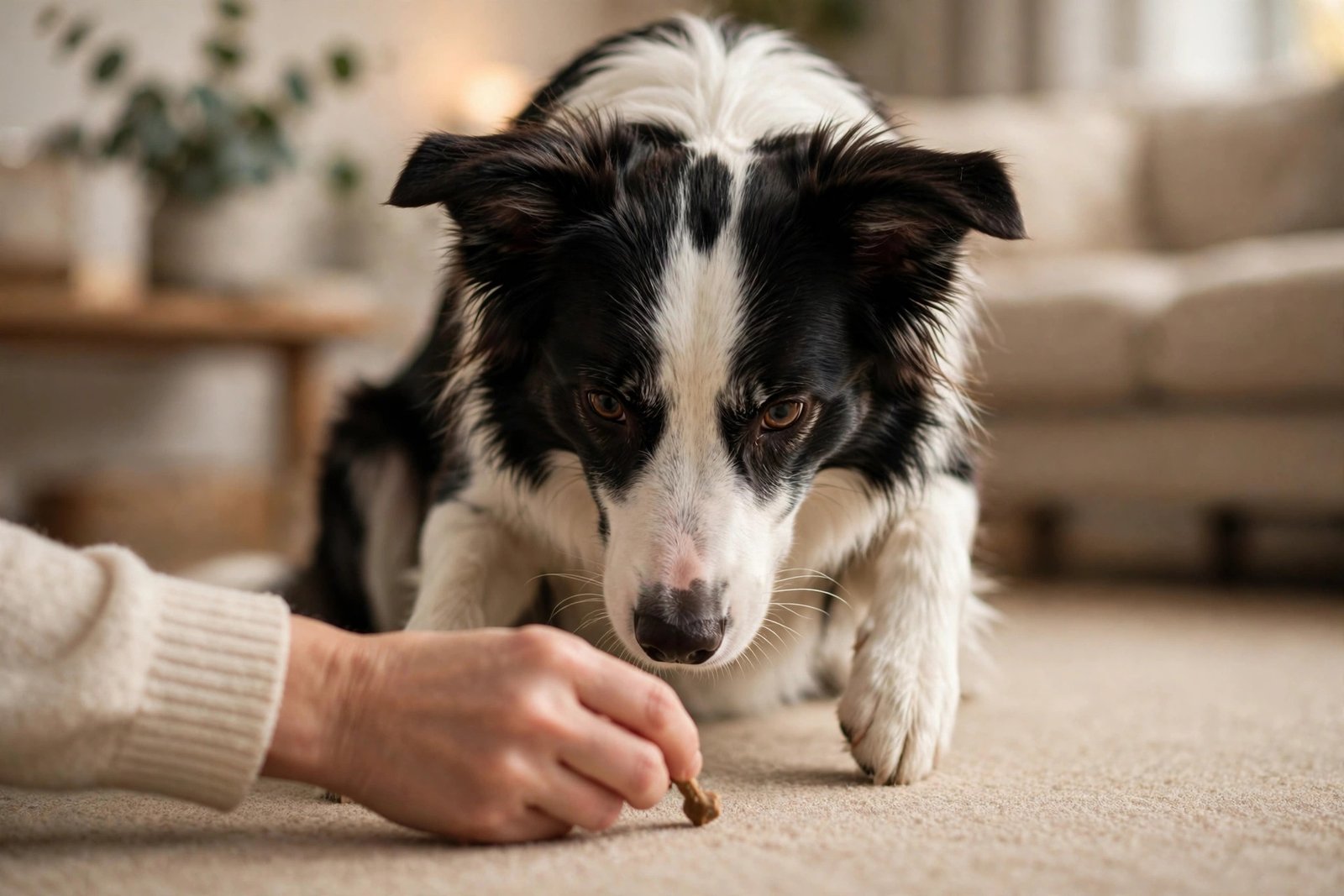
Move the treat slowly — think inches per second, not a quick drop. Your dog’s nose should follow the treat down. The moment their chin and elbows reach the floor, mark it (“yes!”) and deliver the treat low, near the ground. Rewarding low keeps them in the down instead of popping back up.
Step 3: Repeat and build the habit
Do 5–8 reps per session, always ending on a success. If your dog nails it twice in a row, quit there — end with a win, not a slump. Two or three short sessions daily is plenty.
Step 4: Add the hand signal
Once your dog follows the lure smoothly nine times out of ten, start making the same motion with an empty hand — treat hidden in your other hand, delivered right after the mark. The gesture (a flat hand moving toward the floor) becomes your visual cue.
Step 5: Add the word “down”
Now introduce the verbal cue. Say “down” once, then give the hand signal. If your dog responds, mark and reward big — jackpot treats tell them this new word matters. Say the word once per rep; repeating “down-down-DOWN” teaches your dog the real cue is the third one.
Fading the Lure and Adding Distance
Many beginners get stuck here: the dog only lies down when they see the treat. Fading the lure is the bridge from “I did it for the cookie” to “I did it because you asked.”
Start by alternating: one rep with a visible treat in your hand, one rep with an empty hand and the treat delivered from your pocket after the mark. Within a few sessions, the treat stays in your pocket for every rep. Keep rewarding with real treats about every time at first, then move to a variable schedule — reward the fastest, snappiest downs and the slower ones every other time. This keeps motivation high without you needing a treat pouch forever.
Once the lure is gone, add tiny challenges: ask from two feet away, then five, then across the room. Build duration by waiting one extra second before marking. If your dog breaks, you made it too hard — drop back to the last successful level and climb again more slowly.
Troubleshooting: When “Down” Doesn’t Click
Some dogs find “down” surprisingly tricky, and that’s completely normal. Here’s how to handle the three most common snags.
Your dog pops right back up
This usually means the reward is being delivered too high or too slowly. Deliver the treat at ground level, right between the front paws, the instant the elbows land. Speed matters more than treat size here.
Your dog stands or walks toward the treat
Your lure is probably moving too fast or too far forward. Slow down and bring the treat straight down between the paws, almost touching the floor. Some trainers also have luck starting the dog in a corner or next to a wall so forward movement is naturally blocked.
Your dog refuses to lie down at all
Try a softer surface, a different time of day (after a walk, when your dog is naturally calmer), or “capturing” — carrying treats for a day and marking and rewarding every time your dog lies down on their own. Some dogs also respond better if you lure from a standing start, sweeping the treat down and slightly back toward their chest. If your dog seems physically uncomfortable lying down, it’s worth mentioning to your vet at your next visit — general training shouldn’t be painful.
Proofing “Down” in Real Life
A down that only works in your quiet living room isn’t really trained yet. “Proofing” means practicing the cue in gradually harder settings so it holds up in real life. Start with small changes: different rooms, the backyard, then the front porch with a leash on. Then add mild distractions — a family member walking past, a toy on the floor nearby.
The golden rule: change one variable at a time — new location OR new distraction, never both. When the setting gets harder, use richer rewards and quicker marks. A down that earns chicken at a busy park is a cue your dog will offer anywhere. Once it works in five different places, it’s genuinely proofed.
Fun Next Steps After “Down”
Once “down” is solid, follow-up skills open up. The natural companion is teaching your dog to stay from down — down-stay is the café-and-picnic combo that smooths daily life. From there, many owners teach “go to your mat,” the polite answer to doorbells and dinner time.
You can also have fun with it: a down from a distance, or chaining down into a roll-over for playful pups. Keep sessions short and paydays big for great reps. Training never really ends — it just becomes a daily game you play together.
Frequently Asked Questions
How long does it take to teach a dog the down command?
Many dogs get the lure within one to three sessions, but a reliable down — word alone, different places, real distractions — usually takes two to four weeks of consistent practice. Excitable youngsters may take a little longer, and that’s fine. Consistency beats speed.
Why won’t my dog lie down even for treats?
The most common reasons are a slippery floor, a lure that’s moving too fast, or training when the dog is too wired. Try a carpeted spot, slow your hand down, and practice after a walk. If your dog has never been comfortable lying down or seems stiff getting up and down, mention it to your vet — sometimes there’s a physical reason behind the reluctance.
Should I push my dog’s back down to teach “down”?
No — pushing a dog into position creates resistance and damages trust in training. Luring, capturing, or shaping lets your dog figure it out and enjoy the game. A dog who learns “down” through rewards offers it happily; a pushed dog does it reluctantly.
Can I teach “down” to an older dog?
Absolutely — older dogs learn new cues just fine, sometimes faster thanks to years of practice focusing on humans. Keep sessions short, use soft treats, and offer a cushioned surface for stiff joints. If your senior dog seems uncomfortable lying down, check with your vet first.
What age can puppies start learning “down”?
Puppies as young as eight weeks can learn the “down” lure — their brains are sponges. Keep sessions to a minute or two, use tiny treats, and don’t expect reliability yet. You’re building the habit early; polish comes later.