
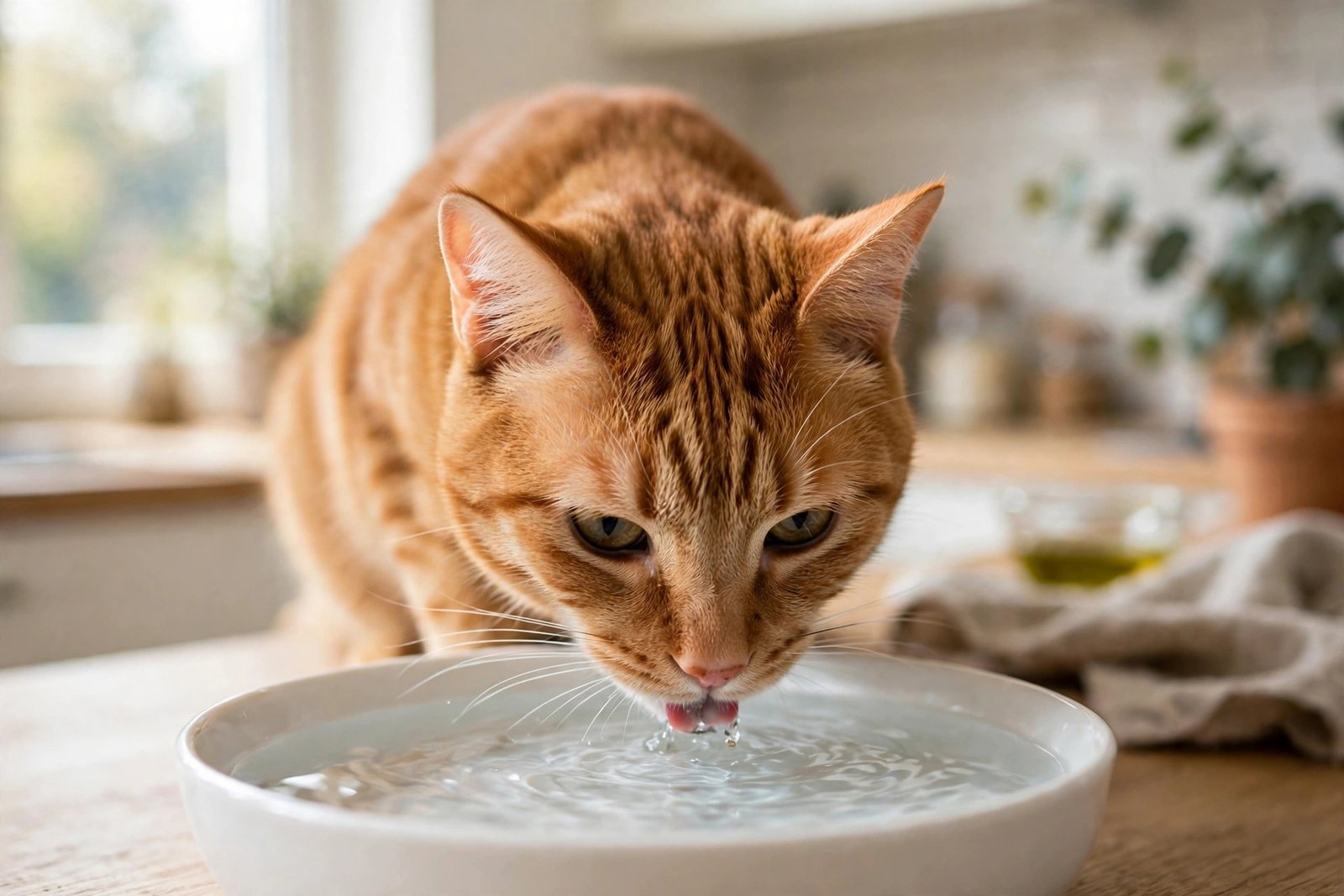

Signs Cat Is Dehydrated: Is Your Cat Drinking Enough?
Cats have a reputation as low-maintenance drinkers, and most live up to it — you fill the bowl in the morning and by evening it barely looks touched. That’s usually fine, but sometimes it’s one of the quiet early signs cat is dehydrated. Telling the difference between a naturally light drinker and a cat that genuinely needs more water is a small owner skill that pays off for years.
The tricky part is that cats hide discomfort well. By the time the clues are obvious, your cat may already be feeling pretty rough. The good news? Most of the signs are easy to spot once you know what to look for, and encouraging a cat to drink more is usually a matter of small, practical changes rather than anything dramatic. This guide walks through what low water intake looks like, what might be causing it, and what you can do at home — plus when it’s time to check with your vet.
Quick Tips
- Watch the water bowl for a few days — a sudden drop in interest can matter more than a low total.
- Wet food adds a lot of moisture; many owners find it the easiest way to boost water intake.
- Wash bowls daily — cats often avoid water that smells stale or has bits floating in it.
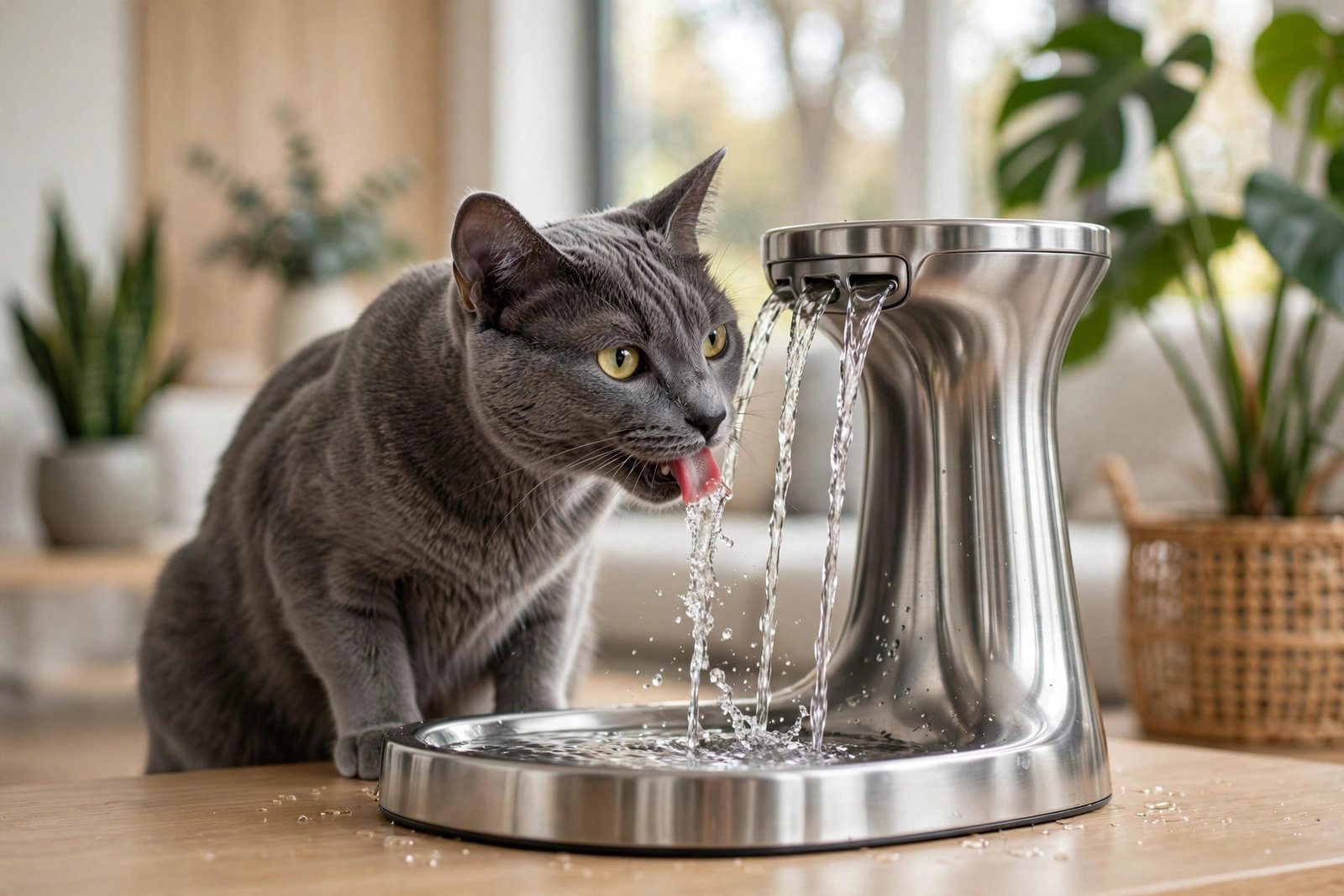
- Try a pet water fountain; the movement seems to tempt a lot of reluctant drinkers.
- Place water in a couple of spots away from the food bowl; cats often prefer some distance.
- If your cat seems lethargic, has dry gums, or the skin on their neck doesn’t spring back, check with your vet.
Why Cats Tend to Drink So Little
To understand your cat’s drinking habits, it helps to know why cats are such reluctant drinkers in the first place. Domestic cats descend from desert-dwelling ancestors, and their bodies are still wired for a life where water came mostly from prey rather than from a bowl. They get a surprising amount of moisture from food, especially wet food, and their kidneys are very good at concentrating urine. That’s an impressive bit of biology — but it also means a cat can be running low on fluids without acting thirsty in the way a dog would.
What a cat eats makes a huge difference here. A cat on a mostly dry-food diet gets far less moisture from meals than one eating wet food, so the water bowl matters much more to them. This is one reason many owners are surprised to learn their dry-food cat “never drinks” — they may simply need the bowl to do all the work, and if the setup isn’t appealing, intake can slide. It also connects to overall body condition: keeping an eye on portions and food type is part of the same picture, which is why guides like how to keep your cat at a healthy weight are worth a read alongside this one. A cat at a healthy weight on a balanced diet generally handles hydration ups and downs better than one carrying extra pounds or eating erratically.
Age plays a role too. Kittens usually investigate every water source with enthusiasm, while seniors can get pickier — stiffness or dental discomfort may make a tall-sided bowl less inviting. Noticing that kind of change is exactly the habit that catches problems early.
Spotting the Signs Cat Is Dehydrated Early
So what do the actual signs cat is dehydrated look like in daily life? Most of them are subtle at first, which is why a quick weekly “look and feel” check is such a good habit. You don’t need any equipment — just your eyes and your hands.
The skin tent check
This is the classic one vets and shelter workers use. Gently pinch a fold of skin at the back of your cat’s neck or between the shoulder blades, lift it slightly, and let go. In a well-hydrated cat, the skin usually snaps back into place quickly. If it returns slowly or stays tented for a moment, that can suggest low fluid levels. Be gentle, and keep in mind that older cats’ skin is naturally less elastic, so use this as one clue among several rather than a verdict on its own.
Gums and mouth
A cat’s gums should look moist and a healthy pink. If you lift the lip and the gums look tacky, sticky, or dry, that may point toward dehydration. Some owners also notice their cat’s nose feels unusually dry, though a dry nose alone isn’t very reliable — cats’ noses go through dry and wet phases naturally. Check gums instead; they’re a steadier indicator.
Eyes and energy
Eyes that look slightly sunken or less bright than usual can be another soft sign, especially with a drop in energy. A cat that’s eating less wet food is also getting less water from meals, which can quietly stack up — appetite changes often travel with hydration issues.
The litter box tells a story
Fewer litter box trips, or noticeably smaller clumps in clumping litter, may suggest lower water intake. You don’t need to measure anything — just notice when the pattern shifts from your cat’s normal.
What Can Cause a Cat to Drink Less
Once you’ve noticed possible hydration warning signs, the next question is usually “why?” The causes range from completely harmless to worth-a-call, and sorting them out mostly comes down to recent changes.
The most common reason is simply the setup. A bowl too close to the food, one deep enough to brush whiskers, water unchanged for days, or a plastic bowl with a faint smell — any of these can quietly turn a cat off drinking. Some prefer moving water (fountains earn their reputation here); others just want a quiet corner where they don’t feel exposed.
Environment matters too. Hot weather increases fluid needs, and stress — a new pet, a move, construction noise — can suppress drinking for a while. In multi-cat homes, one cat may quietly avoid a water station another cat has claimed, so a second location is cheap insurance.
Then there are health-related reasons, and this is where the vet referral comes in. Various illnesses can reduce thirst or increase fluid loss, and dental pain can make drinking uncomfortable. You can’t diagnose any of this at home, and you shouldn’t try — but noticing that these warning signs appeared alongside other changes (weight loss, vomiting, hiding, changes in appetite) is exactly the kind of observation your vet finds useful. Write down what you noticed and when; it makes the appointment much more productive.
Simple Ways to Get Your Cat Drinking More
The encouraging part: for many cats, low water intake is a preference problem, not a medical one, and preferences can be nudged. Most of these ideas cost little or nothing.
Try a water fountain
Pet water fountains keep water moving and filtered, and many reluctant drinkers take to them quickly. They need regular cleaning — a neglected fountain is worse than a bowl — and nervous cats may need a day or two to investigate one unplugged first.
Add wet food to the rotation
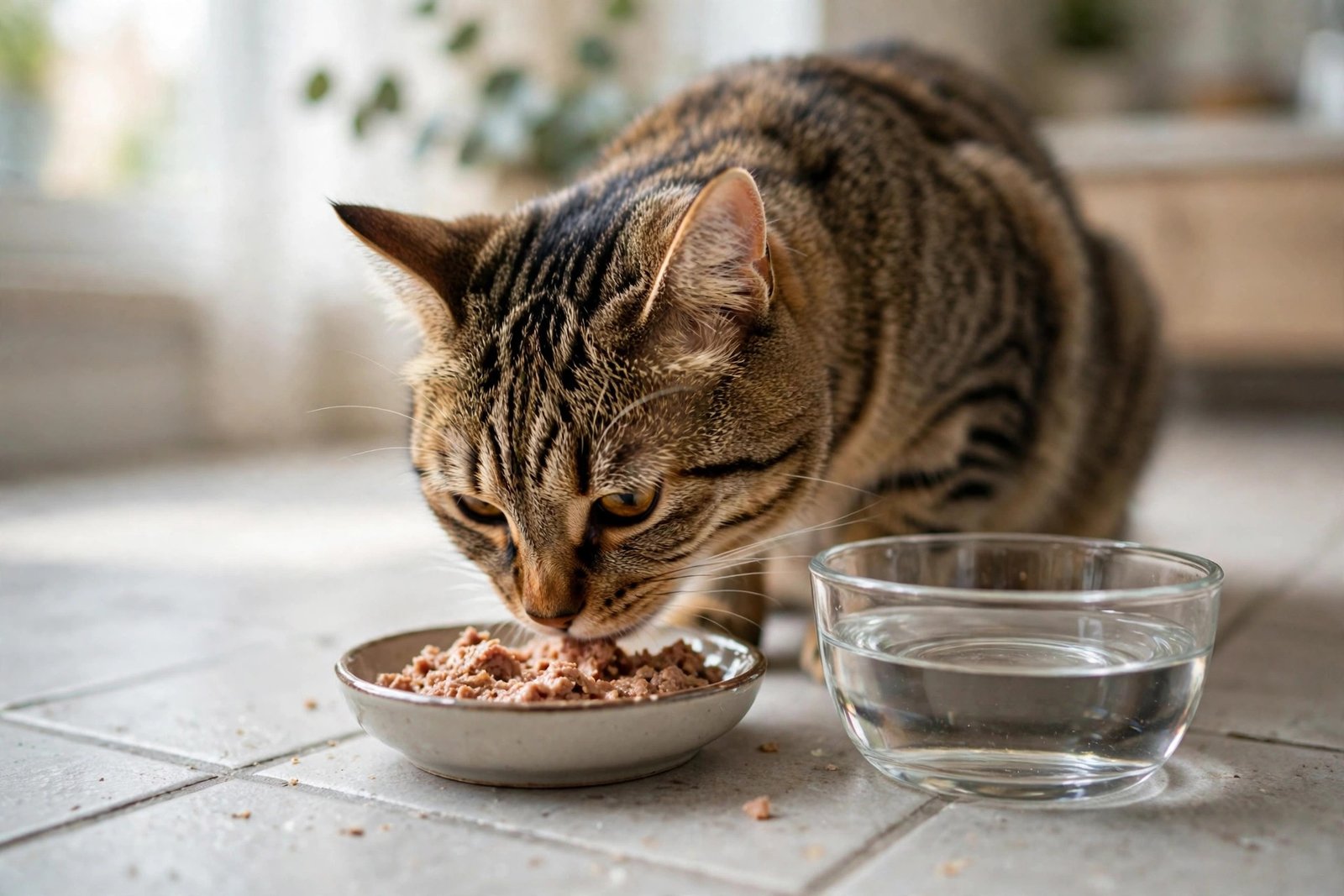
This is often the single most effective change. Wet food is mostly water, so even replacing one dry meal a day can make a noticeable difference. Some cats also enjoy a spoonful of water stirred into wet food, or a little tuna water (spring water, not brine) as an occasional treat.
Rethink bowl placement and style
Try a wide, shallow ceramic or stainless steel bowl in a second location, well away from food. Cats have strong opinions about location — a glass on a bathroom counter or a bowl on a windowsill often wins. Wash bowls daily with hot water; a quick rinse won’t remove the biofilm that puts some cats off.
Keep it fresh and cool
Change the water at least once a day, more often in warm weather. Some cats like an ice cube in the bowl on hot days — partly for the coolness, partly because fishing it out is entertainment. If your tap water has a strong chlorine smell, a simple filter jug for the cat’s bowl is an inexpensive experiment.
When Low Water Intake Means Calling the Vet
Most of the time, encouraging more drinking is a home project — but call early rather than waiting and worrying. If your cat shows several signs at once (dry gums, slow skin return, lethargy, reduced appetite), or a normally keen drinker suddenly stops almost entirely, phone your vet and describe what you’re seeing. The same applies if low intake comes with vomiting, diarrhea, or hiding.
Kittens and senior cats deserve a lower threshold for calling. Kittens can lose fluids faster relative to their size, and older cats are more likely to have underlying conditions where hydration is part of a bigger picture. If you’re ever unsure, a quick call costs nothing and the clinic staff can usually tell you whether it sounds like a “come in today” situation or a “watch and try these things” one. For a broader sense of which symptoms belong in which category, signs it’s time to call the vet covers the general red flags every owner should know.
A vet hydration check is usually quick — their own version of the skin and gum checks, possibly with blood work if something seems off. Many owners find it reassuring to get a baseline for what’s normal for their cat, which makes future home checks easier to interpret.
Frequently Asked Questions
How much water should a cat drink each day?
There’s no single number — it depends on size, diet, activity, and weather. A rough guide many vets mention is around 50 ml per kilogram of body weight daily from all sources including food, but a wet-food cat may barely touch the bowl and still be fine. Watching for the signs cat is dehydrated matters more than hitting a number.
Is it normal for my cat to barely touch the water bowl?
It can be, especially for wet-food cats whose meals cover most of their fluid needs. Investigate when the pattern changes — a cat that used to drink and now doesn’t — or when low intake comes with dry gums, lethargy, or appetite changes. Otherwise it’s probably just preference, and the tips above can still nudge intake upward.
Do cats prefer running water from a fountain?
Many do, though not all — moving water seems to trigger curiosity and may read as “fresher” to feline instincts. Fountains work best for cats that ignore still bowls entirely, but only if kept clean. Give your cat a week or two to get used to one before deciding.
Can I add anything to my cat’s water to make it appealing?
A splash of tuna water (spring water, not brine) or a little low-sodium broth without onion or garlic can tempt some cats as an occasional extra. Keep additions modest so they don’t put your cat off plain water. If your cat has a health condition or takes medication, check with your vet before adding anything regularly.
Should I worry if my cat only drinks from the tap?
Not really — tap-drinkers are extremely common and the water itself is fine. Many owners eventually convert tap-drinkers to a fountain, which scratches the same “moving water” itch. Still offer a bowl as backup, so your cat accepts one if the tap is ever off-limits.