


Why Does My Cat Drool?
You are stroking your cat, they are purring away happily — and then you notice a damp patch on your lap. If you have ever wondered why does my cat drool at moments like this, you are not alone. Drooling in cats is surprisingly common, and most of the time it is nothing to worry about. Many cats drool a little when they are deeply relaxed, just like some people talk in their sleep.
That said, drooling can occasionally point to something that needs attention, from dental discomfort to nausea. The trick is knowing the difference between happy drool and worried drool. This guide walks through the common reasons cats drool, the signs that suggest a vet visit is a good idea, and simple ways to keep your cat’s mouth healthy.
Quick Tips
- Drooling during petting, purring, or kneading is usually a sign of contentment, not illness.
- Learn your cat’s normal: sudden, heavy, or constant drooling is more worth investigating than an occasional drip.
- Bad breath, pawing at the mouth, or trouble eating alongside drooling all merit a vet check.
- Keep household plants, cleaning products, and medications out of reach — bitter tastes and toxins can cause drooling.
- Fresh water and dental-friendly routines support a healthy mouth in most cats.
- When in doubt, call your vet rather than trying to diagnose the cause yourself.
Why Does My Cat Drool When I Pet Them?
The number one reason cats drool is also the sweetest one: they are happy. Many cats start dribbling a little saliva when they are being stroked in just the right spot, kneading a soft blanket, or settling into a warm lap. It seems to be a leftover from kittenhood — nursing kittens drool a bit while feeding, and adult cats appear to slip back into that relaxed, almost trance-like state when they feel completely safe and content. If your cat drools while purring, kneading, and looking utterly blissful, that damp patch is basically a compliment.
This kind of drool is usually light — a few drops, maybe a wet chin — and it stops when the petting session ends. Some cats do it every time they are petted, others only when they are exceptionally relaxed. Both patterns are normal. Interestingly, drooling often goes hand in hand with why cats purr when they are content and with kneading behavior, since all three tend to show up in the same deeply relaxed moments. If the whole picture says “blissfully happy cat,” the drool is almost certainly part of that picture too.
Other Harmless Reasons for Cat Drooling
Contentment is not the only innocent explanation. Some cats drool in their sleep, especially when they are sprawled out in a deep nap with their mouth slightly open — you might find a small wet spot on their favorite cushion. A few cats drool when they are nervous too, such as during car rides, where the combination of motion and stress can get the saliva flowing. Heat can play a role as well; on very warm days, some cats pant lightly and drool a little, much like dogs do.
Taste is another common trigger. If your cat licks something bitter — a bit of cleaning residue off a paw, a nibbled houseplant leaf, or medication — drooling is the mouth’s natural way of flushing out the unpleasant flavor. This kind of drooling usually passes within minutes once the taste is gone. The practical takeaway is simple: keep cleaning products, medications, and unfamiliar plants out of your cat’s reach, and rinse food bowls regularly so old residue does not put them off their meals.
When Drooling Might Signal a Problem
Now for the side that deserves your attention. While most drooling is harmless, a change in the pattern — sudden onset, heavy or constant drooling, drool that is thick, discolored, or foul-smelling — is worth taking seriously. Dental problems are among the more common medical explanations: sore gums, a chipped tooth, or a foreign object stuck in the mouth can all make a cat drool, often alongside bad breath, pawing at the face, or dropping food while eating.
Nausea is another possibility. Cats that feel sick may drool before vomiting, and drooling combined with lethargy, appetite loss, or hiding can suggest something is wrong internally. Mouth injuries, stings, or exposure to something toxic can also cause sudden heavy drooling — if you suspect your cat has gotten into chemicals, medications, or a toxic plant, contact your vet or an emergency clinic right away rather than waiting to see how it develops.
The important thing is not to play detective at home. You cannot reliably tell dental pain from nausea from a swallowed string just by looking, and guessing wrong can cost valuable time. If the drooling is new, heavy, persistent, or paired with any other change in behavior or appetite, a vet visit is the right move. Describe exactly what you are seeing — when it started, how much drool, and anything else that seems off — and let the professional figure out the cause.
What to Do If Your Cat Starts Drooling Suddenly
First, stay calm and observe. Note when the drooling started, whether it is continuous or comes and goes, and whether your cat is otherwise acting normally — eating, grooming, playing, using the litter box. Check gently for anything obvious, like a string around a tooth or a swollen lip, but do not force your cat’s mouth open if they resist; you risk getting bitten and stressing them further.
Think back over the last few hours. Did your cat have access to any plants, cleaning products, medications, or new foods? Did they just come in from outside? Any detail you can share will help your vet. If the drooling is light, your cat is otherwise completely normal, and you can identify a harmless trigger — like a bitter-tasting lick of something — it is reasonable to watch and wait for a short while. But if the drooling is heavy, will not stop, or comes with lethargy, appetite loss, vomiting, or breathing changes, call your vet promptly. Sudden heavy drooling after possible toxin exposure counts as urgent.
Keeping Your Cat’s Mouth Healthy Day to Day
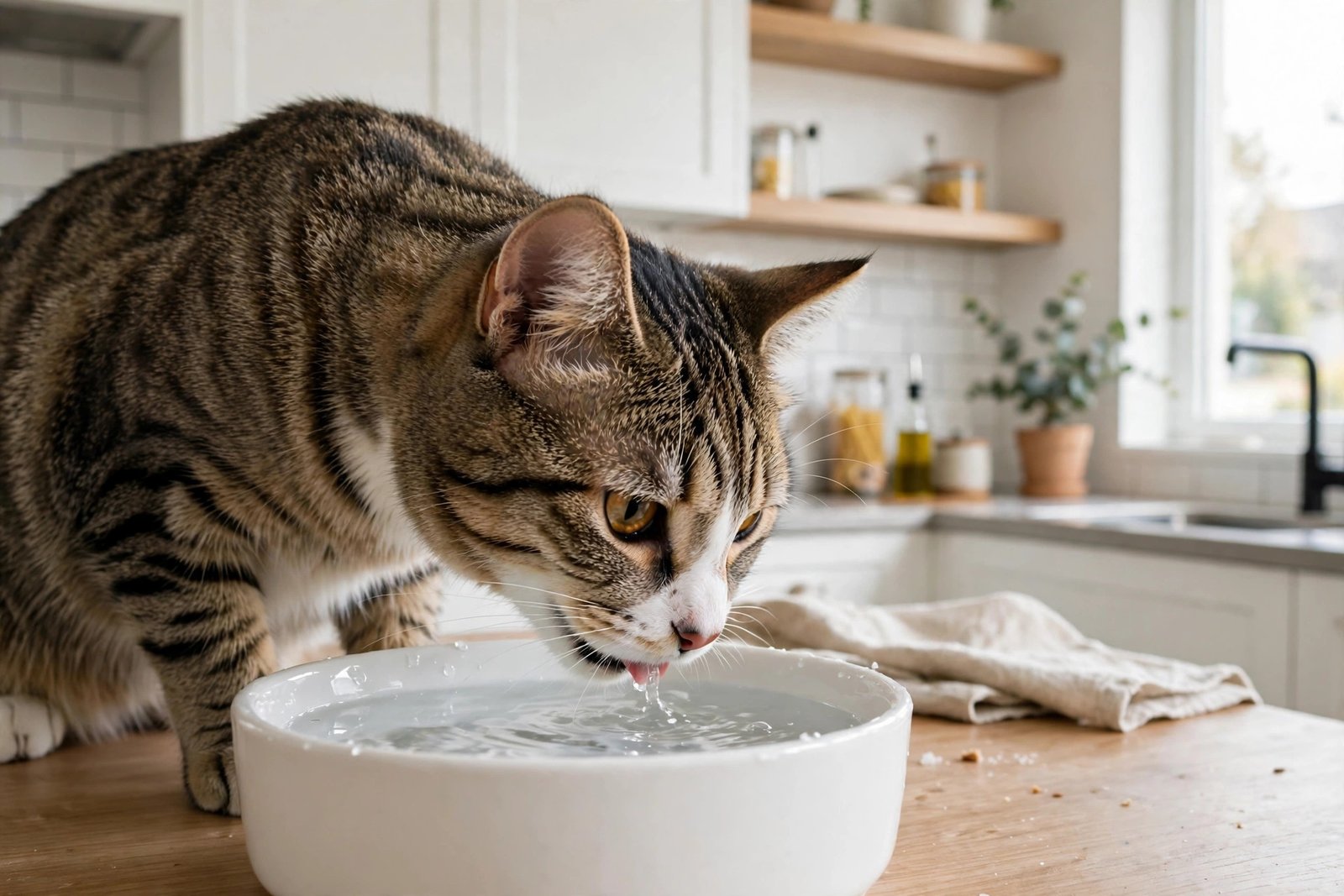
You cannot prevent every cause of drooling, but good mouth care lowers the odds of dental-related problems, which are among the more common medical reasons cats drool. Fresh water available at all times encourages drinking and helps rinse the mouth naturally — many cats drink more from wide, shallow bowls or running-water fountains than from a deep bowl shoved in a corner. Quality food appropriate for your cat’s age and regular mealtimes round out the basics.
For dental care specifically, options range from dental-formulated treats and water additives to actual tooth brushing, if your cat will tolerate it. Brushing is the gold standard but requires patience and a slow introduction; many owners start by simply touching the lips and gums during cuddle time and build up over weeks. Whatever routine you choose, regular vet checkups are where dental problems get spotted early — vets can see tartar buildup and gum inflammation long before they cause the kind of discomfort that leads to drooling.

Frequently Asked Questions
Is it normal for cats to drool when they purr?
Yes, very normal. Drooling while purring, kneading, and being petted is one of the classic signs of a deeply relaxed cat. The purring, the kneading, and the drool tend to arrive together as a package deal in happy cats. As long as the drool is light and only happens during those blissful moments, it is simply part of how your cat expresses contentment.
Why does my cat drool in the car?
Car rides stress many cats out, and stress plus motion can trigger drooling — essentially a mild form of motion sickness. Signs often include restlessness, crying, and panting alongside the drool. If your cat needs to travel regularly, talk to your vet about ways to make journeys calmer, from carrier training to travel-specific advice. Never give motion sickness remedies meant for people or dogs without veterinary guidance.
My cat is drooling and won’t eat — should I worry?
Yes, that combination deserves a vet visit. A cat that is drooling and refusing food may have mouth pain, nausea, or something stuck in the mouth or throat, and cats that stop eating can develop further problems if it goes on too long. Do not wait more than a day to call your vet, and sooner if the drooling is heavy or your cat seems lethargic or in pain.
Do some cat breeds drool more than others?
There is some variation between individual cats, and a few owners report that certain laid-back breeds seem prone to happy drooling, but there is no firm rule. In practice, drooling habits seem to come down to the individual cat’s temperament and how deeply they relax rather than their breed. A cat that has always been a happy drooler is simply being themselves.
Should I clean the drool off my cat’s chin?
For light happy-drool, a gentle wipe with a soft damp cloth is plenty if the chin looks messy — most cats do not mind, and it prevents the fur from getting crusty. Avoid scented wipes or harsh cleaning products around the mouth. If the drooling is heavy or constant, though, skip the cleanup routine and focus on getting a vet appointment instead, since the underlying cause matters more than the symptom.