

Best Cat Litter Types Compared: Which Should You Buy?
The first trip down the pet aisle’s litter section can feel genuinely overwhelming. Clumping, non-clumping, crystal, pine, paper, corn, walnut — an entire wall of bags all promising the best-smelling, lowest-dust, easiest-cleaning solution known to catkind. Grab the cheapest big bag, bring it home, and plenty of cats will give it one sniff before stepping delicately over the edge of the box and relieving themselves on the bath mat instead. Message received.
Choosing between the main cat litter types matters more than most new owners expect. The wrong litter can mean a stinky house, dust everywhere, or — worst case — a cat that decides the laundry pile is preferable to the box. The right one makes daily scooping quick, keeps odors down, and keeps everyone happy. Here is an honest comparison of every major type, based on what actually matters in a real home.
Published: May 29, 2026 | Last updated: May 29, 2026
Quick Tips
- Most cats prefer fine-grained, unscented clumping clay — it is the closest to what they would dig in outdoors.
- Your cat’s preference beats every feature: if the cat avoids the box, the litter is wrong, whatever the bag promises.
- Odor control comes mostly from scooping daily, not from the litter formula.
- Dust matters if anyone in the house has allergies or breathing sensitivities.
- Start with one type and change gradually — sudden litter swaps can cause box avoidance.
- Keep one box per cat plus one extra; the litter type will not fix a too-few-boxes problem.
The Main Litter Types at a Glance
Before the deep dive, here is the quick lay of the land. Every litter on the shelf falls into roughly six families, each with a distinct personality.
Clumping clay (bentonite)
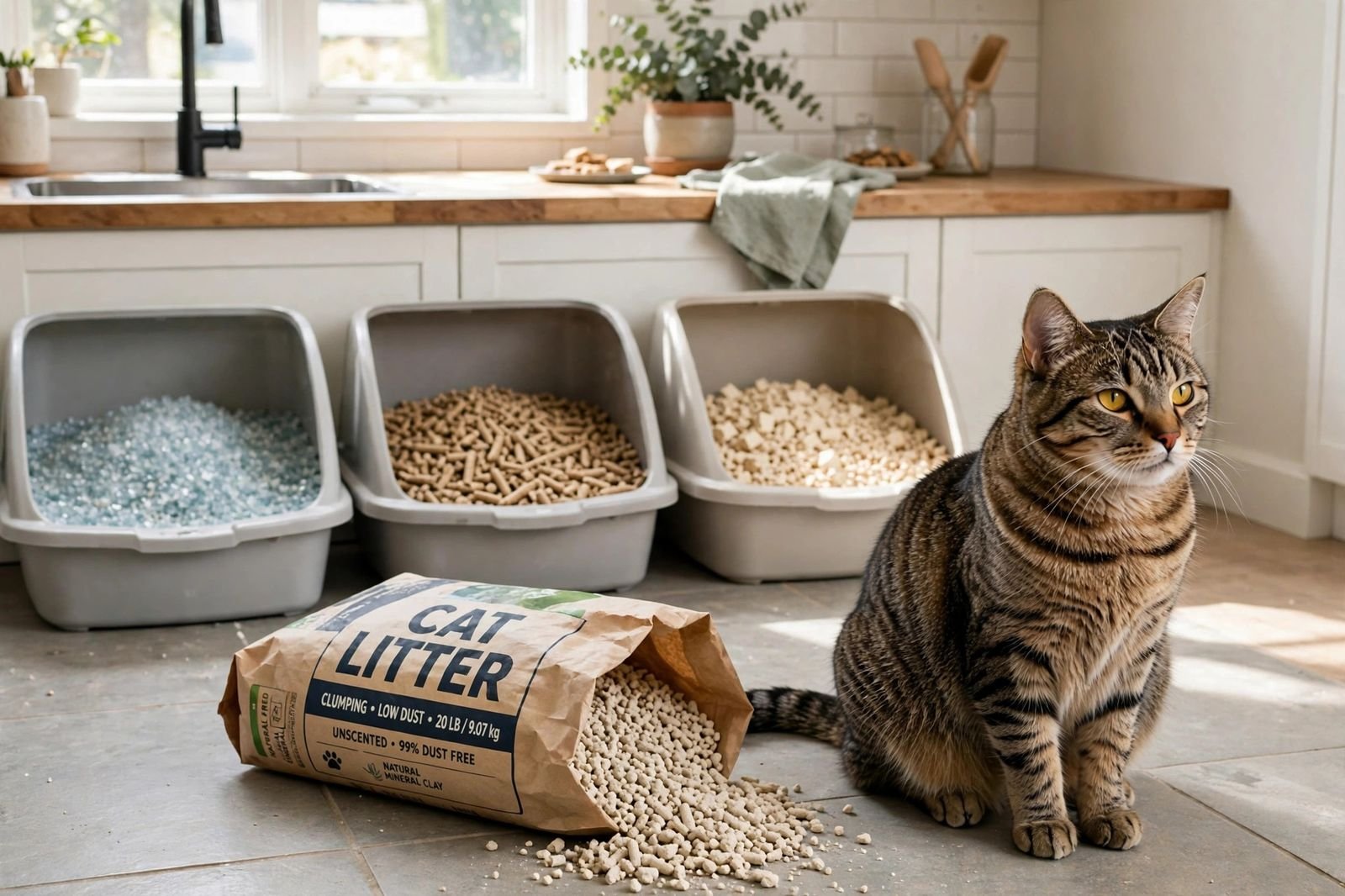
The most popular litter in the US and UK, and the default recommendation for a reason. Clumping clay forms tight, scoopable clumps when wet, so you lift out the used portions and leave clean litter behind. Scooping is fast, waste is minimal, and most cats take to the fine sandy texture immediately because it mimics the loose soil cats would naturally dig in. The downsides: it is dusty (look for “99% dust-free” on the bag), it is heavy to carry, it tracks on little paws, and it is not flushable or biodegradable. Cost is low to moderate.
Non-clumping clay
The old-school option. It absorbs urine rather than clumping it, and you change the whole box once it is saturated. It is cheap and simple, and some cats that dislike the texture of clumping granules prefer it. But it needs full changes more often, odor control is weaker because you cannot remove just the soiled parts, and over a month it often ends up costing about the same as clumping once you factor in how much you throw away. For most households, clumping clay is the better version of this idea.
Silica crystal litter
Those little translucent beads that look like aquarium gravel. Crystal litter absorbs urine into the beads and dehydrates solid waste, controlling odor remarkably well for a week or more per bag. It is very low dust, lightweight, and low tracking. The catch: the texture is crunchy underfoot, and a surprising number of cats simply refuse to stand on it. It is also the most expensive per month, and you still have to stir it and remove solids daily. Great for sensitive noses in the household — if your cat agrees.
Pine and wood litters
Made from compressed sawdust pellets or shavings, pine litter smells faintly of a lumber yard and breaks down into sawdust as it absorbs urine. It is biodegradable, compostable in the right conditions, very low dust, and inexpensive. Many owners love it. But the large pellets feel nothing like sand, and plenty of cats reject them outright. Some versions are designed for sifting boxes where sawdust falls through to a tray. If your cat accepts it, it is one of the most economical and eco-friendly options.
Paper litter
Recycled newspaper formed into pellets or a soft crumbly texture. It is almost dust-free, very soft on paws, biodegradable, and a common recommendation for cats recovering from surgery because it will not stick to wounds. The trade-offs: it controls odor poorly compared to clay or crystal, it gets soggy fast, and it needs changing often. Think of it as a specialty litter — excellent for post-surgery or very dusty-allergy households, less ideal as an everyday choice.
Corn, wheat, and walnut litters
The natural/plant-based family. These clump like clay, are flushable (in small amounts, where local rules allow), biodegradable, and usually low dust. Corn and wheat litters feel closest to clay underfoot, so cats transition easily. Walnut shell litter has excellent odor control with a naturally dark color that hides stains. Downsides: they cost more than clay, some can attract pantry pests if stored badly, and corn-based litter can develop a faint grainy smell in humid homes. For owners who want clumping performance without clay mining, this is the sweet spot.
What Actually Matters When You Compare
Marketing copy will tell you every litter is the best. In practice, five things decide whether a litter works in your house.
Odor control
Here is the uncomfortable truth: no litter compensates for a neglected box. The single biggest factor in how your house smells is how often you scoop. That said, among types, clumping clay and silica crystals give you the most odor control per scoop because you remove the source efficiently. Pine controls odor decently thanks to its natural scent. Paper is the weakest. If odor is your main worry, scoop daily and keep the box in a ventilated spot — that will beat any bag’s promises. For the full routine, my litter box cleaning schedule guide covers exactly how often to scoop and deep-clean.
Dust
Cheap clay litter can throw up a visible cloud every time you pour it. If anyone in the home — human or feline — has asthma or allergies, dust matters a lot. Silica crystals, paper, and pine are the low-dust champions. Clumping clay varies enormously by brand: the budget bags are dusty, while the mid-range “dust-free” ones are genuinely much better — stepping up a price tier often cuts the dust around the box roughly in half.
Tracking
Tracking is the trail of litter your cat carries out of the box on its paws. Larger pellets (pine, paper, crystal) track the least. Fine-grained clumping clay tracks the most — a mat under the box catches most of it, but you will still find granules in places that defy explanation. If you have dark hardwood floors and a white cat, this factor alone may push you toward a pellet-style litter.
Cost per month
Bag price is misleading. What matters is how long a bag lasts. For a single cat, realistic monthly costs run roughly: non-clumping clay lowest upfront, then pine and clumping clay, then plant-based, then crystal highest. Multi-cat homes magnify every difference, so run the numbers for your headcount before committing.
Your cat’s preference (the tiebreaker)
Cats evolved to eliminate in loose, diggable material. Fine-grained, unscented litter is the closest match, which is why most cats accept clumping clay without drama. Scented litters are made for humans, not cats — many cats find strong fragrances off-putting. If your cat is already using the box happily, do not fix what is not broken. If you are switching, the gradual method below prevents most rejections.
How to Switch Litter Types Without Drama
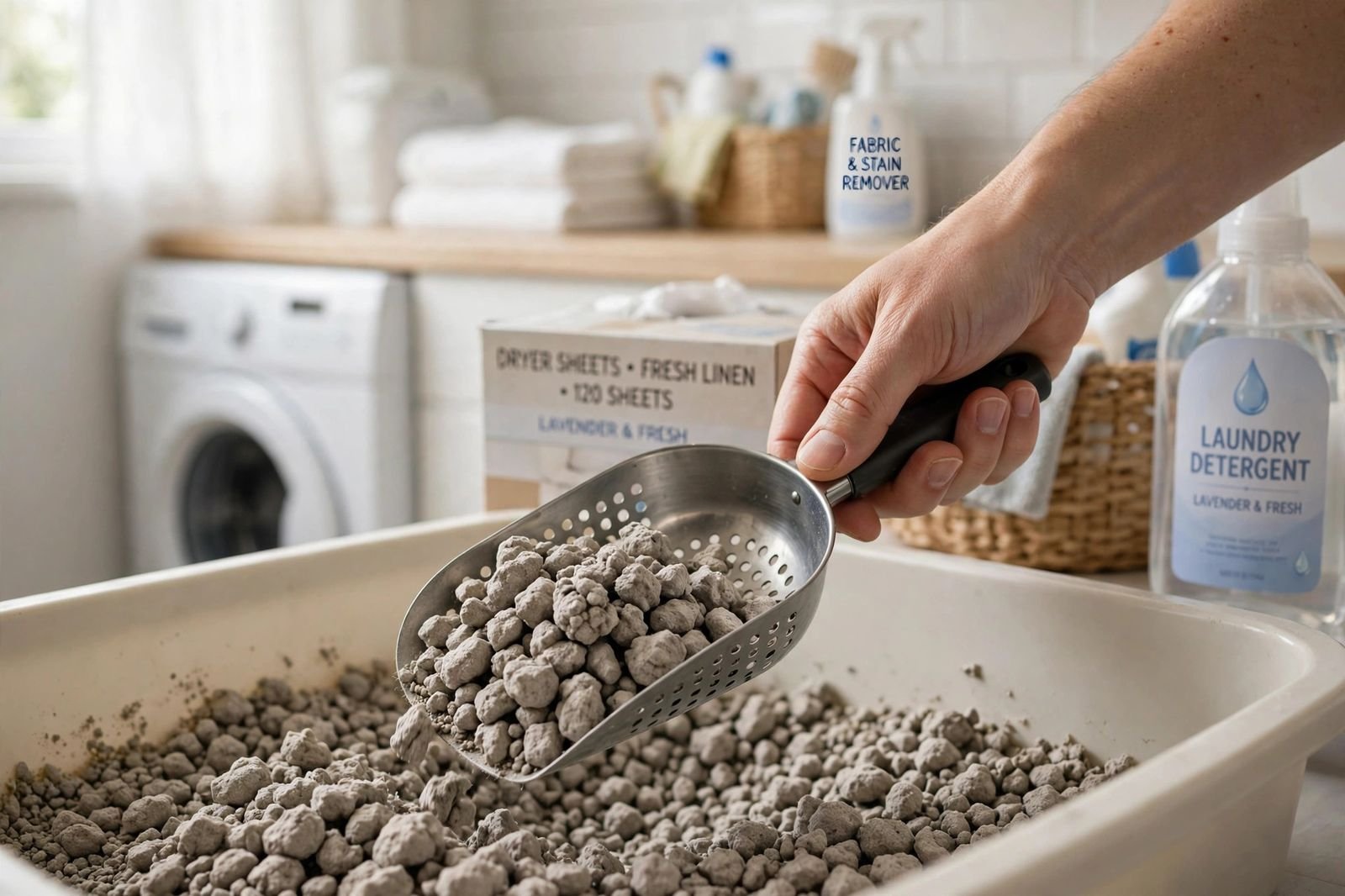
Cats are creatures of habit, and a sudden wholesale change of litter texture can read as “the box is broken.” Many owners learn this the expensive way — via a bath mat or a laundry pile. The safe method takes about a week:
Days 1–3: Mix roughly 75% old litter with 25% new. Days 4–6: Move to a 50/50 split. Days 7–9: 25% old, 75% new. Day 10: Full switch. If your cat starts avoiding the box or going beside it, back up one step and slow down. Kittens, seniors, and anxious cats may need two weeks.
One more tip: keep the box itself unchanged during the transition. Same location, same box, same scooping routine — change only the litter. And if you are bringing a new cat home entirely, settling the litter situation early pays off; my new cat introduction guide covers setting up the whole first-week environment, box included.
Which Litter Should You Actually Buy?
After all the comparing, here is my honest shortlist for different situations:
Best for most people: Unscented clumping clay, mid-range brand. Easy scooping, cats accept it, reasonable cost, decent odor control. This is the default for a reason.
Best for allergies and sensitive lungs: Silica crystal or paper litter. Both are genuinely low dust; pick crystal for odor control, paper for softness and post-surgery recovery.
Best eco-friendly pick: Pine pellets or a corn/wheat clumping litter. Biodegradable, low dust, and the plant-based clumping ones perform nearly as well as clay.
Best for multi-cat homes: A strong clumping clay or walnut-shell litter with a rigorous daily scooping routine. With multiple cats, scooping frequency matters more than the litter formula — consider a second box before a fancier bag. If your cats seem restless or bored on top of everything, good enrichment helps too; see my indoor cat toy guide for ideas that tire them out between naps.
Avoid: Heavily scented litters, the absolute cheapest dusty clay, and switching types abruptly.
Frequently Asked Questions
What is the best cat litter type overall?
For most cats and most owners, unscented clumping clay litter is the best all-rounder: cats accept its sandy texture readily, it clumps for easy scooping, odor control is solid, and it is affordable. That said, the “best” litter is the one your specific cat uses reliably — a cat that avoids the box makes any litter a bad choice.
Is clumping litter safe for kittens?
Very young kittens (under about 8 weeks) sometimes taste litter, and clumping clay can cause digestive blockages if swallowed in quantity — so non-clumping or paper litter is safer until they are past the tasting phase. Once a kitten eats solid food confidently, clumping litter is fine.
Can you flush cat litter down the toilet?
Only litters labeled flushable (some corn, wheat, and paper types) — and even then, only in small amounts and only where local wastewater rules allow it. Never flush clay or crystal litter; it does not break down and can damage plumbing and septic systems. Many experts recommend bagging and trashing litter rather than flushing regardless.
How deep should cat litter be?
About 2–3 inches (5–8 cm) for most litters — deep enough for digging and covering, shallow enough that clumps are easy to scoop. Pellet litters like pine work with a thinner layer, around 1–2 inches. If your cat is a vigorous digger that hits the bottom of the box, add a little more.
Does expensive cat litter work better?
Sometimes, but not reliably. Price correlates with dust control and fancy odor additives more than with the fundamentals. A mid-range unscented clumping clay that you scoop daily will outperform an expensive litter in a neglected box every time. Spend your money on an extra box and a good scoop before upgrading the litter.
Why does my cat kick litter everywhere?
Energetic digging and covering is normal instinct, not misbehavior. A high-sided or top-entry box, a litter mat, and keeping the litter at the right depth all reduce the mess. Some cats kick more with fine-grained litters; switching to a pellet-style litter can help since the larger pieces do not fly as far.