

Dog Shedding: How to Manage It Like a Pro
Plenty of owners have lived this scene: wearing a black blazer to a wedding and spending the entire ceremony discreetly picking cream-colored hairs off the sleeves. The dog in question is often a terrier mix with a wiry coat that, according to every breed description read before adoption, “sheds minimally.” Reader, he sheds. Not husky-in-a-blizzard levels, but enough that the car, the couch, and the wedding-guest wardrobe all carry his signature. It usually takes the better part of a year to stop fighting the shedding and start managing it.
Dog shedding is normal, healthy, and — for most breeds — permanent. You will never stop it entirely, and anyone selling you a product that promises to is selling you something else. What you can do is dramatically reduce the amount of hair that ends up on your floors, your furniture, and your black blazer. Here is the full playbook: why dogs shed, the tools that actually work, the brushing routine that keeps it under control, and the warning signs that mean “call the vet” instead of “buy a better vacuum.”
Published: June 5, 2026 | Last updated: June 5, 2026
Quick Tips
- Shedding is normal — you manage it, you don’t eliminate it. Aim to control where the hair goes, not to stop it.
- Regular brushing (2–3 times a week for most dogs, daily for heavy shedders) removes loose hair before it hits your furniture.
- Match the tool to the coat: slicker brushes for long coats, rubber curry brushes for short coats, undercoat rakes for double coats.
- Spring and fall “coat blows” are the heaviest shedding periods — increase brushing frequency during these weeks.
- A quality diet with adequate fatty acids supports healthy skin and coat; a dull, flaky coat sheds more.
- Sudden bald patches, constant scratching, or skin redness are vet-visit signs, not grooming problems.
Why Dogs Shed (and Why Some Shed Like It’s a Job)
Shedding is how dogs renew their coats. Old or damaged hairs fall out so new ones can grow in — the same reason humans lose hair in the shower. Most dogs shed a little year-round and then shed heavily twice a year, in spring and fall, when they swap their seasonal coats. This is the infamous “coat blow,” and if you own a double-coated breed like a husky, corgi, or golden retriever, you know exactly what I’m describing: tumbleweeds of undercoat rolling across your hardwood floors.
How much a dog sheds comes down mostly to coat type. Double-coated breeds shed the most — that dense undercoat is insulation, and it has to go somewhere when the seasons change. Short single-coated breeds shed moderately but constantly. Wiry and curly coats (poodles, schnauzers, terrier mixes) shed less visibly because loose hairs get trapped in the coat — which is great for your furniture and means you need to brush more, not less, or the trapped hair mats.
Indoor dogs also tend to shed more evenly throughout the year instead of in dramatic seasonal bursts, because artificial lighting and heating confuse their bodies about what season it is.
The Brushing Routine That Actually Controls It
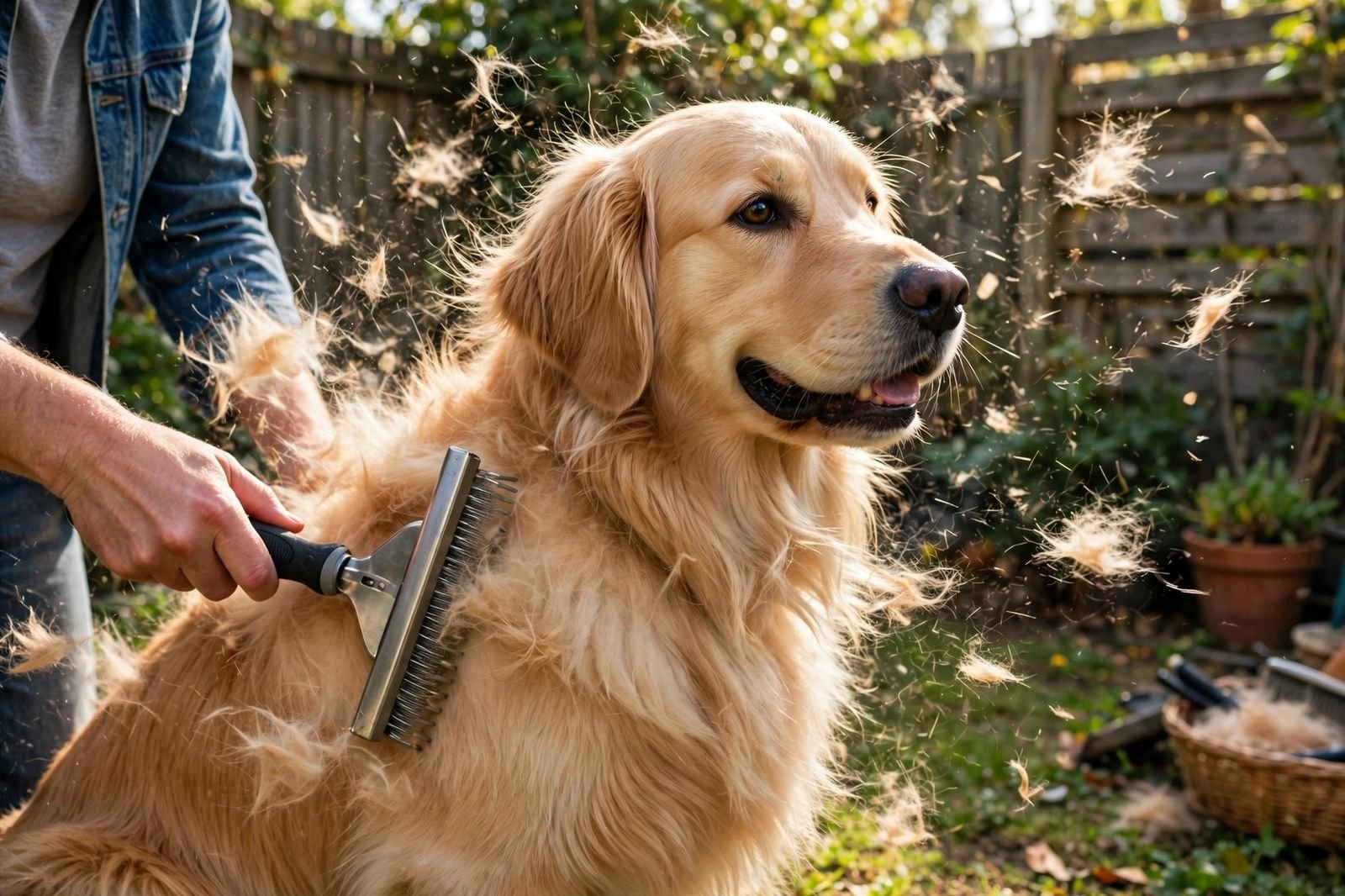
Here is the single most important sentence in this article: the hair you brush out is hair that doesn’t end up on your couch. Every grooming guide says “brush regularly,” and every owner nods and then doesn’t. But five minutes of brushing while the morning coffee brews can cut the hair on clothes roughly in half. The routine matters more than the tool.
For average shedders, 2–3 brushing sessions a week is the sweet spot. For heavy shedders — double coats, especially during coat-blow season — go daily. Five to ten minutes is enough; you’re not detailing a show dog, you’re harvesting loose hair. Brush in the direction of hair growth, section by section, and finish with a once-over. Do it outside or in one easy-to-clean spot if you can — many owners brush on the back porch, and the birds end up with the best-insulated nests in the neighborhood.
Bathing helps too, but not the way people think. A bath doesn’t stop shedding; it loosens dead hair so your post-bath brushing session is dramatically more productive. One bath plus a thorough brush-out removes more hair than a week of dry brushing. If you need a refresher on bathing frequency and technique, my dog bathing guide has the full breakdown.
Don’t forget the diet connection
A dog’s coat is built from what he eats. Dogs on poor-quality diets often have dull, dry, flaky coats that shed more and look worse doing it. You don’t need exotic supplements — a complete, balanced dog food with adequate omega fatty acids does most of the work. Some owners add fish oil on their vet’s advice, and it can help coat quality, but the foundation is simply good nutrition. If your dog’s coat went from glossy to dull, look at the food bowl before you look at the brush drawer.
Choosing the Right Tools (Without Buying the Whole Aisle)
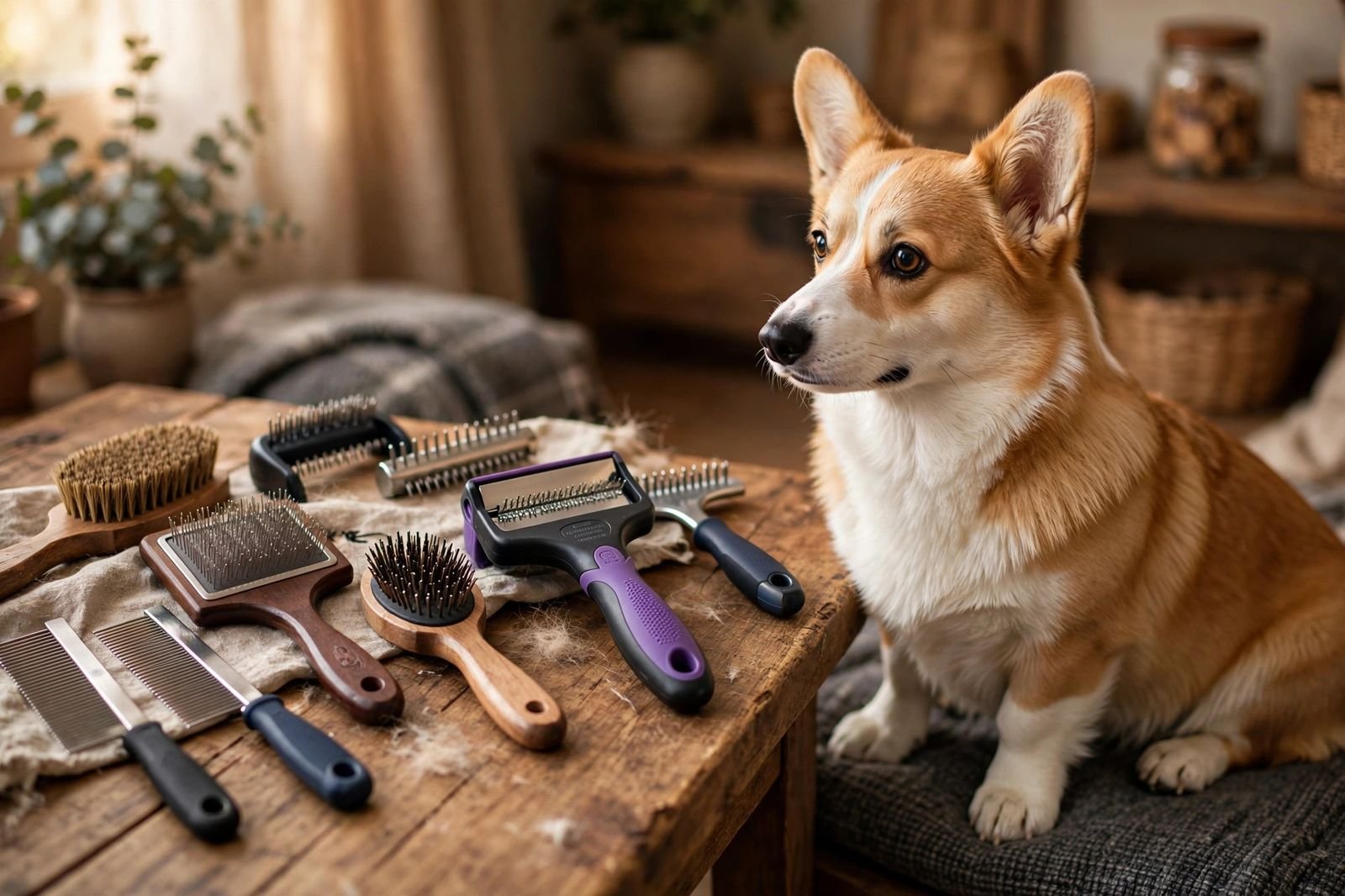
Walk into any pet store and the brush wall is overwhelming: slickers, rakes, combs, mitts, blades, and a deshedding tool with a name that sounds like farm equipment. You need one or two tools matched to your dog’s coat, not a collection. Here’s the cheat sheet.
Short, smooth coats (beagles, boxers, labs)
A rubber curry brush or grooming mitt is your best friend. The rubber nubs grab loose hair that bristle brushes skate right over, and most short-coated dogs love the massage feeling. Use it in circles, then wipe down with a damp cloth. Two minutes, done.
Long or silky coats (goldens, spaniels, setters)
A slicker brush for everyday work plus a steel comb for checking your progress. The slicker’s fine wire pins pull out loose hair and prevent tangles; the comb tells you the truth — if it snags, there’s still loose undercoat or a mat forming. Work in layers, lifting the top coat to get underneath.
Double coats (huskies, corgis, shepherds, chows)
An undercoat rake is the essential tool. It reaches through the top coat to pull out the loose, fluffy undercoat without cutting the guard hairs. During coat-blow season, this is a daily ritual. A deshedding tool (the famous one rhymes with “furminator”) also works but use it sparingly — overuse can damage the top coat. Once a week during heavy shedding is plenty.
Wiry and curly coats (terriers, poodles, doodles)
A slicker brush plus regular professional grooming. These coats trap their own shed hair, which sounds convenient until it forms mats. Brushing every few days prevents the trapped hair from felting into painful tangles. Many wiry-coated breeds also benefit from hand-stripping or clipping on a schedule — ask your groomer what your dog’s coat needs.
Managing the House (Because the Dog Lives There Too)
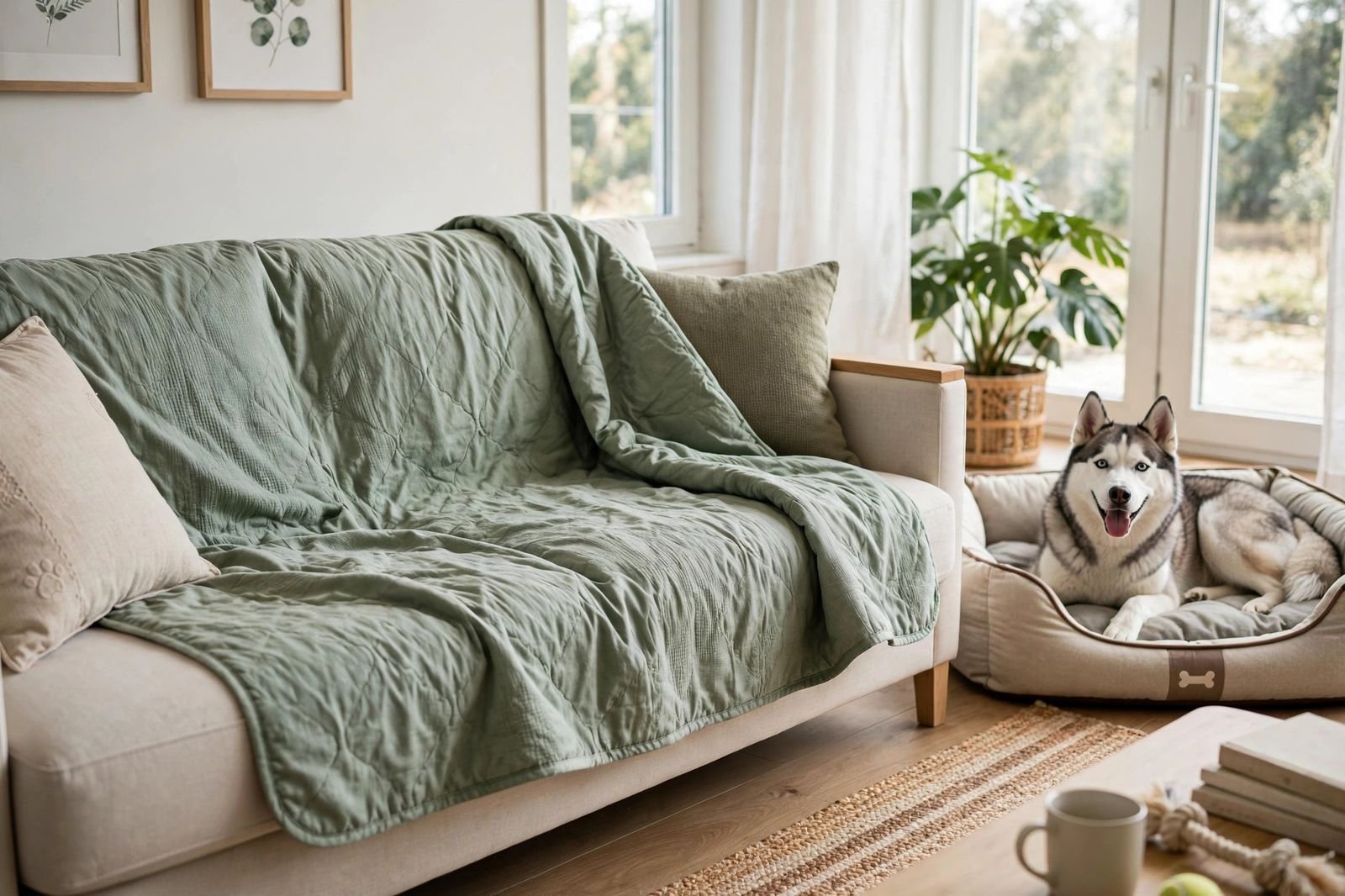
Even with perfect brushing, some hair will escape. The second half of shedding management is home strategy, and it’s mostly about working smarter. Washable throws on the couch and the dog’s favorite chair spot catch an enormous percentage of household hair — toss them in the wash weekly and your furniture stays clean.
For floors, a rubber broom or a vacuum with a pet-hair attachment beats a standard broom every time — regular brooms just push hair tumbleweeds around. A robot vacuum running daily is the luxury version of the same idea, and honestly, for heavy-shedding breeds, it earns its keep. Keep a lint roller by the front door and one in the car. Accept that guests will find one dog hair on themselves no matter what you do, and that this is a sign of a loved home, not a dirty one.
Washing your dog’s bedding weekly matters more than most people realize. Bedding collects hair, dander, and skin oils, and a grimy bed can irritate skin — which increases scratching, which increases shedding. It’s a cycle you can break with a washing machine. If nail trims are the part of grooming you dread, the nail trimming guide walks through it without the drama.
When Shedding Isn’t Normal: Red Flags
Normal shedding is diffuse and even — hair coming out all over, no bald spots, skin looking healthy underneath. Abnormal shedding has a different character, and it’s worth knowing the difference because skin problems are one of the most common reasons dogs visit the vet.
Call your vet if you notice: distinct bald patches or thinning in spots; constant scratching, licking, or chewing at the skin; red, flaky, scabby, or smelly skin; shedding that suddenly increases dramatically with no seasonal explanation; or hair loss paired with lethargy, appetite changes, or weight changes. These can signal allergies, infections, parasites, hormonal issues, or stress — all fixable, but none fixable with a better brush.
Stress shedding is real, too. Dogs shed more when anxious — vet visits, moving house, new family members. If the heavy shedding started right after a big life change and the skin looks fine, give it a few weeks of routine and calm before worrying.
Frequently Asked Questions
Can I ever stop my dog from shedding completely?
No — and be suspicious of any product that claims otherwise. Shedding is a normal biological process. What you can do is reduce it significantly with regular brushing, good nutrition, and smart house management. Even heavy-shedding breeds become very livable with the right routine.
How often should I brush my shedding dog?
Two to three times a week for average shedders; daily for heavy shedders and double-coated breeds, especially during spring and fall coat blows. Five to ten minutes per session is enough. Consistency beats marathon sessions — regular short brushing removes more total hair than one long monthly battle.
Does shaving my dog reduce shedding?
It reduces the length of the hair on your floor, not the amount of shedding — and for double-coated breeds it’s actively harmful, damaging the coat’s insulation and sun protection. Brush instead of shaving. The only dogs that should be clipped short are breeds whose coats are meant to be clipped.
What is the best brush for a heavy-shedding dog?
For double-coated heavy shedders, an undercoat rake used regularly is the single most effective tool. A deshedding tool used once a week during coat-blow season helps too, but don’t overdo it — aggressive deshedding can damage the healthy top coat. Match the tool to the coat type rather than buying the most aggressive option.
Does diet really affect how much my dog sheds?
Yes, noticeably. A complete, balanced diet with adequate fatty acids produces a healthier coat that sheds less and looks better. Dogs on poor nutrition often have dry, flaky skin and dull coats with excessive shedding. If the coat quality drops suddenly, diet is one of the first things to review — alongside a vet check.
Why is my dog shedding so much all of a sudden?
Seasonal coat blows in spring and fall are the most common cause. Stress, a recent move, or a new household member can also trigger heavier shedding. But sudden, patchy, or extreme hair loss with skin changes — redness, flaking, bald spots — warrants a vet visit rather than a grooming solution.