

Can Cats Eat Cheese? What Owners Should Know
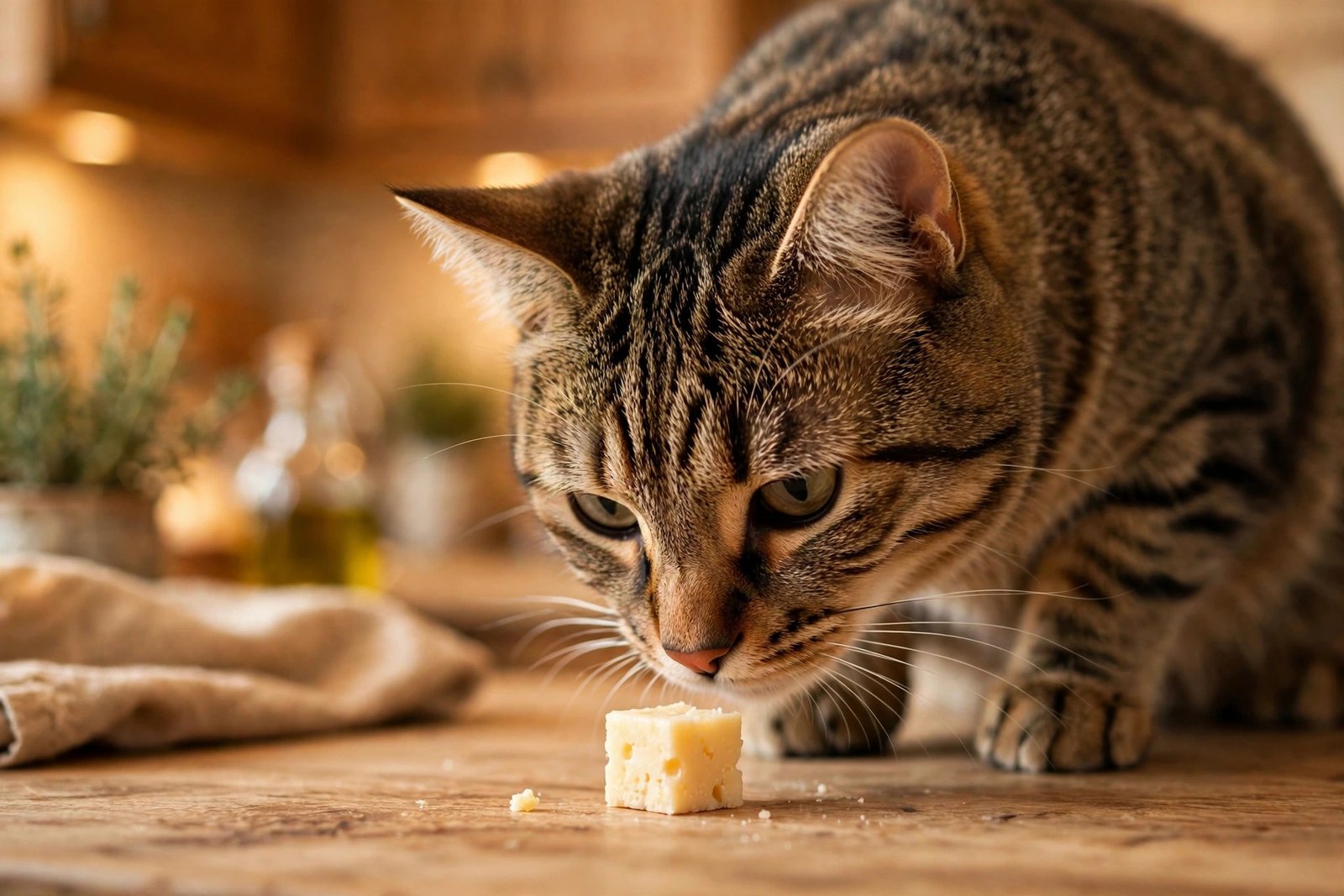
Somewhere along the way, cheese became a cartoon cat food — Tom chases Jerry past the cheese wedge, and we filed cheese under “things cats eat.” Then you get an actual cat, and you notice the fine print: most cats are lactose intolerant. So what is the real story — is that tiny cube of cheddar a harmless treat or a stomachache waiting to happen?
Here is the short version: can cats eat cheese? A tiny amount, once in a while, is usually fine for most cats. But cheese should never be a regular part of a cat’s diet, some cats react badly to even small amounts, and a few types of cheese are best avoided entirely. Let us get into the details so you can make the call for your cat.
Quick Tips
- Most adult cats are lactose intolerant — keep cheese portions tiny and infrequent.
- Hard, aged cheeses (cheddar, Swiss) have less lactose than soft cheeses.
- A pea-sized piece once in a while is plenty; cheese is calorie-dense.
- Skip blue cheese, anything with garlic or onion, and heavily processed cheese spreads.
- Watch for vomiting, diarrhea, or gassiness after cheese — that is your cat telling you no.
- Cheese is a treat, never a meal replacement or a daily habit.
The Lactose Problem (Why Adult Cats Struggle With Dairy)
Kittens drink milk. Adult cats, for the most part, should not. The reason is an enzyme called lactase, which breaks down lactose — the sugar in milk. Kittens produce plenty of it. But after weaning, most cats produce less and less lactase, and many adults produce barely any. Without enough lactase, undigested lactose ferments in the gut, and the result is the classic trio: gas, soft stools, or outright diarrhea.
This is why the “saucer of milk for the cat” tradition is one of those things that survived on charm rather than science. A little milk rarely causes a crisis, but it is not doing the cat any favors either. Cheese sits in the same family — it is dairy, so the lactose question applies — but with an important twist: the cheesemaking process itself removes a lot of lactose.
When milk becomes cheese, much of the lactose drains away with the whey (the liquid part), and aging bacteria consume even more of what is left. The result: a well-aged hard cheese contains only a trace of lactose compared to a glass of milk. That is why many cats who would get an upset stomach from milk handle a crumb of aged cheddar fine — though individual cats vary, and some are sensitive enough that even low-lactose cheese causes trouble.
Which Cheeses Are the Safer Bets?
Not all cheese is created equal for cats. If you are going to share, here is how the common options stack up:
Hard aged cheeses — the best choice. Cheddar, Swiss, Parmesan, and Gouda have been aged long enough that most of their lactose is gone. A tiny piece of cheddar is the classic “safe” cheese treat. Parmesan is so low in lactose it is nearly negligible — though it is also very salty, so keep the piece truly tiny.
Semi-soft cheeses — okay in moderation. Mozzarella and similar cheeses sit in the middle. Lower lactose than milk, higher than aged cheddar. A small piece now and then is fine for most cats.
Soft fresh cheeses — the riskiest. Cream cheese, ricotta, cottage cheese, and fresh mozzarella retain more lactose. These are the ones most likely to cause digestive upset. If your cat is going to react to cheese, it will probably be to these.
Cheeses to skip entirely. Blue cheese and other mold-ripened cheeses can contain compounds that may not agree with cats — no good reason to risk it. Anything with added garlic or onion (some flavored cheese spreads) is off the table, since both are harmful to cats. And heavily processed cheese products — the wrapped slices, squeeze tubes, powdered stuff — bring a load of salt, additives, and fat with almost no upside.
How Much Cheese Is Actually Okay?
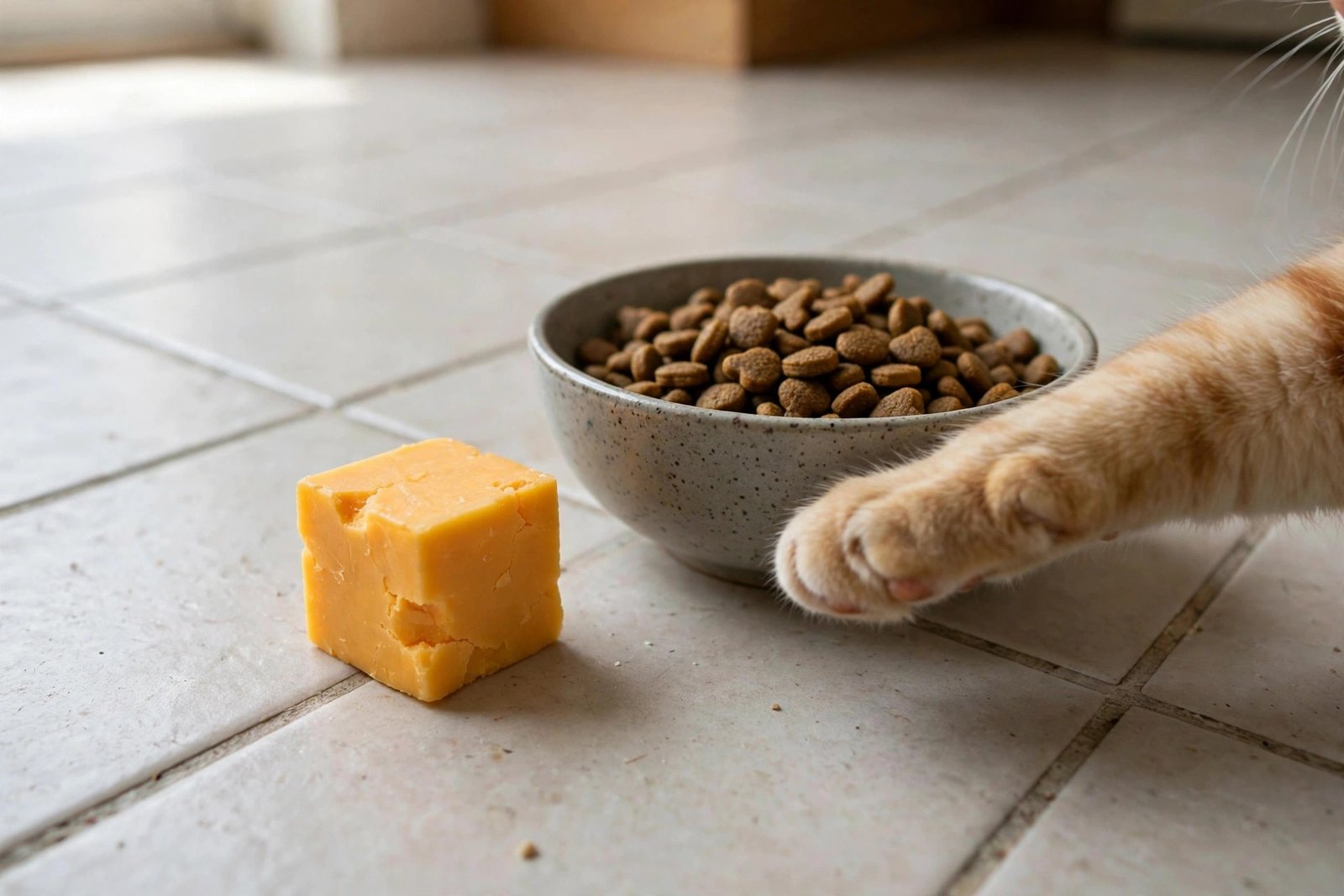
Think of cheese the way you would think of cake frosting: a lick is a treat, a bowlful is a mistake. For a cat, a “treat portion” of cheese means something like a pea-sized crumb or a thin shaving — not a cube, not a slice, not “whatever falls on the floor while I am making a sandwich.”
There are two reasons to keep it tiny. First, the lactose issue above — small amounts are far less likely to cause trouble than generous ones. Second, cheese is calorie-dense: an average cat needs roughly 200–250 calories a day, and a single ounce of cheddar carries over 100. Cats do not need cheese calories; their complete cat food already covers their nutrition. For more on how treats fit into the bigger feeding picture, my can cats eat tuna guide covers the same “occasional treat, not a diet” logic for another popular human food.
Frequency matters as much as portion. A crumb of cheese once a week is a non-event for most cats. A crumb every day starts to become a habit — and daily dairy, even in small amounts, can keep a sensitive gut mildly irritated without you ever connecting the dots. If cheese becomes a daily ritual, it is worth asking whether the cat actually needs it, or whether it is really a ritual for the human.
Signs Your Cat Does Not Tolerate Cheese
Some cats will tell you very clearly that cheese was a bad idea. Watch for these in the hours after sharing:
Soft stools or diarrhea. The most common reaction, and the clearest sign of lactose intolerance. One loose stool after a new treat is worth noting; repeated episodes mean cheese is off the menu.
Vomiting. Some cats vomit dairy quickly. A single episode after cheese is a strong hint.
Excessive gas or a gurgling belly. Less dramatic but still a sign the gut is not happy.
Itchy skin or ear scratching. Less common, but some cats have a genuine dairy sensitivity that shows up as itchiness rather than digestive trouble.
If you see any of these, the answer is simple: skip the cheese. There is nothing in cheese that a cat needs and cannot get from proper cat food. And if digestive symptoms persist beyond a day or seem severe, that is a vet conversation — the same threshold I lay out in my wet vs dry cat food guide for any dietary upset, since ongoing gut trouble always deserves professional input rather than guesswork.
Why Do Cats Seem to Love Cheese So Much?
Given that most cats cannot digest dairy well, their enthusiasm for cheese is a little ironic. But cheese is concentrated fat and protein with a strong savory aroma, and cats are obligate carnivores whose food instincts are driven heavily by smell. The cat is not thinking about lactose — just about how good it smells.
This enthusiasm is worth managing rather than indulging. A cat that learns cheese appears on demand will campaign for it — the staring, the meowing, the paw on your sandwich. Begging behavior around human food is a habit that is much easier to prevent than to undo. If you share cheese at all, do it on your terms: tiny piece, offered occasionally, not handed over because the cat staged a protest at the fridge.
Cheese as a Pill Pocket (The One Practical Use)
Here is where cheese genuinely earns its keep: hiding medication. Many owners discover that a pea-sized ball of soft cheese wrapped around a pill is the only reliable way to medicate a cat that spits out pills with professional skill. Vets themselves often suggest this trick.
A few ground rules for pill-pocket duty. Use the smallest amount of cheese that does the job — you are wrapping a pill, not making a sandwich. Soft cheese works better than hard for molding. And check with your vet first, because some medications should not be given with dairy (dairy can interfere with the absorption of certain drugs). If your vet gives the green light, this is one of the rare cases where cheese serves a real purpose beyond being a tasty bribe.
The same “ask the vet about interactions” logic applies to any food used for medicating — it is a small step that avoids accidentally undermining the treatment you are trying to give.
Better Treat Alternatives
If your cat loves cheese but does not tolerate it — or if you would just rather not play dairy roulette — there are better options that scratch the same itch:
Commercial cat treats. Designed for cats, portion-controlled, and nutritionally appropriate. The crunchy treats in fish or chicken flavors exist precisely to replace the human-food treats owners want to share.
Small pieces of cooked plain meat. A pea-sized bit of cooked plain chicken or turkey gives the savory protein hit with none of the lactose question. No seasoning, no skin, no bones.
Freeze-dried meat treats. Single-ingredient, high-protein, and shelf-stable. Many cats find them as exciting as cheese, and they are squarely in the “made for cats” category.
The pattern is the same one behind most human-food questions: the closer a treat is to “made for cats,” the fewer question marks come with it. Cheese sits in the middle of the spectrum — not dangerous like the foods on the toxic list, but not ideal either.
Frequently Asked Questions
Can cats eat cheese every day?
They should not. Even small daily portions can irritate a lactose-sensitive gut over time, and cheese calories add up fast against a cat’s small daily budget. Keep cheese to an occasional tiny treat — weekly at most — or skip it in favor of treats made for cats.
Is cheddar cheese safe for cats?
Aged cheddar is one of the safer cheese choices because aging removes most of the lactose. A pea-sized piece occasionally is fine for most cats. Watch for digestive upset the first time, keep portions tiny, and avoid making it a habit.
Can kittens eat cheese?
There is no reason to give cheese to kittens. They are still producing lactase, so a tiny taste is unlikely to cause trouble, but kittens have precise nutritional needs and cheese contributes nothing useful. Stick to complete kitten food and kitten-appropriate treats.
What should I do if my cat ate a lot of cheese?
Do not panic — cheese is not toxic to cats the way some human foods are. Expect possible vomiting, diarrhea, or gassiness over the next several hours. Make sure fresh water is available, skip rich foods for a day, and watch. If symptoms are severe, last more than a day, or the cat seems lethargic or in pain, contact your vet.
Can cats eat cream cheese?
Soft fresh cheeses like cream cheese retain more lactose than aged hard cheeses, so they are more likely to cause digestive upset. A tiny lick is unlikely to cause harm, but cream cheese is one of the poorer cheese choices for cats. Aged hard cheese is the better option if you share at all.
Is cheese bad for cats with kidney disease?
Cats with kidney issues are usually on restricted diets, and cheese — high in sodium, phosphorus, and protein — can conflict with those restrictions. If your cat has kidney disease or any chronic condition, check with your vet before offering cheese or any new treat.