
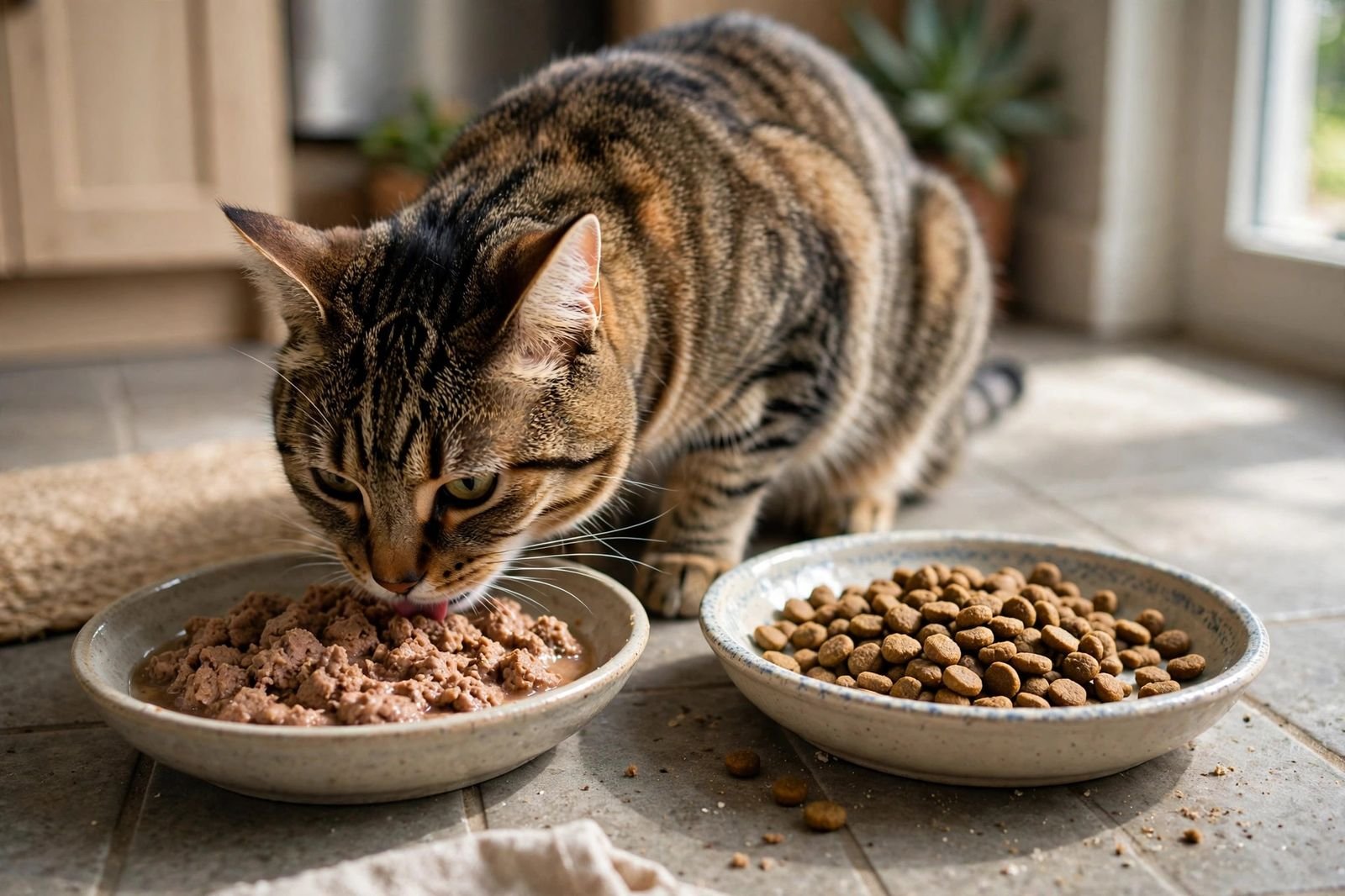

Wet vs Dry Cat Food: Which Is Better?
Walk into any pet store and the cat food aisle is basically two rival camps: the wall of kibble bags and the wall of little tins and pouches. Ask five cat owners which is better and you will get six opinions, several of them strongly held. Many new owners start with dry food because it is cheaper and easier — kibble in the bowl, done. Then they notice the cat drinking surprisingly little water, and fall into the research hole that every cat owner eventually falls into.
The wet vs dry cat food debate has a real answer, but it is not the simple one either camp wants. Each has genuine strengths, each has real weaknesses, and the best choice for most cats is not one or the other. Here is the honest comparison.
Published: June 2, 2026 | Last updated: June 2, 2026
Quick Tips
- Wet food wins on hydration — cats are poor drinkers and get most of their water from food.
- Dry food wins on cost and convenience, and it is fine as part of a mixed diet.
- The “kibble cleans teeth” claim is mostly myth; dental health needs more than food texture.
- Most vets recommend a mix: wet food for moisture, dry for grazing and budget.
- Whichever you choose, “complete and balanced” on the label matters more than wet vs dry.
- Transition between types gradually — a sudden swap can mean a hunger strike.
The Core Difference: Water
Everything in this debate flows from one number: wet food is roughly 75–80% water, while dry food is around 8–10%. That is not a small gap. It is the entire story.
Cats evolved as desert animals, and their thirst drive is famously weak. In the wild, cats get most of their moisture from prey — a mouse is about 70% water, essentially nature’s wet food. A cat eating only dry kibble is living on far less moisture than its body expects, and many cats simply do not drink enough water from a bowl to close the gap. They are not being stubborn; their biology just does not generate strong thirst signals until they are already somewhat dehydrated.
This matters because chronic low-level dehydration is linked to urinary and kidney issues, which are among the most common health problems in cats — especially males and seniors. This is the single strongest argument for wet food, and it is why so many vets nudge owners toward including it. If your cat is a reluctant drinker (most are), wet food is doing quiet work that a water bowl cannot.
The Case for Wet Food
Hydration
As above: a cat eating wet food can take in dramatically more water per day without drinking an extra drop. For cats prone to urinary crystals or with any kidney concerns, this alone can be decisive. It is the closest thing to a consensus in feline nutrition.
Lower calorie density, higher protein
Wet food typically contains more animal protein and fewer carbohydrates per serving than kibble, and its high water content means fewer calories per bite. Cats feel full on volume, so wet food can make weight management easier — the cat eats a satisfying-looking portion with fewer calories. For indoor cats prone to pudginess, that is a meaningful advantage.
Palatability
Most cats find wet food more appealing — the aroma, the texture, the moisture. For picky eaters, elderly cats with reduced appetite, or cats recovering from illness, wet food’s smell and softness can be the difference between eating and not. A strong appetite is worth a lot in a species that can get into trouble quickly from not eating.
The downsides of wet food
It costs more — often two to three times as much per day as kibble for the same cat. Opened cans need refrigerating and using within a couple of days. It cannot sit out all day; wet food left in the bowl for hours in a warm kitchen is a bacterial playground, so grazers need scheduled meals. And the smell, while ambrosia to cats, is not everyone’s favorite kitchen perfume. If fishy tins are already a battleground in your house, my tuna treat guide explains where the human-can stuff fits in.
The Case for Dry Food
Cost and convenience
Kibble is dramatically cheaper per calorie and nearly indestructible in the bowl — you can leave it out all day for grazers without worry, which suits cats that prefer many small meals. For multi-cat households, the cost difference between all-wet and all-dry feeding is enormous. It is also travel-friendly and easy to store. There is no shame in these being real factors; the best diet is one the household can sustain.
The dental myth
The most repeated claim for kibble is that it cleans teeth. The reality is disappointing: most cats swallow kibble pieces whole or shatter them with a single bite, so there is minimal scraping action. Studies have not shown meaningful dental benefits from standard dry food. (There are prescription dental diets engineered with larger, fibrous kibbles that do help — but that is a specialty product, not regular kibble.) Dental health comes from brushing, dental treats, and vet cleanings, not from food texture. Do not let the teeth argument decide this for you.
The downsides of dry food
Low moisture is the big one, as discussed. Dry food also tends to be higher in carbohydrates than cats strictly need — cats are obligate carnivores with limited ability to process carbs, and while modern kibble is formulated to be complete, the carb load is a legitimate criticism. Some cats also become “kibble addicts,” refusing wet food entirely, which is a problem if they later develop a condition where hydration matters medically. Variety early on prevents this.
The Answer Most Vets Give: Feed Both
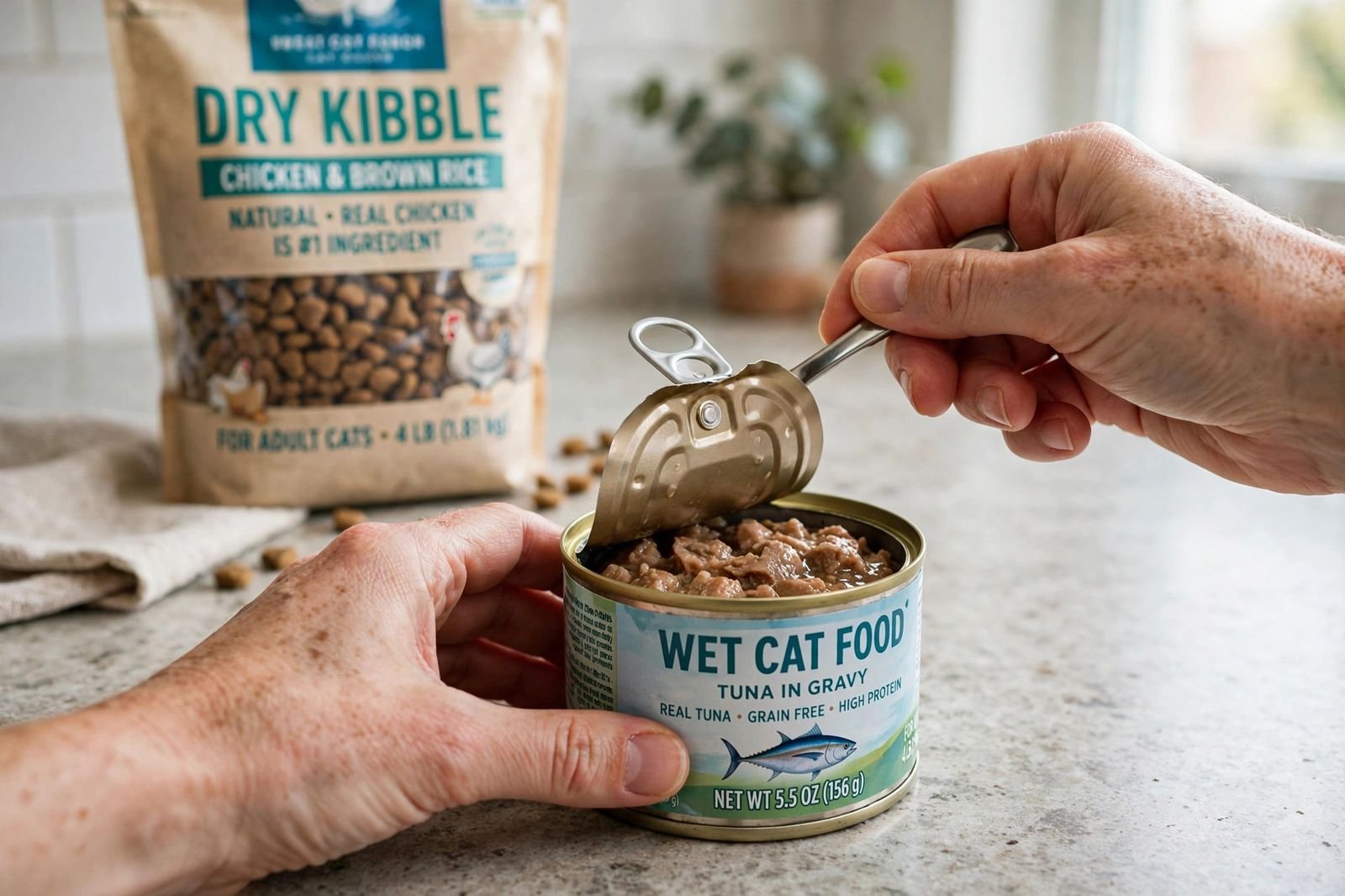
Here is the open secret of the debate: the most common professional recommendation is a mix. Wet food once or twice a day for hydration and protein, dry food available for grazing, cost control, and convenience. You get the moisture benefits of wet food without the full price tag, and the cat gets dietary variety that keeps it flexible about textures.
A practical split that works for many households: a wet meal morning and evening on a schedule, with a measured portion of dry food available during the day. “Measured” is doing important work in that sentence — free-feeding dry food is where weight gain sneaks in, because it is very easy for a bored indoor cat to graze its way to obesity. If you are still dialing in the overall routine, my cat feeding frequency guide covers how meals, grazing, and treats should balance out.
What ratio?
There is no magic number. Even replacing a quarter of the diet with wet food meaningfully improves moisture intake. If budget is tight, one small tin a day plus kibble is a perfectly respectable setup. If budget allows, mostly wet with some dry for grazing is excellent. The direction of travel matters more than the exact percentage: more wet than you feed now is almost always an improvement.
Choosing Good Food in Either Camp
The wet-vs-dry question gets all the attention, but food quality within each camp matters at least as much. A premium dry food beats a junk wet food, and vice versa. What to look for:
“Complete and balanced.” This label statement (referencing AAFCO or FEDIAF standards) means the food meets established nutritional profiles. It is the single most important thing on the package, wet or dry.
Named animal protein first. Look for “chicken,” “turkey,” “salmon” — not “meat by-products” or vague “animal derivatives” — as the first ingredient. Cats need animal protein; it should lead the list.
Life-stage appropriate. Kitten, adult, and senior formulas differ meaningfully in calorie density and nutrients. An all-life-stages food is acceptable, but a formula matched to the cat’s stage is better.
Carbs low on the list (for dry especially). Some carbohydrate is unavoidable in kibble manufacturing, but foods led by grains and starches are a worse pick than meat-led ones.
Price correlates with quality only loosely. Plenty of mid-priced foods meet all these criteria. Read the label, not the marketing.
Transitioning Between Wet and Dry
Cats are texture conservatives. A lifelong kibble cat may look at wet food like it is a personal insult, and a wet-food devotee may crunch dry food suspiciously and walk away. Switch gradually over 7–10 days: mix a little of the new texture into the old, increasing the proportion. Warming wet food slightly (to mouse temperature, as the joke goes — just lukewarm, not hot) releases aroma and helps enormously with suspicious cats.
Do not let a hunger strike run long. A cat refusing a new food for 12–24 hours is protesting; a cat refusing all food beyond that needs the old food back and a slower plan — and if food refusal stretches past a day or two entirely, that is a vet matter, not a patience matter. Cats that stop eating can develop liver complications frighteningly fast. Knowing when to call the vet versus wait it out is essential knowledge for every cat owner.
Frequently Asked Questions
Is wet food actually better than dry food for cats?
Wet food has a genuine edge on hydration, which matters a lot for cats’ urinary and kidney health, plus higher protein and fewer carbs. Dry food wins on cost and convenience. Most vets recommend feeding both rather than choosing a side — the mix captures most of wet food’s benefits without the full expense.
Can cats live on dry food alone?
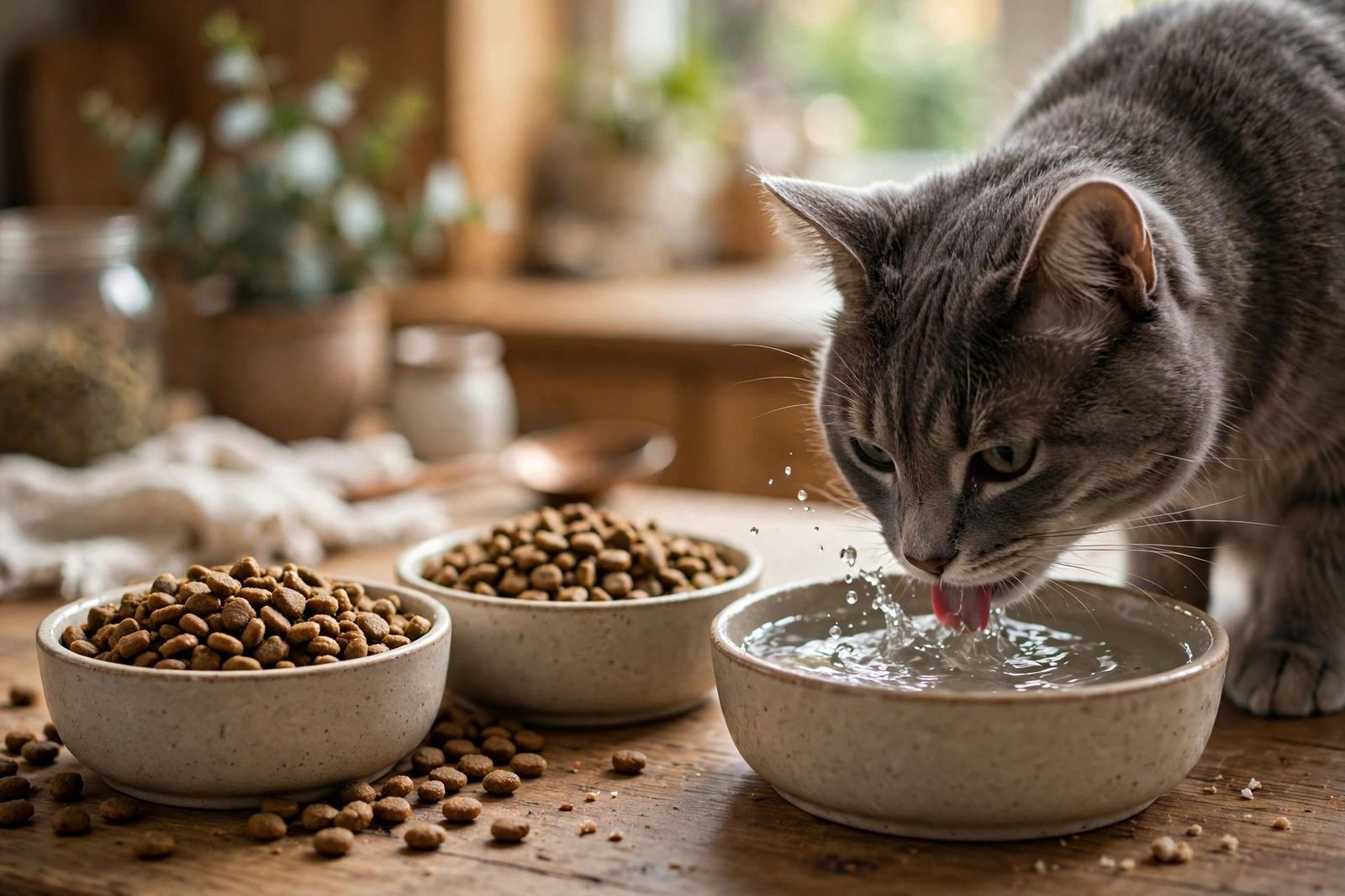
Yes — millions do, and a good-quality complete dry food meets all nutritional requirements. The concern is moisture: dry-only cats need to drink more water, and many do not drink enough. If you feed dry only, encourage drinking with fresh water, a fountain, or wet food toppers, and watch for urinary issues, especially in male cats.
Does dry food clean cats’ teeth?
Not meaningfully. Most cats barely chew kibble, so the scraping effect is minimal, and studies do not show real dental benefits from regular dry food. Dental-specific prescription diets are the exception. For actual dental care, brushing and vet cleanings are what count.
How much wet food should I feed my cat per day?
Follow the feeding guidelines on the specific product, adjusted for your cat’s weight, age, and activity — and reduce dry food accordingly so total daily calories stay right. As a rough starting point, one standard 3-oz tin replaces about a quarter to a third of a typical indoor cat’s daily calories. Your vet can fine-tune portions at checkups.
Is it okay to mix wet and dry cat food in the same bowl?
Yes, many owners do this and cats often love it — the kibble adds crunch and the wet food adds aroma. Just serve it as a meal rather than leaving it out, since the wet component should not sit at room temperature all day. Discard uneaten mixed food after a few hours.
Why won’t my cat eat wet food?
Texture conservatism is the usual reason — cats imprint on what they ate young. Try different textures (pâté vs chunks in gravy vs shredded), serve it lukewarm, and transition over 7–10 days mixed with the familiar food. Some cats only accept one texture; that is fine. Even a small amount of wet food helps with hydration.