

Tick Prevention Basics for Dogs and Cats
There is a particular kind of dread that comes with finding a tick on your pet. You are scratching behind the ears, everything is normal, and then your fingers find a small bump that should not be there. Most first-time owners have never actually seen a tick up close, so the discovery comes with a wave of questions.
Take a breath — finding a tick is common, especially if your pet spends time in grass, woods, or brush. Tick prevention for dogs (and cats too) is mostly about routine: a prevention plan from your vet, regular tick checks, and a few yard habits that make your property less inviting to ticks. This guide covers all of it in plain language.

Quick Tips
- Talk to your vet about a tick prevention plan — options exist for both dogs and cats.
- Check your pet for ticks after every walk in grass, woods, or brush.
- Learn the hot spots: ears, neck, armpits, groin, between toes, and under the collar.
- Remove ticks with fine-tipped tweezers, grasping close to the skin and pulling steadily.
- Keep your yard’s grass short and leaf litter cleared to make it less tick-friendly.
- Never use dog tick products on cats — some ingredients safe for dogs are dangerous for cats.
Why Ticks Deserve Your Attention
Ticks are small parasites that attach to animals (and people) to feed on blood. The bite itself is usually minor — the concern is that ticks can transmit diseases while feeding. Not every tick carries disease, and not every bite leads to illness, but the risk is real enough that prevention is worth the small effort it takes.
Ticks are also patient. Unlike fleas, which live on the animal, ticks wait in the environment — on grass blades, in leaf litter, along trails — and grab on when a warm body brushes past. Wooded areas and tall grass are the classic tick zones, but suburban yards with brush piles host ticks too. Tick season runs roughly spring through fall in most places, though in warmer regions it can be nearly year-round.
Talk to Your Vet About Prevention Options
The single most effective step is also the simplest: ask your vet about tick prevention at your pet’s next visit, or sooner if tick season is already underway. There are several categories of preventatives — topical treatments applied to the skin, oral chewables, and collars — and your vet can recommend what fits your pet’s age, size, health, and lifestyle. What works for a hiking dog in tick country may be overkill for an indoor cat that only visits a screened porch, and your vet knows the tick risks in your specific area.
A few things worth knowing going in. First, flea and tick prevention often comes bundled — many products cover both, which is convenient, and my flea prevention basics guide pairs with this one if you want the full parasite picture. Second, consistency matters more than the specific product: preventatives work on a schedule, and a missed dose is a gap in protection. Set a phone reminder. Third, and this one is critical for multi-pet households: never use a dog tick product on a cat. Some ingredients that are safe for dogs are toxic to cats. Keep dog and cat products separate and labeled.
Natural remedies come up a lot in tick conversations — essential oils, garlic supplements, and similar home approaches. The honest version: most of these have little solid evidence behind them for tick prevention, and some can be harmful to pets. If you prefer a lighter-chemical approach, talk to your vet about the lowest-intervention option they are comfortable with rather than improvising.
The Tick Check: Your Best Free Tool
No preventative is perfect, which makes the humble tick check one of the most valuable habits you can build. After walks in grassy or wooded areas — and daily during peak tick season if your pet roams a yard — run your hands over your pet’s whole body, feeling for small bumps. Ticks range from poppy-seed size (unfed) to grape size (engorged), so you are feeling as much as looking.
Check the hot spots with extra care: inside and around the ears, the neck and under the collar, the armpits, the groin and belly, between the toes, and around the tail base. Ticks like warm, thin-skinned, hidden areas — on long-haired pets, part the fur and look at the skin itself.
Make it pleasant and it becomes easy. Most dogs learn to enjoy the full-body rubdown version of a tick check, and doing it right after a walk — when they are tired and happy — works best. For cats, fold it into regular petting sessions a few times a week.
How to Remove a Tick Safely
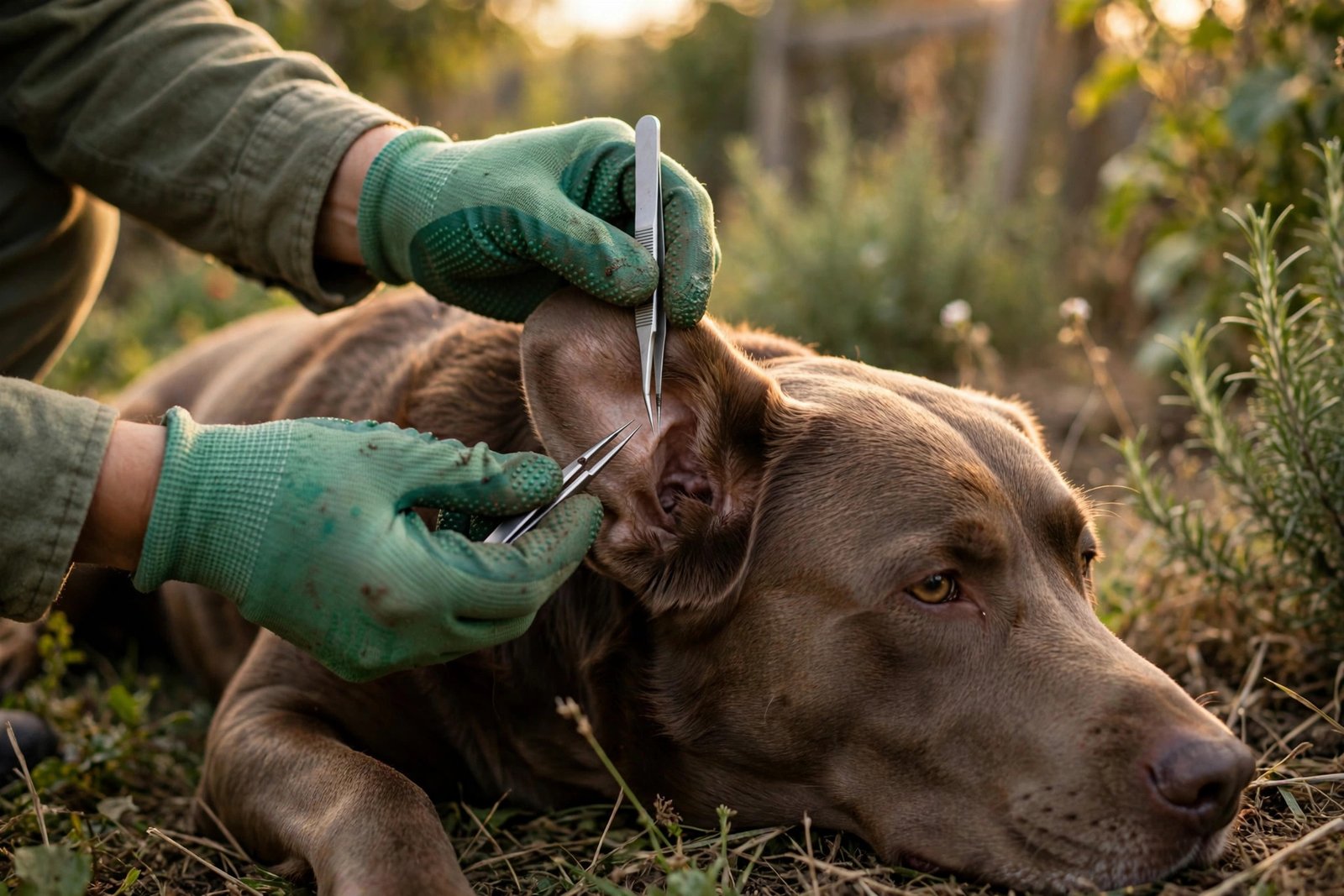
Found one? Do not panic, and skip the old folklore — burning it with a match or smothering it with oil are all worse than the straightforward method. Here is the approach vets recommend:
Use fine-tipped tweezers. Grasp the tick as close to your pet’s skin as possible — you want the head/mouthparts, not the swollen body. Pull straight out with steady, even pressure. No jerking, no twisting.
Clean up after. Once it is out, clean the bite area and your hands with soap and water or rubbing alcohol. Drop the tick in a small container of rubbing alcohol to kill it — or save it in a sealed bag in the freezer for a few weeks, in case your pet develops symptoms later and your vet wants to identify the species.
Watch the spot. A little redness right after removal is normal and usually fades in a day or two. What you are watching for over the next couple of weeks is anything that gets worse instead of better — expanding redness, swelling, or your pet seeming off: lethargy, loss of appetite, or limping. Those are “call the vet” signs. Note the date you found the tick; timelines help vets a lot.
One reassurance: speed matters with tick-borne disease. Most tick-borne illnesses need the tick to be attached for many hours (often 24–48) before transmission happens. That is exactly why daily tick checks are so powerful — finding and removing a tick the same day it attached dramatically lowers the risk.
Make Your Yard Less Tick-Friendly
You cannot tick-proof the outdoors entirely, but you can make your own yard significantly less appealing to ticks. Ticks love humidity and cover — tall grass, leaf litter, brush piles, and overgrown edges. The yard version of tick prevention is mostly just good yard hygiene:
Keep grass short. Mow regularly and trim the edges where lawn meets woods, brush, or fence lines. Short, sunny grass is hostile territory for ticks, which dry out easily.
Clear the clutter. Rake up leaf litter, remove brush piles, and keep woodpiles neat and off the ground. These are tick nurseries. A three-foot barrier of wood chips or gravel between lawn and wooded areas also helps — ticks are reluctant to cross dry, open ground.
Discourage tick taxis. Deer and rodents carry ticks into yards. Fencing that keeps deer out, and not leaving pet food outside that attracts rodents, both reduce the number of ticks arriving on four legs.
These habits overlap nicely with general yard safety — short grass, clear edges, and no brush piles make the whole outdoor space better for pets, not just less tick-friendly.
Cats and Ticks: The Special Notes
Indoor cats have low tick risk, but cats with catio access, leash-walk outings, or a habit of slipping out the door can absolutely pick up ticks. The tick check routine applies to cats too — and cats’ grooming means they may find and swallow ticks themselves, so do not assume a clean-looking cat is a tick-free cat.
The product warning bears repeating because it is genuinely dangerous: dog flea and tick products can be toxic to cats. In multi-pet homes, keep pets separated until topicals dry if your vet advises it, and never borrow from the dog’s supply for the cat. Cat-specific preventatives exist — ask your vet which suits your cat.

Tick Season Strategy: Putting It Together
A workable year-round routine looks like this. Prevention product on schedule, per your vet’s recommendation — set the reminder and do not skip months. Tick checks after outdoor adventures, daily in peak season. Yard kept short and clear. And a small tick kit by the door: fine-tipped tweezers, rubbing alcohol, a sealable bag, and your vet’s number saved in your phone.
Summer is peak tick season in most regions, and it is also peak everything-else season — heat, fleas, mosquitoes. If you are building your warm-weather pet safety routine, my summer safety for pets guide covers the heat side of the equation, which pairs naturally with parasite prevention.
Frequently Asked Questions
How often should I check my dog for ticks?
After every walk in grass, woods, or brush — and daily during peak tick season if your pet spends lots of time outdoors. A full-body check takes two to three minutes once you’re used to it. Pay special attention to ears, neck, armpits, groin, between toes, and under the collar.
What’s the safest way to remove a tick from my pet?
Use fine-tipped tweezers, grasp the tick as close to the skin as possible, and pull straight out with steady pressure — no twisting or jerking. Clean the area afterward, save the tick in alcohol or a sealed bag for a couple of weeks in case symptoms develop, and watch the bite site for worsening redness or swelling.
Can indoor cats get ticks?
It’s uncommon but possible — cats with catio access, leash outings, or escape-artist tendencies can pick up ticks, and ticks can occasionally hitchhike indoors on people or other pets. If your cat goes outside in any capacity, include them in your tick-check routine.
Are natural tick repellents effective for pets?
Most home remedies — essential oils, garlic, and similar approaches — have little solid evidence for tick prevention, and some can be harmful to pets. If you want to minimize chemical preventatives, discuss the lightest effective option with your vet rather than improvising.
How long does a tick need to be attached to transmit disease?
For most tick-borne diseases, transmission typically requires many hours of attachment — often 24 to 48 hours. That’s why daily tick checks are so effective: removing a tick the same day it attached greatly reduces the risk. Note the date when you remove a tick, and watch your pet for lethargy, appetite loss, or limping over the next couple of weeks.
Can I use my dog’s tick prevention on my cat?
No — never. Some ingredients in dog tick products are toxic to cats, and even small amounts can be dangerous. Use only products labeled for cats, dosed for your cat’s weight, ideally chosen with your vet’s guidance. In multi-pet homes, keep dog and cat products clearly separated.