
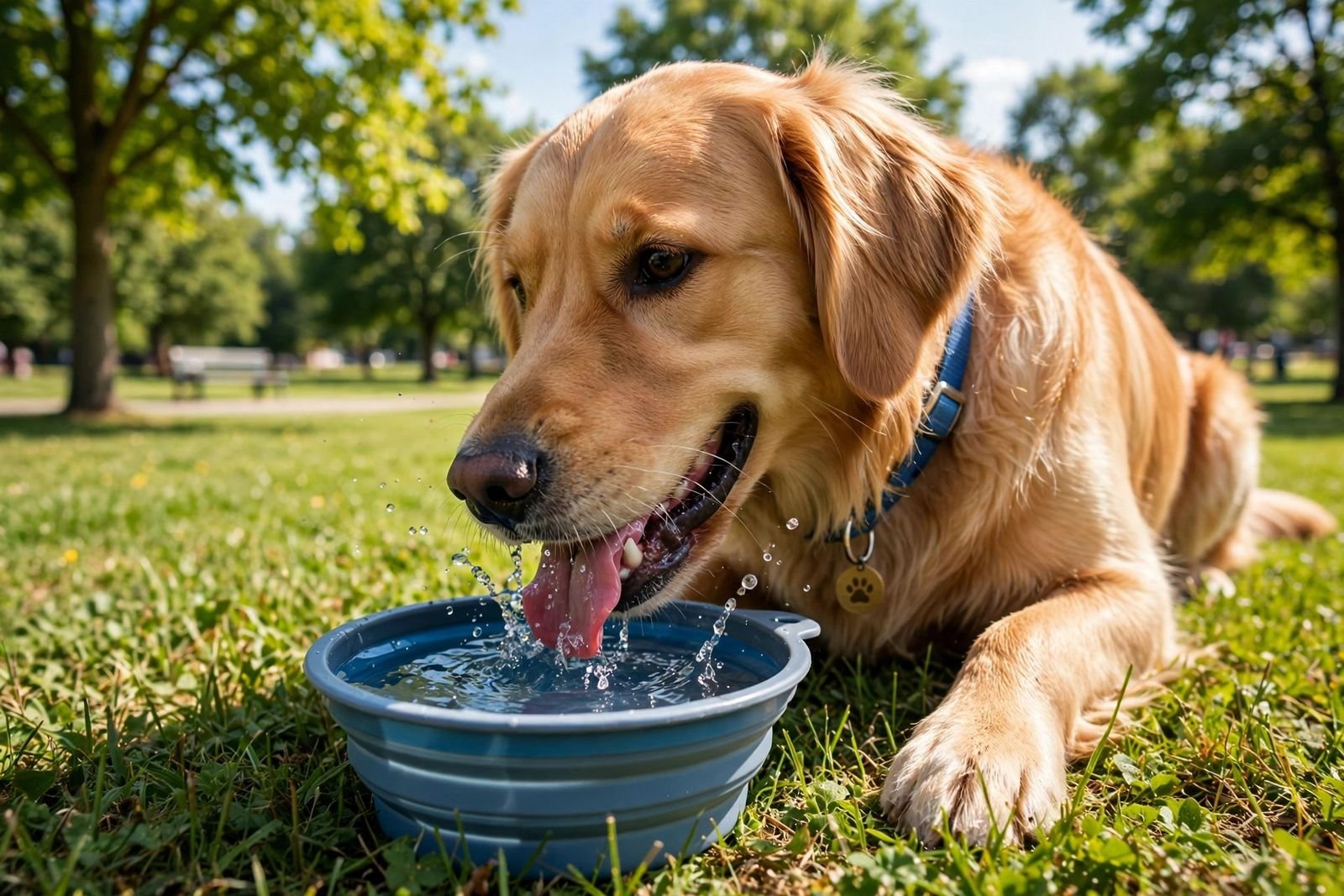

Summer Safety for Pets: Heat, Water, and Sun
Summer is the best season to be a pet owner — long evenings, park trips, the dog asleep in a sunbeam like it is a full-time job. It is also the season with the most underestimated hazards. Every year, vets see the same preventable emergencies: overheated dogs, burned paw pads, pets left in hot cars “just for a minute.” A common lesson for new owners is the pavement one — a quick July walk, a dog doing a strange hopping dance, and asphalt that was far hotter than it looked.
This guide is the summer safety briefing every new owner deserves early on: heat, water, and sun, plus the seasonal extras like barbecues and fireworks. Nothing dramatic — just the practical habits that let everyone enjoy the season safely.
Quick Tips
- Never leave a pet in a parked car — not for a minute, not with windows cracked.
- Walk dogs early morning or late evening; test pavement with your hand first.
- Keep fresh water available everywhere — home, yard, and on outings.
- Know the signs of overheating: heavy panting, drooling, glazed eyes, stumbling.
- Supervise all swimming; not every dog (or any cat) is a natural swimmer.
- Provide shade always — pets need a cool retreat even in their own yard.
Heat: The Number-One Summer Danger
Dogs and cats handle heat far worse than we do. They cannot sweat like humans — dogs cool themselves mostly by panting, cats by grooming and seeking cool surfaces — and both systems get overwhelmed fast in high heat and humidity. Overheating can escalate from uncomfortable to dangerous shockingly quickly, which is why prevention matters so much more than reaction.
Learn the warning signs before you need them: excessive panting that does not ease with rest, thick drooling, bright red gums or tongue, glazed eyes, vomiting, and in serious cases, stumbling or collapse. If you see these, move the pet to shade or air conditioning immediately, offer small amounts of cool (not ice-cold) water, and cool them with damp towels — then get to a vet promptly. Heat emergencies are one of those “do not wait and see” situations. When in doubt, call your vet or an emergency clinic and describe what you are seeing.
Some pets are at higher risk and need extra caution: flat-faced breeds like bulldogs and pugs, elderly pets, puppies and kittens, overweight animals, and pets with heart or breathing conditions. If yours falls in any of these groups, treat warm days as seriously as hot ones.
The Car Rule: Non-Negotiable
This one gets its own section because it kills pets every single summer. Never leave a dog or cat in a parked car in warm weather — not for “just a minute,” not with the windows cracked, not in the shade. A car’s interior can climb to lethal temperatures in minutes, far faster than most people imagine, and cracking windows makes almost no difference.
The “quick errand” is the classic trap. You run in for one thing, the line is long, your phone rings — and ten minutes have passed. If your destination is not pet-friendly, leave the pet home where it is cool and safe. No errand is worth the risk. In many places, bystanders are legally allowed to break into cars to rescue distressed animals, which tells you how seriously this is taken. Make it a hard household rule with zero exceptions, and you will never have to do the math on a hot day.
Walking Smart in Hot Weather
Dogs still need their walks in summer — just timed right. Shift the main walk to early morning or late evening when temperatures and pavement are cooler. Midday summer walks are for quick potty breaks in shade, not exercise. My dog walking guide covers the baseline routine; in summer, keep the frequency and shorten the midday outings.
The pavement test is the habit to build: press the back of your hand flat against the pavement for seven seconds. If it is too hot for your hand, it is too hot for paw pads. Asphalt in direct sun can burn paws badly enough to blister, and dogs will often keep walking on hurting feet because they want to stay with you. Grass routes, shaded paths, and early timing solve most of it. For dogs that must cross hot surfaces, well-fitted booties are an option — introduce them gradually at home first, because the first bootie experience is comedy for everyone except the dog.
Carry water on every summer walk, even short ones. A collapsible bowl and a bottle take no space and prevent the desperate gas-station-bowl situation. And watch the dog, not the route: lagging, excessive panting, or seeking every patch of shade are all votes to cut the walk short and head home.
Water: Hydration and Swimming Safety
Fresh water should be available to pets at all times in summer — indoors, in the yard, and on outings. Wash bowls daily; warm water grows slime fast. On hot days, drop a few ice cubes in; some dogs treat it as enrichment. If you are out for hours, bring more water than you think you need.
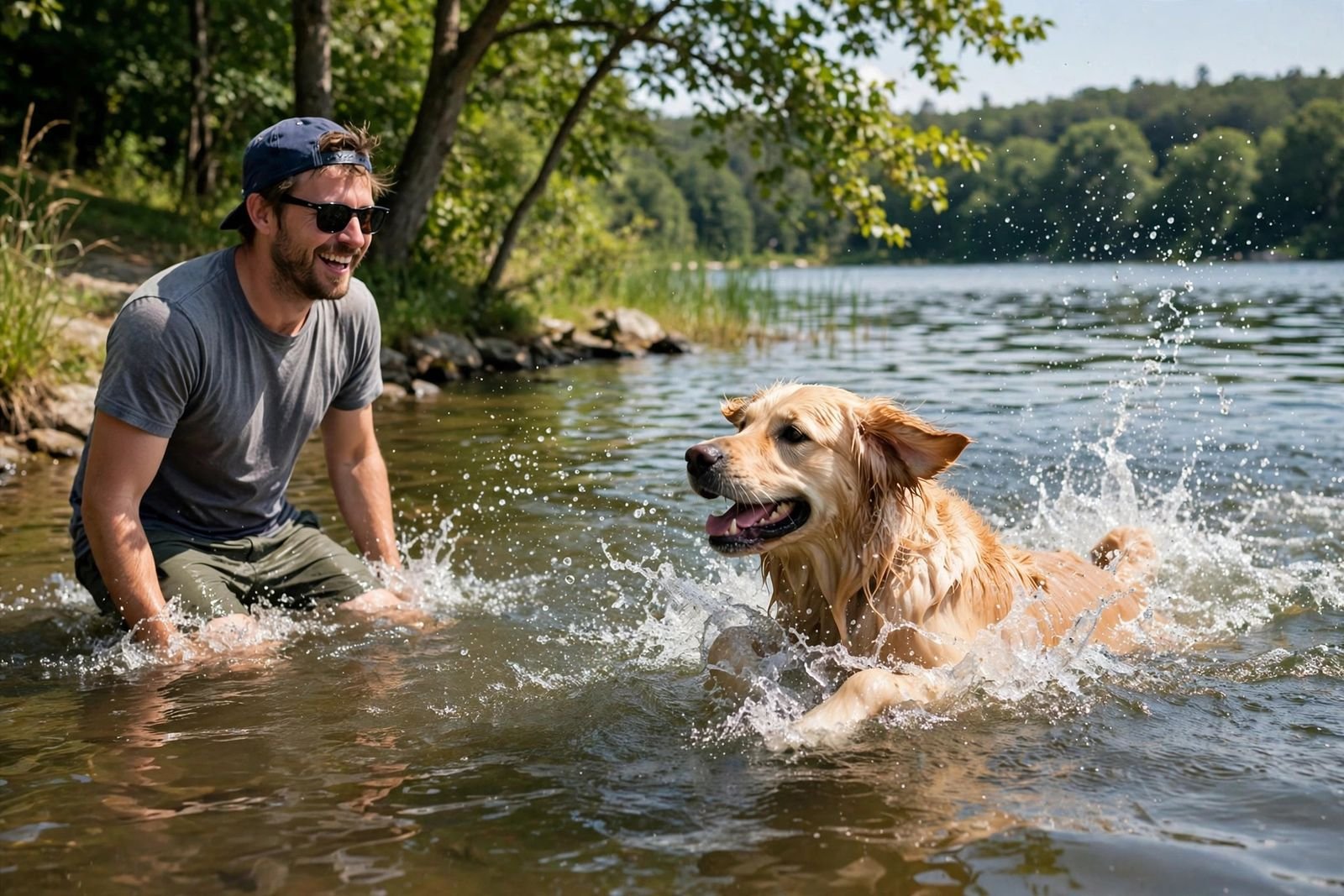
Swimming deserves respect. Not all dogs swim well — bulldogs, pugs, and other heavy-chested breeds can struggle or sink, and even strong swimmers tire. Never assume; introduce water gradually in the shallow end and watch how the dog handles it. A well-fitted dog life vest is cheap insurance for weak swimmers and for any dog around deep water, boats, or currents.
Pools need the same supervision toddlers get: a dog that jumps in may not find the steps to get out, so teach the exit route explicitly and consider a pool alarm or fence. Lakes and rivers bring their own questions — strong currents, and in some areas, algae blooms that can be harmful. When in doubt about water quality, keep the pet out. After swimming, rinse off chlorine or lake water; damp ears are where summer ear irritation starts.
Sun: Yes, Pets Can Get Sunburned
Sunburn is real for pets — especially white or light-colored animals, hairless breeds, and any pet with thin fur on the ears, nose, and belly. A cat sunbathing on the windowsill or a dog with a pink nose can absolutely burn.
The fix is mostly management: make sure shade is always available, limit peak-sun lounging (10 a.m. to 4 p.m. is the harsh window), and for high-risk pets, ask your vet about pet-safe sun protection for exposed areas like ear tips and noses. Never use human sunscreen on pets unless your vet approves the specific product — some ingredients are toxic if licked. Keep summer grooming sensible too: a dog’s coat insulates against heat as well as cold, so shaving down to the skin can make sunburn and overheating worse, not better. Trim, do not shave, unless your vet advises otherwise.
Cats in Summer: The Quiet Risks
Dogs get most of the summer-safety attention, but cats have their own seasonal hazards. The big one is the open window: warm weather means windows open, and every year cats fall from windows and balconies. Secure screens on every window you open, and treat balconies as no-go zones unless fully enclosed with cat-proof netting.
Indoor cats need heat management too. A top-floor apartment in a heatwave can get dangerously warm, and a cat cannot open a window or pour a glass of water. Leave cooling options: tile floors accessible, fresh water in multiple spots, curtains drawn on sun-facing windows. Long-haired cats benefit from regular brushing in summer — mats trap heat against the skin. And parked cars apply to cats just as lethally as dogs; carriers in a hot car heat up terrifyingly fast.
Summer Extras: Barbecues, Bugs, and Fireworks
A few seasonal hazards round out the picture. Barbecues: keep pets away from grills (grease, hot metal, skewers), secure trash so dogs cannot raid bones and corn cobs — both can cause dangerous blockages — and remind guests that “just a bite” of rich barbecue food often ends in a miserable night for the dog. Onion and garlic, common in barbecue food, are toxic to both dogs and cats.
Summer is also peak season for stinging insects and parasites. Most bee stings are minor, but swelling around the face or any sign of breathing difficulty needs a vet fast — know the signs it is time to call the vet before you need them. This is also the season to stay current on flea and tick prevention; your vet can recommend the right routine for your area. And fireworks: the noise terrifies many pets. Keep them indoors during displays, provide a safe den-like hiding spot, keep ID tags and microchip details current in case of escape, and ask your vet in advance if your pet has severe noise anxiety — there are strategies, but they work best planned ahead, not improvised on July 4th.
Before the season ramps up, it is worth doing a general safety pass on your home and yard — my pet-proofing checklist is a good template, with a summer eye on fencing, toxic plants, and standing water.

Frequently Asked Questions
How hot is too hot for a dog walk?
There is no single number because humidity, breed, and fitness matter, but as a rough guide, be cautious above 75°F (24°C) and seriously reconsider above 85°F (29°C) — especially for flat-faced, elderly, or overweight dogs. The pavement test matters more than the air temperature: if the back of your hand cannot stand the pavement for seven seconds, walk on grass or wait for evening.
Can cats get heatstroke indoors?
Yes. An unventilated apartment or a sunny room in a heatwave can overheat a cat, since cats cannot sweat effectively. Signs include rapid panting (unusual in cats — panting is always worth attention), drooling, and lethargy. Ensure cool surfaces, fresh water, and airflow; in extreme heat, a damp towel to lie on helps. Any suspected heatstroke needs a vet promptly.
Is it safe for my dog to swim in lakes?
Often yes, with judgment. Check for posted warnings about algae blooms or contamination, avoid strong currents, and supervise constantly. Rinse the dog afterward. If the water looks scummy, smells off, or has warning signs posted, keep the dog out — when in doubt, skip it.
Do dogs need sunscreen?
Most dogs with full coats do not, but light-colored, thin-coated, or hairless dogs can burn on exposed skin like noses and ear tips. Ask your vet about pet-safe options — never use human sunscreen without veterinary approval, as some ingredients are toxic if licked off.
How do I keep my pet calm during fireworks?
Keep them indoors with windows closed, provide a cozy hiding spot, and keep the evening routine normal — your calm behavior is contagious. Background noise like TV or music helps mask bangs. Ensure ID tags and microchip info are current in case of escape. For severe anxiety, talk to your vet well before firework season about a plan.
[…] on hot days, since heat plus exertion can lead to overheating fast. For more on managing heat, summer safety for pets covers shade, hydration, and warning signs in more […]