
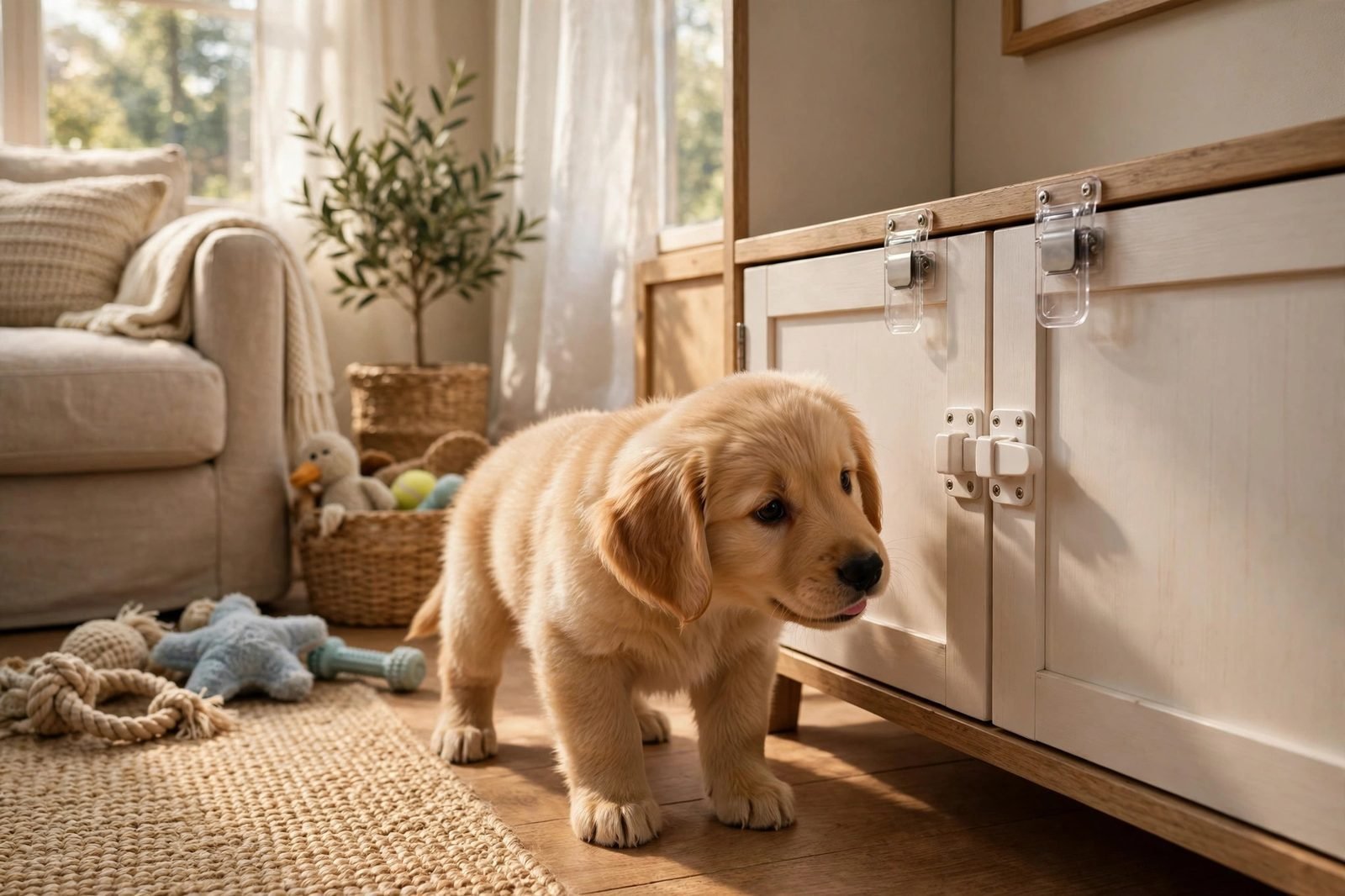

The first time I pet-proofed a home, I did it wrong in the most predictable way possible: I stood up, looked around the room at adult eye level, and declared it safe. My puppy then spent the next two weeks finding every single thing I couldn’t see from five and a half feet up — the gap behind the fridge, the loose outlet cover near the baseboard, the mouse poison the previous tenant had left under the kitchen sink that I am still furious about.
So here’s the real method, the one I use every time now: get down on your hands and knees. Seriously. Crawl around your apartment or house at pet height and look at your home the way your new dog or cat will see it. Everything worth chewing, knocking over, crawling into, or eating is right there at floor level, and you’ll spot ten times more hazards on your knees than on your feet. Do this room by room, and you’ll be done in an afternoon.
Published: May 15, 2026 | Last updated: May 15, 2026
Quick Tips
- Crawl through each room at pet height — you’ll spot hazards you’d never see standing up.
- Lock away cleaning products, medications, and chemicals in every room, not just the kitchen.
- Secure electrical cords or move them out of chewing reach.
- Check your houseplants: many common ones are toxic to pets.
- Use baby gates and cabinet latches — they’re cheap and they work.
- Scan the trash situation: secure lids or move bins behind closed doors.
- Do a final sweep of the yard and garage before your pet arrives.
Before You Start: The Pet-Height Walkthrough
Pick up your phone, set a timer for an hour, and work through your home one room at a time. In each room you’re looking for the same categories of danger: things that can be eaten, things that can be chewed, things that can be knocked over, places a small animal can get stuck, and escape routes. Puppies explore with their mouths. Cats explore with their paws and their climbing. Both will surprise you.
One thing that changed how I do this: I stopped thinking about it as a one-time project. Pet-proofing is really a habit. New hazards arrive constantly — groceries on the counter, a guest’s handbag on the floor, holiday decorations. The room-by-room sweep gets you a safe baseline; the habit keeps it safe. But let’s get that baseline right first.
The Kitchen: Hazard Central
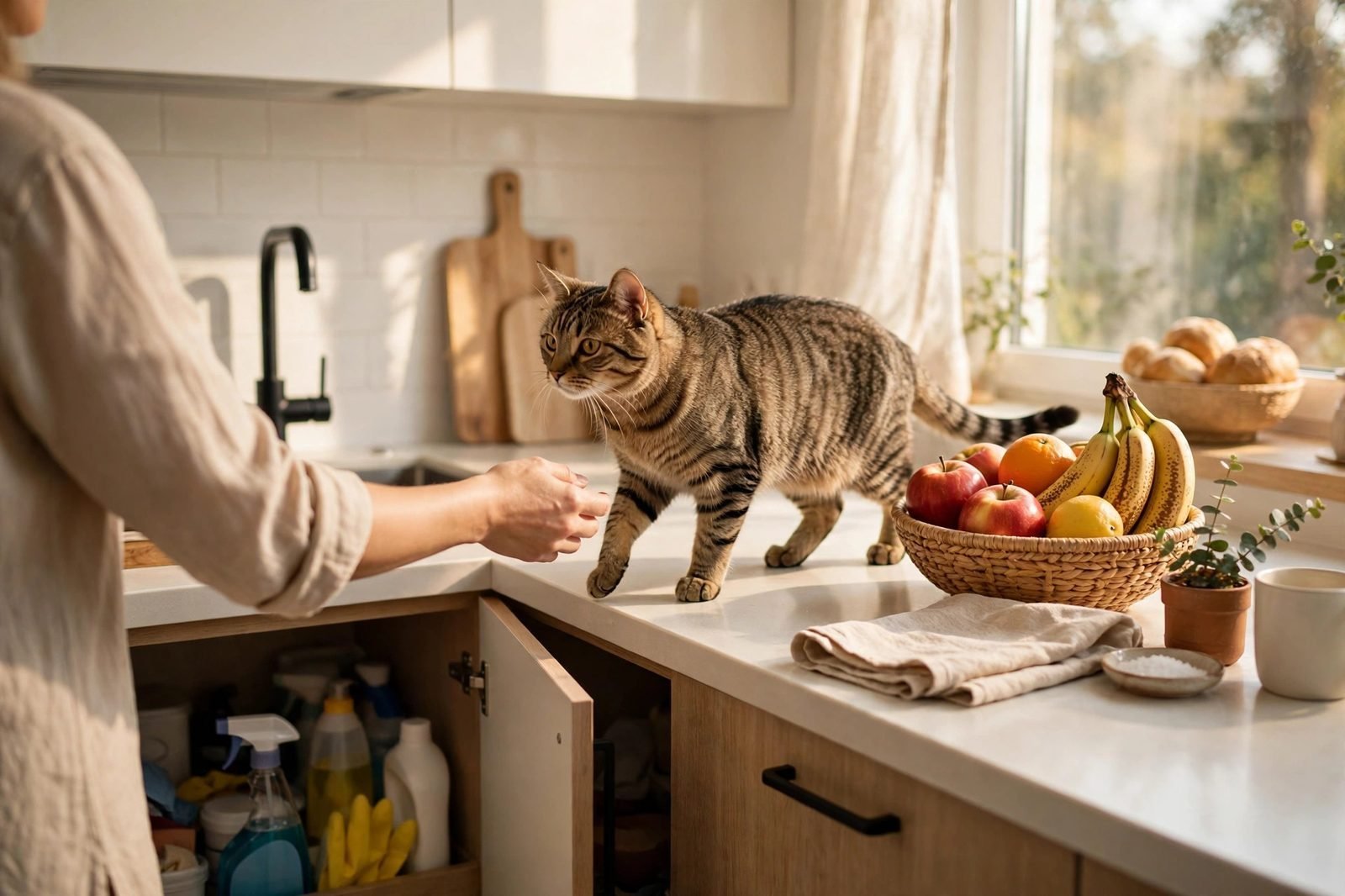
If you only pet-proof one room properly, make it the kitchen. More pet emergencies start here than anywhere else in the house. The combination of food smells, accessible cabinets, and cleaning supplies under the sink makes it the most interesting and most dangerous room for a curious animal.
Food Hazards
Dogs especially are food-motivated burglars, and they’ll learn to open things you assumed were safe. Chocolate, grapes and raisins, onions and garlic, xylitol (a sweetener in sugar-free gum, some peanut butters, and many “sugar-free” products), macadamia nuts, and alcohol are the headline dangers — but the practical rule is simpler: no human food without checking first, and everything edible goes behind a closed, latched door.
The trash can is the kitchen’s sneakiest trap. Get a can with a locking lid, or put the bin inside a latched cabinet. I resisted this for months because locking-lid cans are ugly; I gave in the day my dog pulled a corn cob out of an open bin — exactly the kind of thing that sends a dog to surgery. If you’re still researching food safety, it’s worth learning the specifics — like whether dogs can eat peanut butter safely, including the xylitol check that matters more than most people realize.
Cabinets and Cleaning Supplies
The cabinet under the kitchen sink is where most homes keep their cleaning products, and it’s exactly at nose height for a dog and easily pawed open by a cat. Install childproof latches on every low cabinet that holds chemicals, trash, or sharp objects. They’re cheap, they install in minutes, and they work on pets exactly as well as they work on toddlers.
Dishwasher detergent pods deserve respect — they’re concentrated and interesting to puppies. Store them high or latched, along with any pest control products. If you’ve ever used mouse traps or ant bait, assume there are leftovers somewhere and hunt them down before your pet does.
The Living Room: Cords, Plants, and Small Objects
The living room looks safe because it’s where you relax, but it’s full of chewing-height temptations. Start with the obvious and work down to the sneaky stuff.
Electrical Cords
Puppies chew cords. It’s one of the most consistent behaviors in the species, and a chewed-through lamp cord is genuinely dangerous. Bundle cords with cord covers or spiral wrap, run them behind furniture, or use cord concealers along baseboards. Phone chargers are the worst offenders because they’re thin, dangly, and everywhere — get in the habit of unplugging them and putting them out of reach.
Power strips on the floor are another classic. Elevate them or box them in a cord-management box. It takes ten minutes and removes a whole category of risk.
Houseplants
This one gets people because the plants were there first and nobody thought of them as dangerous. But lilies (extremely toxic to cats — even the pollen), sago palms, pothos, philodendron, dieffenbachia, and many others can cause anything from stomach upset to organ damage. Look up every plant in your home against a reliable toxicity list, and move the questionable ones to high shelves, hanging planters, or a friend’s house.
Cats complicate this because “high shelf” is a suggestion, not a barrier. If you have a determined climber and a toxic plant, the plant has to go. I rehomed a beautiful dieffenbachia to my sister after watching my cat eye it like a project. The sister still has it. The cat never forgave me, but he’s alive, which was the point.
Small Objects and Furniture
Get down at pet height and scan for small chewable objects: coins, rubber bands, hair ties (cats are obsessed with these and they cause terrible intestinal blockages), children’s toys with small parts. Anything smaller than your pet’s mouth is a candidate for swallowing.
Bedrooms: Closets, Laundry, and Nightstands
Bedrooms are where your stuff lives, and your stuff is interesting. The big categories here are clothing, medications, and laundry.
Medications are the headline risk. Nightstand drawers with pill bottles, purses with loose ibuprofen, vitamins on the counter — human medications are one of the most common causes of pet poisoning, and it only takes a moment. Everything goes in a latched drawer or a high cabinet. This includes things that seem harmless: iron supplements, sleep aids, even some vitamins are dangerous in pet-sized doses. Guests need the same briefing; a visitor’s open handbag on your bedroom floor is a classic accident.
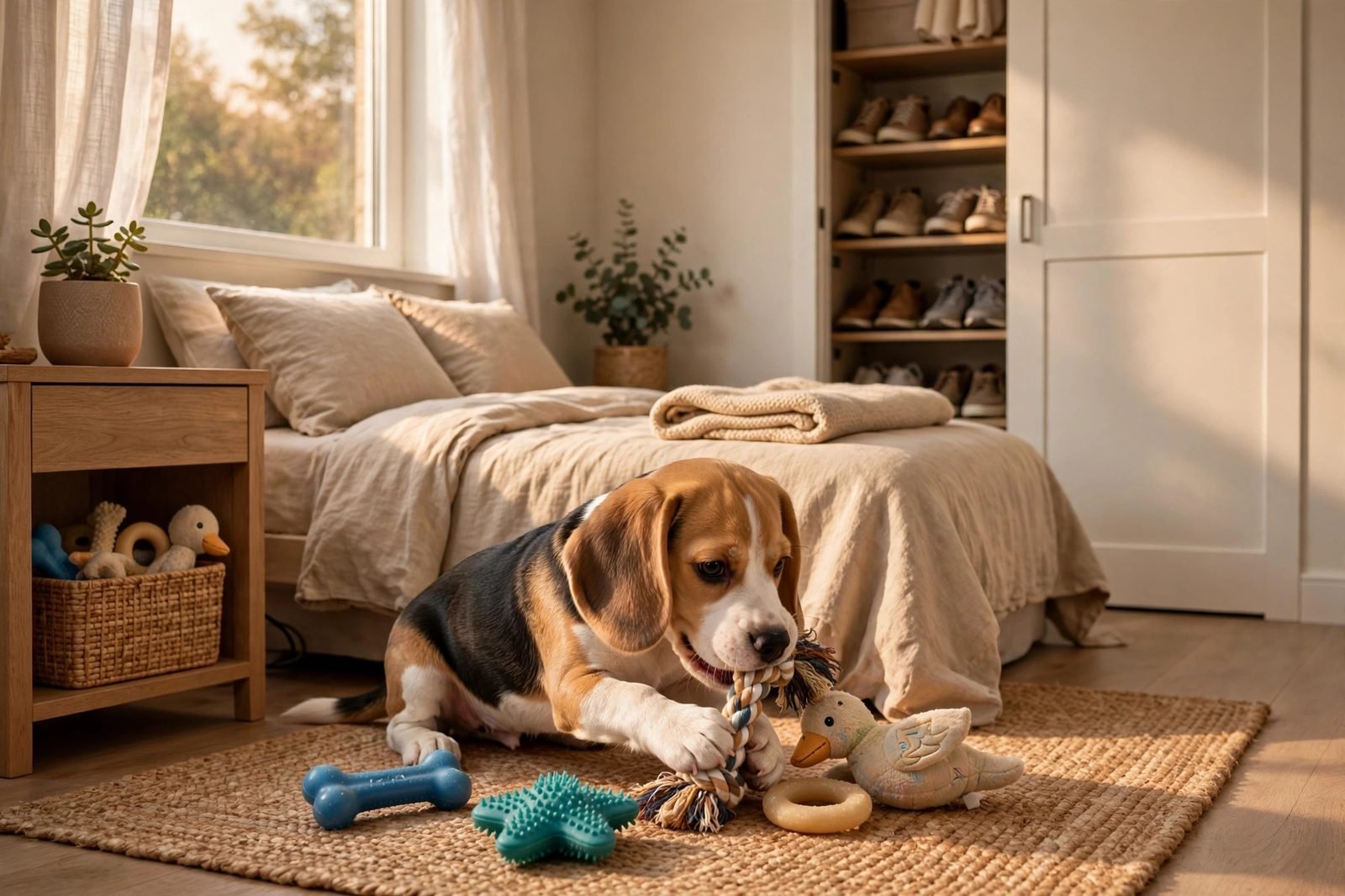
Laundry is the quieter hazard. Socks are the number one swallowed foreign object in dogs — they go down easily and don’t always come back up without surgery. Keep hampers lidded or behind closed doors. Dryer sheets, detergent pods, and fabric softener are chemical hazards; store them like you’d store any cleaning product. And always check the dryer before starting it. Cats love warm dryers. This is not an exaggeration and not a joke — check the dryer.
Closets need doors that stay shut, because closets contain shoes (chewing), mothballs (toxic), and small dark spaces (getting stuck). A simple hook-and-eye latch does the job if the doors don’t stay closed on their own.
Bathrooms: Small Room, Big Risks
Bathrooms concentrate a lot of danger in a small space, which actually makes them easier to secure: keep the door closed. That’s 90% of bathroom pet-proofing. A closed bathroom door solves the toilet (drowning risk for tiny pets, chemical risk from bowl cleaners), the trash (razors, dental floss — string is especially dangerous for cats), and the medications in the cabinet.
For the remaining 10%: put the toilet lid down as a habit, use a lidded trash can or keep it in the cabinet, and store all personal care products out of reach. Some essential oils, diffusers, and potpourri are toxic to pets — cats especially — so check anything scented that runs continuously. And if your pet likes drinking from the tub, make sure no cleaning residue is sitting in it.
Garage, Yard, and Outdoor Spaces
The garage is essentially a chemical storage room that happens to have a car in it. Antifreeze is the famous killer — it tastes sweet to pets and is lethal in small amounts — so any spill gets cleaned immediately and the container stays sealed and high. The same goes for motor oil, pesticides, herbicides, fertilizers, and rat poison. If it has a skull on the label, it lives behind a locked door.
The yard needs its own walkthrough. Check the fence for gaps, loose boards, and digging spots — walk the entire perimeter at pet height. Remove or fence off toxic plants, and be careful with cocoa mulch, which is toxic to dogs despite smelling like a bakery. Pools need a fence or cover, always, and barbecue areas need securing — lighter fluid, hot grills, and chicken bones from the trash all live there.
The Ongoing Habit
Here’s the part nobody puts on a checklist: pet-proofing degrades. You buy a new plant. A guest leaves a bag on the floor. The holidays arrive with tinsel, chocolate, and a tree full of chewable ornaments. Every change to your home is a change to your pet’s environment, and the pet-height walkthrough is worth repeating whenever life shifts.
I do a quick version seasonally — ten minutes, same categories: what’s new at floor level, what’s moved, what’s seasonal. Make it a habit and it stops feeling like a project.
One more thing worth doing early: save your vet’s number and the animal poison control number in your phone now, before you need them. Knowing the signs it’s time to call the vet matters, but having the number already in your contacts when panic hits matters more. You’ll never regret the thirty seconds it takes.
Frequently Asked Questions
What are the most dangerous household items for pets?
The top offenders are human medications, xylitol-containing products, chocolate, cleaning chemicals, antifreeze, rat poison, and certain houseplants like lilies and sago palms. String-like objects (yarn, floss, rubber bands) are especially dangerous for cats, and socks and corn cobs top the swallowed-object list for dogs.
Are baby gates and cabinet latches really necessary?
They’re the cheapest, most effective tools in pet-proofing. A pack of cabinet latches costs less than a pizza and takes minutes to install, and baby gates let you section off kitchens, stairs, and other risky zones without closing doors all day. I consider them essential for the first year at minimum.
What houseplants are safe to keep with pets?
There are plenty of pet-safe options — spider plants, Boston ferns, parlor palms, and many herbs, among others. But always verify each specific plant against a current toxicity reference rather than trusting memory or a plant tag. When in doubt, hang it high or rehome it; no plant is worth a vet emergency.
When can I relax the pet-proofing?
Partially, over time. Most dogs become more trustworthy around one to two years old as the intense chewing phase fades, and you’ll learn your individual pet’s habits — some dogs never counter-surf, some never stop. But medications, chemicals, and toxic foods stay secured for life. Think of it less as a phase and more as a permanent low-effort habit.
[…] got a full room-by-room walkthrough in my pet-proofing checklist, but for day one, the short version is: if a dog could chew it, swallow it, or knock it over, […]
[…] socialization opportunity hiding in plain sight. If the house itself still needs puppy-proofing, my pet-proofing checklist covers the setup […]