
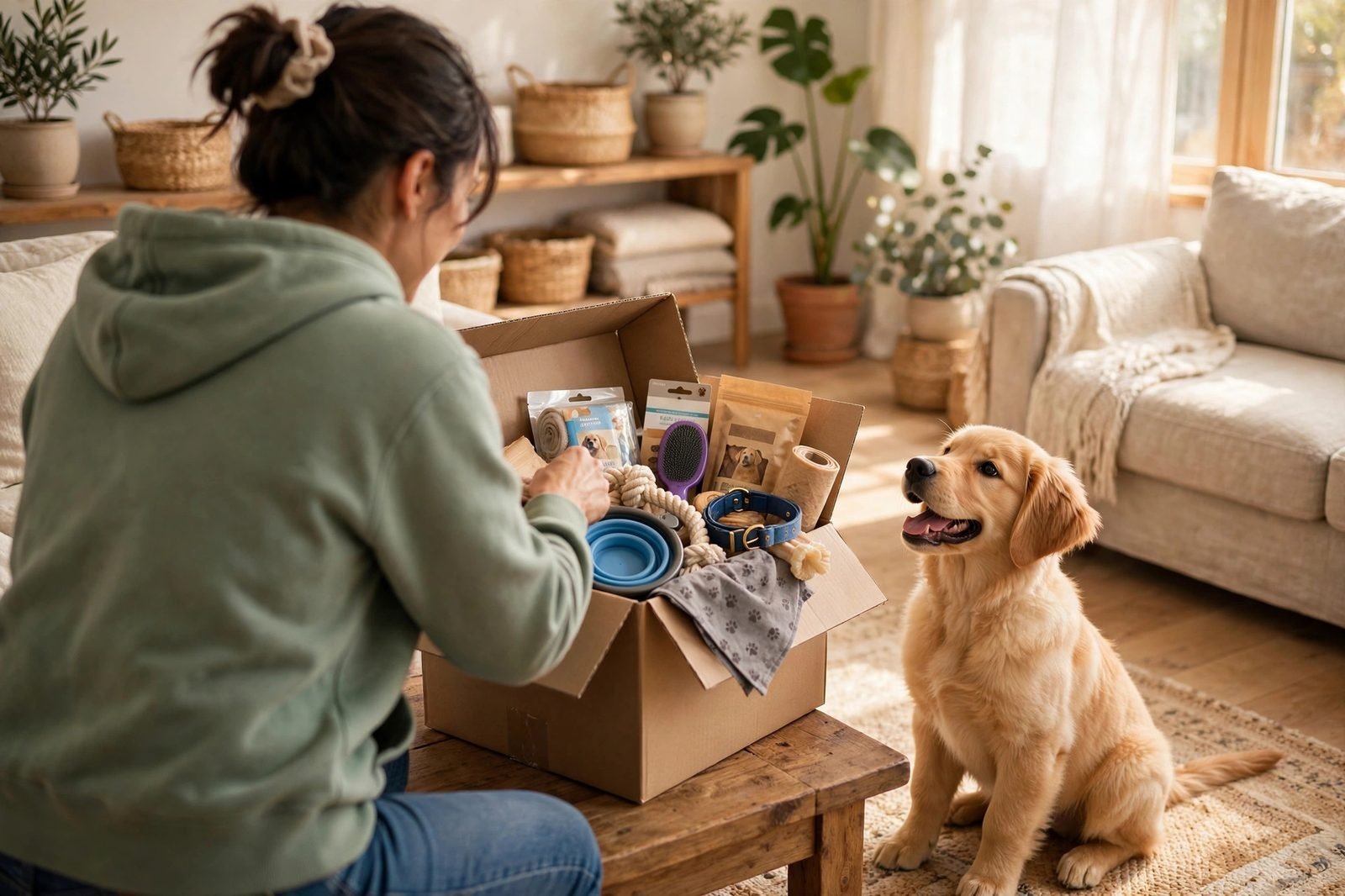

When I brought Pickle home, I was not ready. I had a bag of kibble I’d grabbed in a panic, a leash with no collar to attach it to, and a vague plan that mostly involved “we’ll figure it out.” By 9 p.m. that first night, I was at a 24-hour supermarket buying paper towels in bulk while Pickle — who had never been in a car, a house, or near a staircase before — regarded the whole situation with deep suspicion from the shopping cart.
Here’s the thing: nobody is ever fully ready for their first dog. But there’s a big difference between “learning as you go” and “standing in a supermarket at night because you forgot water bowls.” This first time dog owner checklist is the list I wish someone had handed me — the supplies, the appointments, the first-week priorities, and the unglamorous truths nobody puts in the cute Instagram posts.
Published: May 20, 2026 | Last updated: May 20, 2026
Quick Tips
- Buy the essentials before the dog arrives — not after.
- Book the first vet visit within the first week, ideally days 2–3.
- Puppy-proof one room first; the whole house can wait.
- Pick one food and stick with it for the first month — no experimenting.
- Start training on day one: name, sit, and where to pee.
- Sleep will be rough for a week. It gets better. I promise.
Before the Dog Arrives: The Supply Run
Do this shopping trip before pickup day. Future-you, juggling a stressed new dog, will be grateful. Here’s the non-negotiable list:
Food and Water Basics
Food: Ask the shelter, breeder, or rescue what the dog is currently eating and buy a bag of exactly that. Switching foods abruptly causes stomach upset, which is the last thing you need in week one. You can transition to a different food later, gradually, over 7–10 days.
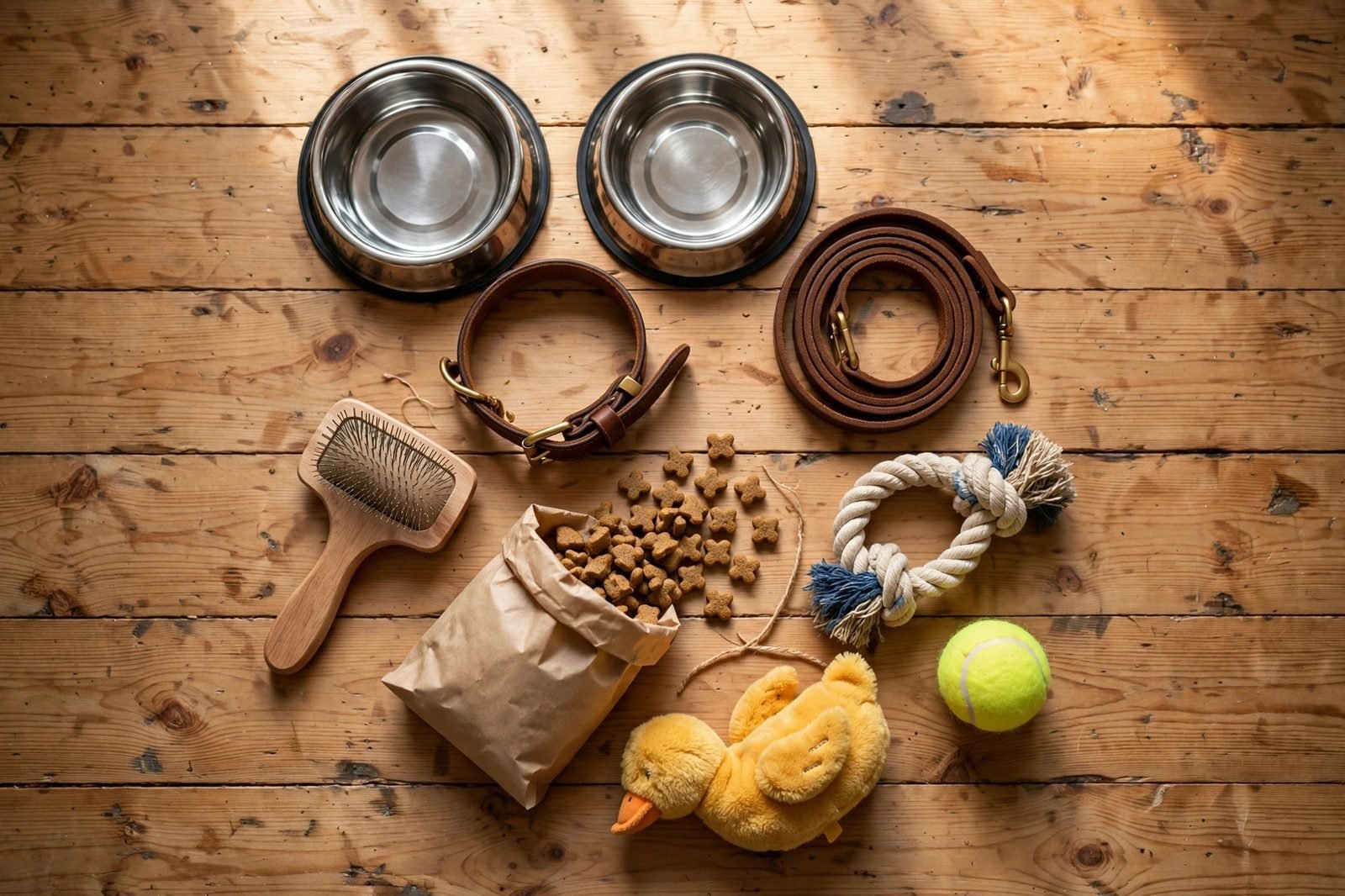
Two bowls: One for food, one for water. Stainless steel is cheap, durable, and dishwasher-safe. Skip the fancy elevated feeders for now — they’re unnecessary for most dogs and an extra expense you don’t need yet.
Treats: Small, soft training treats. You’ll burn through these faster than you expect. Get the tiny ones — you want to reward often without overfeeding.
Sleep and Containment
A crate or a designated sleeping spot: Even if you’re not sure about crate training yet, have a plan for where the dog sleeps. A crate with bedding, or a dog bed in a quiet corner — decide before the dog arrives, not at midnight. If you go the crate route, sizing matters more than most people think.
A bed or blankets: Something washable. In the first weeks, “washable” beats “luxurious” every single time. Trust me on this.
Baby gates: At least one or two. Limiting the new dog to one or two rooms at first makes house training dramatically easier and prevents the “where did he go and what is he chewing” panic.
Walking Gear
Collar with ID tag: Get the tag engraved with your phone number before the dog comes home. So many new dogs slip their collar in the first week because everything is scary and new. A tag is cheap insurance.
Leash: A standard 6-foot leash. Skip the retractable ones — they teach pulling, they’re hard to control in emergencies, and most trainers dislike them. A boring regular leash is the right choice.
Poop bags: Buy more than you think you need. You will use them constantly.
Cleaning and Grooming
Enzyme cleaner: Not regular cleaner — enzyme cleaner, specifically made for pet messes. Regular cleaners leave behind proteins the dog can still smell, which says “pee here again.” Enzyme cleaner actually breaks them down. This is the single most important cleaning supply you’ll own in the first month.
Paper towels and old towels: Bulk quantities. You’ll see.
A brush suited to the coat: Ask the rescue or breeder what works, or check what other owners of the breed use. A quick brush a few times a week prevents matting and gets the dog used to handling.
Nail clippers or a grinder: You may not need these on day one, but have them ready. Long nails affect how a dog walks, and many new owners put this off too long.
The “Nice to Have” Pile
Toys (a couple of chew toys and one puzzle toy is plenty to start), a long-lasting chew for crate time, and a blanket or old t-shirt that smells like you for the first nights. That’s it. Resist the pet store’s siren song — you can buy more once you know your dog’s actual preferences. Half the toys I bought for Pickle before meeting him went untouched.
Puppy-Proof One Room Before Anything Else
You don’t need the whole house ready on day one. You need one room ready — the room where the dog will spend most of the first week. Get down on your hands and knees (seriously) and look at it from dog height: exposed cables, cleaning products under the sink, houseplants, small objects, shoes. Move them or block them.
I’ve got a full room-by-room walkthrough in my pet-proofing checklist, but for day one, the short version is: if a dog could chew it, swallow it, or knock it over, assume they will. New dogs explore the world with their mouths. Plan accordingly.
Book the Vet Visit Now, Not Later
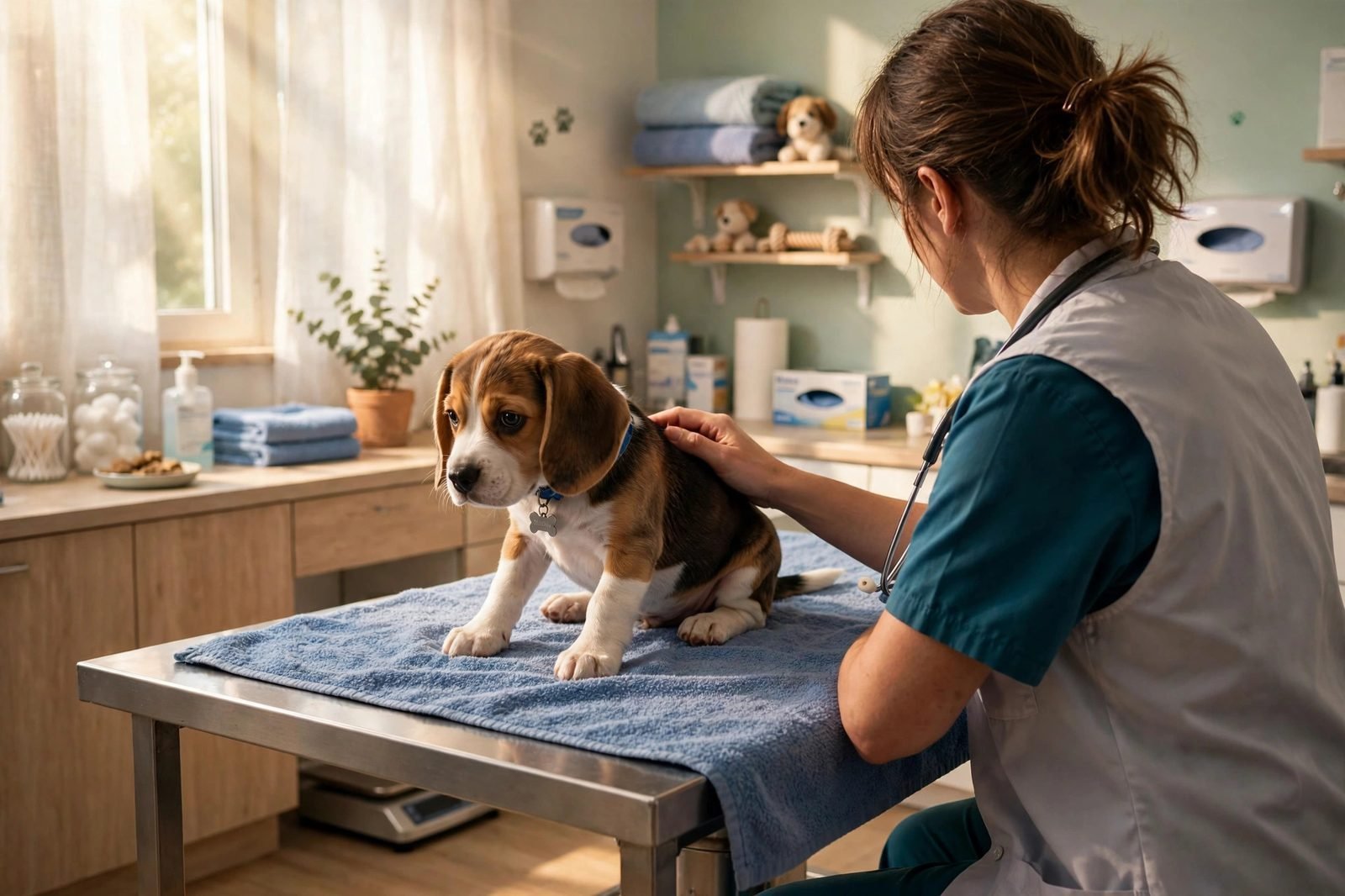
This is the appointment new owners procrastinate on most, and it shouldn’t wait. Book a vet visit for the first week — days two or three are ideal. The vet will do a general health check, review any vaccination records from the shelter or breeder, talk through a puppy vaccination schedule if relevant, and answer the forty questions you’ve been saving up.
If getting a dog into a clinic sounds stressful (it was for me — Pickle shook the whole car ride), my guide on how to prepare for the first vet visit covers what to bring and how to keep it calm. Bring every piece of paperwork the shelter or breeder gave you, plus a list of questions on your phone. You’ll forget them otherwise — I did, twice.
The First 48 Hours: What Actually Matters
Forget the grand plans. For the first two days, your only jobs are: keep the dog safe, start a routine, and begin house training.
Day One Priorities
Let them decompress. The car ride, the new smells, the new people — it’s overwhelming. Give the dog a quiet space and don’t invite the whole neighborhood over. I made this mistake with Pickle; by evening he was hiding under the table.
Show them the toilet spot immediately. Before you even go inside, take the dog to where you want them to pee. When they go, praise like they just won the lottery. This single habit, repeated relentlessly, is house training.
Start the routine. Feed at the same times, walk at the same times, bedtime at the same time. Dogs find predictability deeply calming. A new dog in a new place with a predictable schedule settles in dramatically faster than one in chaos.
Start Training on Day One (Yes, Really)
Training doesn’t mean hour-long sessions. It means: reward the dog for peeing outside, teach their name with treats, and start “sit” with a treat lure. Five minutes, a few times a day. The first week is when habits form — make sure the habits forming are the ones you want.
Food: Keep It Boring for the First Month
New owners love to experiment — raw toppers, five kinds of treats, table scraps “just this once.” Don’t. A new dog’s stomach is already stressed from the move. Feed the same food they were eating before, at the same times each day, measured with an actual measuring cup (eyeballing portions is how dogs quietly gain weight).
After two to four settled weeks, you can transition to a different food if you want to — gradually, mixing increasing amounts of the new food into the old over 7–10 days. And treats should stay small and training-focused at first; a new dog getting rich novel treats plus a food switch plus moving stress is a recipe for digestive drama at 2 a.m.
The Stuff Nobody Puts in the Cute Posts
You will be tired. Especially with a puppy. The first week involves night wakings, constant supervision, and a level of vigilance that’s genuinely exhausting. This is normal, it’s temporary, and it doesn’t mean you’re bad at this. By week three, Pickle and I had a rhythm. By month two, I couldn’t remember what the fuss was about.
Your dog might not bond instantly. Some dogs attach in a day; others take weeks — especially rescues who’ve been through a lot. Don’t panic if your new dog seems aloof at first. Keep the routine steady, keep being kind, and let them come to you.
You’ll make mistakes. I fed Pickle the wrong amount for a month. I skipped socialization windows I didn’t know existed. I bought the wrong crate (there’s a whole article about that disaster). Dogs are resilient — a loving owner who keeps learning beats a perfect owner who doesn’t exist.
It gets easier, then harder, then easy again. The first week is survival. Weeks two to four feel like progress. Then adolescence hits (around 6–14 months depending on breed) and your well-trained puppy forgets everything overnight. This is also normal. Keep training through it.
Frequently Asked Questions
What do I need to buy before getting my first dog?
The essentials: the food they’re currently eating, two bowls, a collar with an ID tag, a 6-foot leash, poop bags, a crate or bed, baby gates, enzyme cleaner, paper towels, a brush, and training treats. That’s genuinely enough to start. Buy toys and extras later once you know your dog.
How soon should a new dog see a vet?
Within the first week — days two or three are ideal. The vet will do a health check, review vaccination records, and discuss any needed vaccines or preventive care. Bring all paperwork from the shelter or breeder and a list of your questions.
Should I take time off work when I get a dog?
If you can, yes — even three or four days makes a real difference. The first days are when routines get established and when the dog is most stressed. If you can’t take time off, arrange for someone to check in midday, especially for a puppy who can’t hold it long.
Is it normal for a new dog to not eat for a day or two?
Often, yes — stress suppresses appetite, and many dogs eat little for the first 24–48 hours in a new home. Offer the familiar food, keep the routine calm, and don’t start offering novel tempting foods to “get them eating” (that creates picky habits). If appetite doesn’t return after a couple of days, or the dog seems lethargic or unwell, call your vet.
When should I start training my new dog?
Day one. Not formal hour-long sessions — just rewarding good choices: peeing outside, responding to their name, sitting for a treat. Five minutes a few times a day. The first week is when habits form fastest, so make them good ones from the start.
What’s the biggest mistake first-time dog owners make?
In my experience, it’s a tie between two: giving the new dog too much freedom too fast (whole house, off-leash, dog park on day three), and skipping the early vet visit. Start small — one or two rooms, short on-leash outings — and expand freedom as the dog earns it.