
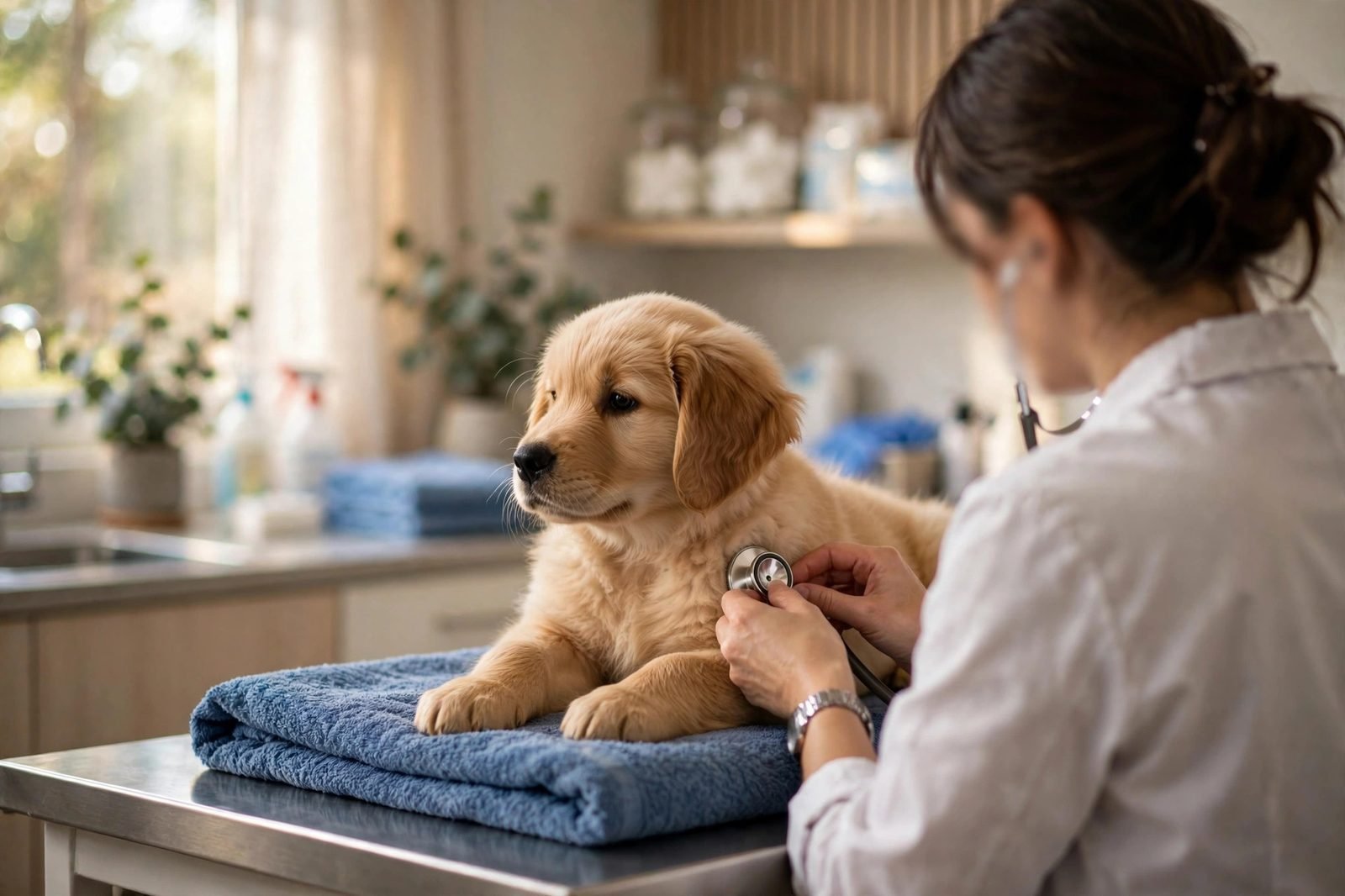

When I brought home my first puppy, I knew embarrassingly little about vaccinations. I knew puppies needed “shots,” and I had a vague sense there was more than one round, but beyond that it was a blur of acronyms I didn’t understand. I remember sitting in the vet’s waiting room with a squirming twelve-week-old puppy on my lap, trying to look like I knew what I was doing while the receptionist asked me questions I couldn’t answer: which shots has he had, when, and who gave them?
That visit turned into a crash course, and I’m writing this so yours doesn’t have to be. A puppy vaccination schedule is really just a simple timeline of appointments over the first few months of your puppy’s life. Once you understand the basic rhythm, the whole thing feels manageable. Here’s what I wish someone had walked me through before that first appointment.
Published: May 13, 2026 | Last updated: May 13, 2026
Quick Tips
- Most puppies get their first shots around 6–8 weeks old, with follow-ups every few weeks until about 16 weeks.
- Your puppy isn’t fully protected until after the last round of puppy shots — your vet will tell you when it’s safe to meet other dogs.
- Bring any vaccination records you got from the breeder or shelter to your first appointment.
- Ask your vet about lifestyle-based shots (like kennel cough) if your dog will go to daycare, parks, or boarding.
- Keep a photo or digital copy of your puppy’s vaccination records on your phone.
- Mild sleepiness or a sore spot after shots is common; call your vet if you’re ever worried.
- Booster shots at the one-year mark keep protection going — put it in your calendar now.
Why Puppies Need a Series of Shots Instead of Just One
This was my first real question, and it’s a good one. If vaccines work, why can’t the vet just give one and be done? The answer has to do with how a puppy’s immune system works, and once I understood it, everything else clicked into place.
When puppies are born, they’re protected for a while by antibodies they got from their mother’s milk. Those maternal antibodies are wonderful — they shield the puppy during those first fragile weeks. But they also interfere with vaccines. The antibodies will attack the vaccine before the puppy’s own immune system gets a chance to learn from it, so a single early shot often just doesn’t “take.”
Those maternal antibodies fade at different times for different puppies, usually somewhere between 6 and 16 weeks. Since nobody can say exactly when your puppy’s antibodies will drop low enough, vets give a series of shots spaced a few weeks apart. Each round is another chance for the puppy’s own immune system to build its own protection. By the final round, usually around 16 weeks, the maternal antibodies are gone and the puppy’s immune response is strong enough to hold.
I like to think of it as knocking on the door until someone answers. The first few knocks might not get through, but you keep knocking until the immune system opens the door.
What “Fully Vaccinated” Actually Means
Here’s the practical part that matters most. Your puppy is not considered fully protected until one to two weeks after the final round of the puppy series. That’s the milestone your vet is working toward, and it’s what determines when your puppy can safely go to dog parks, puppy classes, boarding, and other high-contact situations.
Before that point, most vets recommend a middle path: don’t isolate your puppy completely (socialization matters hugely in those early months), but keep encounters controlled. Clean, puppy-only areas, known healthy dogs, and supervised outings are usually fine. The dog park can wait.
The Core Shots Every Puppy Gets
Vets divide vaccines into “core” ones — recommended for virtually every dog — and “non-core” or lifestyle-based ones, which depend on where you live and what your dog will do. The core group is the foundation of every puppy vaccination schedule.
The main core vaccine is often called DHPP, which is an acronym soup that covers several diseases in one injection. You’ll also see DAPP, which is essentially the same idea with a slight variation in one component. This one shot protects against distemper, adenovirus (which causes hepatitis), and parvovirus — with parainfluenza usually included too. Your vet may use slightly different abbreviations, but the concept is identical: one injection covering the big threats.
The other core vaccine is rabies. This one is special because in most US states, and in many parts of the world, it’s required by law. Your puppy typically gets the rabies shot at a slightly older age than the DHPP series — often at the final visit or shortly after — and then again a year later. The exact timing varies by local law and by the specific vaccine your vet uses, so this is a great question for your first appointment.
Lifestyle Vaccines Worth Asking About
Non-core vaccines aren’t less important — they’re just more situational. The most common one I hear about is the kennel cough vaccine (for Bordetella), which most boarding facilities and daycares actually require. If your puppy will ever be boarded, go to daycare, or attend group training, ask about this one early.
Others your vet might mention include leptospirosis (spread through water and wildlife — relevant if your dog will hike, swim, or live in a rural area) and Lyme disease (tick-heavy regions). Your vet will recommend based on your zip code and your dog’s life. My dog’s vet recommended lepto because we had a raccoon problem in the neighborhood — that was a very specific, very practical recommendation I never would have thought to ask for.
What a Typical Schedule Looks Like
Here’s the part everyone wants: the actual timeline. I’ll give you the standard pattern, with the big caveat that your vet is the one who sets the real schedule for your puppy, because timing depends on the puppy’s age, health, prior history, and local regulations. Don’t treat this as a prescription — treat it as the general shape so you can walk into the clinic understanding what’s happening.
Most puppy vaccination schedules run something like this: the first DHPP shot at around 6 to 8 weeks, then additional rounds every 3 to 4 weeks, with the final DHPP round at around 16 weeks (sometimes 18, depending on the vet). The rabies shot comes in around 12 to 16 weeks as a single dose. Lifestyle vaccines like Bordetella or lepto get slotted into the schedule wherever they fit, sometimes requiring two doses a few weeks apart.
If your puppy came from a shelter or breeder, they may already have had the first round — and possibly more. That’s why the records matter so much. I once watched a friend’s vet give an extra round unnecessarily because the breeder’s records never made it to the clinic. Bring everything. A photo of the paperwork on your phone counts.
What Happens at Each Appointment
Knowing what to expect took all the anxiety out of these visits for me, so here’s the typical flow. You’ll check in, a tech or the vet will ask about your puppy’s health and behavior since the last visit — appetite, energy, any vomiting or diarrhea, that sort of thing. Then there’s a quick exam: listening to the heart, checking eyes and ears, feeling the belly. This matters, because vets prefer to vaccinate only healthy puppies.
Then the shots themselves. Puppies barely react to most injections — a small pinch, and it’s over in seconds. The whole thing usually takes less time than the weigh-in. Honestly, my puppy was more upset about the thermometer than the needles.
After the shots, most clinics ask you to hang around for 10 to 15 minutes to watch for any immediate reaction. Allergic reactions are rare, but this observation window is standard practice. Use the time to ask your questions — and trust me, ask them. This is also when most of my real education happened: socialization questions, feeding questions, the stuff that never fit into a Google search. If you’re wondering how much exercise a puppy needs at this age, or when puppies can go outside safely before they’re fully vaccinated, your vet’s answers will be tailored to your actual puppy and neighborhood — far more useful than anything generic.
After the Shots: What to Watch For
Most puppies feel completely normal after vaccinations, or maybe just a little sleepy for the rest of the day. A small, slightly sore lump where the injection went in is also common and usually fades within a week or two. My puppy once slept through an entire afternoon after his second round and woke up ravenous — totally normal, slightly dramatic.
What you’re watching for is anything unusual or severe: swelling of the face or muzzle, vomiting or diarrhea that doesn’t stop, hives, or difficulty breathing. These are rare, but they warrant an immediate call to your vet — don’t wait and see. Knowing the signs it’s time to call the vet is part of responsible puppy ownership, and post-vaccination reactions are no exception. Your vet would rather get a call that turns out to be nothing than not get a call that turns out to be something.
Frequently Asked Questions
How much do puppy vaccinations cost?
It varies a lot by location and clinic, but a full puppy series typically runs a few hundred dollars total across all visits. Many clinics offer puppy wellness packages that bundle all the rounds plus exams at a lower overall price, so ask about those at your first visit. Low-cost vaccination clinics and shelter-run programs exist in many areas if cost is a real barrier — don’t skip vaccines because of price without asking around first.
Can my puppy meet other dogs before the shots are done?
Controlled socialization is fine and important. Let your puppy meet healthy, vaccinated dogs you know in clean environments. What’s risky is high-traffic dog areas — dog parks, pet store floors, rest stops — where many unknown dogs pass through. Your vet can give you guidance specific to your area’s disease risk, so ask at your appointment.
What if I don’t know my puppy’s vaccination history?
This is common with rescue puppies and rehomed dogs. Bring whatever information you have to the vet — age estimates, where the puppy came from, anything. Your vet will build a catch-up schedule based on the puppy’s age and the unknown history. When in doubt, vets err on the side of making sure the puppy is protected.
Are there side effects I should worry about?
Mild sleepiness, a slightly sore injection site, or a temporarily reduced appetite are all common and usually pass within a day or two. Serious reactions — facial swelling, persistent vomiting or diarrhea, difficulty breathing — are rare but require an immediate call to your vet. If anything feels off to you, call. Vets expect these calls and would always rather hear from you.
Can puppies go outside before they’re fully vaccinated?
Yes, with reasonable precautions — and most vets and behaviorists agree they should, because the socialization window doesn’t wait. Carry your puppy in busy areas, stick to clean environments, let them observe the world from your arms or a blanket, and avoid places with heavy unknown-dog traffic. Your vet’s advice for your specific area is the gold standard here.
[…] normal at this age, and what would warrant a call? If you’ve been wondering about a puppy vaccination schedule, this is the perfect moment to get your vet’s version for your specific puppy rather than […]
[…] detailed the typical timeline in my puppy vaccination schedule guide, and if the whole clinic thing feels daunting, my walkthrough on preparing for the first vet […]
[…] disease risk in your area, so have that conversation early. For the shot timeline itself, my puppy vaccination schedule guide walks through what happens […]