

How to Pet-Proof Your Yard
The first time most of us let a new dog or cat out into the yard, the pet finds the one gap in the fence, the one bag of fertilizer, and the one poisonous plant you never noticed — all within about four minutes. The yard is full of things that look harmless to us and dangerous to a curious nose.
The good news is that making a yard safe for pets is mostly common sense plus a slow walk around the perimeter. When you pet proof your yard, you are really doing three things: keeping them from getting out, keeping dangerous things from getting to them, and making the space comfortable enough that they actually want to stay in it. This guide walks through all three, step by step.
Quick Tips
- Walk your fence line twice a year — gaps, rot, and loose posts cause most escapes.
- Learn which of your plants are toxic to pets before they start chewing on them.
- Lock up all lawn chemicals, fertilizers, and pesticides behind a door pets can’t open.
- Provide fresh water and shade so pets aren’t tempted to drink from puddles or chew random things.
- Supervise new pets outdoors until you know their habits — most escapes happen early.
- If you have a cat, remember they need different yard safety than dogs — escaping upward is their thing.
Start With the Fence: The Number One Job
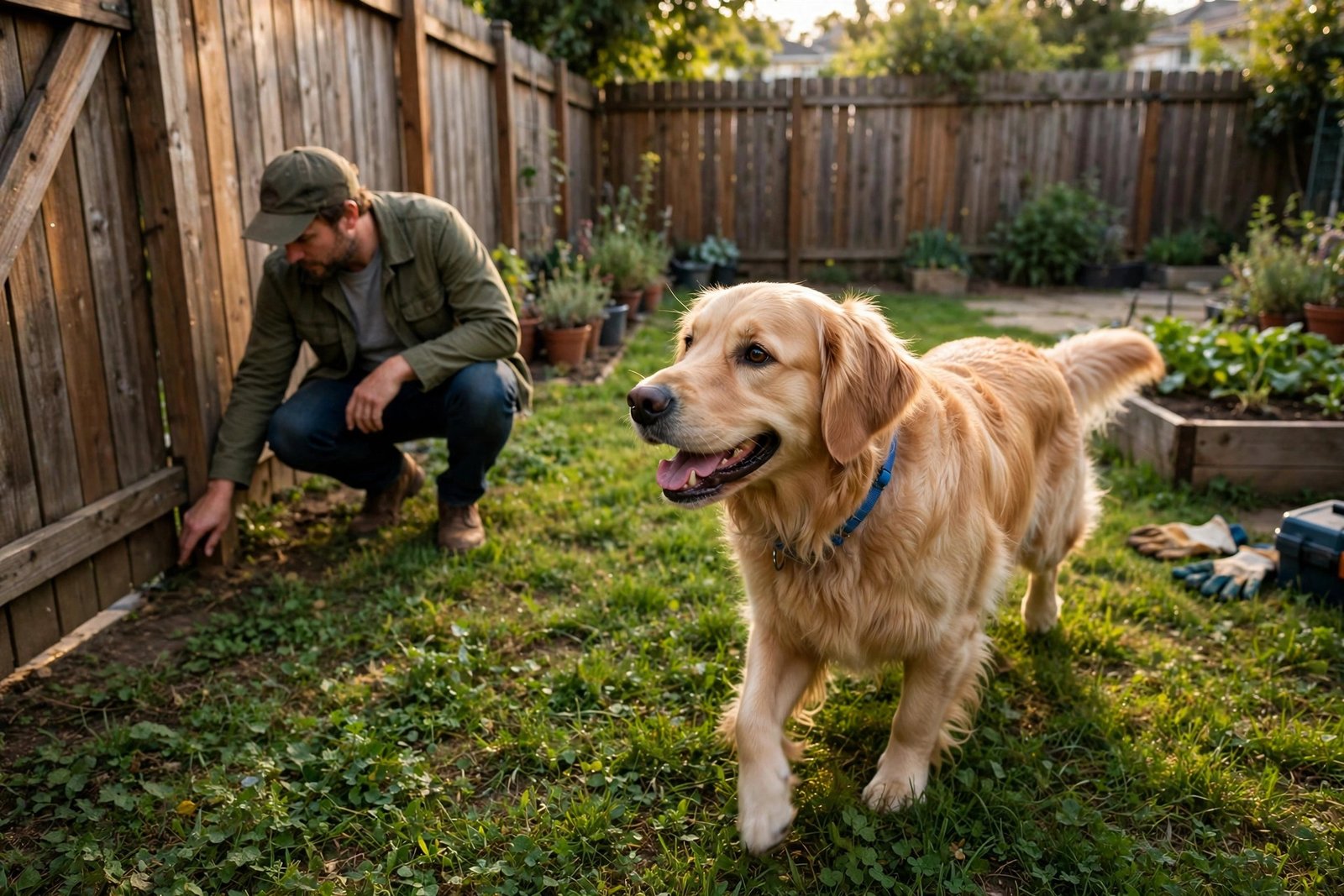
A fence that keeps pets in is not the same as a fence that looks fine from the street. Dogs find weaknesses we walk past every day: a post rotted at the base, a panel bowing outward at the bottom, a gate latch that technically closes but a wet nose can push open. Before anything else, walk the entire fence line slowly, inside and out. Push on every section and check where the fence meets the ground — erosion and digging create gaps over time, and a determined dog does not need much of a hole.
Height matters, and it depends on the dog. Four feet holds most small dogs; many medium and large dogs need six feet. And some dogs are climbers — chain-link fencing is basically a ladder for them, so solid wood or vinyl panels are usually the safer choice if your dog has shown any interest in going up and over.
Then there is the diggers’ union. Some dogs dig for sport, some dig out of boredom, and some dig because there is a fascinating smell on the other side. If your dog is a digger, burying a strip of welded wire at the base of the fence — bent in an L-shape pointing inward — stops most tunneling. A well-exercised dog also digs less, which is worth remembering before you blame the fence alone.
Gates deserve their own inspection. Self-closing hinges and a latch that locks — not just a handle that sits closed — are worth the small investment, because guests, delivery drivers, and kids can all leave a gate ajar. Inside pet-proofing matters too — my pet-proofing your home checklist covers the indoor half of the job, which pairs with this outdoor guide.
Plants: The Quiet Yard Hazard
Most yards have at least one plant that is toxic to dogs or cats, and most owners have no idea. Lilies are the famous one for cats — all parts of true lilies are dangerous to cats, so if you garden with lilies and own a cat, that combination needs rethinking. For dogs, the common culprits include sago palm (extremely toxic), azalea, oleander, tulip bulbs, and daffodils. Many ornamental plants that look innocent are rough on stomachs at minimum.
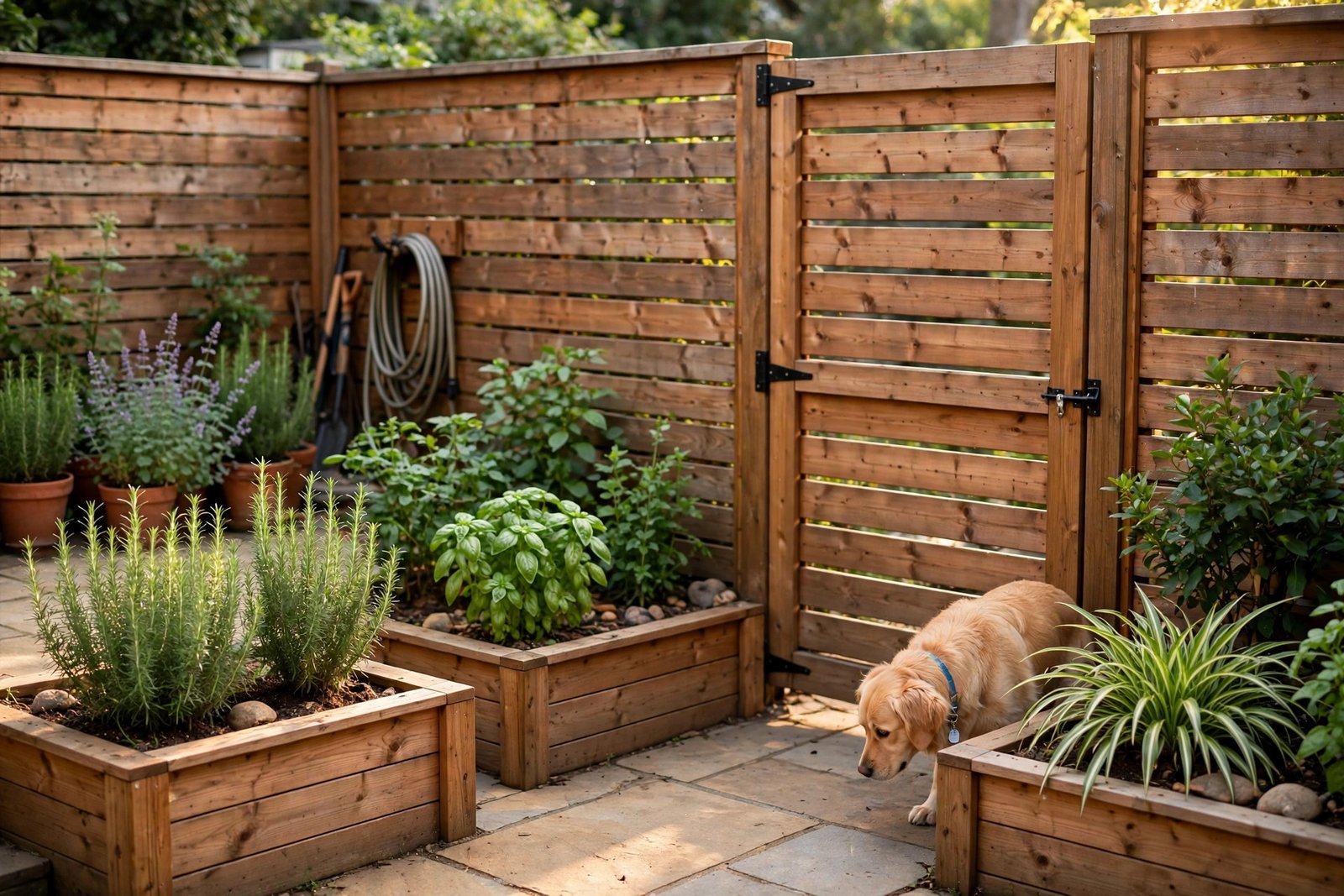
You do not need to become a botanist. Walk your yard with your phone and look up anything you cannot identify — there are free plant ID apps that work well enough for this. Anything flagged as toxic to dogs or cats should be removed, fenced off, or relocated to a front yard the pets never visit. If you are replanting, pet-safe options that still look great include marigolds, snapdragons, sunflowers, and rosemary.
Lawn Chemicals, Fertilizer, and Other Garage Dangers
This is the category where a little caution prevents the scary scenarios. Weed killers, pesticides, and many fertilizers are designed to kill living things, and a dog’s smaller body plus their habit of licking their paws makes them more vulnerable than we are. The standard advice — keep pets off treated areas until the product has dried completely, and ideally longer — exists for good reason. Read the label of anything you apply to your lawn, and look for the re-entry guidance. “Safe once dry” products are only safe once actually dry, not roughly dry.
Storage matters as much as application. Bags of fertilizer, bottles of weed killer, snail bait, and rat poison should all live behind a latched door — a shed, a garage cabinet, anywhere a curious nose cannot reach. Some snail and slug baits contain an ingredient that is extremely dangerous to dogs and apparently tastes good to them, which is a terrible combination. While you are at it, clean up antifreeze spills on the driveway immediately (sweet-tasting and dangerous), and clear standing water in old buckets or tires that can grow mosquitoes.
Make the Yard Somewhere They Want to Be
Here is the part people skip: a comfortable yard gets used safely. A boring, hot, waterless yard gets escaped from. If your dog has shade, fresh water, and something interesting to do out there, the motivation to find trouble drops dramatically.
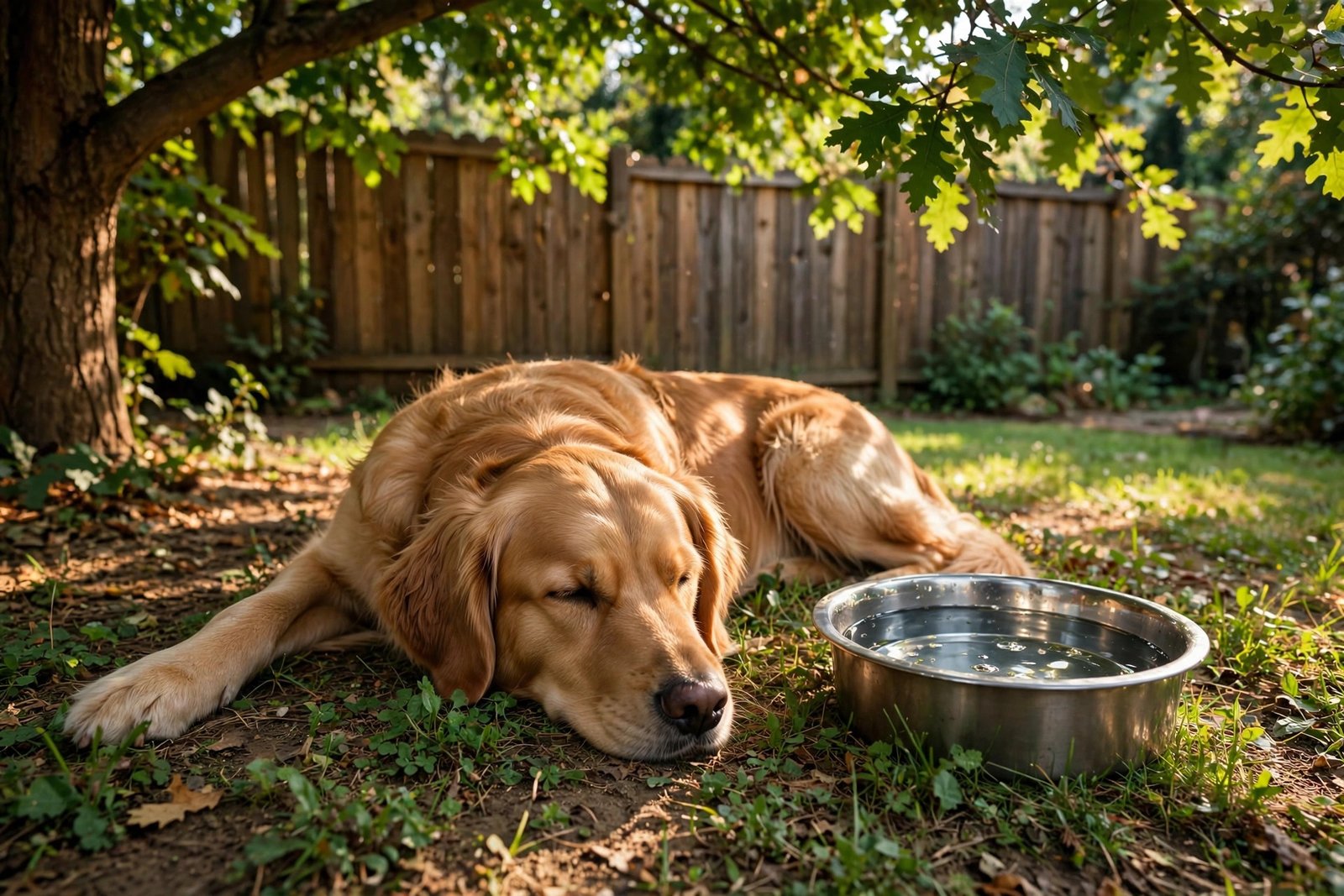
Water first. A sturdy bowl that cannot tip easily, refilled daily, placed in the shade. In summer heat this is non-negotiable — dogs can overheat fast, and a slimy old bowl will push a dog toward drinking from puddles instead.
Shade second. Trees are ideal, but a shade sail, a patio umbrella, or even a simple dog house positioned out of the sun works. On genuinely hot days, though, shade outside is not a substitute for cool air inside — when temperatures climb, pets do better indoors during the peak heat hours.
Then give them a job. Boredom is the root cause of an enormous amount of yard mischief — the digging, the fence-chewing, the barking at nothing. A few durable outdoor toys, a designated digging spot (a sandbox or loose-soil corner where digging is allowed saves the rest of the yard), and regular play sessions with you make the yard a place of fun rather than a place of plotting.
Cat-Specific Yard Safety
Cats change the equation. A fence that contains a dog is a suggestion to a cat. If your cat goes outside, you have essentially two safe options: a fully enclosed “catio” or cat-proofed fencing, or supervised time on a harness and leash. Free-roaming is the option most vets and rescue organizations advise against, for reasons that go beyond your own yard — traffic, other animals, and fights are real risks out there.
Cat-proof fencing usually means adding an inward-leaning extension or roller system to the top of an existing fence, which prevents the cat from getting purchase to climb over. They only work on fences in good condition with no nearby launch points — a shed roof, a tree, or a stack of firewood next to the fence becomes a cat highway over your nice roller system. Walk the yard and think like a cat: anything tall near the fence is a staircase.
Plants matter even more for cats because they chew greenery more deliberately than most dogs. The lily warning bears repeating: many owners simply ban true lilies from the property. If you want to give a cat something safe to nibble, a pot of cat grass on the patio satisfies the urge without the risk.
The First Month: Supervise Like a Hawk
Most yard escapes and yard incidents happen in the first few weeks with a new pet, when you do not yet know their habits. You do not know if they are a digger, a climber, a chewer of everything green, or a bolter at the gate. For the first month, treat outdoor time as supervised time and watch what they gravitate toward — the dog that immediately tests every fence panel is telling you something useful before it becomes a 10 p.m. neighborhood search.
Use this period to learn the specific risks of your specific pet. One dog’s yard might need dig-proofing; another’s might need the compost bin relocated. After the trial month, settle into a routine — with a fence check every few months and a quick scan after big storms, which have a habit of creating brand-new gaps overnight.
Frequently Asked Questions
How often should I check my fence for pet safety?
Do a thorough walk-through twice a year — spring and fall are good anchors — plus a quick check after any major storm. Wood rots, posts loosen, and ground settles over time. Five minutes of checking beats a lost-pet search every time.
What plants are most dangerous for pets in the yard?
The big ones to know: lilies are dangerous to cats; sago palm, oleander, azalea, and tulip/daffodil bulbs are dangerous to dogs. Many more plants cause stomach upset if chewed. If you’re unsure about a plant in your yard, look it up or ask your vet — and when replanting, choose varieties known to be pet-safe.
Is it safe to let my dog on the lawn after fertilizing?
Follow the product label’s guidance — many products say to keep pets off until the area is fully dry, and some recommend longer waits. When in doubt, wait longer than the minimum and store all lawn products behind a closed door. If your dog shows vomiting or unusual behavior after being on a treated lawn, call your vet.
How do I stop my dog from digging under the fence?
Bury welded wire in an L-shape at the fence base, lay pavers or gravel along the fence line, or give the dog an approved digging spot elsewhere. Also look at exercise and boredom — a well-exercised dog with toys and interaction digs far less than an under-stimulated one. Persistent digging despite all this is worth discussing with a trainer.
Can my cat go outside safely without a fence?
Not unsupervised, honestly. Cats climb standard fences easily, and free-roaming brings risks from traffic, other animals, and getting lost. The safer options are a fully enclosed catio, cat-proof fence toppers, or harness-and-leash outings with you.
Are mulch and compost safe around pets?
Most plain wood mulches are fine, but cocoa shell mulch is dangerous to dogs (it contains the same compounds as chocolate), so avoid it. Compost piles can grow molds that are harmful if eaten, and they often contain food scraps that aren’t pet-safe — my toxic foods for dogs list covers what shouldn’t end up in there. Keep compost bins covered and lidded.