

Best Cat Carriers: How to Choose the Right One
Almost every cat owner knows the carrier wrestling match. The vet appointment is in twenty minutes, the carrier comes out of the closet, and the cat — who was asleep on the couch two seconds ago — suddenly develops the reflexes of a ninja. The carrier itself gets blamed for a lot of this drama, and honestly, sometimes it deserves the blame. A bad carrier makes everything harder; a good one, paired with a little preparation, makes travel genuinely uneventful.
Choosing the best cat carrier is not about finding one perfect product — it is about matching the carrier type to your cat’s size, temperament, and how you will actually use it. Vet visits, car trips, flights, and emergencies all ask slightly different things of a carrier. This guide breaks down the types, the features that matter, and how to turn the carrier from a scary box into a familiar den.
Quick Tips
- Size the carrier so your cat can stand, turn around, and lie down comfortably.
- Hard-sided carriers are sturdiest for vet visits; soft-sided ones are easier to carry and store.
- Top-loading carriers make vet exams much less stressful for everyone.
- Look for secure latches, good ventilation, and a washable interior.
- Leave the carrier out at home with treats inside so it becomes familiar, not feared.
- For flights, check the airline’s exact carrier dimensions before you buy.
The Main Types, Honestly Compared
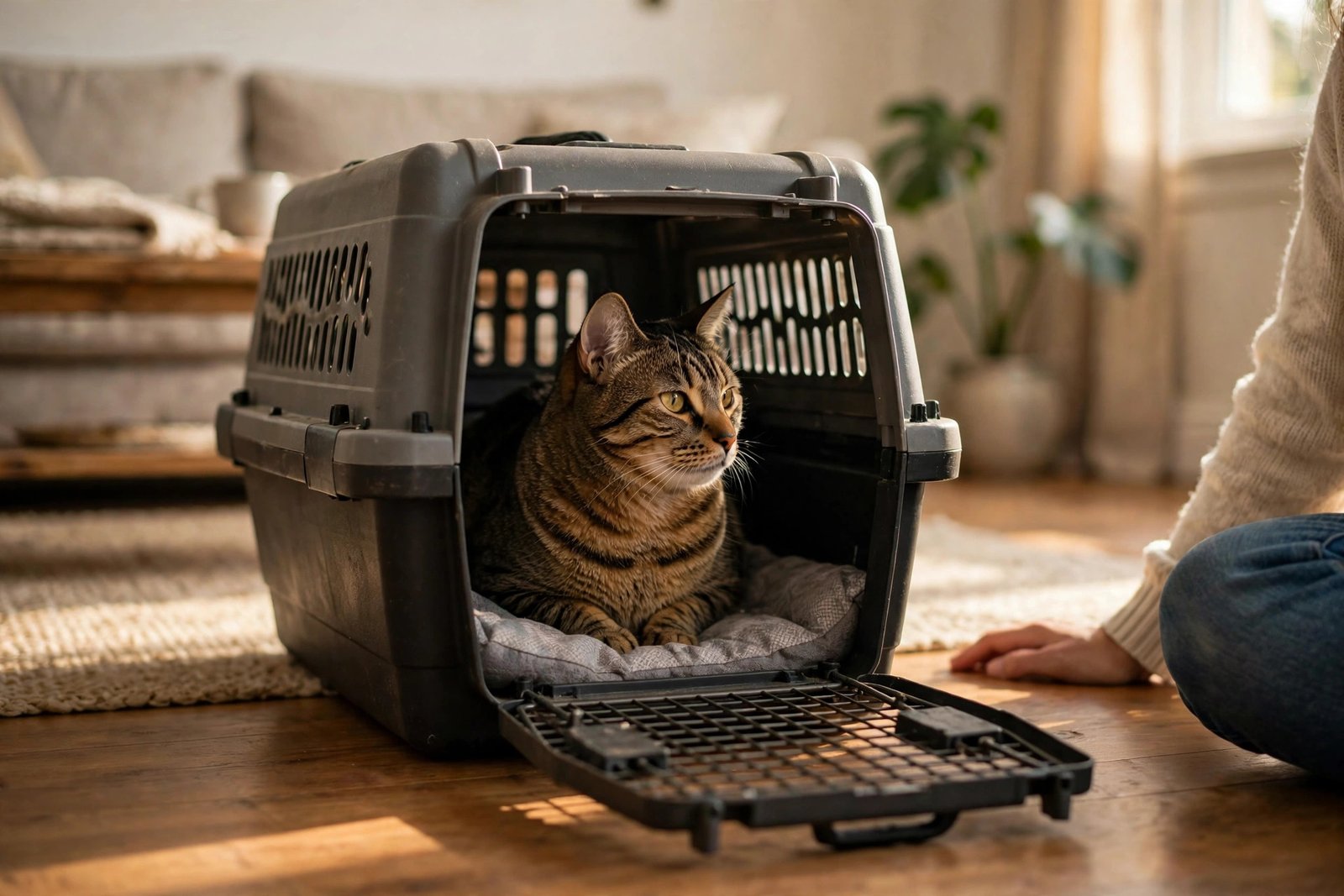
Hard-sided carriers are the classic plastic box with a barred door. They are the sturdiest option, the easiest to clean (a huge plus after a carsick episode), and the one most vets prefer — a good hard carrier often opens from the top, letting the vet examine a nervous cat without dragging it out through the front door. Downsides: bulky to store, heavier to carry, and the hard walls can feel exposed to a nervous cat unless you drape a towel over them.
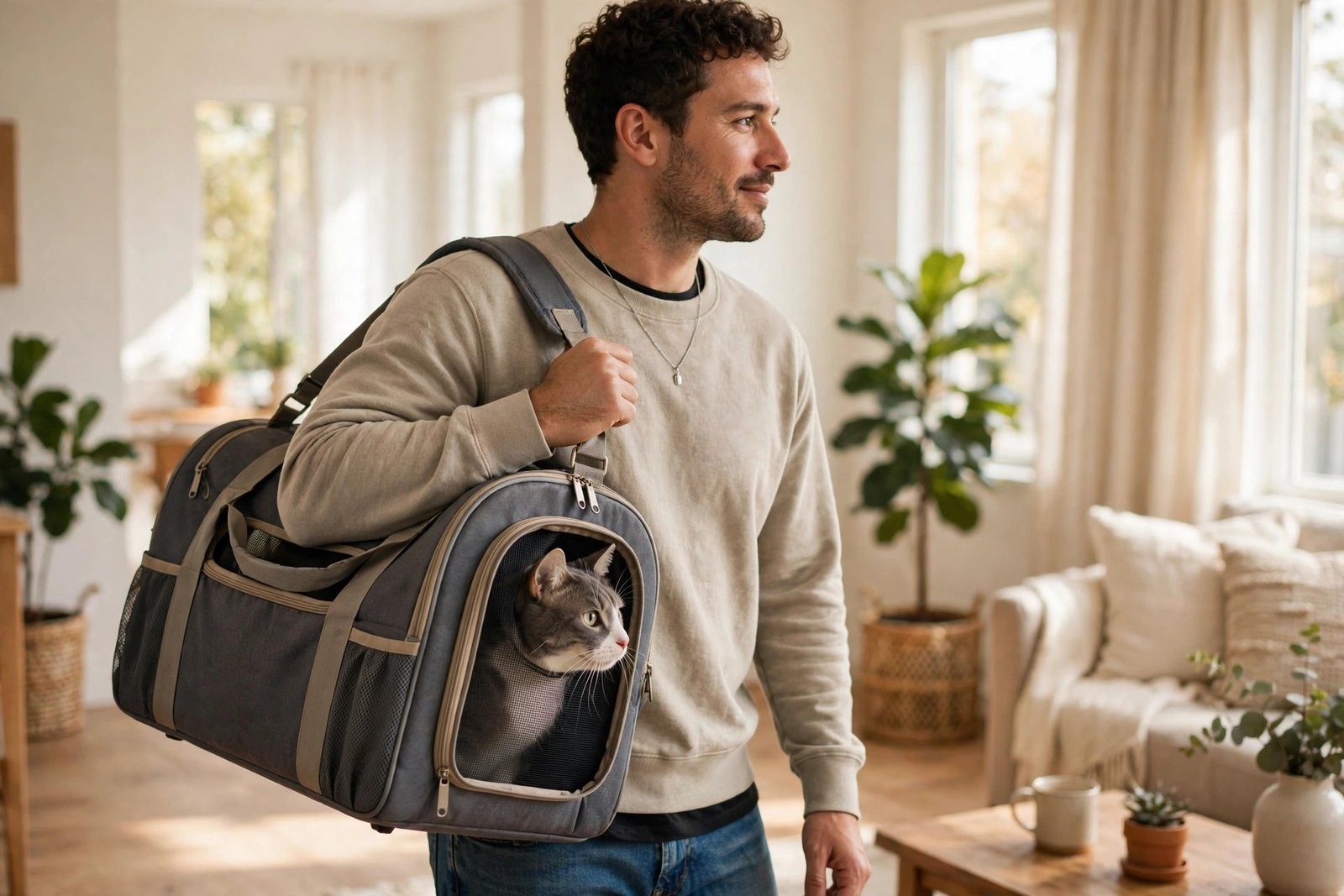
Soft-sided carriers are fabric bags with mesh windows and usually a shoulder strap. They are lighter, more comfortable to carry, and they squash down for storage. Many are airline-approved for in-cabin travel, which is their real superpower. The trade-offs: less protection in a real impact, harder to clean thoroughly (look for removable washable bedding), and a determined cat can sometimes push through a zipper.
Top-loading carriers deserve their own mention because the loading direction matters more than most people expect. Lowering a cat gently into a top opening is dramatically easier than shoving one through a front door, and at the vet, top access means examinations with minimal handling stress. Many hard-sided carriers now offer both top and front openings — if you are choosing between otherwise similar models, the top-loading one wins.
Backpack carriers — the ones with the bubble window — are popular for a reason: hands-free, and cats that like observing the world often enjoy them. But be honest about the use case. They are great for short outings with an adventurous cat. They are not ideal as a primary vet-visit carrier, and the bubble window versions can get warm inside — ventilation matters. Think of it as a second carrier for fun outings, not the only carrier.
Wheeled carriers and strollers exist for owners who cannot comfortably carry a cat’s weight, and they are a legitimate option — a carrier on wheels beats no carrier. Just make sure the cat compartment itself is secure and escape-proof, since the convenience features sometimes come at the expense of the basics.
Sizing: The Goldilocks Problem
Too small is the most common mistake. A carrier should let your cat stand up, turn around, and lie down in a natural position. An oversized carrier lets the cat slide around during car rides, which is stressful and less safe in a sudden stop. Measure your cat — length from nose to base of tail, height to the top of the head — then check the carrier’s interior dimensions, not just the exterior.
If you have a kitten, it is tempting to buy tiny. Resist it — a carrier that fits a three-month-old kitten will be a joke by month eight. A medium carrier that fits an average adult cat works fine for a kitten now (add a folded towel to make it cozy) and still fits later. Speaking of kittens, if you are bringing one home soon, my kitten’s first week home guide covers the carrier trip home and everything after.
For multi-cat households: one carrier per cat for vet visits. Sharing sounds economical until both cats need to go in at once, or one is sick and the other is just along for moral support. Two medium carriers stack for storage and save enormous hassle.
Features That Actually Matter
Beyond type and size, here is what separates a good carrier from a frustrating one:
Secure closures. Test every latch, zipper, and clasp in the store (or right after unboxing). Zippers should have locking pulls or a way to secure them — cats are shockingly good at nosing open an unsecured zipper from the inside. Latches on hard carriers should click positively and not pop under pressure.
Ventilation. Mesh windows on at least two or three sides for soft carriers; generous vent slots on hard ones. Airflow matters for comfort and for a nervous cat that is panting. Many owners cover part of the carrier with a light towel, which gives the cat the option of darkness.
Easy cleaning. Accidents happen — carsickness, stress, the occasional protest. Hard carriers that hose out are the easiest; for soft carriers, look for removable, machine-washable pads and wipeable linings. You will thank yourself the first time you need this feature.
Seatbelt compatibility. If you drive with your cat, the carrier should ride secured, not loose on the seat. Many carriers have a strap slot for threading a seatbelt through. An unsecured carrier becomes a projectile in a sudden stop — this is a safety feature, not a convenience one. For the full picture on car travel with pets, my dog travel guide covers road-trip principles that apply equally to cats riding in carriers.
Weight and handles. Pick it up loaded — or imagine it loaded with your cat’s actual weight. Comfortable handles or a padded shoulder strap make the difference between a manageable trip and a miserable one.
The Real Secret: Carrier Training
Here is the thing the product guides skip: the best carrier in the world still fails if it only appears for vet visits. Cats are excellent pattern-matchers, and “carrier appears → terrible things happen” is a pattern they learn in one repetition. The fix is simple: make the carrier furniture.
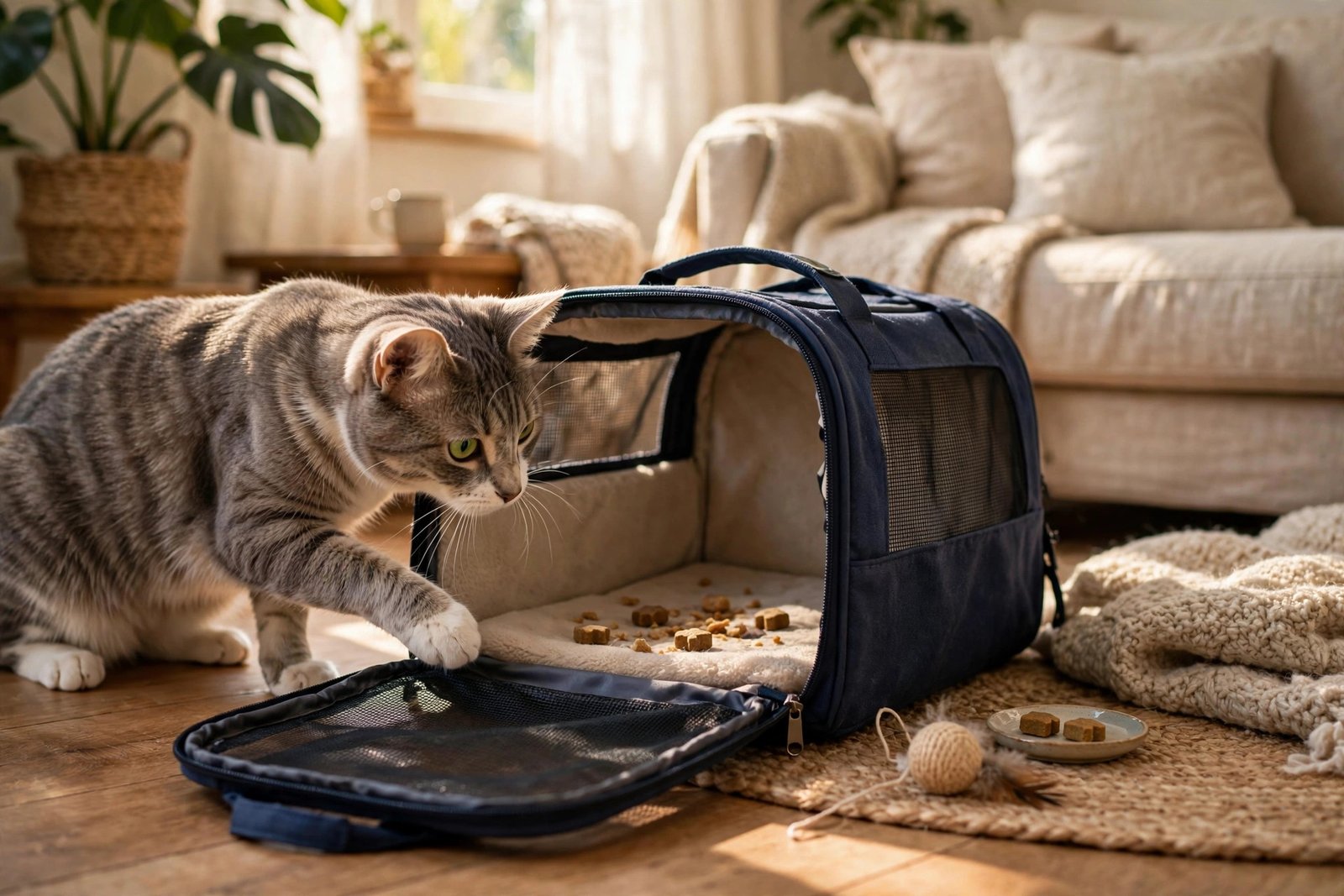
Leave the carrier out in a room your cat uses, door open, with a soft blanket inside. Toss treats in and around it. Feed a meal near it, then inside it. Let the cat explore on their own terms — no pushing, no closing the door at first. Most cats will start napping in it within days. Once the cat goes in voluntarily, practice closing the door for a few seconds, then opening it — building up duration gradually, always with treats.
Then add motion: carry the closed carrier around the house briefly, then set it down and treat. Then a short car ride to nowhere, then home and treat. By the time a real vet visit comes, the carrier is a familiar den that sometimes moves, not a trap that appears from the closet of doom. This single habit does more for travel stress than any product feature.
Special Cases: Flights, Emergencies, and Nervous Cats
Flying with a cat adds rules. Airlines have specific requirements for in-cabin carriers — maximum dimensions that fit under the seat — and these vary by airline and even by aircraft, so check with your specific airline before buying, and measure twice. Book the pet reservation early; most airlines limit the number of in-cabin pets per flight.
Emergencies are the argument for always having a carrier accessible, not buried in the attic. In fires, evacuations, or sudden vet emergencies, a frightened cat’s first instinct is to hide somewhere you cannot reach — and trying to stuff a panicked cat into an unfamiliar carrier wastes time you may not have. Keep the trained, familiar carrier somewhere you can grab in a minute.
For genuinely terrified cats — the ones who drool, pant, or vocalize nonstop in any carrier — talk to your vet before the next trip. There are situational calming options that can take the edge off. Combine that with the carrier training above and the right carrier type, and even nervous cats usually improve markedly.
Frequently Asked Questions
What size cat carrier should I buy?
Big enough for your cat to stand, turn around, and lie down comfortably — not much bigger. Measure your cat’s length (nose to base of tail) and height, then check interior dimensions. For kittens, buy for the adult size they’ll reach within months, and add a folded towel to make it cozy in the meantime.
Are soft or hard cat carriers better?
It depends on use. Hard-sided carriers are sturdier, easier to clean, and preferred by most vets — the best choice for vet visits. Soft-sided carriers are lighter, easier to carry and store, and often the only option for in-cabin flights. Many owners end up with one of each, since they serve different jobs.
How do I get my cat used to a carrier?
Leave it out at home with the door open, put treats and meals inside, and let the cat explore on its own terms for a week or two. Gradually practice closing the door briefly, then carrying it around the house, then short car rides — always paired with treats. The goal is making the carrier familiar furniture, not a scary box that only appears for vet visits.
Can I take my cat on a plane in a carrier?
Yes, most airlines allow cats in the cabin in an approved carrier that fits under the seat — but dimensions and rules vary by airline and aircraft, so check before you buy. Book the pet spot early since airlines limit in-cabin pets per flight. Soft-sided carriers are usually required for under-seat fit.
What’s the easiest carrier style for vet visits?
A hard-sided carrier with a top opening (or one that comes apart into top and bottom halves). Top access lets the vet examine a nervous cat with minimal handling — no dragging the cat out through the front door. If you’re choosing between similar models, pick the top-loader.
Do cat backpack carriers work well?
They’re great for short outings with adventurous cats — walks and bike rides, hands-free. They’re less ideal as your only carrier: loading a reluctant cat is awkward and vets can’t examine through them. Think of a backpack as a fun second carrier, not the primary one.