

How to Travel With Your Dog Safely
The first road trip I took with my dog was a six-hour drive to visit family, and I prepared for it the way I prepare for everything: not at all. I threw his bed in the trunk, packed a bag of kibble, and figured dogs had been riding in cars since cars were invented. Two hours in, he threw up on the back seat. An hour later he refused to drink water at a rest stop. By the time we arrived, he was stressed, I was stressed, and the car smelled like a barn.
Learning how to travel with your dog safely is mostly about thinking through the trip from your dog’s point of view. Dogs do not understand why the world is moving or why their routine vanished. A little planning turns travel from an ordeal into something you both enjoy. Here is what I have learned across road trips, flights, and hotel stays — including the mistakes, so you can skip them.
Published: May 25, 2026 | Last updated: May 25, 2026
Quick Tips
- Secure your dog in the car with a crash-tested crate, carrier, or harness — never loose.
- Never leave your dog alone in a parked car — temperatures turn dangerous in minutes.
- Stop every 2–3 hours on road trips for water, bathroom, and a short walk.
- Pack food, water, medications, records, and a familiar-smelling blanket or bed.
- Practice short car rides first if your dog is not used to traveling.
- Check pet policies before booking hotels, rentals, or flights — rules vary wildly.
Car Travel: The Foundation
Most of your dog’s travel life will happen in cars, so this is where to get the basics right. The single most important rule: your dog should be secured. An unrestrained 50-pound dog becomes a 50-pound projectile in a sudden stop — dangerous for the dog and for everyone else in the car. Beyond the physics, a loose dog climbing into the driver’s lap is a crash waiting to happen.
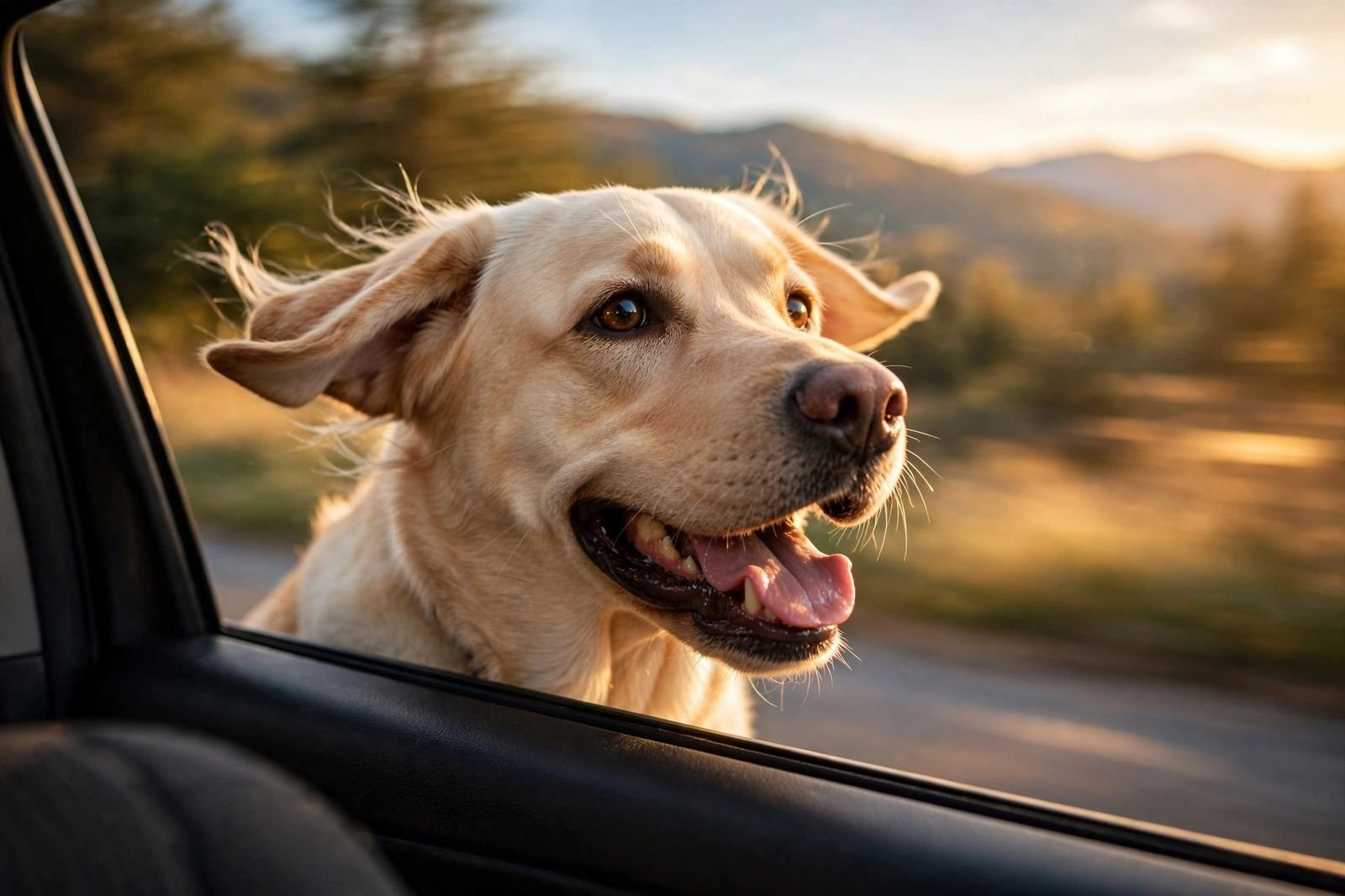
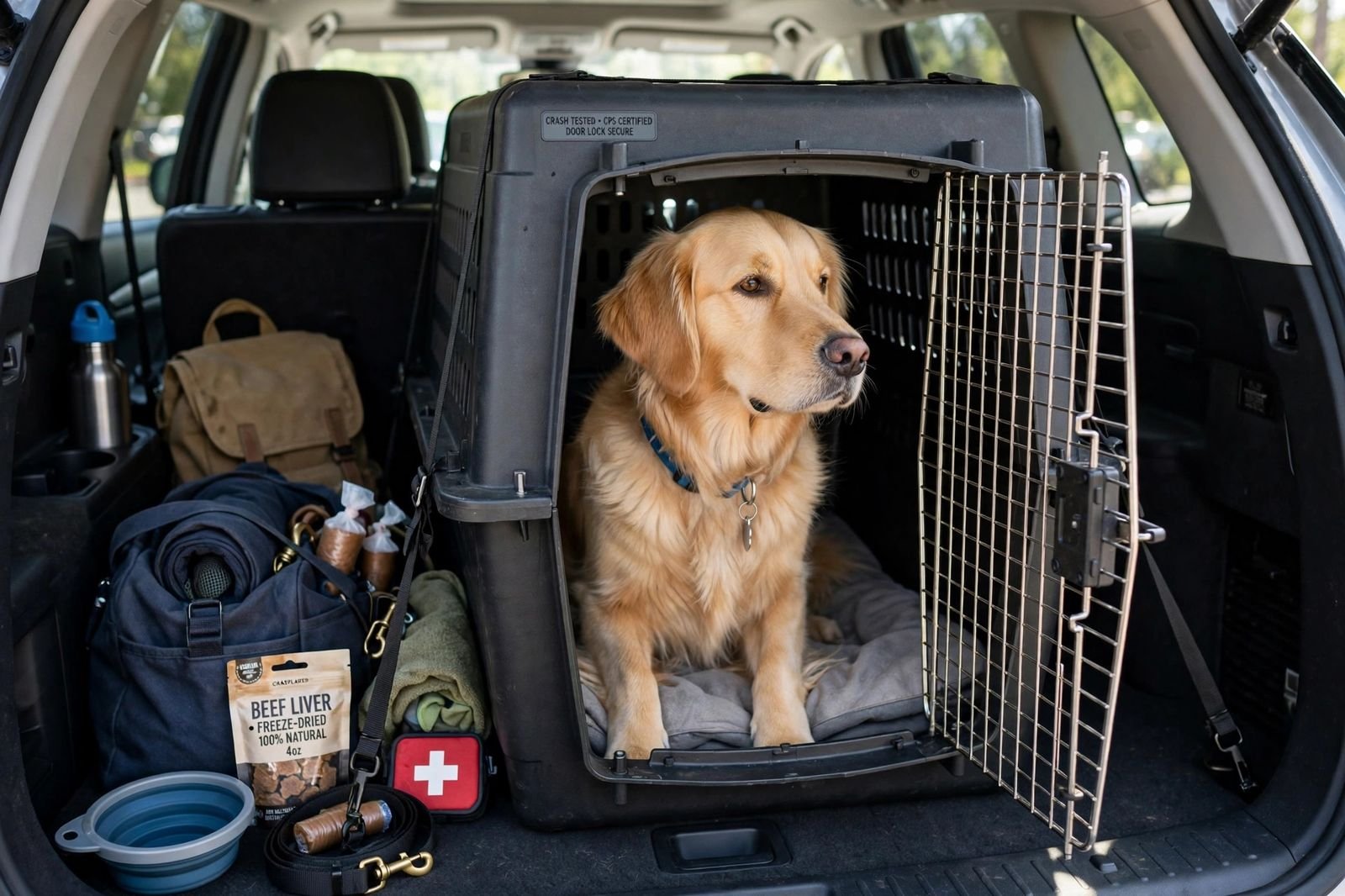
You have three good options. A crash-tested crate secured in the cargo area is the gold standard — the enclosed space feels like a den, and many dogs settle faster in a crate than on a seat. A crash-tested car harness that clips into the seatbelt works well for crate-haters. For small dogs, a secured carrier on the back seat does the job. What does not work: the dog on your lap, roaming the back seat, or riding shotgun with the airbag. The back seat or cargo area is always the right zone, and windows should be cracked for air but never wide enough for a full head-out at highway speed.
The Non-Negotiable: Never Leave Your Dog in a Parked Car
This deserves its own section because it kills dogs every single year, and it happens to careful, loving owners who thought “just five minutes.” On a 75°F day, the inside of a parked car can hit 100°F in about ten minutes — and cracking the windows barely slows it down. Dogs cool themselves mostly by panting, which stops working in superheated, still air. Heatstroke can set in fast, and it is frequently fatal.
The rule is absolute: if you cannot take the dog inside with you, the dog does not come on that errand. Plan stops around it. On road trips, use drive-throughs, take turns with a travel partner, or choose pet-friendly stops. In winter the equation flips — a car gets dangerously cold too. There is simply no weather in which a parked car is a safe place to leave a dog alone.
Road Trip Prep: Before You Leave
A week or two before a long drive, do a few practice runs. Start with short trips that end somewhere fun — the park, a friend’s house — so the car predicts good things, then gradually increase duration. A dog whose entire car history is vet visits will dread every trip. Mine did, until I rebuilt the association with a month of short, treat-filled rides.
The packing list
Food for the trip plus two extra days, the usual bowl, familiar water (some dogs get upset stomachs from unfamiliar water), medications, poop bags, a leash and a backup, your vet’s number and vaccination records, and a blanket or bed that smells like home. That familiar smell is genuinely calming in strange hotel rooms. A chew toy or stuffed Kong handles the boring stretches.
Exercise before you load up
A tired dog is a good traveler. A solid walk or play session before a long drive takes the edge off restlessness and makes the first few hours much smoother. For guidance on tiring out different energy levels, my dog walking guide breaks it down by breed type.
ID and microchip check
Travel is when dogs get lost — unfamiliar places, open car doors, slipped leashes at rest stops. Make sure the collar has an ID tag with your current mobile number, and confirm your microchip registration is up to date before you leave. A photo of your dog on your phone, showing distinctive markings, is worth having too.
On the Road: The Rhythm That Works
Settle into a rhythm: drive for two to three hours, then stop for fifteen to twenty minutes. Every stop follows the same pattern — water first, bathroom break on leash (rest stop grass is prime sniffing territory, so allow a few minutes), then a short walk to stretch legs. Keep the leash on at every stop, no exceptions; even a well-trained dog can bolt in an unfamiliar place with highway noise and strange smells.
Feed on roughly the normal schedule, but go a little light — some dogs get carsick, and a huge meal before a long driving stretch is asking for trouble. If your dog drools heavily, whines, or vomits in the car regularly, talk to your vet before the trip about options. Do not dose anything on internet advice.
Keep the car comfortable. Dogs overheat faster than people, so run the air conditioning and do not assume the back is as cool as the front. Offer water at every stop, and resist the drive-through french fry handouts — rich unfamiliar food plus motion is a recipe for back-seat disaster.
Staying Overnight: Hotels and Rentals
Not all “pet-friendly” listings mean the same thing. Always confirm before booking: weight limits, breed restrictions, nightly fees, whether dogs can be left alone in the room, and where the relief area is. Listings are often vague or outdated — a quick call beats a nasty surprise at check-in.
On arrival, sweep the room before letting the dog explore — under beds, behind curtains, the trash can. Set up the dog’s bed or blanket immediately; that familiar-smelling spot becomes home base. Stick to the normal feeding and walking schedule as closely as you can. Routine is a comfort blanket for dogs in strange places.
In rentals and guests’ homes, bring a sheet for furniture, keep the dog off beds unless invited, and never leave the dog uncrated and alone in someone else’s space. If your dog is crate-trained, the crate is your best friend on trips — familiar den, zero damage risk. My crate size guide helps if you need a travel crate.
Flying With Your Dog: The Honest Overview
Flying is the most stressful common way to travel with a dog, and my honest advice is: drive if you reasonably can. But sometimes flying is necessary, so here is the landscape.
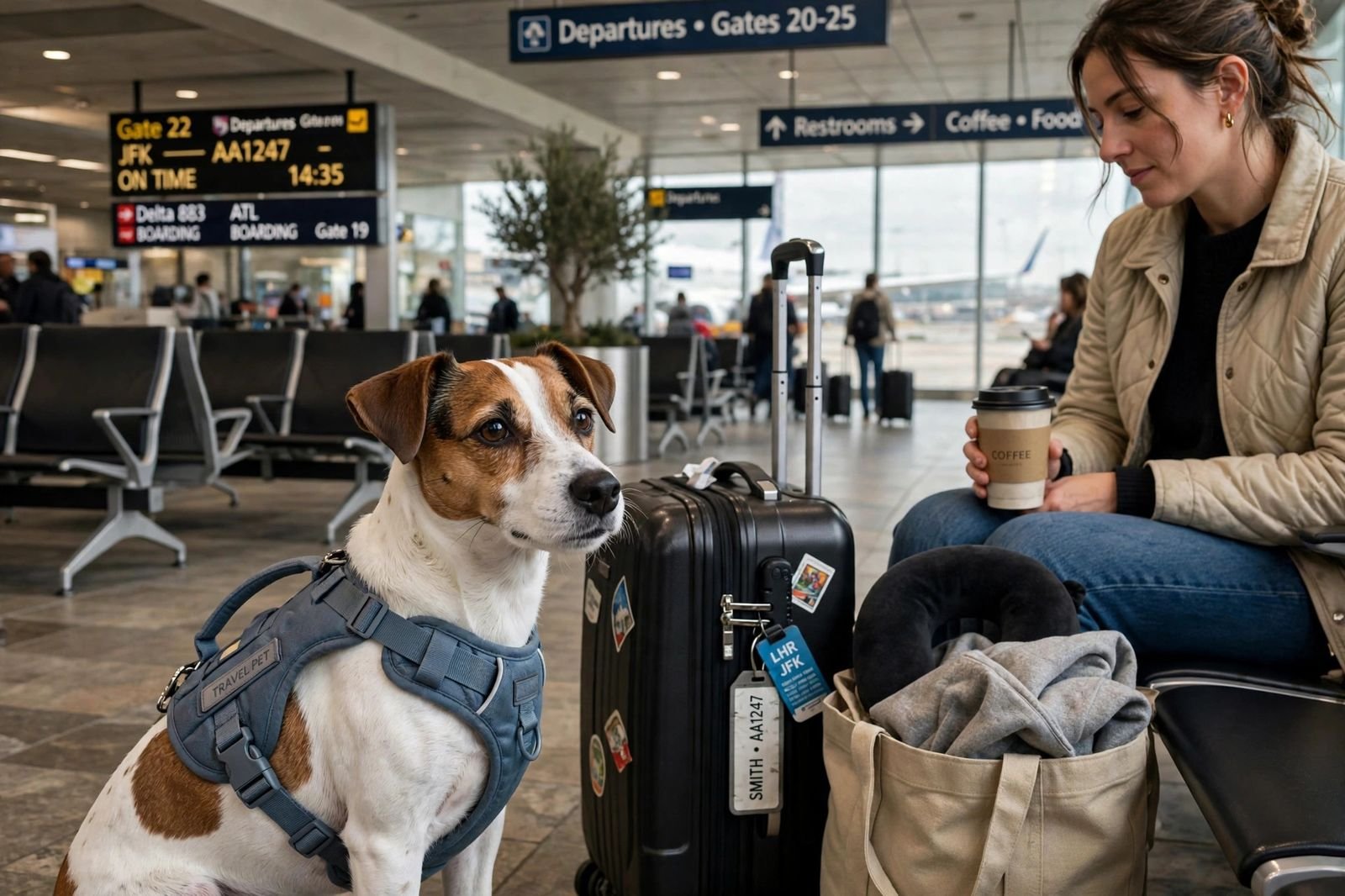
Small dogs that fit in an airline-approved carrier under the seat can fly in the cabin on most airlines — by far the least stressful option. Rules on carrier size, weight limits, and fees vary, so confirm directly with your airline and book the pet spot early, since cabins have limited slots. Larger dogs generally must fly as cargo: temperature restrictions, breed restrictions (flat-faced breeds are often refused), and real stress for the dog. If cargo is the only option, talk to your vet well in advance about whether your dog is a good candidate.
For any flight you will need a health certificate from your vet, usually issued within a short window before travel. International travel adds a whole layer — specific vaccinations, microchips, blood tests, waiting periods measured in months. Start that research the moment an international trip is on the horizon, not the month before.
One firm rule: do not sedate your dog for air travel unless your vet specifically directs it. Sedation at altitude affects breathing and temperature regulation in dangerous ways, and cargo staff cannot monitor a sedated dog properly.
Travel Anxiety: Helping Nervous Travelers
Some dogs take to travel like they were born for it. Others find the whole production deeply upsetting — panting when it is not hot, drooling, whining, trembling, or shutting down completely.
The fix is gradual desensitization, not one heroic road trip. Start with the dog sitting in the parked car getting treats. Then the engine on, treats. Then around the block, treats. Build duration slowly over days or weeks, always ending before stress sets in. Comfort items help too: the familiar bed, a worn t-shirt that smells like you, a long-lasting chew. What does not help is forcing a terrified dog through a long trip “to get used to it” — that usually makes the fear worse. If the anxiety is severe, talk to your vet or a trainer about a plan before the trip, not during it.
Frequently Asked Questions
How long can a dog ride in a car?
Most healthy adult dogs handle 6–8 hours of driving with breaks every 2–3 hours. Puppies, seniors, and dogs with health issues need shorter stretches and more frequent stops. Watch your dog, not the clock — restlessness, whining, and panting mean it is past time for a break.
Should I feed my dog before a long drive?
Feed a light meal a few hours before departure, and keep meals a bit smaller than usual on travel days — this reduces carsickness. Offer water at every stop, and skip rich treats and table scraps on the road.
Can my dog fly in the cabin with me?
On most airlines, yes, if your dog fits comfortably in an airline-approved carrier under the seat — typically small dogs, though exact limits vary. Book the pet spot in advance and pay the fee. Larger dogs generally fly as cargo, which has more restrictions. Always confirm current rules directly with your airline.
What paperwork do I need to travel with my dog?
At minimum: proof of current rabies vaccination and your vet’s contact info. Flights require a recent health certificate. International destinations can require vaccinations, microchips, blood tests, and waiting periods — check the official requirements early, not the week before.
How do I find pet-friendly hotels?
Filter for pets on booking sites, then call the hotel directly to confirm — listings are often outdated. Ask about fees, weight limits, breed restrictions, and whether dogs can be left alone in the room. For longer stays, rentals with fenced yards are often easier than hotels.
My dog hates the car. Can I fix that?
Usually, yes, with gradual desensitization: short sessions in the parked car with treats, then the engine on, then tiny drives, building up over days or weeks. End every step before stress sets in. If the anxiety is severe or includes vomiting, talk to your vet — there may be more going on than nerves.