
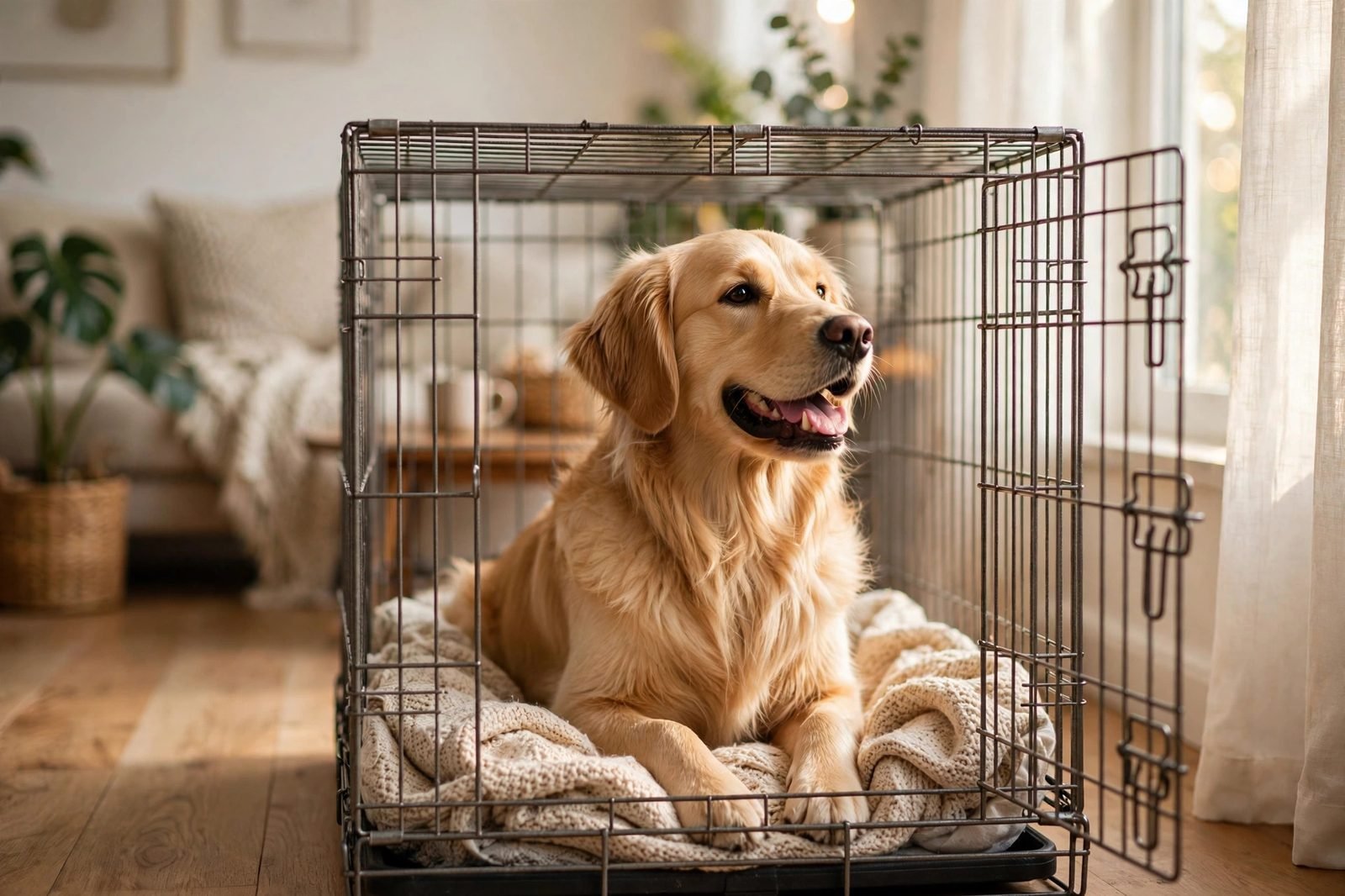

Here’s a confession: the first crate I ever bought for my dog was completely wrong. I walked into the pet store, saw a big sale tag on an extra-large wire crate, and thought, “Well, he’ll grow into it.” He was a scruffy terrier mix named Pickle who weighed about 22 pounds and would never, ever weigh a pound more. That crate was roughly the size of a studio apartment for him, and for the next three weeks, he treated one corner of it as his bedroom and the opposite corner as his bathroom. I had no idea why until a friend with three dogs took one look at the setup and started laughing.
“Your crate’s too big, mate,” he said. “You’re basically giving him a house with an ensuite.”
He was right. And that’s the thing about dog crate size — it’s one of those small decisions that quietly affects everything: house training, sleep quality, even how your dog feels about the crate itself. Get it right, and the crate becomes your dog’s favorite den. Get it wrong, and you end up washing blankets at midnight like I did.
I’ve bought crates for my own dogs, helped friends pick them out, and learned every lesson the hard way so you don’t have to. This guide walks you through exactly how to measure your dog, how to read those confusing size charts, and how to avoid the mistakes most first-timers make — including the “grow into it” trap I fell straight into.
Published: May 18, 2026 | Last updated: May 18, 2026
Quick Tips
- Your dog should be able to stand up, turn around, and lie down stretched out — nothing more.
- Measure your dog’s nose-to-tail-base length and floor-to-head-top height, then add 2–4 inches.
- For puppies, buy the adult size but use a divider panel so the space stays snug.
- When in doubt, size up one step rather than cramming — but never go two sizes up.
- Wire crates suit home use; plastic crates are better for travel and dogs that need a darker den feel.
- Ignore crate weight ratings — they describe the crate’s strength, not who should sleep in it.
Why Crate Size Actually Matters
When I first got Pickle, I figured a crate was basically a cage — bigger must mean happier, right? Wrong. Dogs don’t think in square footage. They think in terms of a den: a cozy, enclosed space that feels safe. A right-sized crate gives them that. An oversized one just feels like an empty room.
Too Big Means Bathroom Problems
This was my lesson learned the sweaty, detergent-smelling way. Dogs naturally avoid soiling their sleeping area — it’s one of their strongest instincts. But when a crate is too roomy, the dog can sleep in one corner and pee in another, and the instinct never kicks in. The day we swapped Pickle to a properly sized crate, the accidents stopped almost overnight. I still think about all that laundry.
If you’re in the middle of training, crate size and house training go hand in hand — I’ve written more about the whole process in my guide on how to house train a puppy, because the crate is really just one tool in that bigger picture.
Too Small Means an Uncomfortable, Stressed Dog
On the flip side, squeezing a dog into a crate that’s too small is genuinely unfair. Your dog needs to stand up fully without hunching, turn around without performing gymnastics, and stretch out on their side when they sleep. A dog who can’t do these basics will dread the crate, whine, and possibly hurt themselves trying to get comfortable. And honestly? You’d feel guilty every time you closed the door. I know a neighbor who crammed her lanky greyhound mix into a crate meant for a beagle because it “fit better in the hallway.” The dog hated the crate within a week. The hallway location didn’t matter — the discomfort did.
How to Measure Your Dog for a Crate
Okay, the practical part. Measuring your actual dog takes three minutes and beats any breed chart, because two Labradors can be built completely differently. Here’s exactly what I do.
What You’ll Need
A flexible tape measure (the sewing kind is perfect) and a treat to keep your dog standing still. Do it after a walk, when the zoomies have been burned off.
The Two Magic Numbers
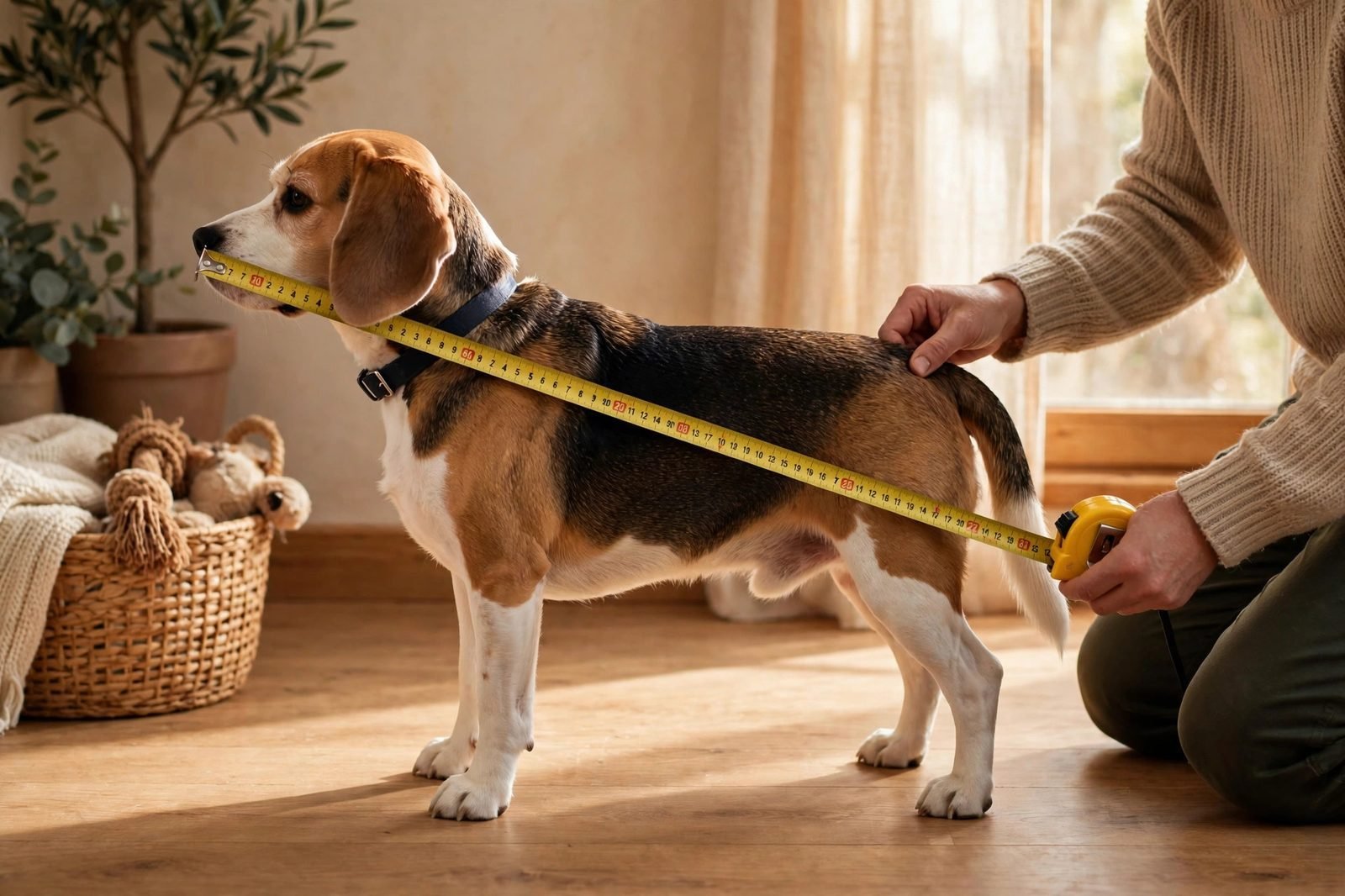
You need two measurements. First, length: with your dog standing squarely, measure from the tip of the nose to the base of the tail — the base, where it meets the body. Second, height: floor to the top of the head, or the ear tips for pointy-eared breeds like shepherds.
Add 2 to 4 inches to each number, and that’s your ideal interior size. So if your dog measures 24 inches long and 20 inches tall, look for a crate with roughly 28 inches of interior length and 24 inches of interior height. Simple as that.
One catch: manufacturers list exterior dimensions on the box, and the interior is always a bit smaller. Check the specs for interior measurements if you can; if you can’t, assume you’ll lose an inch or two.
Crate Size Cheat Sheet by Breed Type
Now, measuring is always best, but I know plenty of people buy a crate before they even bring the dog home — especially first-timers. So here’s a rough starting guide based on breed size. Treat these as starting points, not gospel, and always double-check with a tape measure once your dog arrives.
Extra small (18–22″): Chihuahuas, Yorkies, Toy Poodles, Maltese — a 22-incher also fits nicely in most cars. Small (24″): Dachshunds, Shih Tzus, Miniature Poodles, Cavaliers, French Bulldogs (sturdy ones sometimes need a 30″). Medium (30″): Beagles, Cocker Spaniels, Border Collies, most terriers.
Large (36″): Labs, Goldens, Boxers, Standard Poodles — probably the most-bought crate size in the world. Extra large (42″): big Shepherds, Rottweilers, Great Danes, Mastiffs. Giant (48″): the true giants — Wolfhounds, big Danes, Saint Bernards.
A quick word on those charts you see on pet store websites: they often size by weight alone, which is unreliable. A 40-pound bulldog and a 40-pound border collie are completely different shapes. Length and height measurements will always beat a weight chart.
What About Puppies? Buy for the Adult, Divide for Now
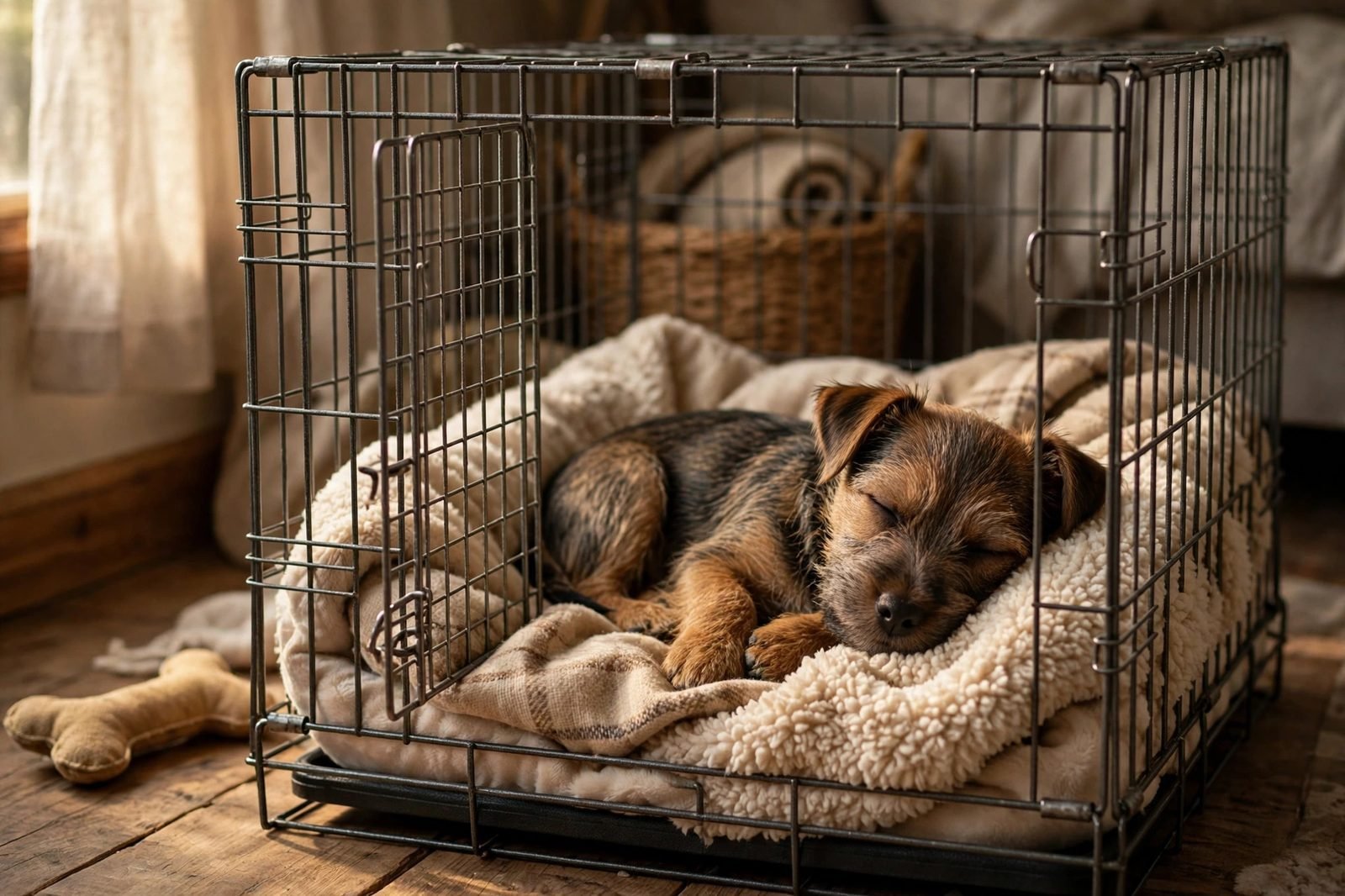
Puppies grow absurdly fast — Pickle was the size of a slipper at eight weeks and a respectable small dog by six months. Buying a new crate for every growth spurt would be ridiculous. The standard trick: buy the crate your dog will need as an adult, and use a divider panel to shrink the usable space while they’re small.
Most wire crates include a divider or sell one for a few dollars. Slide it in so the puppy’s section is just big enough to stand, turn, and lie down, then move it back as they grow. It solves the too-big bathroom problem without you buying two or three crates.
Don’t know how big your puppy will get? Ask your vet at your first visit — they see hundreds of puppies a year and are surprisingly good at predicting. When genuinely unsure, lean toward the larger adult size with a divider; slightly big is a much easier problem than too small.
Mistakes I See First-Timers Make (I’ve Made Most of Them)
1. Buying for the dog they wish they had. A friend bought a 42-inch crate for his new corgi puppy because “he looked like he’d get big.” He did not get big. He’s a corgi. Measure the dog you have, or the adult size your vet predicts — not your daydreams.
2. Trusting the weight rating on the box. Those ranges describe the crate’s build strength, not comfort. Always go by dimensions.
3. Forgetting about the door. Check the door size and which side it opens before you buy. Double-door crates cost a little more and are worth it.
4. Not leaving room for bedding. A thick bed can eat two or three inches of interior height. Between sizes with plush bedding planned? Size up.
Wire vs. Plastic vs. Soft-Sided: Does the Type Change the Sizing?
The measurement method is the same for all three, but each type has quirks.
Wire crates are the most popular for home use, and their sizing is the most honest. They usually come with dividers — the best choice for puppies. Some dogs find all that visibility overstimulating; draping a blanket over the top and sides (never the door) turns it into a proper den.
Plastic kennels (airline-style) run a little smaller inside than the box suggests because the walls are thick, and they feel darker and more enclosed — anxious dogs often prefer that. Great if you travel; just check airline rules separately, because those are their own headache.
Soft-sided crates are lightweight and fine for calm, crate-trained adults. Not for puppies or determined chewers — a motivated dog can unzip one from the inside. Sizing runs generous, so use your exact measurement.
Where You Put the Crate Matters Too
A perfectly sized crate stuck in a cold garage won’t get used happily. Dogs are social sleepers — they want to be near you. The sweet spot is a corner of the bedroom or living room: quiet enough for rest, close enough that your dog can hear you. Avoid drafty hallways, the front door (every delivery becomes a crisis), and windows with direct afternoon sun.
This matters because dogs sleep a lot — and good rest shapes daytime behavior. My piece on how much sleep dogs need explains why that corner-of-the-bedroom setup works so well. A dog who sleeps well is a dog who trains well.
Frequently Asked Questions
Can a dog crate be too big?
Yes — the most common sizing mistake. An oversized crate lets your dog sleep in one end and use the other as a bathroom, which undermines house training. If yours is too big, add a divider panel or swap to a smaller size.
Should my dog be able to fully stretch out in the crate?
Yes. Stand up without hunching, turn around comfortably, lie down stretched out — that’s the minimum. They don’t need room beyond that; a little snug is cozy, not cruel.
How do I size a crate for a puppy I just adopted?
Estimate the adult size (ask your vet — they’re great at this), buy that size, and use a divider panel to keep the puppy’s section small for now. Move the divider back as they grow. This saves you from buying multiple crates and keeps house training on track from day one.
Is it cruel to crate a dog at all?
With the right size and a proper introduction, most dogs love their crate — it becomes their bedroom and retreat. It becomes unfair when the crate is too small, the dog is left in it for excessive hours, or it’s used as punishment. It should always be associated with good things: treats, meals, cozy bedding.
What size crate does a 50-pound dog need?
It depends on build, not just weight — a 50-pound bulldog and a 50-pound greyhound need different crates. As a rough guide, most 50-pound dogs fit a 36-inch crate, but always measure nose-to-tail-base and floor-to-head-top and add 2–4 inches rather than trusting weight alone.
Can two dogs share one crate?
Generally no. Even bonded dogs can clash in a confined space, and sizing for two almost guarantees it’s too big for house-training purposes. Each dog deserves their own den.