
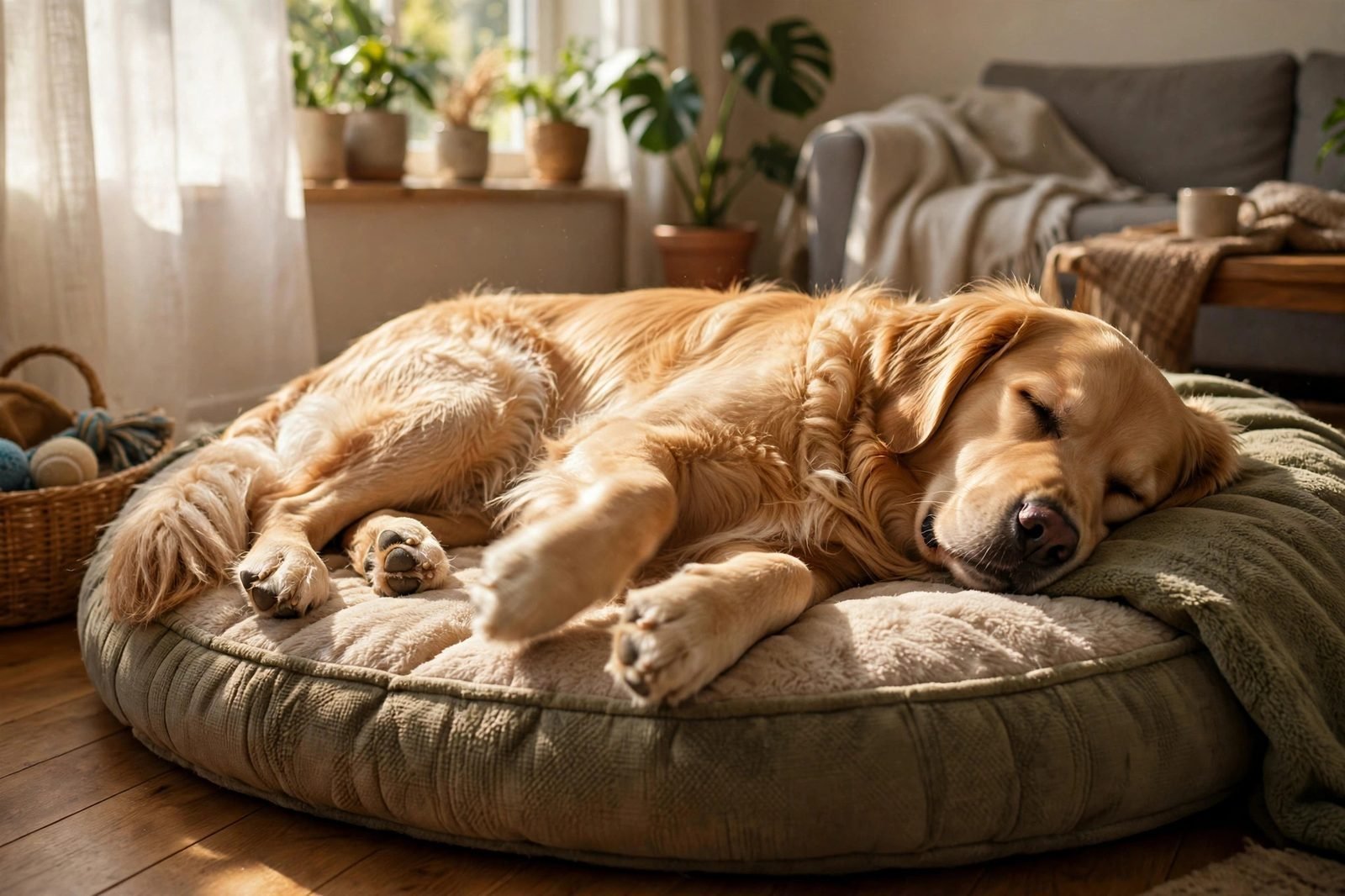

The first time I realized something was wrong with Biscuit’s sleep, it wasn’t dramatic. My sister’s beagle puppy — the same land-shark who once ate a remote control — had started sleeping through her evening zoomie hour. Three days of a puppy choosing naps over chaos, and I was at the vet’s door convinced something was terribly wrong. The vet’s diagnosis? “She’s growing. Puppies do that.”
That visit cost me forty pounds and taught me the most reassuring lesson of puppy ownership: puppies sleep an almost absurd amount, and it is completely normal. Adult dogs sleep a lot too — more than most new owners expect. But how much is normal, what changes it, and when should you actually worry? Here is the honest, age-by-age answer.
Published: April 25, 2026 | Last updated: April 25, 2026
Quick Tips
- Puppies need 18–20 hours of sleep a day; adult dogs need 12–14; seniors often need 14–18.
- Big dogs sleep more than small dogs, and every dog sleeps more after a busy day.
- Dogs cycle through sleep stages like we do — twitching, whimpering, and “running” in dreams is normal.
- A sudden big change in sleep habits is worth a vet call; gradual changes with age are expected.
- Protect nap time: puppies who don’t get enough sleep become cranky, bitey nightmares.
- Consistent bedtime routines and a comfortable sleeping spot improve sleep quality at any age.
How Much Sleep Dogs Need by Age
If there is one number to remember from this article, it is this: most adult dogs sleep 12–14 hours out of every 24, and that counts naps, not just nighttime. It sounds like a lot until you realize dogs are polyphasic sleepers — they doze in chunks around the clock rather than in one solid block like we do.
Puppies: 18–20 hours
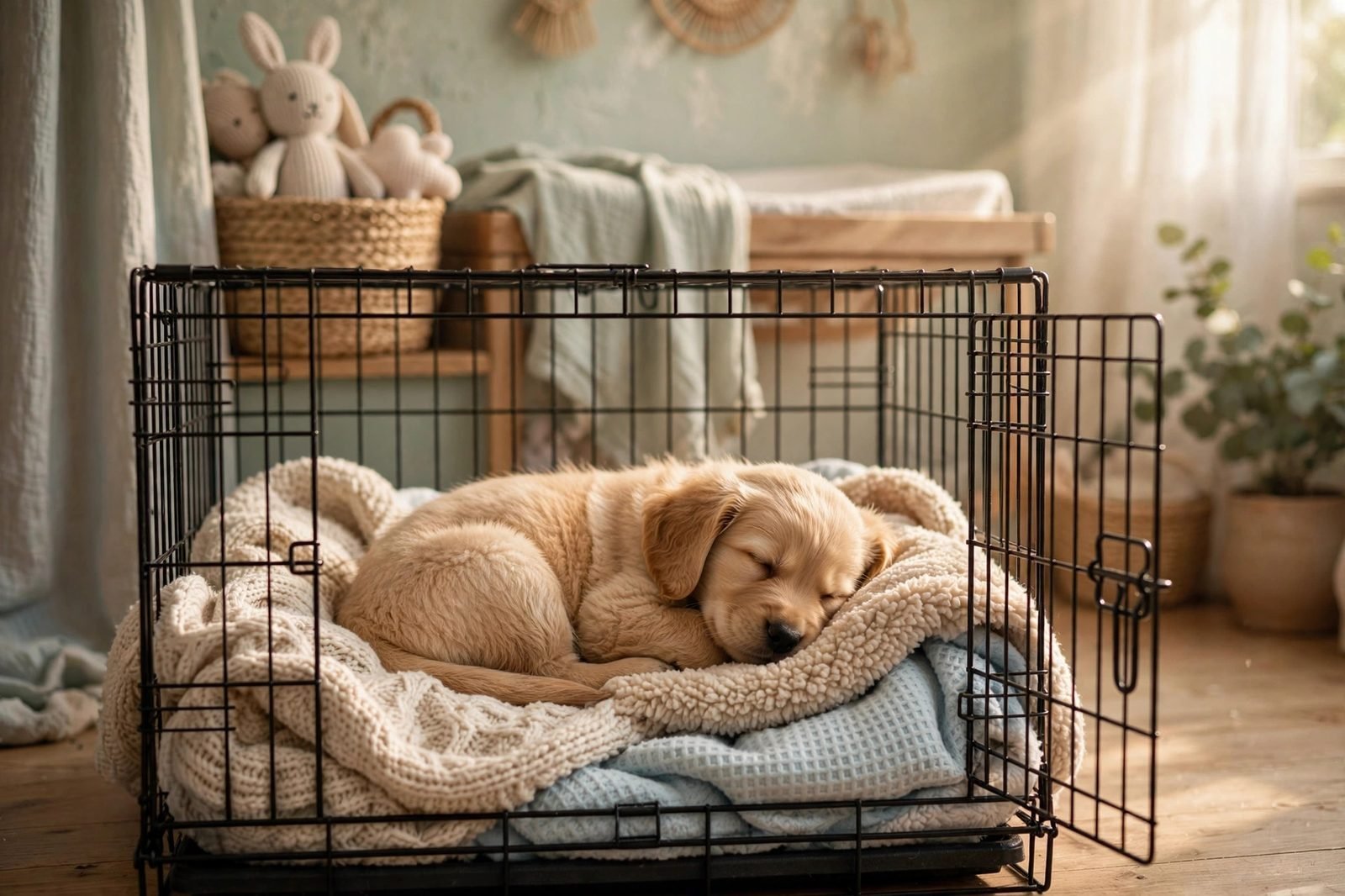
Newborn puppies sleep around the clock — up to 22 hours. By 8–12 weeks, expect 18–20 hours. That sleep is doing critical work: growth hormone is released during deep sleep, the brain is consolidating everything learned that day, and the immune system is building itself. A puppy that is not allowed to sleep enough will be overtired, hyperactive, and nippy — the classic “witching hour” demon is usually just an exhausted baby.
I learned to treat Biscuit’s crate as a sleep sanctuary: covered, quiet, boring, and — this was the hard part — I stopped fishing her out every time she woke up for two minutes. Puppies cycle in and out of light sleep; not every wake-up needs entertainment.
Adults: 12–14 hours
Between roughly one and seven years old (earlier for giant breeds), most dogs settle into 12–14 hours. Working and high-energy breeds may sleep slightly less when well exercised; couch-potato breeds may sleep more without it meaning anything. The number that matters is your dog’s baseline — learn what is normal for them, and you will notice real changes instantly.
Seniors: 14–18 hours
Older dogs sleep more deeply and more often, sometimes up to 18 hours. Metabolism slows, joints ache, and rest becomes recovery. Gradual increases are normal aging. What is not normal is a sudden jump — a seven-year-old dog that goes from 12 to 18 hours in a month is telling you something, and it deserves a vet visit. My old neighbour’s lab did exactly this, and it turned out to be an underactive thyroid — totally manageable once caught.
What Affects How Much a Dog Sleeps
Age is the biggest factor, but it is far from the only one. Here is what moves the needle:
Breed and size
Large and giant breeds are champion sleepers — a mastiff can out-nap a cat, and nobody should be surprised. Smaller breeds tend to be lighter sleepers with slightly lower totals. Brachycephalic (flat-faced) breeds often sleep in odd positions because they are managing their airways; snoring that worsens over time is worth mentioning to a vet.
Exercise and mental stimulation
A well-exercised dog sleeps deeply and contentedly — this is the good kind of tired. An under-exercised dog may actually sleep more out of boredom, in restless, unsatisfying chunks. And an over-exercised dog crashes hard, the way a puppy does. The sweet spot: enough activity that sleep looks peaceful, not comatose or fidgety.
Environment and routine
Dogs sleep better with routine. Same bedtime, same wake time, same sleeping spot — boring is beautiful. Household chaos, irregular schedules, and sleeping somewhere noisy or draughty all fragment sleep. If your dog paces at night, check the basics first: too hot, too cold, needs the toilet, or has learned that 3 a.m. pacing earns attention.
Health
Pain, itching, digestive trouble, urinary issues, and cognitive decline all change sleep — usually by breaking it up rather than increasing it. A dog that cannot settle, circles repeatedly, or wakes panting is uncomfortable, not lazy. Conversely, conditions like hypothyroidism and depression increase total sleep. Sleep changes are a symptom worth reporting, not a diagnosis to make yourself.
Understanding Dog Sleep Cycles
Once you know what is happening in there, the weird stuff gets a lot less alarming.
The twitching, paddling, and whimpering
Dogs go through REM sleep just like we do, and during REM they dream. The paw-twitching, leg-paddling, muffled barks, and whisker-twitches are dream behaviour — completely normal, and honestly delightful. The old advice says never wake a sleeping dog suddenly, and it is good advice: a dog startled out of deep sleep can snap before it is fully awake. If you must wake them, call their name softly from a little distance.
Why dogs circle before lying down
The circling, scratching, and nest-building is ancient software — wild canids trampled grass into a bed and checked for snakes. Domestic dogs with memory-foam beds still run the program. Let them. Interrupting the ritual just means they start it over.
Snoring
Some snoring is normal, especially in flat-faced breeds and deep-sleeping large dogs. New or worsening snoring, snoring with gasping, or snoring that leaves the dog tired during the day deserves a vet’s opinion — sleep apnoea exists in dogs too.
Setting Up Good Sleep for Your Dog
You cannot make a dog sleep, but you can make good sleep easy. The formula is simple:
The bed
Right-sized, supportive, washable, and in a quiet spot — not in the hallway everyone walks through at midnight. Orthopaedic beds genuinely help seniors and large breeds; for puppies, something cheap and chew-proof until the destruction phase passes. Let the dog choose between a couple of spots if you can — some dogs sleep hot and migrate to cool floors, and that is fine.
The routine
Last toilet break, then bed — same order, same time. An evening wind-down helps high-energy dogs: a calm sniff walk beats a wild play session right before bed. And a tired brain sleeps well, so a little evening training or a stuffed Kong can settle a restless dog better than extra physical exercise.
Protecting puppy naps
This one deserves repeating because new owners get it wrong constantly: let sleeping puppies lie. Enforce naps in the crate or pen — an overtired puppy will not choose sleep on its own, any more than a toddler will. One hour awake, two hours asleep is a solid rhythm for young puppies. The household rule in Biscuit’s era became “if the puppy is asleep, the puppy is invisible,” and our bite-scratch statistics improved immediately.
When Sleep Changes Mean a Vet Visit
Gradual, age-appropriate changes: normal. Sudden or dramatic changes: a conversation with your vet. Specifically, call if you notice:
- A sudden big increase or decrease in total sleep over days or weeks
- Restlessness at night — pacing, panting, inability to settle — especially if it is new
- Difficulty getting up, stiffness after rest that was not there before
- Sleeping so deeply the dog is hard to rouse, or seeming groggy and disoriented on waking
- Changes paired with appetite, thirst, weight, or toilet habit changes
In seniors, watch for the signs of canine cognitive dysfunction — the doggy version of dementia: night-time restlessness, staring, getting stuck in corners, house-training regression. It is manageable, especially caught early, and better sleep is often part of the treatment plan. None of this is a diagnosis from an article — it is a “mention it at the next appointment, or book one” list. Trust the baseline you have learned; you know your dog’s normal better than anyone.
Frequently Asked Questions
Is it normal for my puppy to sleep all day?
Yes — 18–20 hours is normal for young puppies. They sleep in intense bursts between short windows of chaos. As long as the puppy is bright, eating, and playful during waking hours, marathon napping is exactly what growing bodies do.
Why does my dog sleep so much?
Because dogs are built to. Twelve to fourteen hours is the adult baseline, and large breeds, seniors, and dogs recovering from big days sleep more. Worry about changes from your dog’s normal, not the absolute number.
Should I wake my dog from a dream?
Best not to. Twitching, paddling, and soft whimpering during REM sleep are normal dreaming. Waking a dog suddenly from deep sleep risks a startled snap. If you need them up, say their name gently from a short distance away.
Do dogs need less sleep as they get older?
The opposite — senior dogs typically sleep more, often 14–18 hours, and more deeply during the day. What changes is the pattern: older dogs may sleep more by day and rest less well at night, which is worth mentioning to your vet if it disrupts the household.
Is it bad if my dog sleeps in my bed?
Not inherently — it is a personal choice, not a training failure. The real questions are whether everyone sleeps well and whether the dog can also settle alone when needed. A dog that cannot sleep without you may have separation-related anxiety worth addressing.
How can I help my dog sleep better at night?
Consistent routine, enough daytime exercise and mental stimulation, a comfortable bed in a quiet spot, and a last toilet break before bed. For restless seniors, a vet check first — then consider night lights, orthopaedic bedding, and keeping water nearby.
[…] they just kneaded. It’s a bedtime ritual. Speaking of sleep habits, I’ve written about how much sleep dogs need too — and while the numbers differ, that pre-nap wind-down ritual looks remarkably similar across […]
[…] My schedule, which has worked for years: breakfast around 7:30 when I get up, dinner around 6:30 when I start making my own food. Eleven hours apart. On weekends I sleep in and breakfast slides to 9 — and the dogs adjusted within a few weeks. A predictable evening meal also sets up a calm bedtime; I dug into the sleep side of the daily rhythm in my guide on how much sleep dogs need. […]