

Senior Dog Care: What Changes as Your Dog Ages
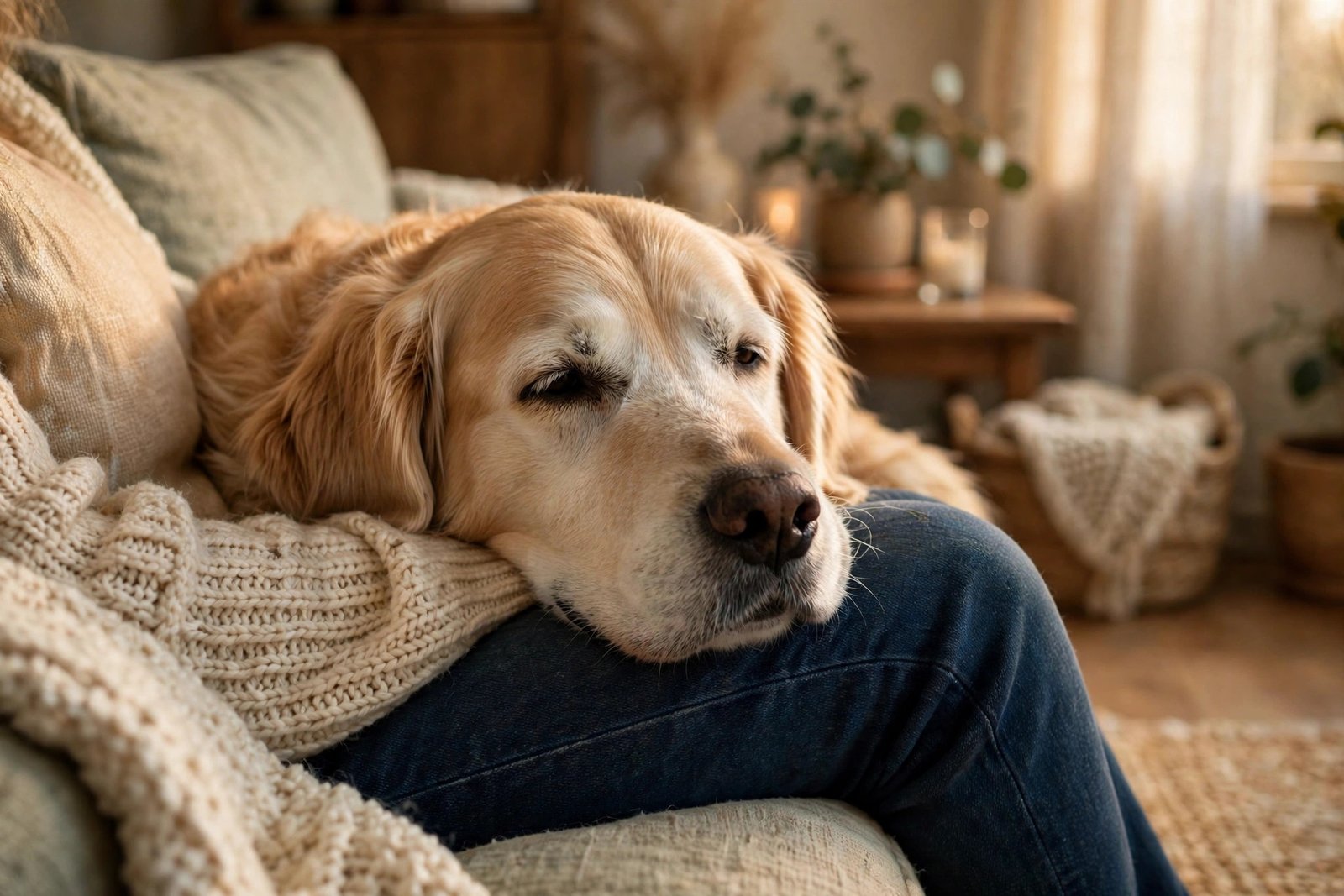
It sneaks up on you. One day your dog is launching itself off the couch like a furry missile, and the next — well, not the next day, but gradually, over months — the landings get a little more careful. The muzzle goes gray. The afternoon nap gets longer. Your dog is becoming a senior, and while that word can feel bittersweet, the senior years are often the sweetest: calmer, deeper, and full of a companionship that only comes with time.
Senior dog care is not about treating your dog like it is fragile. It is about adjusting the routine to match the body your dog has now — a little less intensity, a little more comfort, a little more attention to the small changes that tell you how it is doing. Most of it is common sense once someone lays it out. Here is the full picture.
Quick Tips
- Dogs are generally considered senior around 7–8 years (sooner for large breeds).
- Shift to twice-yearly vet checkups to catch age-related changes early.
- Swap intense exercise for shorter, more frequent gentle outings.
- An orthopedic bed and non-slip rugs are the two highest-impact comfort upgrades.
- Keep the mind busy — senior dogs still need enrichment, just gentler.
- Watch for gradual changes (appetite, thirst, mobility) and mention them to your vet.
When Does a Dog Become a “Senior”?
There is no birthday where a dog officially becomes old. The common guideline is around 7 to 8 years for medium dogs — but size changes the math considerably. Large and giant breeds age faster and may be considered senior as early as 5 or 6, while small breeds often do not show their age until 9 or 10. A 7-year-old Great Dane and a 7-year-old Chihuahua are at very different life stages.
More useful than any number is watching your individual dog. The senior transition announces itself through small changes: sleeping more deeply, hesitating before jumping into the car, graying around the muzzle, a little less enthusiasm for the long hike. None of these mean anything is wrong — they are the normal texture of aging. What matters is noticing the baseline so you can spot when something changes beyond the gradual drift.
Adjusting Exercise: Less Intensity, Same Joy
The biggest mistake owners make with aging dogs is cutting exercise too much, too fast. A senior dog that stops moving loses muscle tone, gains weight, and stiffens up — which makes everything harder. The goal is not less activity; it is the right kind of activity.
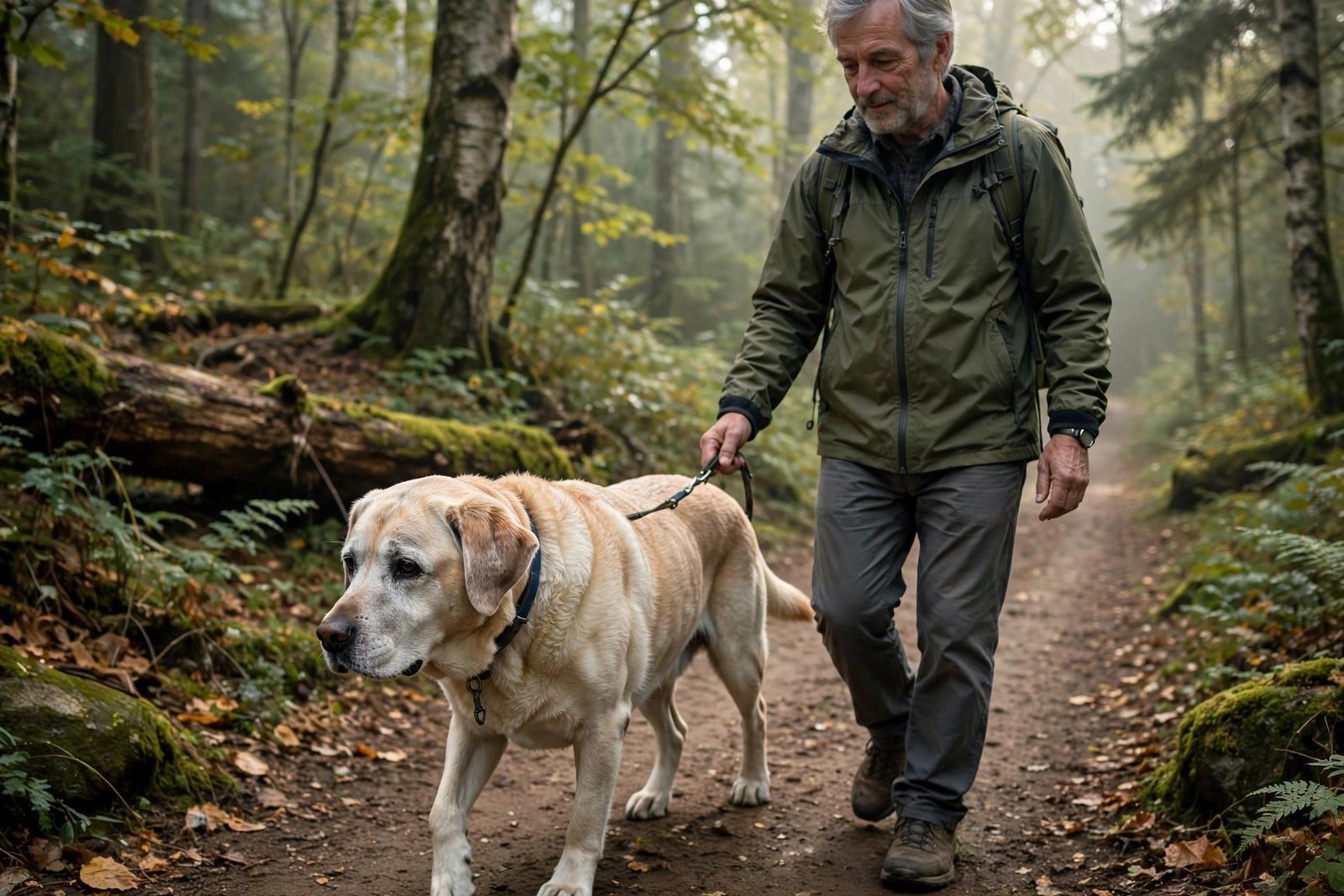
Trade the long weekend hike for two or three shorter outings spread through the day. Twenty minutes of gentle walking, twice daily, often suits a senior far better than one exhausting hour. Let the dog set the pace — sniff walks, where the dog decides where to go and how long to linger, are perfect senior exercise because they provide mental stimulation without physical strain.
Swimming deserves a special mention. For dogs with stiff joints, swimming is close to ideal: full-body movement with no impact. Not every dog takes to water, and you should introduce it gradually in a safe, calm setting — but for the dogs that love it, it can genuinely extend their comfortable active years. As always, watch for fatigue and keep sessions modest.
What to ease off: repetitive high-impact activity like endless fetch on hard ground, long runs, and jumping in and out of cars. A ramp for the car is one of those purchases that feels unnecessary until the first morning your dog hesitates at the bumper — and then it feels essential. For sleep and rest patterns in older dogs, my guide to how much dogs sleep covers what is normal at every life stage.
Feeding the Older Dog
Metabolism slows with age, and activity usually drops — which means the food amount that maintained a perfect weight at age four may gradually add padding at age nine. Weight is the single biggest lever in senior comfort: extra pounds multiply the load on aging joints, while a lean senior moves noticeably better. Most owners need to reduce portions somewhat as their dog ages, though the right amount is individual — your vet can help you find it at checkups.
Senior-formulated foods exist for a reason: they tend to be slightly lower in calories, with adjusted protein and added joint-supporting nutrients. Whether to switch is worth discussing with your vet, especially if your dog has any kidney or weight considerations. What matters more than the bag label is the outcome — steady healthy weight, good energy, and a coat that looks well.
Two practical notes. First, some seniors get fussier about food as their sense of smell dulls; warming food slightly or adding a splash of warm water can make it more appealing. Second, raised food and water bowls can make eating more comfortable for dogs with neck or shoulder stiffness. Small ergonomic changes like this are the essence of senior care — nothing dramatic, just removing friction.
Comfort Upgrades That Actually Matter
You do not need to renovate your house. Two changes deliver most of the comfort benefit.
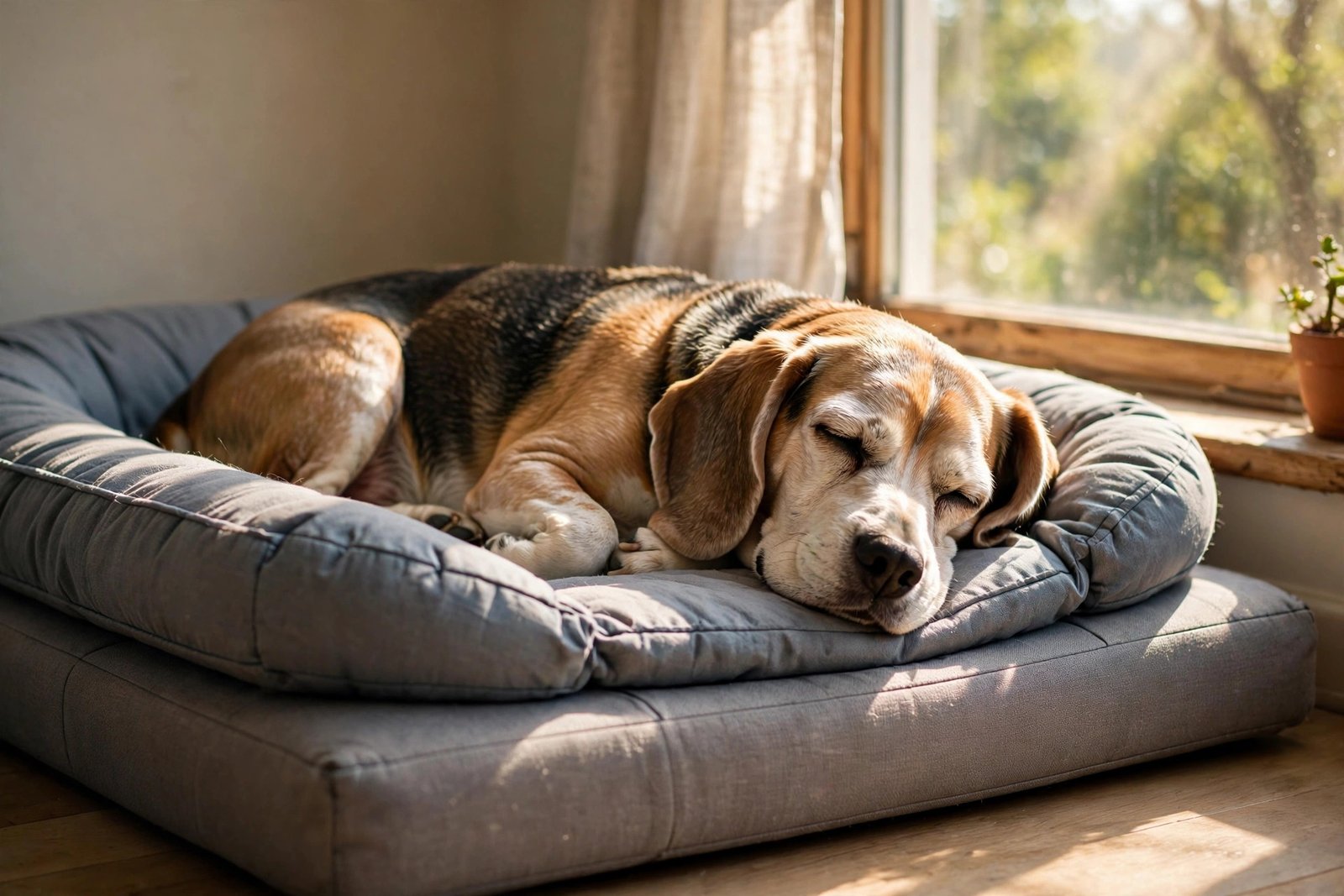
An orthopedic bed. Memory foam beds that cushion joints make a visible difference for stiff seniors — many owners report their dog moves more easily in the morning within a week or two of the switch. Place it somewhere warm and draft-free, ideally where the dog already likes to rest. Older dogs feel the cold more, so a bed near (not on top of) a heat source is prime real estate.
Traction. Hardwood and tile floors become obstacle courses for dogs with weak hind legs. Non-slip rugs or runners along the dog’s usual paths — bed to water bowl, door to couch — prevent the splayed-leg panic that is both frightening and a fall risk. Yoga mats cut to size work in a pinch and are easy to wash.
Beyond those two: keep nails trimmed a little more often (long nails worsen slipping and posture), consider a warm coat for cold-weather walks since seniors chill faster, and keep essentials — food, water, bed, a potty spot — on one floor if stairs are becoming hard.
Vet Care Rhythm for Seniors
The standard advice — and it is good advice — is to move to twice-yearly checkups once your dog is senior. The logic is simple: dogs age faster than we do, so six months for a senior dog covers a lot of ground. Regular bloodwork at these visits establishes trends over time, which is far more useful than any single snapshot. A value that has crept upward across three visits tells a story that one reading never could.
Between visits, you are the monitoring system. The changes worth mentioning to your vet are the gradual ones owners tend to normalize: drinking noticeably more water, appetite shifts in either direction, new lumps (most are harmless, but new lumps deserve a professional opinion), coughing, stiffness that does not loosen up with gentle movement, or any behavior change like restlessness at night or confusion. None of these are emergencies on their own — they are simply data your vet wants. My guide to signs it is time to call the vet helps sort the “mention at the next visit” from the “call today.”
Dental health becomes more important with age, not less. Dental disease is extremely common in seniors and affects far more than the mouth — chronic oral pain suppresses appetite and energy in ways owners often attribute to “just getting old.” If your dog has never had a dental assessment, the senior years are the time to ask about one.
Keeping the Senior Mind Engaged
There is a quiet tragedy in how many owners stop training and playing with their dogs once the gray muzzle appears — as if enrichment had an expiration date. It does not. Senior dogs still need things to do; they just need the difficulty calibrated to the body they have now.
Short, easy training sessions are wonderful for older dogs. Reviewing known cues, learning gentle new tricks (a chin rest on your palm is a favorite), and nose work games all provide mental engagement without physical strain. Puzzle feeders set to easy, snuffle mats, and scatter feeding in the yard turn meals into enrichment. The sessions should be short — five to ten minutes — and always end on a success.
Social life matters too. If your dog has dog friends, keep those friendships going at a comfortable pace. Gentle parallel walks with a calm buddy often suit seniors better than rowdy play. And the human bond deepens in these years in a way that is hard to describe — the dog that has been with you a decade reads you better than any creature on earth. Spending unhurried time together is not just nice; it is genuinely part of their wellbeing.
Frequently Asked Questions
At what age is a dog considered a senior?
Generally around 7–8 years for medium dogs, 5–6 for large and giant breeds, and 9–10 for small breeds. But individual variation is huge — watch your dog’s actual changes (energy, mobility, sleep) rather than the calendar. Your vet can tell you when to start thinking in senior terms for your specific dog.
How much exercise does a senior dog need?
Most seniors do well with shorter, more frequent outings — often 20–30 minutes of gentle walking once or twice daily, adjusted to the individual. Let the dog set the pace, favor sniff walks over forced marches, and watch for fatigue. The goal is maintaining muscle and mobility, not building fitness. If your dog is consistently exhausted or reluctant, mention it to your vet.
Should I switch my dog to senior food?
It is worth discussing with your vet, especially around age 7+. Senior formulas are typically lower in calories with adjusted nutrients, which suits many aging dogs — but the right choice depends on your dog’s weight, health, and how it is doing on its current food. Do not switch abruptly; transition over 7–10 days like any diet change.
Why is my senior dog drinking more water?
Increased thirst can be a normal part of aging, but it can also signal conditions like kidney changes or diabetes that are more common in older dogs. The practical rule: if the increase is noticeable and persistent, mention it to your vet — ideally sooner rather than later, since these things are most manageable when caught early. Bring notes on roughly how much more and for how long.
How can I help my senior dog with stairs?
Minimize stair use where possible — move essentials to one floor. For unavoidable stairs, non-slip treads help, and a support harness with a handle lets you assist without straining the dog. Ramps work for cars and couches. If stairs are suddenly much harder than they were, that change is worth a vet visit rather than just management.
Is it normal for old dogs to sleep all day?
Seniors do sleep significantly more — often 16–18 hours — and deeper. What matters is the pattern: a dog that sleeps a lot but is bright and engaged when awake is usually fine. A dog that is lethargic even during its waking hours, or that has lost interest in things it used to enjoy, deserves a vet check. Gradual change is aging; sudden change is information.
[…] Senior pets. Older dogs and cats often feel the cold more as they age. A warm bed can make the difference between a restless night and a settled one. If your senior pet has started seeking out the warmest spots in the house — the sunny patch, your lap — a heated bed is a natural fit. Pair it with the broader comfort measures in our guide to senior dog care basics. […]
[…] An owner who notices changes, plus a vet who addresses them, makes the difference — see also our senior dog care basics […]