


Heated Pet Beds: Are They Worth It?
Somewhere around the first cold snap of the year, a lot of pet owners find themselves staring at a heated pet bed and thinking: is this actually useful, or just an expensive way to spoil my pet? It is a fair question — and the answer depends on your pet more than the product.
Heated pet beds come in a few different types, they suit some pets much better than others, and there are real trade-offs — cost, electricity use, and safety — worth weighing before you buy.
Quick Tips
- Heated pet beds come in two main types: electric (plugged in) and self-warming (reflect body heat) — self-warming beds cost less and have no cords to worry about.
- Senior pets, thin-coated breeds, and pets with stiff joints tend to benefit the most from a warm sleeping spot.
- Electric beds usually warm to just above a pet’s resting body temperature — they warm the bed, not the room.
- Look for chew-resistant cords, removable washable covers, and auto shut-off features for safety.
- A heated bed is a comfort product, not a treatment — talk to your vet if your pet seems to be in pain or is newly reluctant to move.
- Many owners start with a self-warming pad; it is the cheapest way to test whether your pet likes extra warmth.
How Heated Pet Beds Actually Work
There are two completely different technologies hiding under the “heated pet bed” label, and knowing the difference matters more than any brand comparison.
Electric heated beds plug into a wall outlet and use a low-wattage heating element to warm the sleeping surface, often just a few degrees above a pet’s resting body temperature. Many turn on only under the pet’s weight, and better models include thermostats and automatic shut-off timers.
Self-warming (thermal) beds need no electricity at all. They contain a layer of reflective material — similar to the emergency blankets runners use — that reflects the pet’s own body heat back toward them. They do not create heat; they conserve it. They are cheaper, cord-free, and washable, but the warming effect is mild compared with an electric bed.
Which Pets Benefit Most From a Heated Bed?
Not every pet needs one. A young, thick-coated husky in a warm house will probably ignore a heated bed entirely and choose the cold tile floor instead — many owners report exactly that. But some pets genuinely seem to love the extra warmth:
Senior pets. Older dogs and cats often feel the cold more as they age. A warm bed can make the difference between a restless night and a settled one. If your senior pet has started seeking out the warmest spots in the house — the sunny patch, your lap — a heated bed is a natural fit. Pair it with the broader comfort measures in our guide to senior dog care basics.
Pets with stiff or achy joints. Warmth tends to feel good on stiff joints. A heated bed will not fix joint problems, but many owners of older dogs notice their pet seems more comfortable getting up in the morning after sleeping warm. Stiffness is a conversation for your vet first; a heated bed can be part of the comfort picture afterward.
Thin-coated and small breeds. Greyhounds, whippets, Chihuahuas, and hairless breeds like the Sphynx lose body heat fast and often shiver or burrow under blankets in winter — a heated bed gives them a reliable warm refuge.
Newborn puppies and kittens. Very young animals cannot regulate their body temperature well, so breeders and foster carers often use gentle warming pads. If this is your situation, ask your vet or an experienced breeder for guidance on safe temperatures — overheating is a real risk for tiny newborns.
For a healthy adult pet in a heated home, a heated bed is mostly a luxury — a pleasant one, but a luxury. A good quality regular bed serves them just as well.
Electric vs. Self-Warming: An Honest Comparison
Here is how the two types stack up on the things that actually matter:
Warmth level. Electric beds produce real, noticeable warmth. Self-warming pads produce a gentle retained warmth. On a genuinely cold night, there is no contest.
Cost. Self-warming pads are typically the cheapest option by a wide margin. Electric beds cost more up front, plus a small ongoing electricity cost — though at a few watts, most models cost only a few dollars a year to run. Check the wattage on the label to estimate your own cost.
Safety and supervision. Self-warming beds have no cords, no electricity, and no failure modes beyond the fabric wearing out. Electric beds are safe when they are well made and used properly, but they do introduce a cord and a heating element into your pet’s space. That means choosing reputable products and checking the cord and bed regularly for damage.
Maintenance. Self-warming pads are usually fully machine washable. Electric beds typically have a removable washable cover, but the heating element itself cannot go in the wash — you wipe it down.
Portability. Self-warming pads win here too — no outlet needed, so they work in crates, cars, and outdoor shelters. Electric beds are tied to wherever your outlets are.
If you are still on the fence, a self-warming pad is the sensible experiment. It costs little, carries no risk, and tells you within a week whether your pet even cares about extra warmth. If your pet claims the pad immediately and never leaves it, an electric bed might be a worthwhile upgrade for winter.
Safety: What to Watch For
Heated beds are generally safe products, but “generally” is doing some work in that sentence. A little care goes a long way:
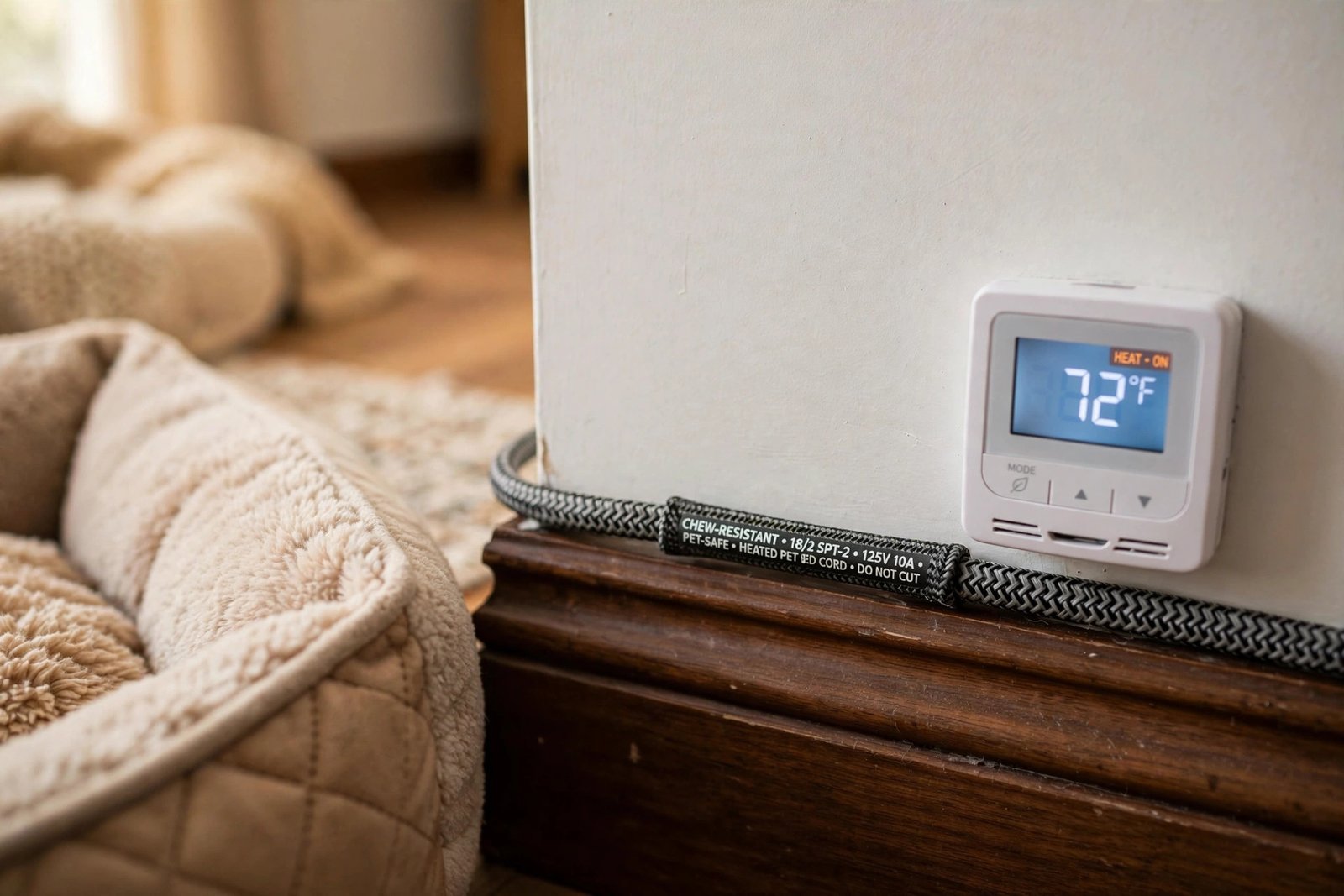
Chewing is the big one. Puppies, kittens, and determined chewers should not be left unsupervised with an electric bed. Look for beds with steel-wrapped or braided chew-resistant cords, and route the cord where it cannot be reached or tugged. If your pet chews bedding as a habit, stick with a self-warming pad until the chewing phase passes.
Check for damage regularly. Every few weeks, give the bed and cord a quick inspection — frayed fabric, exposed wiring, cracked casing, or a cord that has been gnawed on means the bed gets retired immediately. A damaged electric bed is not worth trying to repair.
Give your pet an exit. Pets should always be able to move off the heat. Do not use a heated bed inside a closed crate with no way to shift away from the warm spot, and be cautious with pets who have limited mobility and cannot reposition themselves. If your pet cannot move away from the heat on their own, skip the electric bed.
Watch for overheating signs. Panting, restlessness, or moving away from the bed repeatedly can mean the bed runs too warm for that pet. Most pets self-regulate fine, but keep an eye out during the first few days.
Buy for your pet’s size and species. Use cat-rated products for cats and dog-rated products for dogs; wattage and temperature targets differ. And buy a bed your pet actually fits on — a pet hanging halfway off a heated pad is getting half the benefit.
When in doubt, ask your vet. This is especially true for pets with diabetes, nerve damage, or conditions that affect circulation or sensation — these pets may not feel excessive heat properly. A quick call to the vet before buying can save you real worry.
What to Look For When You Buy
Shopping for a heated bed is simpler than it looks once you know the feature checklist:
Thermostat or temperature control. On electric beds, this is the single most useful feature. A bed that holds a steady, pet-appropriate temperature is safer and more comfortable than one that just runs at a fixed output.
Auto shut-off. Many good electric beds turn off after a set number of hours or when no weight is detected. This is a genuine safety plus, not a gimmick.
Removable, washable cover. Non-negotiable for most households. Pet beds get dirty — fur, drool, the occasional accident — and a bed you cannot wash properly will not last.
Appropriate wattage. Indoor beds typically run at low wattages (often under 10 watts for cats and small dogs). Outdoor or kennel-rated heated pads may run higher; only use outdoor-rated products outdoors, and protect the connections from moisture.
Certifications. Look for recognized electrical safety certifications on the label (such as UL or ETL listing in the US). It is one of the easiest quality signals to check, and uncertified heating products are not worth the gamble.
Right size and shape. Measure your pet’s favorite sleeping sprawl, not just their body length. Cats like a snug nest; large dogs need a full mat. When in doubt, size up.

Are They Worth It? The Honest Verdict
So, back to the original question. Are heated pet beds worth it?
For senior pets, thin-coated breeds, and pets that are always seeking warmth — yes, many owners find them genuinely worthwhile.
For healthy adult pets in warm homes — it is a nice-to-have. Your pet will probably enjoy it, but they do not need it. A good quality regular bed, chosen with the same care you would give any purchase, serves them just as well. Our guide to choosing the best dog bed walks through what matters when warmth is not the priority.
The sweet spot for most undecided owners: buy an affordable self-warming pad first. Watch what your pet does. If they adopt it like it has always been theirs, you have your answer — and a warm winter ahead for everyone.
Frequently Asked Questions
Are heated pet beds safe to leave on overnight?
Well-made electric beds with thermostats and auto shut-off are designed for extended use. Still, inspect the bed and cord regularly for damage, make sure your pet can move off the heat, and do not leave a chewer unsupervised with an electric bed. When in doubt, ask your vet.
Do heated pet beds use a lot of electricity?
Usually not. Most indoor heated pet beds run at very low wattage — comparable to a nightlight — so the annual electricity cost is typically just a few dollars. Check the wattage on the product label and multiply by your local electricity rate if you want an exact figure.
Can I use a heated pet bed for a puppy or kitten?
Self-warming pads are fine for young animals. With electric beds, be cautious: young pets chew, and very young newborns cannot regulate body temperature well, so overheating is a concern. If you are warming a whelping or nesting area, get guidance from your vet or an experienced breeder on safe setup.
My cat ignores the heated bed. Is something wrong?
Probably not. Cats are famously particular, and some prefer cool surfaces or simply need time to accept a new bed. Try placing it where your cat already likes to sleep, add a familiar-smelling blanket, and give it a week or two. If your cat is also eating less, hiding, or seems unwell, that is a vet visit — not a bed problem.
Can heated beds help with arthritis?
Warmth often feels soothing on stiff joints, and many owners of arthritic pets report their animals seem more comfortable on a warm bed. But a heated bed does not treat arthritis — it is a comfort measure. If your pet is stiff, limping, or reluctant to move, see your vet first.