


Your Puppy’s First Grooming Session: What to Expect
The first grooming session is a bigger deal for your puppy than it might seem. For a young dog, the salon is a whole new world of unfamiliar sounds, smells, slippery tables, and buzzing clippers. A good first visit sets the tone for every appointment that follows — get it right, and most dogs learn to treat the groomer like a regular stop; rush it, and you can end up with a dog who dreads the salon for years.
A little preparation at home, the right groomer, and realistic expectations can turn the first session into a calm experience. Here’s what to know before you book.
Quick Tips
- Most groomers recommend a first visit between 8 and 16 weeks, after the puppy’s initial vaccinations — ask your vet what’s appropriate for your area.
- Handle your puppy’s paws, ears, and mouth daily at home so touching isn’t a shock at the salon.
- Look for a groomer experienced with puppies who offers a gentle “puppy intro” package rather than a full groom.
- Keep the first visit short — a bath, light trim, and nail clip is plenty. Save the full cut for later.
- Book the appointment for a time when your puppy is rested, not overtired or bursting with energy.
- Expect some nervousness; a little whimpering or squirming is normal and doesn’t mean the visit went badly.
When Should a Puppy Have Their First Grooming Session?
There’s no single perfect age, but most groomers and vets suggest introducing a puppy to the salon sometime between 8 and 16 weeks of age, once the puppy has had its first round of vaccinations. The earlier the better, honestly — young puppies are in a phase where new experiences register as normal much more easily than they do a few months later. A puppy who meets the dryer, the clippers, and the grooming table at 12 weeks usually accepts them far more readily than a dog meeting them for the first time at a year old.
That said, “early” doesn’t mean “full groom.” Many groomers offer a puppy introduction package — essentially a short orientation with a bath, gentle brush-out, nail trim, and tidy-up around the face. It’s deliberately kept short because a puppy’s attention span and stress tolerance are limited.
If your puppy is a short-coated breed that barely needs trimming, a salon visit is still worth doing once or twice while they’re young. Even wash-and-go dogs benefit from getting comfortable being handled by a stranger — it pays off at the vet’s office too.
Before booking, it’s worth a quick check with your vet about timing, especially around vaccinations. Salons are social places with other dogs coming and going, so your vet may suggest waiting until certain shots are on board.
Choosing the Right Groomer for a Puppy’s First Visit
Not every groomer is a great fit for puppies, and that’s fine — grooming styles differ, and so do temperaments. When you’re shopping around, ask directly whether the groomer has experience with young puppies and whether they offer an introductory package. A groomer who lights up at the mention of puppies is usually a better bet than one who treats a squirmy 12-week-old like an inconvenience.
A few things worth asking or observing:
- How do they handle nervous dogs? You’re looking for patience and calm, not forced compliance. A good groomer lets a frightened puppy sniff around and settle before starting.
- How busy is the salon? A quieter appointment time — early morning on a weekday — means less barking and chaos. Ask if you can book a slower slot.
- Can you stay? Some salons welcome owners to watch; others find owners’ anxiety transfers to the puppy. Ask, and respect their policy.
- What products do they use? Puppy-safe, gentle shampoos matter. A reputable groomer will happily tell you what they use on young dogs.
Trust your gut during the first visit. A groomer who handles your puppy roughly or dismisses your questions is a groomer you don’t go back to.
Preparing Your Puppy at Home Before the Visit
Here’s where you have the most control. The handling exercises you do at home in the weeks before the appointment make the groomer’s job dramatically easier and your puppy’s experience dramatically calmer. None of this takes long — a few minutes a day is plenty.
Start with touch desensitization. Every day, gently handle the parts of your puppy that the groomer will need to work on: lift each paw and touch the toes, look inside the ears, open the mouth briefly, and run your fingers through the tail. Pair each touch with a small treat or praise so the puppy builds a positive association with being handled.
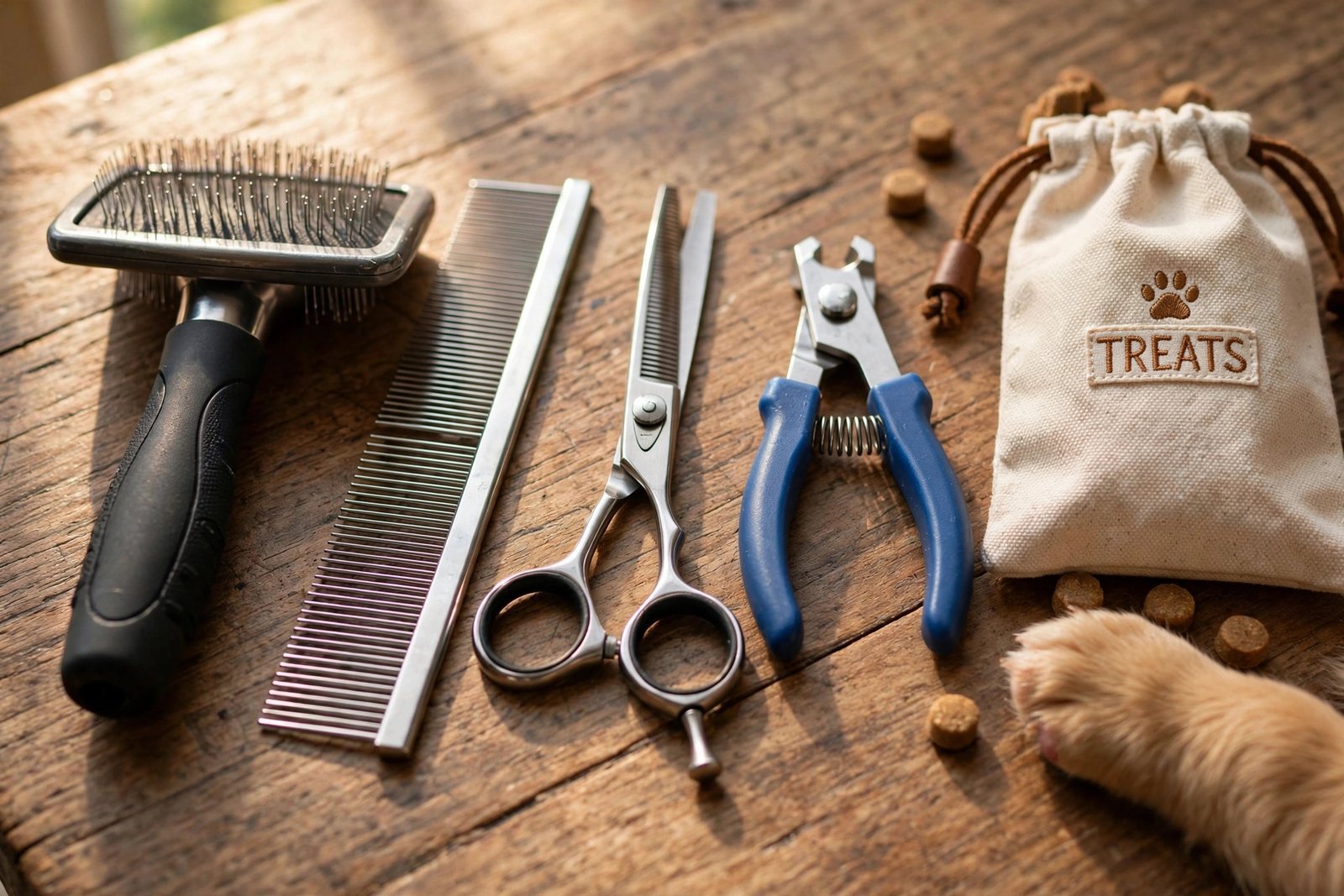
Next, get your puppy used to grooming tools. Let them sniff a brush, then do a few gentle strokes while they’re calm and reward them. Turn on a hair dryer on its lowest setting from across the room and treat the puppy for staying relaxed, gradually closing the distance over several days. The dryer is often the scariest part of a salon visit for a first-timer, so this exposure is one of the most useful things you can do.
For coat-specific prep, read up on what your breed actually needs. A long or double-coated puppy benefits from regular brushing at home so the first salon visit isn’t also the first time they’ve ever been detangled. If you’re not sure what tools suit your dog’s coat, this guide to brushing different coat types walks through which brushes work for which coats and how often to use them.
What Actually Happens During the First Session
Knowing what the appointment involves takes a lot of the mystery out of it. While every salon does things a little differently, a typical puppy intro session follows a predictable flow.
The meet and greet. The groomer will usually spend a few minutes letting your puppy explore the salon and sniff the table. This isn’t wasted time — it’s the most important part of the visit for a nervous puppy.
The bath. Warm water, a gentle puppy shampoo, and a thorough rinse. First-timers are often surprised by the water, so the groomer will usually introduce it gradually — a little on the paws first, then working up.
Drying. Salon dryers are loud, and this is often the scariest part for a first-timer. Many groomers use a low, warm setting or partially towel-dry. Some very nervous puppies just get towel-dried on visit one — that’s completely fine. The goal is a positive experience, not a perfectly fluffed coat.
Brushing and light trimming. A gentle brush-out, a tidy around the eyes so the puppy can see, and a nail trim. Nails are the number-one thing puppies fuss about — getting your puppy comfortable with paw handling at home, and doing a nail trim at home once or twice beforehand, takes a lot of the drama out of this step.
Finishing touches. Ear cleaning, a final brush, and usually a treat. Then your puppy comes home tired — mentally tired, mostly. New experiences are exhausting for young dogs, so don’t be surprised if your puppy naps hard after the first visit. That’s normal.
How to Make It a Good Experience
A few practical choices on the day of the appointment can make a real difference.
Time it well. Book when your puppy is rested and has had a chance to relieve themselves — not right after a wild play session and not when they’re due for a nap. A short walk beforehand helps burn off edge.
Skip the big meal right before. A light snack is fine, but a full stomach plus nerves is a recipe for an upset tummy at the salon. Feed normally after you get home.
Stay calm yourself. Puppies read their owners remarkably well. A cheerful, matter-of-fact drop-off — “have fun, see you soon” — tells the puppy there’s nothing to worry about. Lingering goodbyes tend to do the opposite.
Keep it short. If the groomer suggests stopping early because the puppy is getting stressed, that’s a sign of a good groomer. A 20-minute positive session beats a 45-minute one that ends in tears.

After the Appointment: What to Watch For
Most puppies come home from their first grooming session sleepy and a little subdued, and that’s completely normal. They’ve just processed a mountain of new sensations. Give them water, a meal, and a quiet place to rest.
There are a few things worth checking once you’re home. Run your hands over the coat to make sure there are no missed mats, and glance at the nails to see how the trim looks. Watch for any skin irritation over the next day or two — redness or excessive scratching could indicate sensitivity to a product. It’s uncommon with puppy-safe products, but every dog’s skin is different. If you notice anything sore or not settling, a quick call to your vet is the right move.
And pay attention to how your puppy acts in the days after. A puppy who was a little nervous but bounced back quickly probably had a fine experience. A puppy who seems genuinely fearful for days afterward may have found it overwhelming — talk to the groomer about a gentler approach next time, or try a different salon.
Frequently Asked Questions
How old should a puppy be for their first grooming appointment?
Most groomers suggest between 8 and 16 weeks, after the first vaccinations are on board. Earlier is generally better for building comfort with the salon. If you’re unsure about timing, ask your vet.
What is included in a puppy’s first grooming session?
Typically a gentle introduction package: a bath with puppy-safe shampoo, a light brush-out, a tidy-up around the face and sanitary areas, ear cleaning, and a nail trim. It’s kept shorter and gentler than a full adult groom.
Will my puppy be scared at the groomer?
Some nervousness is completely normal — new sounds, smells, and handling are a lot for a young dog. A good groomer goes slowly and keeps the session short. Most puppies settle within a visit or two.
Can I stay and watch my puppy’s first grooming session?
It depends on the salon. Some welcome it; others prefer owners to leave because puppies often behave better without their owner in sight. Ask when you book, and if you stay, keep calm and let the groomer lead.
How much does a puppy’s first grooming session cost?
Prices vary by location, breed size, and coat type, but a puppy intro package is usually priced below a full groom. Call a couple of salons for quotes — and remember the cheapest option isn’t always the best fit for a nervous first-timer.