

Why Does My Cat Headbutt Me?
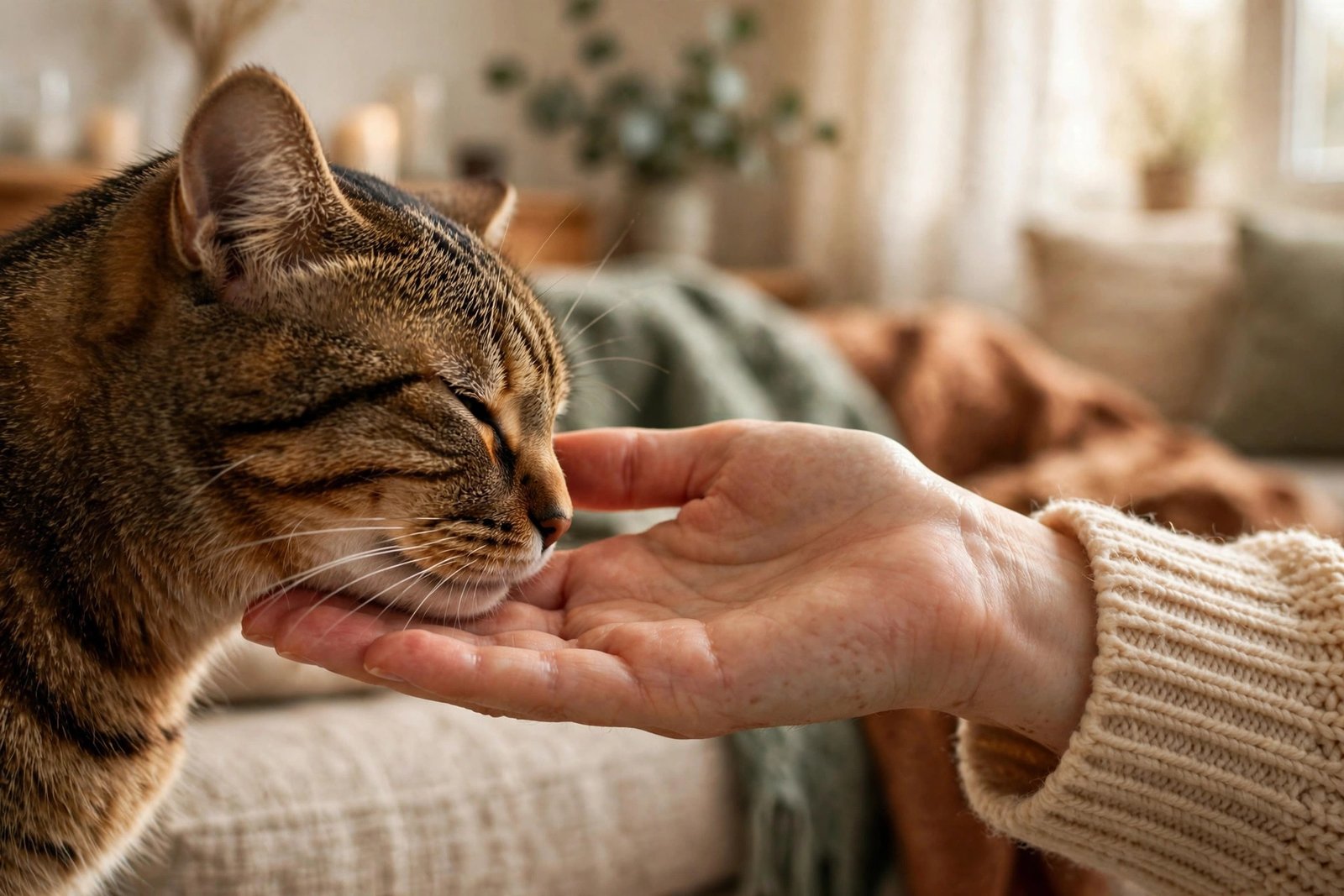
You’re sitting on the couch, minding your own business, when your cat walks up and deliberately bonks their forehead into your hand, your chin, or your leg. It’s not an accident — they meant to do that. And if you’ve ever wondered what on earth that little headbutt means, the short answer is: it’s one of the nicest compliments a cat can give you.
Quick Tips
- A headbutt (called “bunting”) is usually a sign of affection and trust — take it as a compliment.
- Cats headbutt to mark you with their scent, claiming you as part of their social group.
- Gentle headbutts are normal; respond with a calm scratch behind the ears if your cat enjoys it.
- Headbutting plus rubbing is how cats say hello — it’s their version of a hug.
- Watch the whole picture: a headbutt from a relaxed cat means something different than one from a tense, restless cat.
- If headbutting suddenly increases alongside appetite or behavior changes, mention it to your vet.
First Things First: It’s Called Bunting
Cat people and behaviorists have a proper word for the headbutt: bunting. It’s the same motion cats use with each other — one cat presses its forehead or cheek firmly against another cat, a person, or even a piece of furniture. It looks a little clumsy, which is why so many owners call it a headbutt rather than a nuzzle. But bunting is deliberate, meaningful communication, and it’s almost always friendly.
To understand why your cat does it, you need to know one thing about how cats experience the world: scent is everything. Cats live in a world of smells the way we live in a world of sights. They have scent glands on their foreheads, cheeks, chins, and around their lips, and when they press those areas against you, they’re depositing their scent. In cat language, that translates roughly to: “You smell like me. You’re part of my group. You’re safe.”
Reason 1: They’re Marking You as Theirs
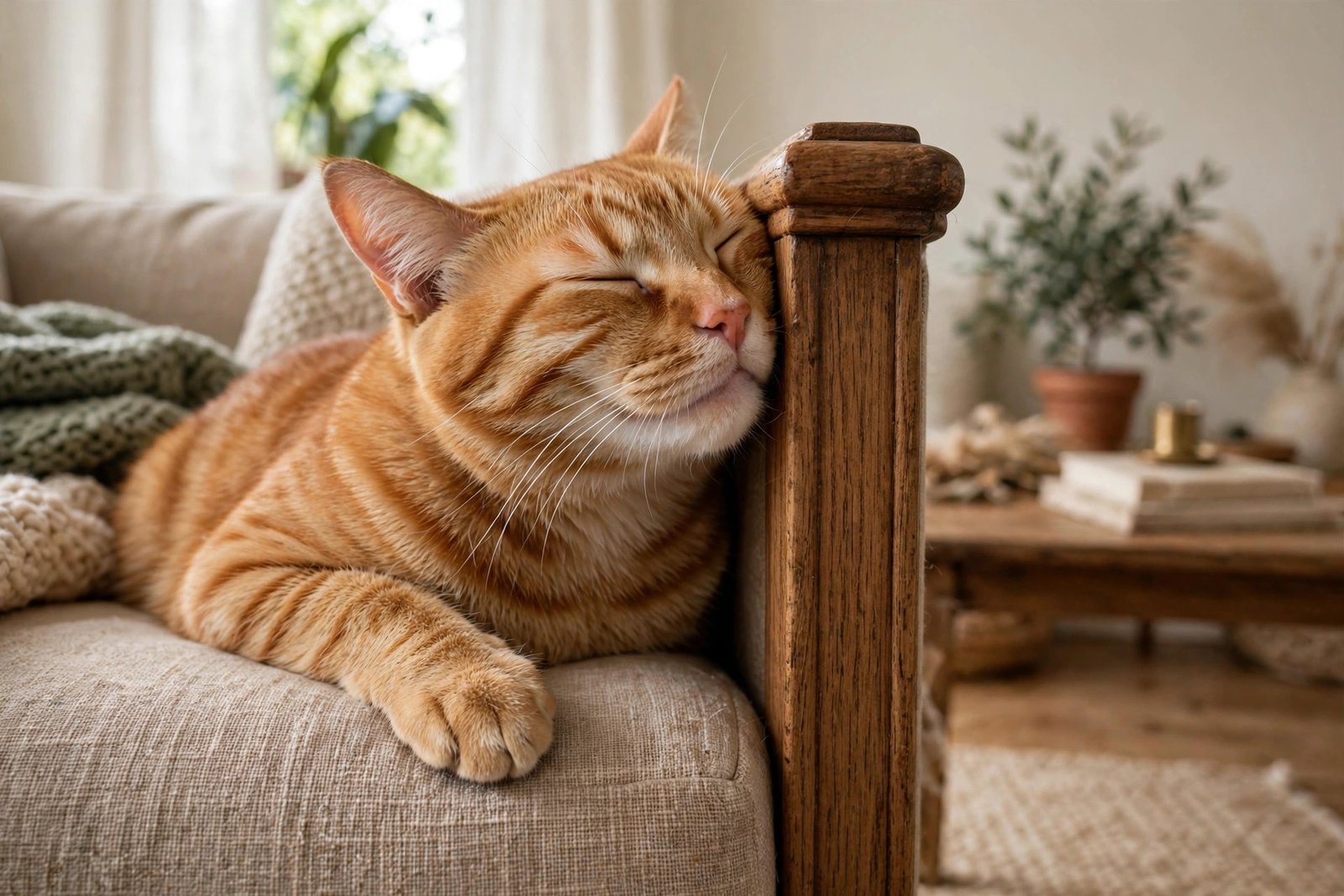
This is the big one. When your cat headbutts you, they’re mixing their scent with yours. Cats mark the things and beings they consider part of their territory and their social circle — the corners of doorways, the arm of your favorite chair, and yes, you.
It helps to flip your perspective for a moment. We tend to think of ourselves as the cat’s owner, the one who claims the cat. From the cat’s point of view, it’s mutual — that headbutt is your cat doing the claiming. Many owners notice their cat headbutts them most right after they’ve come home, as if re-applying the family scent after a day of strange smells. That’s very likely exactly what’s happening.
Reason 2: It’s a Genuine Sign of Affection
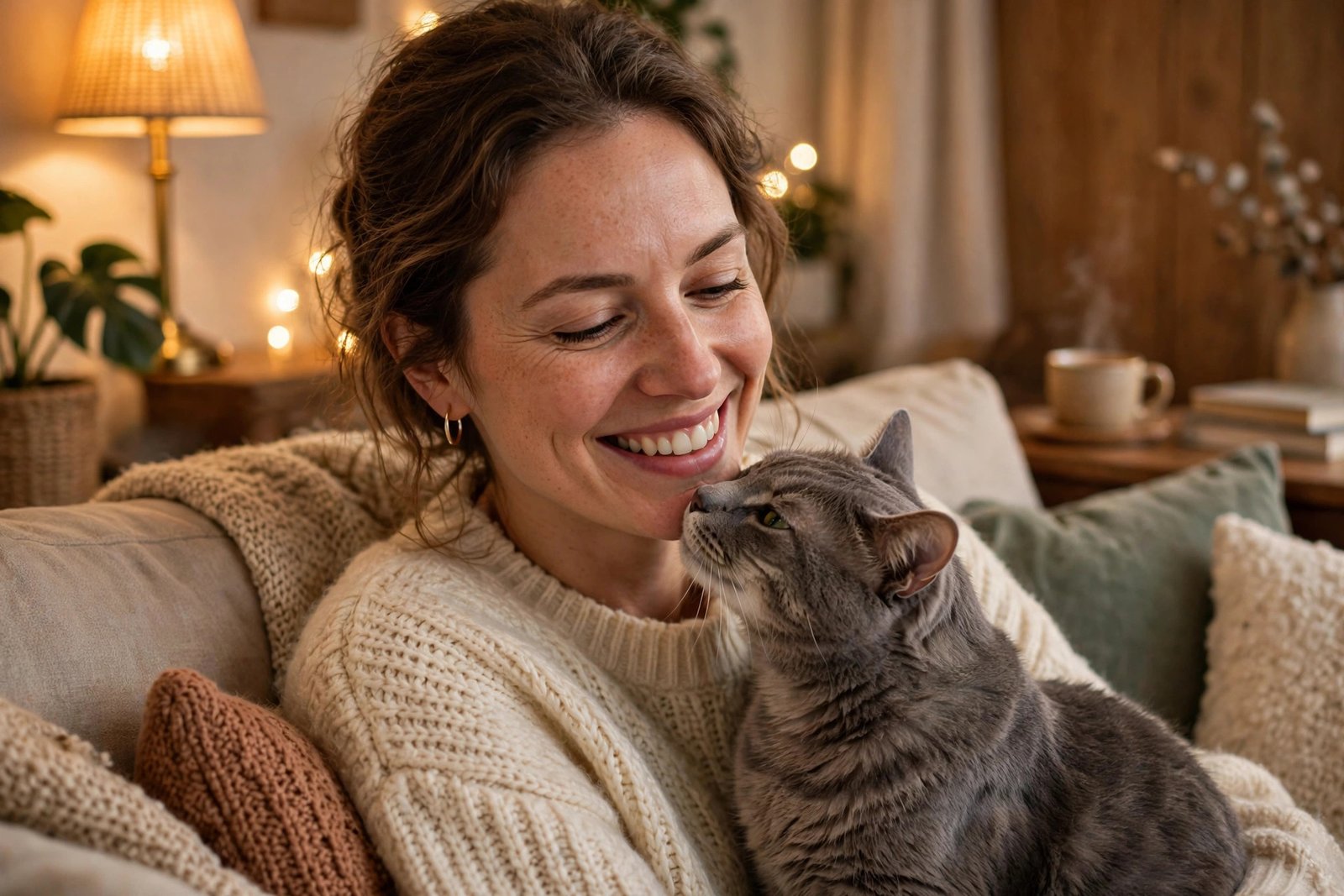
Cats are famously selective with their affection, which is what makes bunting so special. Cats don’t headbutt strangers they don’t trust, and they don’t headbutt people they’re unsure about. A cat who walks up and presses their head into you is a cat who feels safe with you.
You’ll often see bunting paired with other happy-cat signals: a softly purring motor running, a tail held high with a little quiver or curl at the tip, slow blinks, or kneading with their paws on your lap. Each of those on its own is a good sign; stacked together, they’re about as close as a cat gets to saying “I love you” out loud. Speaking of sounds, if your cat’s headbutts come with rumbling, you might enjoy our piece on why cats purr — the two behaviors often show up together.
Reason 3: They’re Saying Hello
Watch two cats who like each other meet after some time apart, and you’ll often see them bunt each other’s heads and then move on to rubbing along each other’s sides. It’s a greeting ritual. Your cat does the same thing with you.
A lot of owners report a specific pattern: they walk through the door, the cat trots over, and bonk — forehead to shin, or a jump up for a head-to-hand press. That’s a hello. The cat is acknowledging your return and re-establishing the social bond. If your cat does this consistently when you come home, congratulations — you’ve been officially greeted, cat-style, and it means you were missed.
Reason 4: They Want Your Attention (and They Know It Works)
Let’s be honest: headbutting is also an extremely effective way to get a human to stop looking at their phone. Cats are quick learners, and most of them figure out within weeks that a well-timed bonk to the hand produces immediate petting, talking, and eye contact.
There’s nothing wrong with this. A cat who headbutts for attention is a cat who has learned that you’re responsive — that’s a healthy dynamic. The only time it becomes an issue is if the headbutting turns demanding: repeated hard bonks while you’re working, or face-bonks at 5 a.m. for breakfast. The fix is to reward calm, polite headbutts with affection, and not reinforce the 5 a.m. breakfast bonks by getting up to feed them.
Reason 5: They’re Gathering Information About You
Remember that scent is a cat’s primary sense. When your cat presses their face into your hand or clothes, they’re also reading you — where you’ve been, what you’ve touched. That thorough sniff-and-bunt after you’ve petted a friend’s dog is your cat processing new information, then overwriting it with the familiar family scent.
This is also why cats often headbutt new objects you bring into the house. That shopping bag, that new pair of shoes, the box from a delivery — all of them get the forehead treatment. Your cat is cataloging the new smell and deciding whether it belongs. You get the same treatment, just with more affection attached.
Reason 6: It Feels Good and It’s Self-Soothing
There’s a physical component too. The pressure of pressing their head against something solid seems to be genuinely pleasant for many cats — similar to how some cats love having their cheeks and chins scratched firmly. The scent glands in those areas are sensitive, and the contact may release feel-good associations.
Some cats also bunt more when they’re slightly anxious or overstimulated — after a loud noise, during a house full of guests, or at the vet’s office. In those moments, pressing into a trusted person seems to be self-soothing, like a child hugging a parent’s leg. If your normally independent cat suddenly becomes a headbutt machine during a stressful event, they’re likely seeking comfort. Let them have it.
Reason 7: You Might Have Accidentally Trained Them
Here’s a fun one. Think about what you do when your cat headbutts you: petting, sweet talk, maybe a treat. The cat learns within a few repetitions that headbutt equals reward, and the behavior increases. You’ve essentially trained your cat without meaning to, using affection as the treat.
Again — this is fine. It’s one of the more charming accidental training outcomes in pet ownership. Just be aware of it if the headbutting ever becomes inconvenient, because you’ll need to change your own response to change the behavior.
When Headbutting Means Something Else
Nine times out of ten, a headbutt is affection, greeting, or scent-marking. But context matters, and it’s worth knowing the exceptions so you can read your cat accurately.
Head pressing is not headbutting. This is the important distinction. Bunting is a quick, social press against you or an object, usually with the cat otherwise relaxed and interactive. Head pressing — where a cat compulsively pushes its head against a wall, floor, or corner and holds it there — is a different behavior entirely and can signal a serious neurological issue. If your cat starts pressing its head against walls or floors and holding it there, don’t wait — call your vet promptly.
Also pay attention to sudden changes. A cat who has never been a headbutter and suddenly won’t stop, especially alongside changes in appetite, thirst, energy, or litter box habits, is worth a vet check. Cats can’t tell us when something feels off, so behavior changes are their early warning system. Most of the time it turns out to be nothing, but “most of the time” is exactly why a quick check is worth it.
How to Respond When Your Cat Headbutts You
The good news: you basically can’t get this wrong as long as you’re gentle. Most cats who bunt want a calm scratch around the cheeks, chin, or behind the ears (right where their scent glands are), or simply your calm presence. Let the cat dictate the interaction — some want a full petting session, others deliver one bonk and walk away, mission accomplished.
A few things to avoid: don’t push the cat’s head away roughly (a gentle redirect is fine if you’re busy), don’t grab their head and hold it, and don’t force prolonged cuddles on a cat who just wanted a quick hello. Respecting the cat’s terms is what keeps the trust — and the headbutts — coming.
And if your cat has never headbutted you? Don’t take it personally. Some cats show affection differently — following you from room to room, sleeping on your laundry, chirping when you come home, or simply choosing to nap within sight of you. Bunting is one dialect of cat affection, not the whole language.
Frequently Asked Questions
Why does my cat headbutt me and then bite?
This is usually “love biting” — the cat gets a bit overstimulated during an affectionate moment and gives a gentle nip. It’s different from an aggressive bite: love bites are typically soft, don’t break skin, and happen mid-petting or mid-bunt. If the bites are getting harder, though, it’s a sign to end the interaction a little earlier, before the cat hits their stimulation limit.
Why does my cat headbutt my phone or laptop?
Two reasons, most likely: the object smells like you (and your cat is marking it as family property), and it has your undivided attention (and your cat would like some of that, please). It’s the same behavior directed at the thing that’s currently stealing their human.
Do cats headbutt to show dominance?
Not really. Bunting is a social bonding behavior, not a power move. In multi-cat households, cats who bunt each other are generally cats who get along — it’s closer to a handshake or a hug than a challenge. True dominance displays in cats look very different: staring, blocking doorways, or resource guarding.
Why does my cat headbutt me in the morning?
Morning headbutts are usually a combination of greeting (“you’re awake, excellent”), scent remarking after the night, and — let’s be honest — a breakfast reminder. Cats learn fast that a 6 a.m. bonk to the face produces a human who gets up. If the breakfast nudge is getting too early, try not to feed immediately upon waking so the cat stops connecting the two events.
Is it okay to headbutt my cat back?
Many owners do a gentle forehead-to-forehead press and their cats seem to love it. Keep it soft, let the cat be receptive, and stop if they pull away. Think of it as answering in their language.
My older cat just started headbutting. Should I worry?
A new behavior in a senior cat is worth noting, but not necessarily worth worrying about. Cats’ habits do evolve with age. Just mention it at your cat’s next vet visit, especially if it’s paired with other changes like increased thirst, weight loss, or restlessness. Your vet can rule out anything medical and you’ll have peace of mind.