
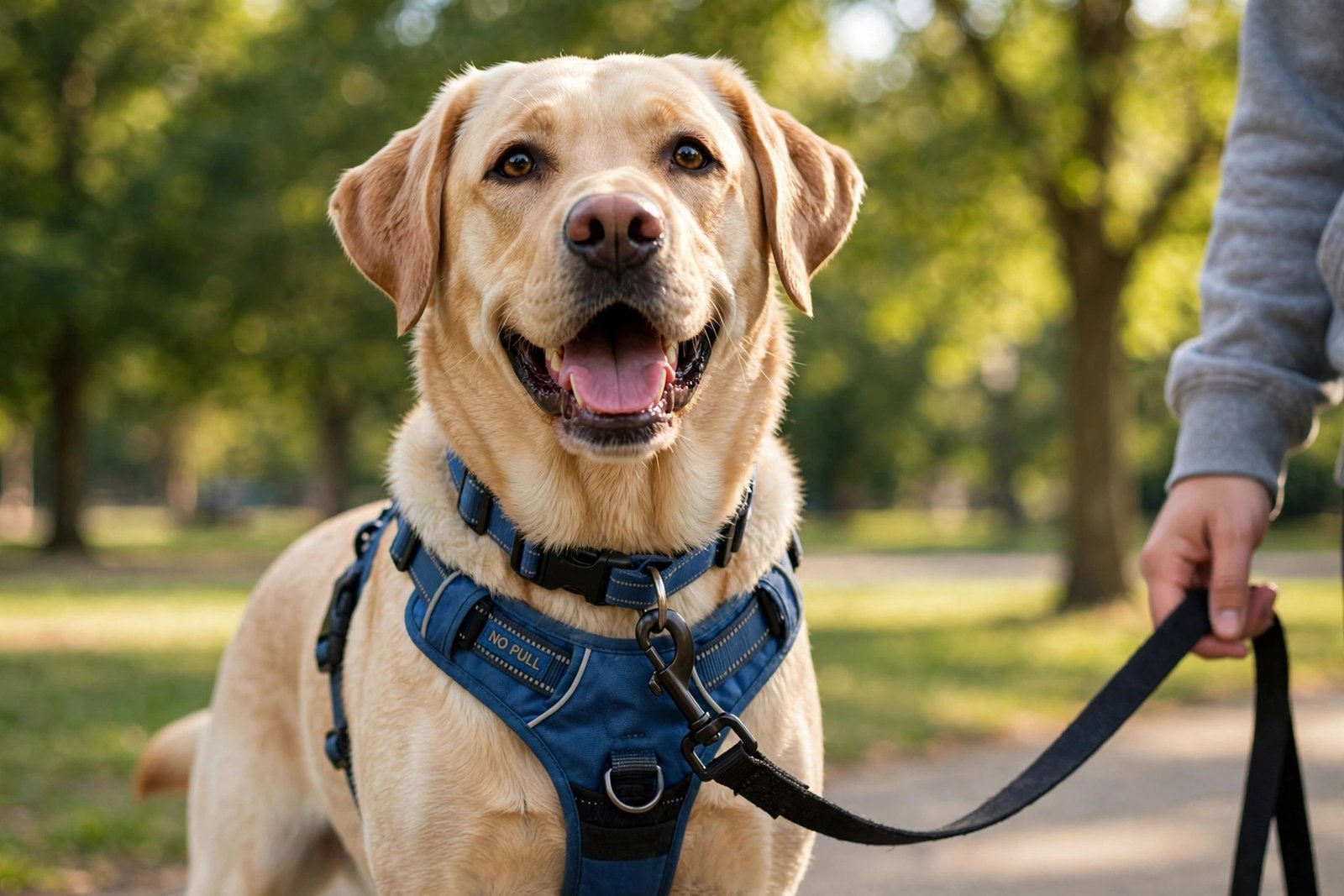

Best Harness for Dogs That Pull (No-Choke Picks)
Walks are supposed to be the best part of the day. But when your dog treats every walk like a sled-dog time trial — lungs heaving, arm nearly yanked from its socket — it stops being fun fast. Pulling is one of the most common complaints dog owners have, and it is also one of the most fixable. The right harness will not magically train your dog overnight, but it makes pulling physically harder to sustain, protects your dog’s neck and throat, and gives you the control you need while training catches up.
This guide covers what to look for in a no-pull harness, the main styles worth considering, how to fit one properly, and the training basics that actually stop pulling for good.
Quick Tips
- For pullers, front-clip harnesses beat back-clip ones — the leash attaches at the chest, redirecting forward momentum.
- Avoid anything that tightens around the neck; a good harness distributes pressure across the chest and shoulders.
- Fit matters more than brand: snug but not tight, with room for two fingers under every strap.
- Measure your dog’s chest before buying — sizing by breed or weight alone often goes wrong.
- No harness replaces training; pair the gear with loose-leash practice for lasting results.
- Check straps regularly for rubbing, especially under the front legs where chafing is most common.
Why a Harness Beats a Collar for Pullers
When a dog pulls hard against a collar, all that force concentrates on the neck — the trachea, the thyroid area, the delicate structures of the throat. Chronic pulling on a collar can contribute to coughing, throat irritation, and neck strain, and for breeds prone to tracheal issues, it is genuinely risky. A harness moves the attachment point to the torso, spreading force across the chest and shoulders where the dog’s body is built to handle it.
That does not mean collars are useless — they are still the standard place for ID tags, and many dogs walk perfectly well on a flat collar. But for a committed puller, a harness is the kinder and more practical choice while you work on training. If you are weighing the two options, our collar vs. harness comparison breaks down when each one makes sense.
Front-Clip vs. Back-Clip: What Pullers Need
Harnesses come in two main leash-attachment styles, and the difference matters enormously for pullers:
Back-clip harnesses attach the leash between the shoulder blades. They are comfortable and simple, and they are fine for dogs who already walk politely. But for pullers, a back-clip can actually make pulling easier — it engages the dog’s natural opposition reflex (push against pressure), which is the same instinct that makes sled dogs lean into their harnesses. If your dog pulls, a back-clip-only harness may just give them a more comfortable platform to drag you from.
Front-clip (no-pull) harnesses attach the leash at the center of the chest. When the dog lunges forward, the front attachment gently turns their body back toward you, redirecting momentum instead of rewarding it. There is no pain or choking involved — it is simple physics. Most trainers recommend front-clip harnesses as the starting point for pullers, and many good harnesses offer both front and back clips so you can switch as training progresses.
Dual-clip harnesses give you both attachment points. Many owners use the front clip for training walks and the back clip for relaxed sniff walks or car rides, getting the best of both worlds from one piece of gear.
What to Look for in a No-Pull Harness
Beyond the clip position, these features separate the good harnesses from the mediocre ones:
Multiple adjustment points. Look for at least three or four points of adjustment (neck, chest, belly). Dogs are not standardized shapes — a deep-chested greyhound and a barrel-chested bulldog need very different fits, and adjustability is what makes one harness work across body types.
Padding where it counts. Padding across the chest and behind the front legs prevents chafing during long walks. Neoprene or fleece-lined straps are gentler than bare nylon webbing, especially for short-coated dogs.
A sturdy front D-ring. The front attachment takes real force from a lunging dog, so it should be metal, securely stitched, and positioned at the center of the chest — not off to one side.
No-choke design. The harness should never ride up into the armpits or press on the throat when the dog pulls. A Y-shaped front (straps going around the neck and between the front legs, meeting at the chest) generally distributes pressure better than a straight strap across the chest.
Easy on and off. You will be putting this on every single day, possibly on an excited dog. Step-in designs or harnesses with quick-snap buckles save a lot of daily wrestling. Avoid anything that has to go over the head if your dog hates that — it will poison the whole walk before it starts.
Visibility. Reflective trim is a genuine safety feature for anyone walking at dawn, dusk, or night. It costs manufacturers almost nothing to add and can make your dog visible to drivers.

Getting the Fit Right
The best harness in the world is useless if it fits badly — and a badly fitted harness can chafe, restrict movement, or let the dog wriggle out. Fitting takes five minutes and is worth doing carefully:
Measure first. Use a soft tape measure around the widest part of your dog’s chest (just behind the front legs) and around the base of the neck. Compare to the manufacturer’s size chart — ignore breed recommendations, which are rough guesses at best.
The two-finger rule. Once it is on, you should be able to slide two fingers flat under every strap. Tighter than that restricts movement and breathing; looser than that invites escape artistry.
Check the range of motion. Watch your dog walk. The harness should not rub in the armpits, ride up toward the throat, or shift sideways dramatically. Have your dog sit, lie down, and turn — the harness should stay put through all of it.
Re-check regularly. Puppies grow fast, adult dogs gain and lose weight with the seasons, and straps loosen with use. A quick fit check every few weeks takes seconds and prevents most harness problems.
Watch for rubbing. After the first few walks, check under the front legs and across the chest for redness or hair loss. Some initial adjustment is normal, but persistent rubbing means the fit or the design is wrong for your dog.
The Training Side: Gear Helps, Training Fixes
Here is the honest truth no product page will tell you: a front-clip harness manages pulling, but training is what ends it. The harness buys you comfortable, controlled walks while you teach loose-leash skills — think of it as training wheels, not the bicycle.
The core technique is simple, if not easy: reward the behavior you want. When the leash goes slack — even for a second — mark it (a cheerful “yes!”) and reward with a treat. When your dog pulls, stop walking. Be a tree. The walk only continues when the leash loosens. Most dogs figure out the pattern within a few sessions: pulling stops the fun, slack leash keeps it going.
Keep training sessions short and positive — five to ten minutes of focused practice beats a frustrated half-hour. Train when your dog is slightly tired rather than bursting with energy, and start in low-distraction environments before graduating to squirrel territory. For a full walkthrough, see our guide on how to leash train a puppy — the same principles apply to adult pullers, just with more patience required.
What not to do: do not use choke chains, prong collars, or leash “corrections” (sharp yanks). They work through pain and fear, they can injure your dog’s neck, and they do nothing to teach the dog what you actually want. Positive, reward-based training is slower on day one and dramatically more effective by day thirty.

Common Harness Mistakes to Avoid
Leaving the harness on all day. Harnesses are for walks and outings, not 24/7 wear. Constant wear causes matting, skin irritation, and gives the dog no break from the sensation. Take it off at home.
Buying by weight alone. Two 25-pound dogs can have completely different chest measurements. Always measure the chest — it is the dimension that determines fit.
Expecting the harness to do the training. Worth repeating: the front clip reduces pulling mechanically, but without training, many dogs learn to pull against it anyway. Gear plus training is the formula.
Ignoring the escape risk. Some dogs — especially fearful or newly adopted ones — can back out of a loose harness. If your dog is an escape risk, choose a harness with a third belly strap or a snugger fit, and always use a secure leash attachment.
The Bottom Line
For dogs that pull, a well-fitted front-clip harness is one of the highest-value purchases you can make: kinder than a collar for a puller, more control for you, and a genuine aid while training does the long-term work. Measure your dog’s chest, prioritize adjustability and padding, check the fit with the two-finger rule, and pair the gear with consistent loose-leash practice. Your shoulders will thank you — and walks might just become the best part of the day again.
Frequently Asked Questions
Do no-pull harnesses actually stop pulling?
Front-clip harnesses significantly reduce pulling by redirecting your dog’s forward momentum, and most owners notice an immediate improvement. But they manage rather than cure pulling — lasting results come from pairing the harness with loose-leash training. Think of the harness as making training possible, not replacing it.
Are front-clip harnesses safe for dogs?
Yes, when properly fitted. Front-clip harnesses distribute pressure across the chest and shoulders rather than the neck, which is much safer for pullers than a collar. Just ensure the fit is snug but not tight, check for rubbing behind the front legs, and never leave the harness on unsupervised for long periods.
Can a dog still pull with a harness on?
Yes — a determined dog can pull in any equipment. A back-clip harness may even make pulling more comfortable for the dog. The front clip makes pulling self-defeating (lunging turns them around), which is why it is the recommended choice for pullers, but training is still what teaches the dog not to try.
What size harness does my dog need?
Measure the widest part of the chest (just behind the front legs) and the base of the neck with a soft tape measure, then match those numbers to the manufacturer’s size chart. Do not rely on breed or weight estimates alone. When between sizes, the harness with more adjustment points is usually the safer bet.
Should my dog wear a harness all day?
No. Harnesses are designed for walks, training, and outings. All-day wear can cause chafing, matting, and skin irritation. Take the harness off at home and let your dog relax — their collar with ID tags can stay on for identification.
At what age can a puppy start wearing a harness?
Puppies can wear a lightweight, well-fitted harness as soon as they start going outside for short outings — often around 8 to 10 weeks, following your vet’s guidance on vaccination timing for public areas. Choose a soft, adjustable puppy harness, keep early sessions short and positive, and expect to size up as they grow.