
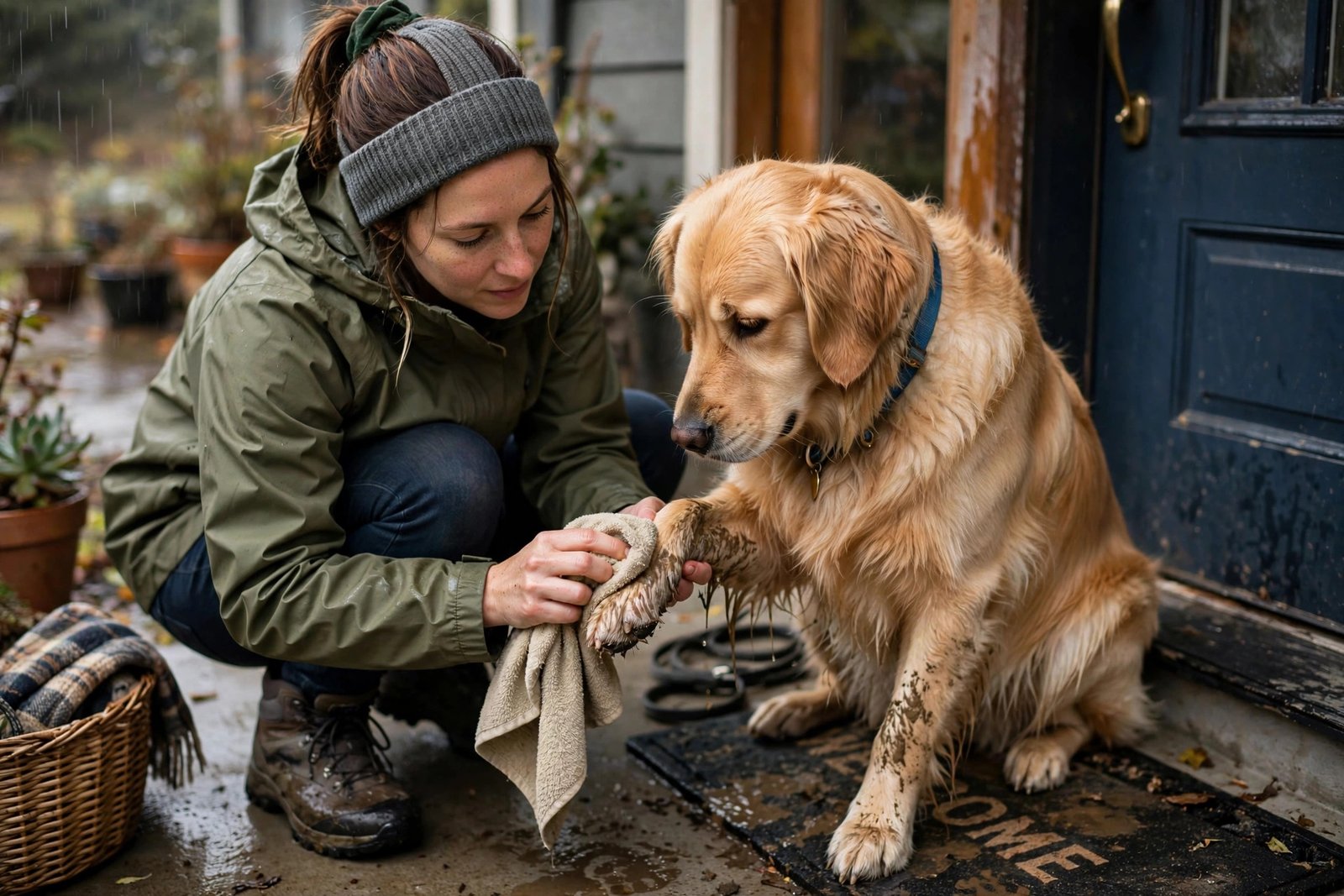

How to Clean Your Dog’s Paws After Walks
Your dog comes through the door after a walk, and within thirty seconds there are muddy paw prints across the floor you just cleaned. It is one of the small, recurring frustrations of dog ownership — and it is also a genuine care task, not just a housekeeping one. Paws pick up road salt, lawn chemicals, allergens, thorns, and all kinds of grime, and a quick clean after walks protects both your floors and your dog’s feet.
This guide covers how to clean dogs paws the easy way: a simple wipe-down routine that takes under two minutes, what products are actually worth having, what to look for between the toes while you are down there, and how to handle the special cases — winter salt, mud season, and dogs who hate having their feet touched.
Quick Tips
- A quick paw wipe after every walk takes under two minutes and prevents most problems.
- Use a damp microfiber towel or unscented pet wipes — no harsh soaps or chemicals.
- Always rinse off road salt and de-icer in winter; they irritate and can be toxic if licked.
- Check between the toes for thorns, ticks, and matted fur while you wipe.
- Dry paws thoroughly — trapped moisture encourages irritation between the toes.
- Make paw handling a calm, treat-paired routine so your dog cooperates willingly.
Why Paw Cleaning Matters
It is tempting to treat paw wiping as purely cosmetic — something you do for the sake of your rugs. But paws are in direct contact with everything on the ground, and some of it is worth removing on purpose. Road salt and de-icers irritate paw pads, dry out the skin, and can upset the stomach when licked off. Lawn chemicals — fertilizers, herbicides, pesticides — sit at paw level in parks and neighborhoods year-round. Allergens collect on paws too, and many owners of itchy dogs notice real improvement just from consistent wiping, since it reduces the pollen load the dog tracks indoors. And physical debris — thorns, burrs, small stones — hides between the toes, where catching it early prevents limping and minor infections.
The Two-Minute Wipe-Down Routine
Forget elaborate setups. The routine that actually sticks is the simple one you will do every single time:
1. Set up a paw station by the door. Keep a towel or a pack of pet wipes right where you come in. If the supplies are anywhere else, you will skip it on tired evenings. A small basket by the door with a microfiber towel, pet wipes, and treats covers everything.
2. Wipe each paw, top and bottom. For a basic clean, a damp microfiber towel is enough: wipe the tops of the paws, then lift each paw and wipe the pads and between the toes. A few seconds per paw is plenty for a normal walk.
3. Check while you wipe. This is the hidden value of the routine. As you handle each paw, glance for thorns, ticks, cuts, cracked pads, or redness between the toes. You are already holding the paw — the inspection costs nothing extra.
4. Dry thoroughly. If the paws are wet from the wipe or from rain, dry them properly. Moisture trapped between the toes encourages irritation and yeast issues, especially in dogs with hairy feet.
5. Reward the cooperation. A treat after paw handling, especially in the early weeks, builds a dog that offers its paws willingly instead of yanking them away. This pays off enormously at the vet and groomer too.
What to Use (and What to Skip)
Damp microfiber towels are the workhorse. They are cheap, reusable, effective at grabbing dirt, and gentle. Keep a few in rotation by the door.
Unscented pet wipes are the convenient option — good for travel, muddy days, and quick cleanups. Choose wipes made specifically for pets, unscented and alcohol-free. Baby wipes are a common substitute, but many contain fragrances or ingredients not meant for animals that lick their paws, so pet-specific is the safer default.
Paw washer cups — the silicone cups with soft bristles inside that you fill with water and plunge each paw into — work well for genuinely muddy paws. They are more thorough than a wipe for caked-on mud, though overkill for a normal dry walk.
Mild dog shampoo has a place for the truly filthy paw, but it is not an everyday product — frequent soaping dries out paw pads.
What to skip: harsh soaps, dish soap, and household cleaners — too stripping for paw skin. Alcohol-based products — they sting and dry. Bleach dilutions and internet “paw soak” recipes — unnecessary and risky. Plain water and a towel handle 95% of walks.

Winter Salt and Summer Heat: Seasonal Paw Care
Routine wiping covers most of the year, but two seasons demand extra attention.
Winter is the hard one. Road salt, sand-salt mixes, and chemical de-icers are everywhere, and they are genuinely harsh on paws. After winter walks, rinse paws with lukewarm water — a wipe alone may not dissolve salt crystals lodged between the toes. Check for cracking and dryness, and consider a paw balm (more below) as a barrier. Dog boots are the nuclear option: many dogs hate them at first, but with gradual treat-based training, plenty of dogs learn to tolerate them, and they solve the salt problem completely.
Summer brings hot pavement. If you cannot comfortably hold the back of your hand on the pavement for five seconds, it is too hot for paws — walk on grass or in the cooler morning and evening hours. After hot walks, check pads for redness or blistering. Wiping still matters in summer for allergens and lawn chemicals.
For a deeper dive into year-round paw protection, this seasonal paw care guide covers balms, boots, and weather-specific routines in detail.
Paw Balm: Worth It?
Paw balms — waxy sticks or tins you rub onto the pads — are popular, and they do have legitimate uses. In winter, a balm applied before walks creates a mild barrier against salt and ice. For dogs with chronically dry, rough pads, regular balm use can improve pad condition over time.
That said, balm is a supplement to cleaning, not a replacement. A balm-coated paw that walks through road salt still needs rinsing afterward. And a little goes a long way — over-applied balm leaves greasy prints on floors and can make paws slippery. Choose a pet-specific balm (human lip balms and lotions may contain ingredients dogs should not ingest), apply a thin layer, and give it a minute to absorb before the walk.
What to Look For Between the Toes
The wipe-down doubles as a daily health check, and knowing what is normal helps you spot what is not. Healthy paws have supple pads without deep cracks, fur between the toes that is not matted, and skin that is not red, swollen, or smelly.
Things worth noticing: persistent redness or brownish staining between the toes (often linked to licking or yeast — worth mentioning to your vet if it does not resolve), swelling or limping after walks (possible thorn or splinter), excessive licking focused on one paw (something is bothering that specific foot), and cracked or peeling pads (common in winter and on rough terrain).
None of these are emergencies on their own, but they are all good reasons to watch closely for a day or two and call your vet if they persist or worsen. Early attention to paw issues prevents the small stuff from becoming the expensive stuff.
For Dogs Who Hate Having Their Feet Touched
Some dogs treat paw handling like a personal insult. This is common and fixable, but it takes patience — not force. The technique is desensitization paired with treats:
Start without any cleaning at all. Touch the dog’s shoulder, treat. Touch the leg, treat. Briefly touch a paw, treat. Over days and sessions, build up to holding the paw for a few seconds, then wiping one paw, then all four. Keep sessions short and end on a win. The dog should learn that paw handling predicts good things, not a wrestling match.
What not to do: pinning the dog down, chasing the paw around, or scolding the flinching. Force teaches the dog that feet-touching is exactly as scary as it suspected, and you will be fighting that lesson for months. Slow and treat-heavy wins.
If your dog’s foot sensitivity seems extreme — snapping, panic, or pain reactions to gentle touch — mention it to your vet. Occasionally there is an underlying soreness driving the behavior, and it is worth ruling out.
Mud Season Survival
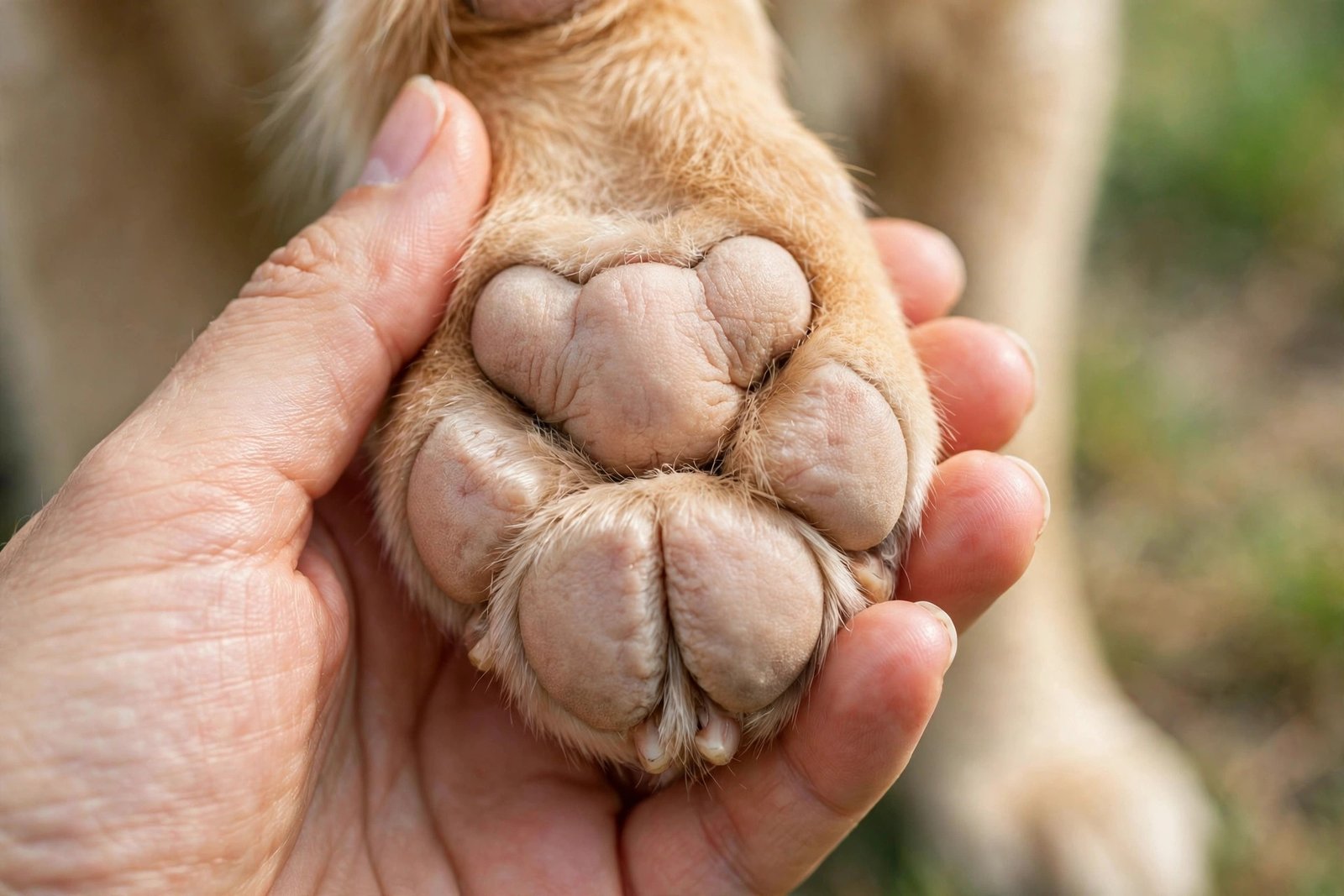
Every dog owner knows the season: spring thaw or autumn rain turns the yard into a swamp. Keep a dedicated “mud towel” by the door — big, absorbent, and ugly. For truly caked paws, the paw washer cup earns its keep; a dunk and swirl removes mud far faster than wiping. If your dog has feathered fur on the feet, keeping it trimmed short dramatically reduces mud collection. And the muddiest yard paths are usually the same few routes — a bag of mulch or gravel on the worst stretch cuts the mud at the source.
Frequently Asked Questions
Do I really need to wipe my dog’s paws after every walk?
For most dogs, a quick wipe after every walk is the ideal — it takes under two minutes once it is a habit. At minimum, always wipe after walks on treated roads (winter salt), chemically treated lawns, or muddy terrain. On a clean, dry sidewalk walk, a wipe is still good practice for allergen removal.
Can I use baby wipes on my dog’s paws?
Occasionally, in a pinch, unscented baby wipes are unlikely to cause harm — but pet-specific wipes are the safer everyday choice. Many baby wipes contain fragrances or ingredients formulated for human skin, not for paws a dog will lick. Given how cheap pet wipes are, there is little reason not to use the right product.
How do I get road salt off my dog’s paws?
Rinse with lukewarm water — a damp wipe alone may not dissolve salt crystals lodged between the toes. A paw washer cup filled with clean water works well, or just hold each paw under a gentle stream. Dry thoroughly afterward, and consider paw balm before winter walks as a barrier. If pads look cracked or sore, give them a rest from salted routes and mention it to your vet if it persists.
Why does my dog lick his paws constantly?
Occasional paw licking is normal grooming, but constant licking — especially focused licking that stains the fur or causes redness — usually signals irritation: allergies, something stuck between the toes, dryness, or a minor injury. Regular paw wiping helps with allergen-related licking. If it is persistent, focused on one paw, or the skin looks irritated, have your vet take a look.
Is paw balm necessary, or just a gimmick?
It is a legitimate tool for specific situations — winter salt protection and chronically dry pads — rather than a daily necessity for every dog. Think of it as a supplement to cleaning, not a replacement. A thin layer of a pet-specific balm before harsh-weather walks is the main use case most owners actually need.
How often should I bathe my dog overall, not just the paws?
Paw wiping is separate from full baths — most dogs need a full bath far less often than owners assume. Over-bathing strips the coat’s natural oils. This guide to bathing frequency breaks down the right schedule by coat type and lifestyle.