
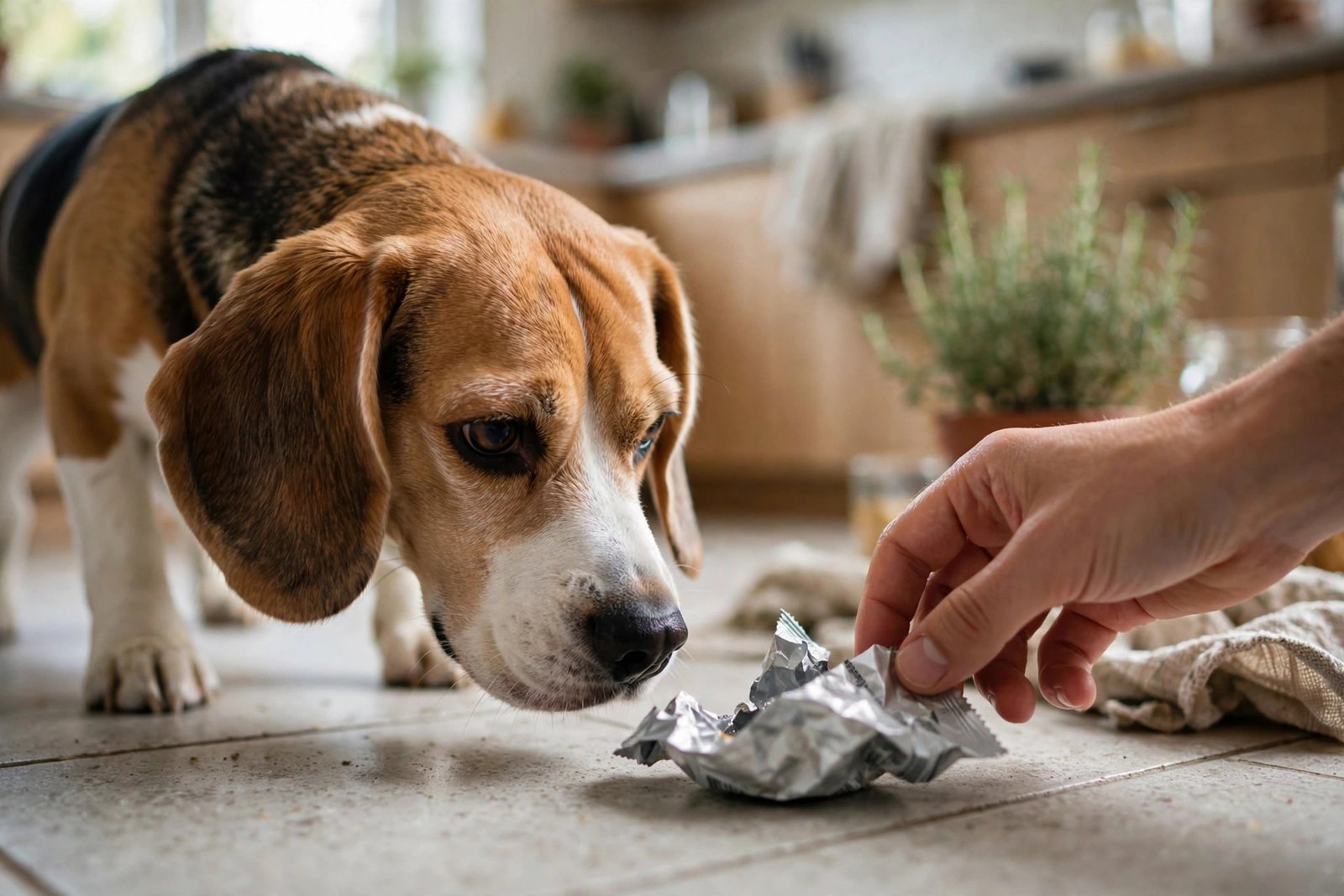

What to Do If Dog Eats Something Weird: A Calm Owner’s Guide
It happens in about three seconds. You turn around, you hear an interesting crinkling sound, and by the time you look, your dog is swallowing something with the focused determination of a creature that has never been fed in its life. Knowing what to do if dog eats something weird before it happens is one of the most useful things a dog owner can learn — because in the moment, panic makes everything harder, and a calm plan makes everything easier.
This guide isn’t a substitute for your vet — some situations need professional help fast, and only your vet can judge that. What it is: a clear, step-by-step way to handle the moment, figure out how worried to be, gather the information your vet will need, and reduce the chances of it happening again. Read it now, while everyone’s fine, and you’ll be glad you did later.
Quick Tips
- Stay calm and remove any remaining bits of the item from your dog’s reach.
- Figure out WHAT was eaten, WHEN, and roughly HOW MUCH — your vet will ask all three.
- Call your vet or a pet poison helpline promptly; don’t wait for symptoms to appear.
- Never try to make your dog vomit unless your vet specifically tells you to.
- Keep packaging, labels, or a sample of the item to show or describe to the vet.
- Watch for vomiting, drooling, lethargy, or appetite loss — and report anything unusual.
First: Don’t Panic (Your Dog Is Reading You)
The single most important part of what to do if dog eats something weird is also the hardest: stay calm. Dogs are excellent at reading human stress, and a shouting, lunging owner can turn a manageable moment into a chase — during which the dog swallows faster just to keep the prize. If you can, calmly trade: offer a high-value treat in exchange for whatever’s still in the mouth. Many dogs will happily swap, and a trade beats a wrestling match every time.
Once the immediate moment is handled, take a breath and assess. Is your dog breathing normally? Walking normally? Acting like themselves? A dog that just hoovered up a dropped piece of bread is in a very different situation from one that got into a box of chocolates. Your job right now isn’t to diagnose — it’s to observe and gather facts. Note the time, note what you think was eaten and how much, and check whether any packaging is left that tells you ingredients or quantities.
Resist the urge to go straight to internet horror stories. Search results at moments like this tend to surface the worst cases, which spike your anxiety without helping your dog. The calmer, more useful move is to pick up the phone. Your vet’s team handles these calls constantly and can usually tell you quickly whether this is a “monitor at home” situation or a “come in now” one.
Figure Out What Was Eaten and How Risky It Might Be
Not everything a dog eats is dangerous — dogs have remarkably robust stomachs, and plenty of swallowed oddities pass through without incident. But some categories deserve immediate attention, and knowing which is which shapes your next move.
Common high-concern items
Chocolate, xylitol (also called birch sugar, found in some sugar-free gum, candy, and peanut butters), grapes and raisins, onions and garlic in quantity, macadamia nuts, and alcohol are among the foods most often flagged as risky for dogs. Medications — human or pet, but especially human painkillers — are another major category; even a single dropped pill can be serious depending on the drug and the dog’s size. Household chemicals, certain plants, and batteries round out the usual suspects. For a fuller rundown of food hazards, toxic foods for dogs list is worth bookmarking before you need it.
Objects versus substances
There’s a useful distinction between something toxic and something that’s a physical problem. A sock, a corn cob, a toy squeaker, or a chunk of a chew toy may not be poisonous, but objects can cause choking or intestinal blockages — which is why “he seems fine” isn’t always the full story. Watch over the next day or two for repeated vomiting, loss of appetite, straining, lethargy, or abdominal tenderness, and call your vet if any of those show up. Small, smooth, non-toxic items often pass on their own, but only your vet can advise for your specific dog and the specific object.
When you don’t know what it was
Sometimes you just find the chewed remains and have to guess. Do your best detective work: check the bin, the countertops, the kids’ rooms, the garden. Look for torn packaging, missing items, or suspicious crumbs. If you genuinely can’t identify it, tell the vet exactly that — “chewed-up something from the kitchen bin, unknown contents, about ten minutes ago” is still useful information. And keep the remains; a photo or the actual packaging helps enormously.

What to Do If Dog Eats Something Weird: The Step-by-Step
Here’s the calm sequence to follow once you’ve assessed the moment:
1. Secure the scene. Remove remaining bits of the item and anything similar nearby. If other pets are around, separate them so nobody else samples the evidence.
2. Gather the facts. What was it? How much? When? How big is your dog, and how are they acting now? Snap a photo of the packaging or the remains. This is the information your vet or poison helpline will ask for, and having it ready saves precious minutes.
3. Call your vet. Do this before symptoms appear, not after. Describe what happened factually. They may ask you to monitor at home, come in immediately, or call a poison control helpline for specialist guidance. Follow their instructions rather than improvising.
4. Do NOT induce vomiting on your own. This is important enough to say plainly: making a dog vomit can cause more harm than good with certain substances (corrosives, petroleum products, sharp objects), and the methods people find online carry their own risks. Only induce vomiting if your vet specifically instructs you to, and only exactly as they describe.
5. Monitor closely. Even if the vet says it’s likely fine, keep an eye on your dog for the next 24–48 hours. Note appetite, energy, bowel movements, and any vomiting or drooling. If anything changes or you’re simply uneasy, call back — vets would much rather hear from a worried owner than see a dog that waited too long.
If it’s outside your vet’s hours, most areas have an emergency vet clinic or a pet poison helpline. Save those numbers in your phone now — when you need them, you won’t want to be searching. A well-stocked pet first aid kit is also worth assembling in advance; it won’t solve an ingestion emergency on its own, but having basics like your vet’s number, a muzzle, and saline wound wash in one place makes every emergency calmer.
After the Scare: Preventing a Repeat Performance
Dogs that eat strange things once tend to do it again — it’s a personality trait as much as a mistake. The good news is that most repeat incidents are preventable with a few habit changes.
Start with the kitchen and bins. A bin with a secure lid (or a bin inside a latched cupboard) eliminates the single most common source of swallowed weirdness. Counter-surfing dogs need food pushed well back and never left unattended; it takes one successful raid to teach a dog that counters are worth checking forever. Medications should live in closed cupboards, not on nightstands or in open handbags — dropped pills are a classic emergency.
On walks, work on “leave it” and “drop it.” These two cues are the closest thing to a remote control for a dog’s mouth, and they’re worth more than any gadget. Practice with low-value items first and build up gradually; a dog that reliably drops a boring stick on cue is far more likely to drop something genuinely dangerous. Muzzle training (introduced positively, as a skill rather than a punishment) is also a legitimate option for committed scavengers — many owners of chronic bin-raiders find a basket muzzle on walks completely removes the worry.
Finally, dog-proof with fresh eyes every so often. Get down to dog height and look around: what dangles, what smells interesting, what’s newly within reach? Puppies and adolescents are the worst offenders, but any dog can develop new hobbies. A ten-minute sweep now and then catches the sock under the sofa before it becomes a vet visit.

Frequently Asked Questions
My dog ate chocolate — how worried should I be?
It depends on the type and amount of chocolate relative to your dog’s size — dark and baking chocolate are more concerning than milk chocolate, and a small dog is at higher risk than a large one from the same amount. Don’t try to calculate it yourself from internet charts; call your vet with the details (type of chocolate, approximate amount, your dog’s weight, and when it happened) and let them assess. The sooner you call, the more options they have, so don’t wait for symptoms.
Should I make my dog throw up after eating something bad?
Not on your own — only if your vet specifically tells you to. Inducing vomiting is the wrong move for some substances and some situations (sharp objects, corrosive chemicals, or a dog that’s already drowsy, for example), and the home methods people find online can cause harm. Your vet will decide whether vomiting is appropriate based on what was eaten and when, and they’ll guide you through it safely if so.
What if I don’t know what my dog ate?
Gather what you can — check bins, counters, and rooms for torn packaging or missing items, photograph any remains, and note the time and your dog’s current behavior. Then call your vet and describe the situation honestly, including the uncertainty. “Unknown ingestion” is something vets deal with regularly, and they can advise on monitoring and warning signs even without a confirmed substance.
How long should I watch my dog after they eat something strange?
A good rule of thumb is close monitoring for 24–48 hours, even if your vet said it will probably be fine. Watch appetite, energy levels, vomiting, diarrhea, drooling, and abdominal comfort. Some issues, like partial blockages from swallowed objects, can take a day or more to show symptoms — so “seems fine right now” isn’t the all-clear. When in doubt at any point, call your vet back.
Are some dogs just more likely to eat weird things?
Yes — young dogs, retrievers and other orally-fixated breeds, anxious dogs, and under-exercised or bored dogs all tend to explore more with their mouths. Knowing your dog is a scavenger lets you plan for it: secure bins, solid “leave it” training, and supervision in new environments. Many dogs mellow with age, but management in the meantime prevents most emergencies.