
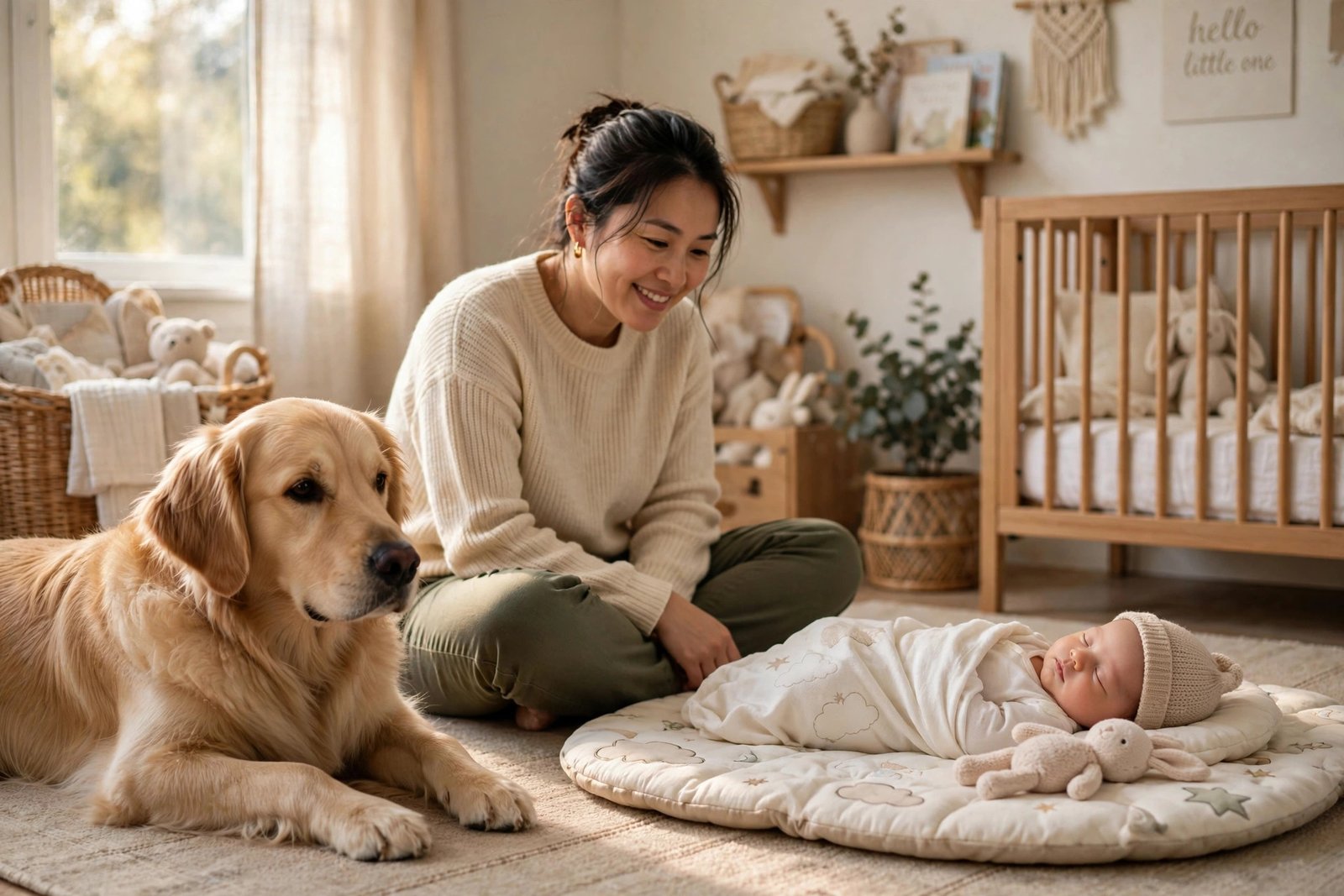

How to Introduce Dog to New Baby
Bringing a newborn home when you already have a dog can feel like juggling two full-time jobs at once. Your dog has been the baby of the house, and suddenly there’s a tiny human who cries at 3 a.m., smells different, and takes up all your attention. If you want to introduce dog to new baby life smoothly, the good news is that most dogs adjust beautifully — as long as you prepare ahead of time instead of hoping it all works out on the day you walk through the door.
This guide walks you through the process: what to practice before the baby arrives, how to handle the first meeting, and how to manage daily life with a dog and a newborn so nobody feels forgotten. You don’t need a perfect dog or a perfect plan — just a calm, consistent approach.
Quick Tips
- Start training 2–3 months before the due date — loose-leash walking, settling on a mat, and gentle greeting manners.
- Introduce baby sounds and smells (blankets, lotions) gradually so nothing feels brand new on day one.
- Keep the first meeting short, boring, and leashed — let your dog sniff from a few feet away, then move on.
- Never leave a dog and a baby alone together, not even for a few seconds, no matter how gentle your dog is.
- Protect your dog’s routine and one-on-one time so the baby’s arrival doesn’t feel like a punishment.
- Watch for stress signals like lip licking, yawning, or moving away — and give your dog space when you see them.
Start Preparing Months Before the Baby Arrives
The biggest mistake new parents make is waiting until the baby is home to think about the dog. By then you’re sleep-deprived and overwhelmed, which is the worst possible time to teach new skills. Starting two or three months early gives your dog time to learn at a relaxed pace, and it gives you one less thing to worry about later.
Begin with the basics your dog will need around a baby. Practice loose-leash walking, because you’ll eventually be pushing a stroller with a dog at your side. Teach a solid “settle” or “place” cue so your dog can lie on a mat while you feed or rock the baby. Work on polite greetings, since visitors will be coming and going and an excitable jumper doesn’t mix well with a newborn in someone’s arms. Short daily practice sessions — five minutes, a few times a day — work better than one long weekly session.
Next, get your dog used to the sounds and smells of baby life. You can play recordings of baby crying at a very low volume while your dog gets treats, gradually turning it up over days and weeks so the sound becomes background noise instead of a shock. Bring home baby blankets, lotions, and diapers before the birth and let your dog sniff them casually. Set up the nursery early and let your dog explore it on leash, so the room isn’t a thrilling forbidden zone the moment the baby arrives. Many owners also rehearse the new routine — shorter walks at different times, less couch time if the dog won’t be allowed on the nursery furniture — so the changes feel gradual rather than sudden.
Teaching the Skills Your Dog Will Need
Beyond basic manners, a few specific skills make life with a baby dramatically easier. The most useful is a reliable “go to your bed” or mat behavior. When you’re nursing at 2 a.m. or changing a diaper on the floor, you want a dog who can settle on a mat nearby instead of pacing around you. Train it the same way you’d train anything else: reward small steps, practice in short sessions, and build up duration slowly. Place the mat where you’ll actually need it — near the nursing chair, in the living room, wherever the baby will spend time.
Another valuable skill is calm behavior around food and dropped items. Babies drop everything, and toddlers will eventually throw snacks on purpose. A dog who has practiced “leave it” won’t dive for every fallen Cheerio. This isn’t about perfection; it’s about having a cue you can use in the moment while you pick things up yourself. If your puppy is still in the socialization window, our guide on how to socialize a puppy has useful foundations that carry over here, since a well-socialized dog generally handles household changes with more confidence.
Don’t forget to practice handling. Your dog will be touched by tired parents, curious relatives, and eventually grabby little hands. Gently practice touching paws, ears, and tail while rewarding calm behavior, so your dog is comfortable being handled in clumsy ways. And if your dog has any existing behavior concerns — resource guarding, fear of strangers, reactivity on walks — now is the time to work with a qualified professional trainer. A few sessions before the baby arrives can prevent problems that would be much harder to solve afterward.

The First Introduction: Slow and Boring Is Perfect
The day the baby comes home, resist the urge to make it a big event. Dogs pick up on your energy, and a tense, emotional reunion sets exactly the wrong tone. A calmer approach works better: have one parent greet the dog first, alone, with the warm familiar hello the dog is used to. Let the dog burn off a little excitement in the yard or on a short walk if possible. A dog who has just exercised is a dog who can think.
For the actual meeting, keep the baby in someone’s arms and the dog on a loose leash with a second person handling them. Let the dog notice the baby from a few feet away. Some dogs will want to sniff; let them take a quick sniff of the baby’s feet, then call them away cheerfully and reward them. That’s it. The whole thing can take two minutes. Boring is the goal — you want the baby to register as no big deal, not as the most exciting thing that ever happened.
Don’t force interaction. If your dog hangs back, that’s fine — it means they’re processing. If your dog gets overly excited, calmly increase distance and try again later. Some dogs need several short, low-key exposures over a few days before they’re relaxed around the baby. There’s no deadline here. A slow start beats a dramatic one every time, because every calm repetition teaches your dog that the baby is simply part of the scenery.
How to Introduce Dog to New Baby Routines Without the Guilt
The first weeks home are when most dog owners feel the guiltiest. The dog’s walks get shorter, playtime shrinks, and every spare minute goes to the baby. Some guilt is normal, but you can plan around it so your dog doesn’t feel abandoned. The trick is protecting a small slice of routine that’s just for the dog — even fifteen minutes of dedicated one-on-one time a day, like a morning walk or an evening training game, goes a long way toward keeping your dog’s world feeling stable.
Build the dog into the baby’s routine instead of treating them as separate schedules. Walk the dog with the baby in the carrier or stroller. Do training reps while the baby does tummy time nearby. Let the dog hang out on their mat while you feed the baby, tossing the occasional treat for calm behavior. This keeps the dog exercised and engaged, and builds positive associations with the baby’s presence — dogs learn fast that baby time equals treat time.
Set up the house so everyone has safe spaces. Use baby gates to give the dog a quiet room to retreat to when the crying gets loud — and to give the baby’s areas clear boundaries the dog understands. A crate the dog already loves works the same way. These aren’t punishments; they’re pressure valves. A dog who can choose to walk away from an overwhelming situation is a dog who won’t feel trapped. If you have older children too, our article on introducing a new pet to kids covers how to set expectations with children around animals, which pairs well with everything here.
Warning Signs and When to Get Help
Most adjustment grumbles — a little jealousy, some extra barking, testing boundaries — fade within a few weeks as routines settle. But some behaviors deserve a prompt call to a professional trainer or behaviorist. Growling or snapping directed at the baby, intense staring with a stiff body, guarding spaces or people from the baby, or any attempt to mouth or nip are red flags that need expert eyes, not internet advice.
Watch for chronic stress signals too. A dog who stops eating, hides constantly, licks their paws raw, or seems shut down may be struggling more than you realize. Some dogs mask stress well, so pay attention to the small stuff: excessive yawning, lip licking when the baby cries, or always positioning themselves at the far end of the room. If you notice a pattern, talk to your vet to rule out anything medical, then consider a certified behavior professional. Many offer video consultations, which is a lifesaver when leaving the house with a newborn feels impossible.
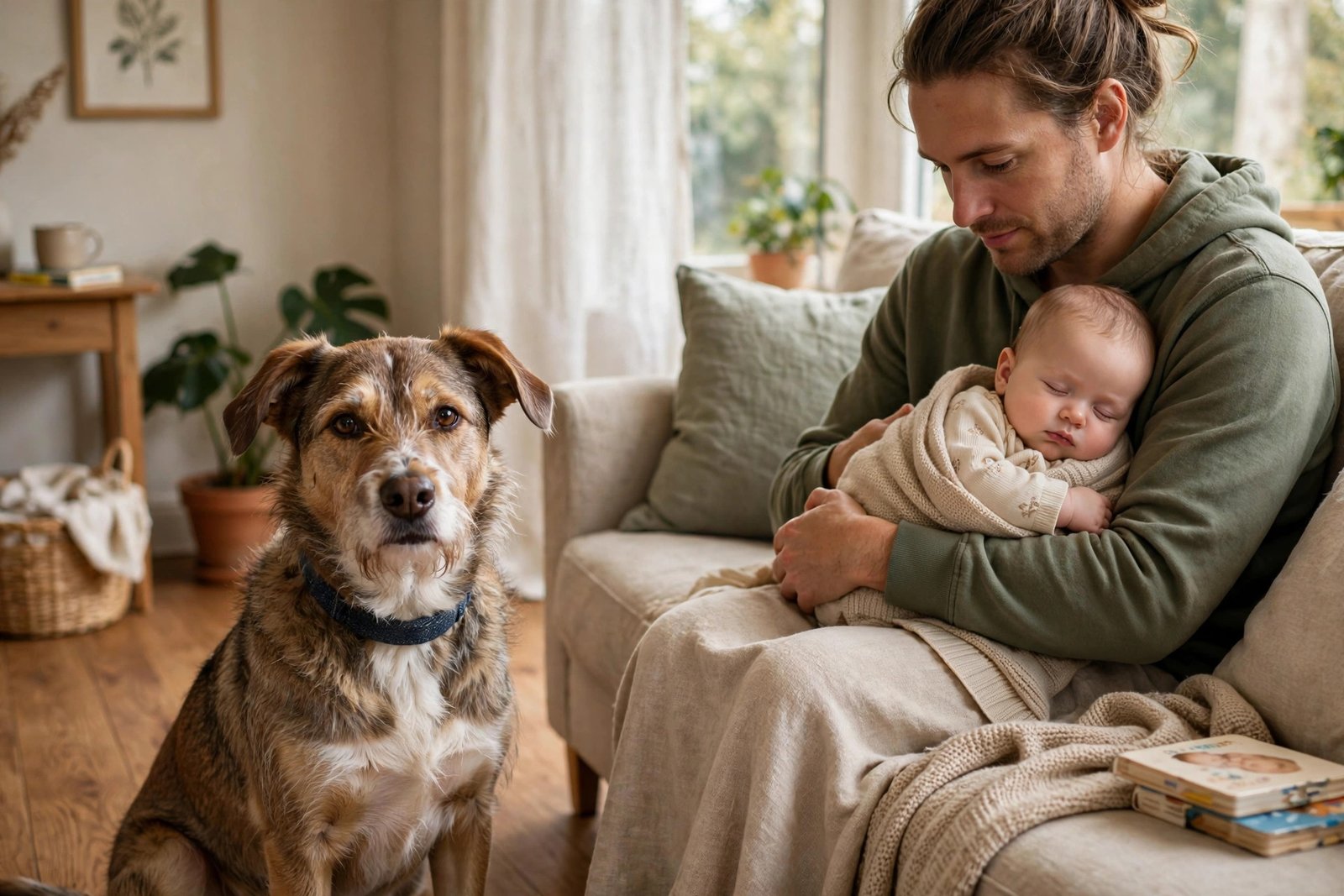
And here’s the rule that matters most: never leave your dog and baby alone together. Not while you run to the kitchen, not while the baby naps, not for “just a second.” Even the gentlest dog is still an animal, and babies are unpredictable — a sudden cry or flailing arm can startle any dog. Supervision means an awake, attentive adult within arm’s reach. When you can’t actively supervise, use separate spaces. This one habit prevents the vast majority of serious incidents.
Frequently Asked Questions
When should I start preparing my dog for a new baby?
Ideally two to three months before the due date. That gives you time to teach skills like settling on a mat and walking calmly beside a stroller, and to gradually introduce baby sounds and smells. If the baby is due sooner than that, start today — even a few weeks of preparation helps.
Should my dog sleep in the same room as the baby?
Most experts recommend keeping the dog out of the room where the baby sleeps at first. It reduces the chance of the dog being startled awake by crying and gives everyone cleaner boundaries. A baby gate or closed door works fine.
What if my dog is jealous of the baby?
What looks like jealousy is usually just a dog whose routine changed overnight. The fix is rarely about the baby — it’s about restoring the dog’s exercise, mental stimulation, and one-on-one time. Reward calm behavior around the baby, and avoid scolding the dog for wanting attention. The adjustment period typically lasts a few weeks.
Can my dog lick the baby?
It’s best to discourage face licking, since dogs’ mouths carry bacteria that newborns are more vulnerable to. A quick sniff of feet or hands is generally fine, but keep licking away from the baby’s face, hands, and any broken skin. If you’re unsure, check with your pediatrician — they can give guidance based on your baby’s age and health.
How long does it take for a dog to adjust to a new baby?
Many dogs settle into the new normal within two to six weeks, though some take a few months. The timeline depends on the dog’s temperament, how much the routine changed, and how consistently the household manages the transition. Slow, steady progress is normal — you don’t need a perfect week one.