


How to Keep Dog Entertained While at Work
Most of us can’t stay home with our dogs all day — the bills need paying, and an empty house for eight hours is just reality. But a bored dog isn’t a happy dog, and boredom is behind a lot of the behaviors owners complain about: chewed shoes, shredded cushions, nonstop barking that the neighbors mention. Learning how to keep dog entertained while at work isn’t about spoiling them — it’s about meeting their needs so the hours you’re gone pass calmly instead of destructively.
The good news is that you don’t need expensive gadgets or a complicated schedule. A tired dog, an interesting environment, and one good midday break cover most of it. This guide walks through a practical plan: what to do before you leave, how to set up the house, which toys actually hold a dog’s attention, and when it’s worth paying for help.
Quick Tips
- Exercise your dog before work — a morning walk or play session makes alone time much easier.
- Feed breakfast from puzzle toys or frozen food toys instead of a bowl to stretch out mental work.
- Set up a safe, interesting space: a window view, safe chews, and a cozy resting spot.
- Arrange a midday break — a walker, neighbor, or family member — for dogs alone 6+ hours.
- Rotate toys weekly so old ones feel new again; novelty keeps dogs engaged.
- Keep departures and arrivals calm — big emotional goodbyes make alone time harder.
Start With the Morning: Tire Them Out Before You Leave
The single most effective thing you can do happens before you leave the house. A dog who has been walked, played with, and mentally engaged in the morning will spend most of your workday napping. A dog who woke up, ate from a bowl in thirty seconds, and watched you leave will spend those same hours looking for something to do — and “something to do” often means your couch cushions.
You don’t need a marathon. For most adult dogs, twenty to forty minutes of morning activity — a walk with plenty of sniffing, a game of fetch, or some training reps — takes the edge off. Puppies and high-energy breeds may need more; our guide on how much exercise a puppy needs breaks it down by age so you don’t overdo it with young joints. The key insight is that a dog’s day runs on an energy budget, and spending a good chunk of it before work leaves less to burn while you’re gone.
Pair the physical exercise with a mental task. Feeding breakfast from a puzzle feeder, snuffle mat, or frozen stuffed food toy turns a thirty-second meal into a twenty-minute project. Scatter feeding — tossing kibble across the lawn or a room for the dog to hunt — works the same way. A dog who has used both body and brain in the morning is a dog primed for a long, contented nap.
How to Keep Dog Entertained While at Work: The Home Setup
Think of your home during work hours as your dog’s daytime habitat. The goal isn’t constant stimulation — dogs sleep twelve to fourteen hours a day naturally — but a space that offers comfortable rest plus a few interesting options for the hours they’re awake. Start with confinement that matches your dog’s reliability: a crate for dogs who love it, a gated room or pen for young or mischievous dogs, or free roam for trustworthy adults. The right space prevents both destruction and anxiety.
A window with a view is the cheapest entertainment there is. Many dogs will happily watch the street, the birds, or the neighbor’s cat for long stretches. Set up a sturdy perch or move a bed near a window (curtains secured so they don’t get tangled). Just be aware of your individual dog: if watching passersby triggers frantic barking rather than calm observation, that window might need frosted film instead. Know your dog.
Background sound helps many dogs settle. Calm music, talk radio, or a podcast at low volume masks outside noises — the mail slot, the garbage truck — that might otherwise trigger barking. There are even playlists designed for dogs, though regular mellow music works fine. And leave out two or three safe chews: a rubber chew toy, a long-lasting dental chew, something the dog can work on quietly. Avoid anything the dog could break into swallowable pieces unsupervised; when in doubt, choose sturdier than you think you need.

Puzzle Toys and Food Games That Actually Last
Not all puzzle toys are equal, and most owners learn this the expensive way: the “thirty-minute” puzzle that their dog solves in ninety seconds. The trick is matching difficulty to your dog and building up. Start easy so the dog learns the game is winnable, then increase the challenge over weeks. A frustrated dog gives up; a slightly challenged dog stays engaged.
Frozen food toys are the workday champion for most dogs. A rubber toy stuffed with kibble, peanut butter (xylitol-free), or wet food and frozen overnight can occupy a dog for thirty to sixty minutes — far longer than the same toy unfrozen. Make two or three at a time and rotate them through the freezer. Snuffle mats, where you hide kibble in fabric strips for the dog to nose out, are another strong option, especially for dogs who inhale their food.
Toy rotation keeps everything fresher. Instead of leaving all toys out all the time, keep half put away and swap them weekly. A toy the dog hasn’t seen in two weeks is practically new again. And don’t overlook simple DIY games: a muffin tin with tennis balls covering treat-filled cups, a cardboard box filled with crumpled paper hiding kibble, a rolled-up towel with treats tucked in the folds. Cheap, effective, and endlessly remixable. For rainy days when the morning walk gets cut short, our indoor exercise ideas for dogs pair well with these food games.
Midday Breaks: Walkers, Neighbors, and Daycare
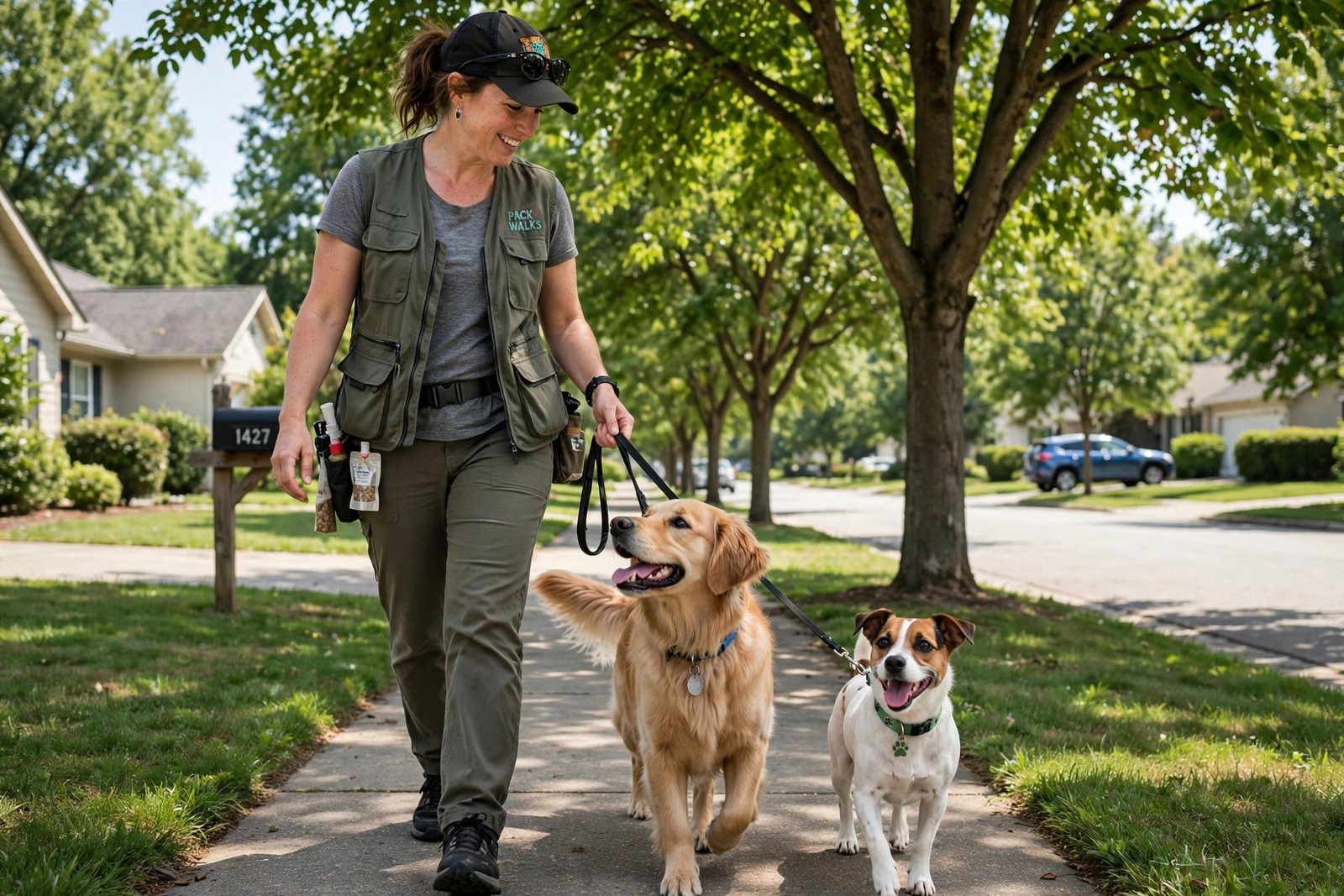
For dogs alone six or more hours, a midday break isn’t a luxury — it’s basic welfare, especially for puppies, seniors, and dogs with small bladders. A twenty- to thirty-minute visit breaks the day into two manageable halves: bathroom break, a short walk, fresh water, and a bit of human contact. Many owners find the difference dramatic — the afternoon half of the day passes far more calmly than the morning did.
A professional dog walker is the most reliable option, and worth interviewing properly: ask about their experience, whether walks are solo or group, how they handle emergencies, and whether they’re insured. A trusted neighbor or family member works just as well if the schedule fits. Some workplaces now allow dogs a day or two a week, which can be a great middle ground if your dog has the temperament for an office.
Doggy daycare suits some dogs brilliantly and others not at all. Social, playful dogs often thrive on it once or twice a week — it burns enormous energy and provides dog company. But anxious, fearful, or easily overwhelmed dogs can find a loud daycare room stressful rather than fun. If you try it, look for small playgroups, rest periods, and staff who actually supervise. And watch your dog afterward: a happy-tired dog who naps contentedly is a good sign; a wired, overstimulated dog who can’t settle may be telling you it’s too much.
Evenings: Making the Most of Your Time Together
Here’s the part many guides skip: what happens when you get home matters as much as the workday setup. A dog who’s been alone all day is bursting with social energy, and an owner who flops on the couch feeling guilty isn’t meeting it. You don’t need hours — but the first thirty to sixty minutes home should be quality time: a real walk (not just a yard trip), some play, some training, some undivided attention.
This evening session serves double duty. It burns off the day’s stored energy, and it reassures your dog that your return reliably brings good things — which actually makes the next day’s departure easier. Dogs learn patterns fast: if coming home always means a great walk, the workday becomes just the boring part before the good part, rather than an abandonment to dread.
Finally, keep perspective. Some guilt about leaving your dog is normal, but a well-set-up dog with exercise, enrichment, and a midday break is genuinely fine — dogs sleep most of the day by nature. Watch for signs the arrangement isn’t working: destructive behavior, house soiling in a trained dog, excessive barking reported by neighbors, or signs of distress like drooling at the door. Those are signals to adjust the plan — more exercise, a walker, daycare, or a vet check to rule out anxiety — not signs you’re a bad owner. You’re already doing the right thing by thinking it through.
Frequently Asked Questions
How long can a dog be left alone during work hours?
Most healthy adult dogs manage 6–8 hours with proper setup, though shorter is better. Puppies need much more frequent breaks — generally one hour per month of age. Seniors and dogs with medical issues may also need midday care. If your schedule regularly exceeds 8 hours, a walker or daycare becomes important rather than optional.
Is it cruel to crate my dog while I’m at work?
A crate isn’t cruel for a dog who likes their crate — many dogs treat it as a cozy den. But all-day crating every day is a lot, especially without a midday break, and it’s wrong for dogs who panic in confinement. If your dog is calm and settled in the crate and gets exercise before and after, it’s fine; if they show distress, switch to a larger confined space and talk to your vet.
What are the best toys to leave with a dog unsupervised?
Stick to sturdy, one-piece rubber toys and durable chews sized for your dog — things that can’t be broken into swallowable chunks. Avoid toys with squeakers that can be ripped out, small parts, or anything the dog destroys quickly. When trying a new chew, supervise the first few sessions to see how the dog handles it before leaving it out alone.
Will getting a second dog keep my dog company?
Sometimes, but it’s a gamble — and a second dog doubles the work, cost, and potential problems. A second dog doesn’t fix separation anxiety or lack of exercise; it just adds another animal with needs. Get a second dog because you want one and can care for one, not as a fix for the first dog’s boredom.
My dog destroys things despite toys and walks. What now?
First, check the basics: is the exercise truly enough for this dog’s energy level, and is the alone stretch too long? Then consider whether it’s boredom or anxiety — destruction focused on doors and windows often signals distress rather than mischief. If you’ve covered exercise, enrichment, and midday breaks and it’s still happening, talk to your vet or a qualified trainer for an outside perspective.