


Questions to Ask Before Adopting a Pet From a Shelter
Walking into a shelter is emotional — and that’s exactly why the smartest adopters ask questions first and fall in love second. Knowing the questions to ask before adopting a pet can save you from surprises about health, behavior, and costs, and it helps shelter staff match you with an animal who genuinely fits your life. This guide gives you the exact questions to ask, explains why each one matters, and tells you what good answers sound like.
One framing note: shelter staff are on your side. A good shelter wants a permanent match, not a quick placement, so asking detailed questions marks you as a serious adopter, not a difficult one. PawsGuide covers general pet care information, not veterinary advice — for anything health-related that comes up in your answers, follow up with your own vet before finalizing the adoption.
Quick Tips
- Ask about health history, behavior observations, and the pet’s backstory before you fall in love — staff notes often reveal more than the kennel card.
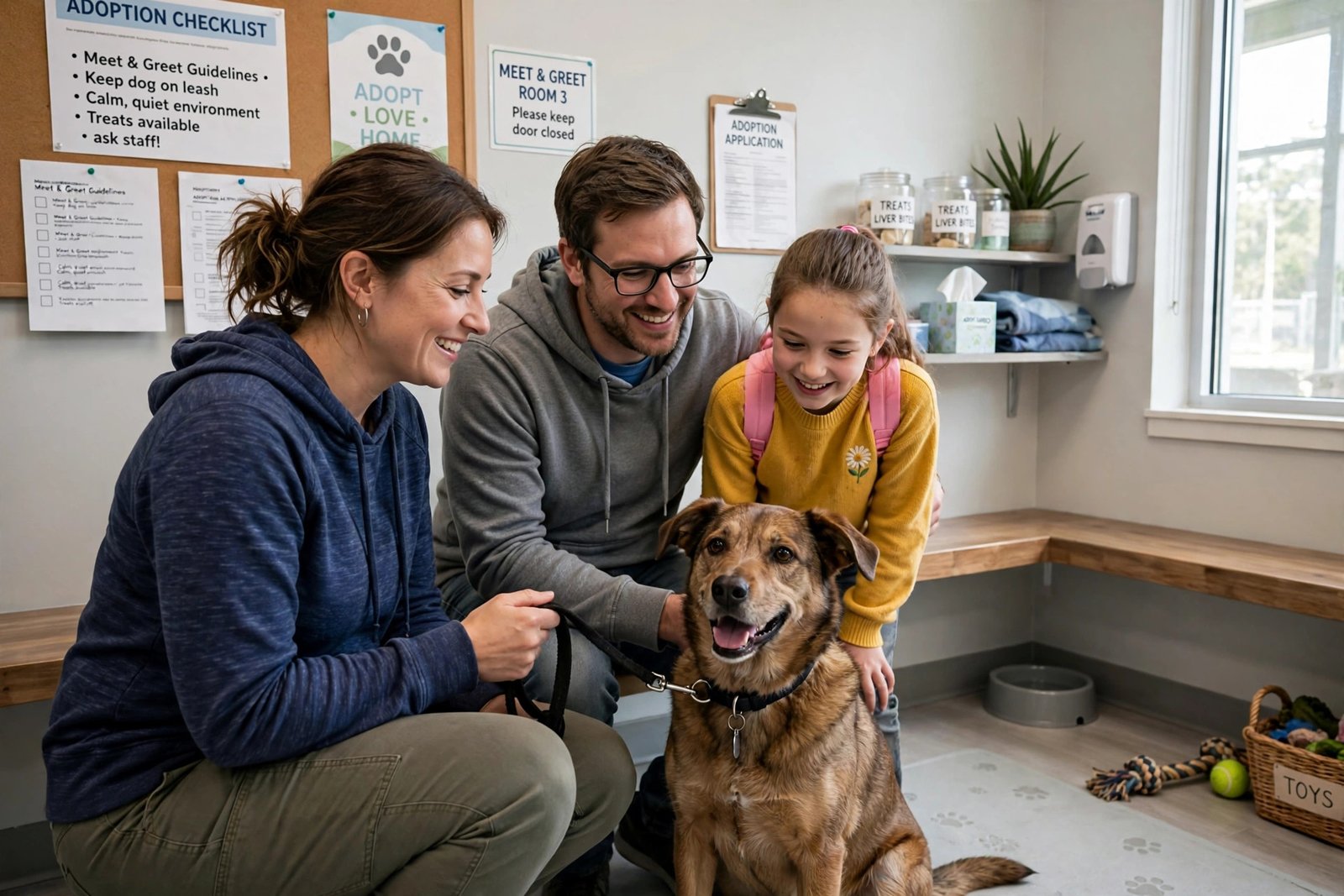
- Request a meet-and-greet away from the kennels; many animals behave very differently in a calm room than in a noisy kennel row.
- Ask what the adoption fee covers (spay/neuter, vaccines, microchip, trial period) so you’re comparing real value, not just sticker price.
- Find out what post-adoption support the shelter offers — behavior helplines, trainer referrals, and return policies matter more than most people think.
- Bring every household member, including resident dogs, to at least one meeting before you decide.
- If you’re leaning toward a dog specifically, our shelter dog adoption guide walks through the full process from first visit to first week home.
Questions to Ask Before Adopting a Pet: Health and Vet History
Health questions come first because they affect your budget and your plans from day one. Start with the basics: what veterinary care has this animal already received? A thorough answer covers spay/neuter status, vaccination history, parasite treatment (deworming, flea prevention), and microchipping. Many shelters include all of this in the adoption fee, which is part of why adoption is such good value — but confirm exactly what’s done and what paperwork you’ll receive.
Next, ask directly: does this pet have any known health conditions, past injuries, or ongoing treatment? Shelters are required in most places to disclose known issues, and honest ones do so proactively. A senior pet with early arthritis or a cat with a managed thyroid condition can still be a wonderful companion — you just deserve to know before you commit, so you can budget and plan. If the answer is vague, ask whether the animal has seen the shelter’s vet recently and whether you can see those records.
Two more questions many first-timers miss: has this animal been behaviorally or medically evaluated, and by whom? And what happens if my own vet finds something in the first two weeks? Good shelters offer a health guarantee window or a free first exam with a partner vet. Whatever they tell you, book your own vet visit within the first week or two of adoption — a fresh, independent checkup is standard practice, and your vet can confirm vaccine schedules and preventive care going forward.
Behavior and Temperament: What the Staff Has Actually Observed
Kennel cards tell you age, breed mix, and a one-line personality blurb. Staff and foster volunteers know the real story — so ask for it. How does this animal behave with strangers, with children, and with other animals? Has the pet lived in a foster home, and if so, what did the foster report about house training, crate comfort, sleep habits, and alone time? Foster notes are gold; a dog who was “a dream in foster” is a very different prospect from one who’s only ever been observed in a kennel.
Ask about the specific behaviors that cause most returns: house training status, chewing or scratching habits, barking or vocalization, leash manners, and any resource guarding around food or toys. Frame it neutrally — “what is she still working on?” gets more honest answers than “does he have problems?” Also ask how the animal handles handling: being picked up, having paws touched, grooming, and vet-style exams. These answers tell you what daily life will feel like, not just what the highlight reel looks like.
Finally, ask what the shelter recommends for this particular animal’s first weeks: crate training, decompression routines, introductions to resident pets. A shelter that gives you a tailored plan — rather than a generic pamphlet — is a shelter that knows its animals. And remember that behavior in a stressful kennel often undersells the animal; many owners report their pet’s true personality emerged two to three weeks after coming home.
The Pet’s Backstory: Why They’re Here and What They’ve Known
Every shelter animal has a history, and understanding it helps you set expectations. Ask why the animal was surrendered or how they arrived — owner surrender, stray, transfer from another shelter. The reason matters less than you’d think (most surrenders are about human circumstances like moves or finances, not the animal), but it sometimes explains behavior. A dog surrendered for “too much energy” might be perfect for an active owner and miserable in a quiet apartment.
Ask what the animal’s previous life looked like, if anything is known: indoor or outdoor, alone or with other pets, around kids or not, accustomed to a yard or apartment living. Even partial answers help you recreate familiar comforts. For strays with unknown histories, ask how long the shelter has had them and what they’ve learned in that time — length of stay often correlates with how well staff know the animal.
One more underrated question: has this animal been adopted and returned before, and why? A return isn’t a red flag by itself — many returns are about adopter circumstances — but the reason is informative. A cat returned for “not cuddly enough” tells you about adopter expectations, not the cat. A dog returned twice for escaping yards tells you to check your fencing. Ask kindly, listen carefully, and judge the pattern, not the single event.
Costs, Policies, and Post-Adoption Support
Money questions feel awkward; ask them anyway. What exactly does the adoption fee include, and are there discounts for senior pets, bonded pairs, or long-stay animals? Many shelters run reduced-fee promotions that aren’t advertised on every kennel card. Ask about the return policy in plain terms: if the match doesn’t work, can the animal come back, within what timeframe, and is any part of the fee refunded or credited? A clear, humane return policy is a sign of a responsible organization, not a reason to worry.
Then ask about support after adoption day, because the first month is when most new owners need help. Does the shelter offer a behavior helpline, post-adoption check-in calls, or trainer referrals? Some shelters include a free training class or a voucher for a first vet exam. Ask what resources they recommend for your specific situation — first-time owner, apartment dweller, multi-pet home. Shelters that invest in post-adoption support have lower return rates, and their advice is free.
Also clarify the logistics: what’s the timeline from application to taking the pet home? Some shelters do same-day adoptions; others require a home check, landlord confirmation, or a waiting period. Ask what paperwork you need to bring (ID, proof of address, landlord approval) so you don’t make two trips. And if you’re considering an older animal, read our senior rescue pet adoption guide — the questions shift a bit when the pet is in their golden years, especially around health planning and costs.

Red Flags and Green Flags at Any Shelter or Rescue
Most shelters are wonderful. A few aren’t, and knowing the difference protects both you and the animal. Green flags first: clean facilities, animals with water and enrichment, staff who answer questions thoroughly and encourage meet-and-greets, transparent fees and policies in writing, spay/neuter before or contracted after adoption, and a genuine interest in your living situation. The best shelters interview you — that selectivity is a feature, not an obstacle.
Red flags: pressure to decide on the spot, refusal to let you meet the animal outside its kennel, vague or evasive answers about health and behavior, no vet records available, cash-only fees with no receipt, or unwillingness to take an animal back under any circumstances. Another subtle one: a rescue that ships animals long distances with no foster history and no behavioral information. Trust your gut — if something feels off, it’s fine to walk away and visit a different organization.
A final note on “no-kill” versus open-admission shelters. Both do important work, and neither label tells you everything about how animals are treated. Visit, observe, ask your questions, and judge what you see. The questions to ask before adopting a pet work the same everywhere — and the shelter that welcomes them is usually the shelter worth adopting from.
Frequently Asked Questions
What is the most important question to ask before adopting a shelter pet?
If you ask only one thing, make it: “What has the staff or foster observed about this animal’s behavior in a home-like setting?” Health records matter, but behavior determines daily life — and foster notes reveal house training, alone-time tolerance, and quirks that a kennel card never will. Ask for specifics, not adjectives.
Should I ask why the animal was surrendered?
Yes — kindly and without judgment. Most surrenders are about human life changes (moving, finances, new baby, landlord issues) rather than the animal’s behavior. But the answer sometimes explains things, like a high-energy dog surrendered by a sedentary owner, and it helps you assess whether your lifestyle is actually a better fit.
How do I know if a shelter is reputable?
Look for transparency: clear written policies, available vet records, animals in clean enriched housing, staff who welcome questions and meet-and-greets, and a reasonable return policy. Reputable shelters also ask you questions about your home and lifestyle. Pressure tactics, evasive answers, or no paperwork are reasons to look elsewhere.
Can I return a shelter pet if it doesn’t work out?
Responsible shelters have a return policy and would much rather take an animal back than have it rehomed unsafely or abandoned. Ask about the policy before you adopt: the timeframe, whether fees are refunded, and what support they offer first (many behavior issues are fixable with guidance). Returning isn’t failure — it’s using the safety net the way it was designed.
Should I bring my kids or current pets to the shelter visit?
Bring all human household members to at least one meeting — their comfort with the animal matters as much as yours. For resident dogs, most shelters can arrange a controlled dog-to-dog introduction on site; ask about it in advance. For cats meeting resident cats, scent-swapping and slow introductions at home matter more than a shelter meeting, so ask staff for their recommended introduction protocol.