


How to Stop Your Dog Pulling on the Leash
Being dragged down the street by your own dog is one of the least fun parts of dog ownership. Your shoulder aches, the walk feels like a workout you didn’t sign up for, and instead of enjoying time with your dog, you’re spending the whole walk managing the leash. If that sounds familiar, you’re far from alone — pulling is probably the single most common complaint dog owners have about walks.
Here’s the reassuring part: pulling is one of the most fixable behavior problems out there. It doesn’t require special talent or expensive equipment. It requires understanding why dogs pull in the first place, and then being more consistent than the dog is stubborn. Here’s the full playbook.
Quick Tips
- Dogs pull because it works — every step forward while pulling rewards the pulling. Stop rewarding it.
- Reward your dog for being in the “walking zone” beside you, generously and often at first.
- Use the “be a tree” method: the instant the leash tightens, stop moving.
- A front-clip harness gives you better steering without pain or discomfort.
- Train in short sessions in boring locations before expecting results on exciting walks.
- Make sure your dog’s exercise needs are met — an under-exercised dog is much harder to walk calmly.
Why Dogs Pull (It’s Not Spite)
Dogs pull for beautifully simple reasons: they walk faster than humans, the world is incredibly interesting, and — crucially — pulling works. Every time your dog leans into the leash and you keep walking, the dog learns that pulling gets them where they want to go.
There’s also an opposition reflex: when something pushes against a dog, their instinct is to push back. So the harder you pull back, the harder many dogs pull forward. Leash-pulling contests are unwinnable by design.
None of this means your dog is dominant, stubborn, or disrespectful. Those labels get thrown around a lot, but they don’t describe what’s happening. Your dog is doing what has always worked. Change what works, and the behavior changes.
Set Yourself Up: Equipment and Exercise
Before training starts, two foundations make everything easier.
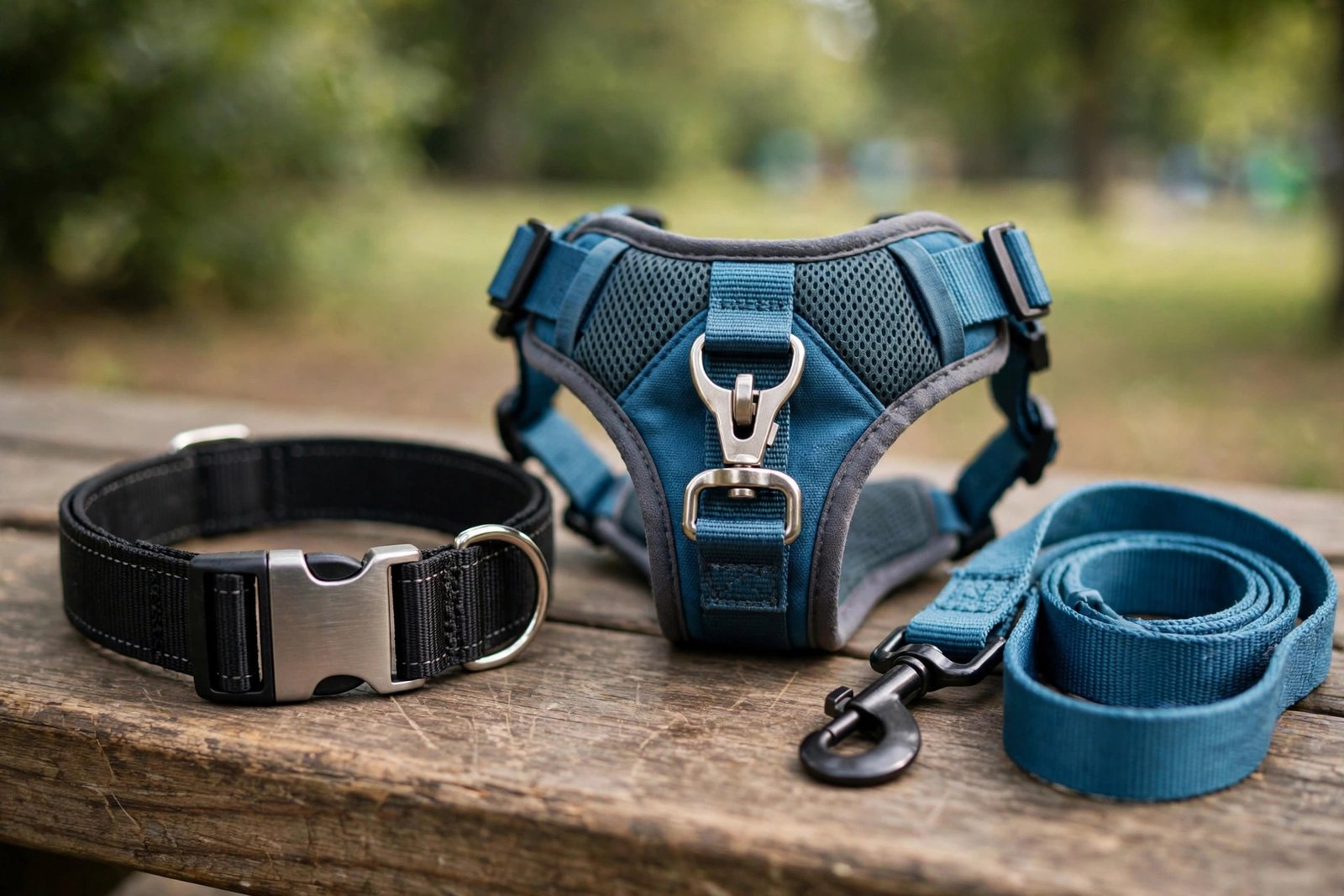
Equipment. For a dedicated puller, a front-clip harness is usually the better tool — the leash attaches at the chest, so when the dog pulls, they’re gently turned back toward you instead of throwing their full weight forward. It’s steering, not punishment. There’s a more detailed breakdown of the collar vs. harness question if you want help choosing. Whatever you use, make sure it fits properly — a badly fitted harness chafes, and a chafing dog is a distracted dog.
Avoid equipment that works through pain or fear — choke chains, prong collars, and shock collars. They can suppress pulling short term, but they don’t teach the dog what to do instead, and they risk increased anxiety and damaged trust.
Exercise. This one gets underestimated constantly. A young, athletic dog who’s been cooped up all day and is bursting with energy is going to pull — training or no training. Make sure your dog’s basic exercise needs are met through play or free running in a safe area before you expect calm leash manners. A tired dog is a teachable dog.
The Core Method: Reward the Position You Want
Here’s the fundamental principle of loose-leash walking: make being near you the best-paying job on the walk. Most owners only interact with the leash when the dog does something wrong — a yank, a scold, a “heel!” But the dog walking nicely beside you gets… nothing. Silence. From the dog’s perspective, pulling gets a reaction and walking nicely gets ignored. Flip that economy.
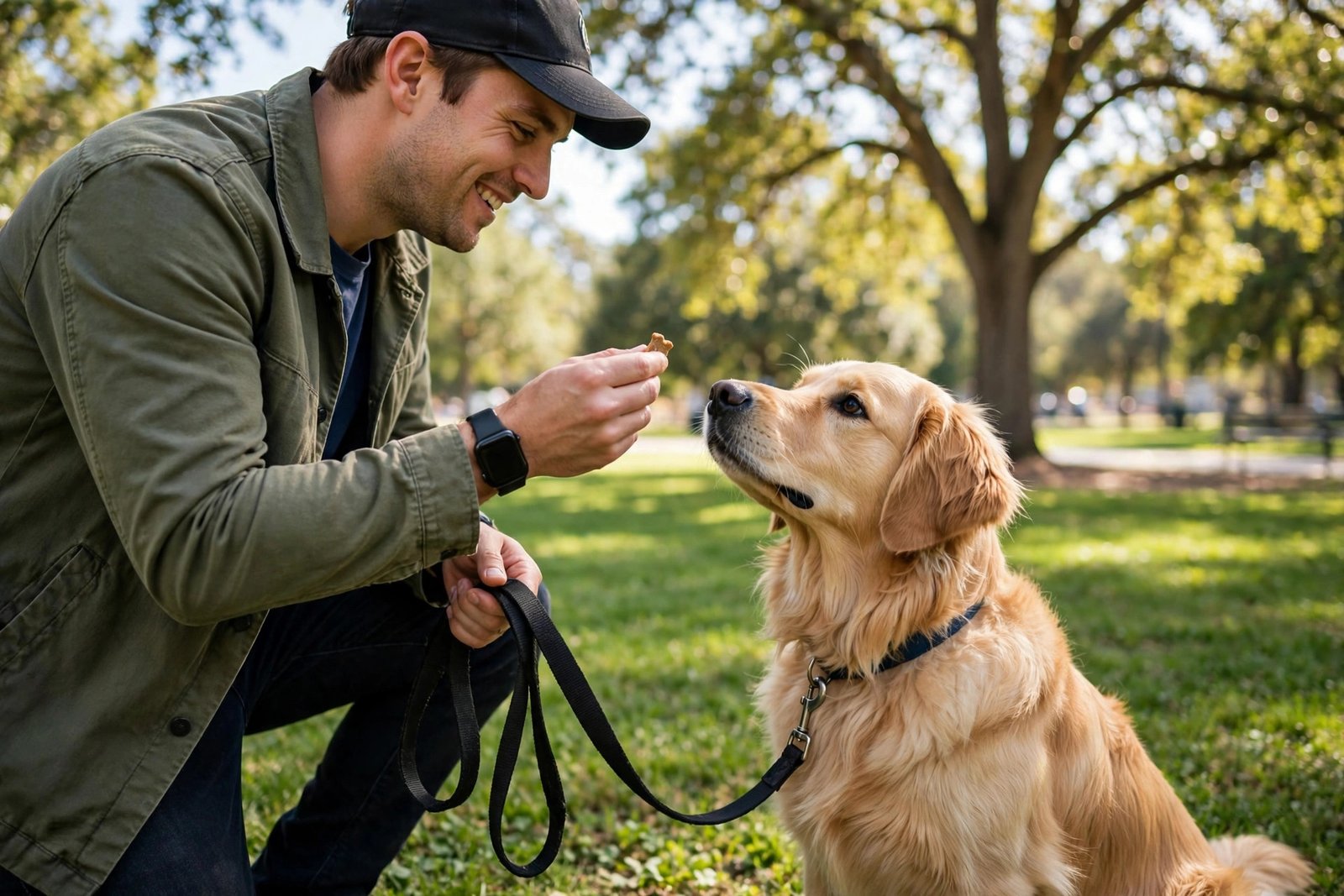
Start in a boring location — your driveway, a quiet street, your yard. Take a few steps. The instant your dog is beside you with a loose leash, mark it with a “yes!” and deliver a treat. Then take a few more steps and do it again. In the beginning, you’re rewarding every few steps. Yes, you’ll go through a lot of treats. That’s the investment.
What you’re building is a habit: walking near you predicts good things. Over sessions, gradually stretch the interval — then make rewards random and unpredictable, which is more powerful than constant ones once the behavior is established.
Keep your energy upbeat. Talk to your dog. Be interesting. A silent owner staring at their phone while the dog scans the horizon is a recipe for pulling — the environment will always outcompete a boring handler.
The “Be a Tree” Technique
Rewarding good position is half the equation. The other half is making pulling stop working — and the simplest way is the “be a tree” method: the moment the leash goes tight, you stop moving. Plant your feet. Become boring. Wait.
Sooner or later, the dog will do something that loosens the leash — glance back at you, shift their weight, take a step toward you. The instant there’s slack, mark it (“yes!”) and move forward again. Forward motion is the reward here, which is elegant: the thing the dog wanted (going forward) now comes from slack leash, not tight leash.
A few things to know before you try this:
- It’s tedious at first. Your first few sessions might cover fifty feet in ten minutes. That’s normal — you’re rebuilding an association, and it takes repetitions.
- Don’t yank the dog back. Just stop. Let the dog figure out that tight leash = the walk pauses.
- Combine it with rewards. “Be a tree” removes the payoff for pulling; rewarding position adds a payoff for walking nicely. You need both.
- Everyone who walks the dog has to do it. If you “be a tree” and someone else lets the dog drag them to the park, the dog learns pulling works with some people. Household consistency isn’t optional.
Direction Changes: The Penalty Yards Method
A useful companion to “be a tree” is the direction change. When the dog surges ahead, cheerfully turn and walk the other way. The dog hurries to catch up — and when they arrive at your side, reward them.
This interrupts the forward momentum of pulling and teaches the dog to pay attention to where you’re going. Dogs who learn that the human changes direction unpredictably start checking in more — exactly the habit you want.
Keep it light and fun, not punitive. You’re not jerking the dog around; you’re just… going this way now. Happy voice, quick turn, reward the catch-up. Some dogs find this game genuinely enjoyable, and it doubles as engagement training.
Troubleshooting: When the Basics Aren’t Enough
“My dog pulls only at the start of the walk, then settles.” Very common, and usually an arousal issue rather than a training gap. Let the dog sniff and decompress for a few minutes first, then start structured walking once the initial excitement burns off.
“My dog walks nicely in the neighborhood but pulls everywhere else.” The behavior hasn’t generalized — dogs are famously bad at transferring learning between contexts. You have to retrain in each new environment, starting easier than you think you need to.
“My dog pulls toward other dogs specifically.” That’s excitement or reactivity toward dogs, not general leash manners. The loose-leash techniques still help, but address the underlying trigger response too.
“I’ve been trying for weeks and nothing’s changing.” Check the fundamentals: is everyone in the household consistent? Is the dog getting enough exercise? Are you rewarding often enough? Honest answers usually reveal the gap.
“My puppy pulls — is it too early to train this?” It’s the perfect time. Everything here applies to puppies — just in shorter sessions with more patience. This puppy leash training guide covers the early foundations step by step.
What About “Heel”?
You might be wondering where the formal “heel” command fits in. For most pet owners, a strict heel — dog glued to your leg, eyes up — is overkill for daily walks. What you actually want is loose-leash walking: the dog can sniff and look around, as long as the leash stays slack.
Loose-leash walking is more enjoyable for the dog and more sustainable for you. Save the formal heel for situations that call for it — crossing a busy street, passing through a crowd — and teach it as a separate cue rather than the default walk mode.
Making It Stick: The Long Game
Here’s what nobody tells you about loose-leash walking: it’s not a trick you teach once, it’s a habit you maintain. Dogs will test the system — a new exciting route, a few days of inconsistent handling — and the pulling creeps back. That’s not failure; it’s just how habits work.
The maintenance plan is simple: keep rewarding good walking intermittently (treats, a favorite sniff spot, genuine praise all work), stay consistent about not moving forward into a tight leash, and revisit the basics whenever you notice slippage. After the initial training period, maintenance is nearly effortless.
And keep perspective. A dog who walks on a loose leash 90% of the time and pulls briefly when a rabbit appears isn’t a training failure — that’s a dog being a dog. The goal was never perfection. It was walks you actually enjoy.
Frequently Asked Questions
How long does it take to stop a dog from pulling on the leash?
With consistent daily practice, most owners see noticeable improvement within two to four weeks, and reliable loose-leash walking within a couple of months. Consistency from everyone who walks the dog matters more than total time spent.
Will a harness stop my dog from pulling?
A front-clip harness helps by giving you better steering, but it doesn’t train the dog on its own — it’s a tool, not a solution. The training above is what actually teaches loose-leash walking.
Should I use a retractable leash?
Retractable leashes work against loose-leash training because they teach the dog that constant leash pressure is normal. A standard 4-to-6-foot flat leash is the better choice for training and everyday walks.
Is it okay to let my dog pull sometimes, like on hikes?
It’s fine to have different rules for different contexts — for example, a regular leash means loose-leash walking while a long line means “you can pull on the trail.” What confuses dogs is the same leash meaning different things on different days.
My dog pulls and chokes themselves. Is that dangerous?
Chronic pulling on a collar can strain the neck and throat, which is one reason a well-fitted harness is often recommended for strong pullers. If your dog is coughing or gagging on walks, switch to a harness and mention it to your vet.
Can an old dog learn to stop pulling?
Yes. Older dogs can absolutely learn loose-leash walking — it may take longer if pulling has been rehearsed for years, but the methods are the same. It’s never too late for better walks.