

Why Do Cats Sleep So Much?
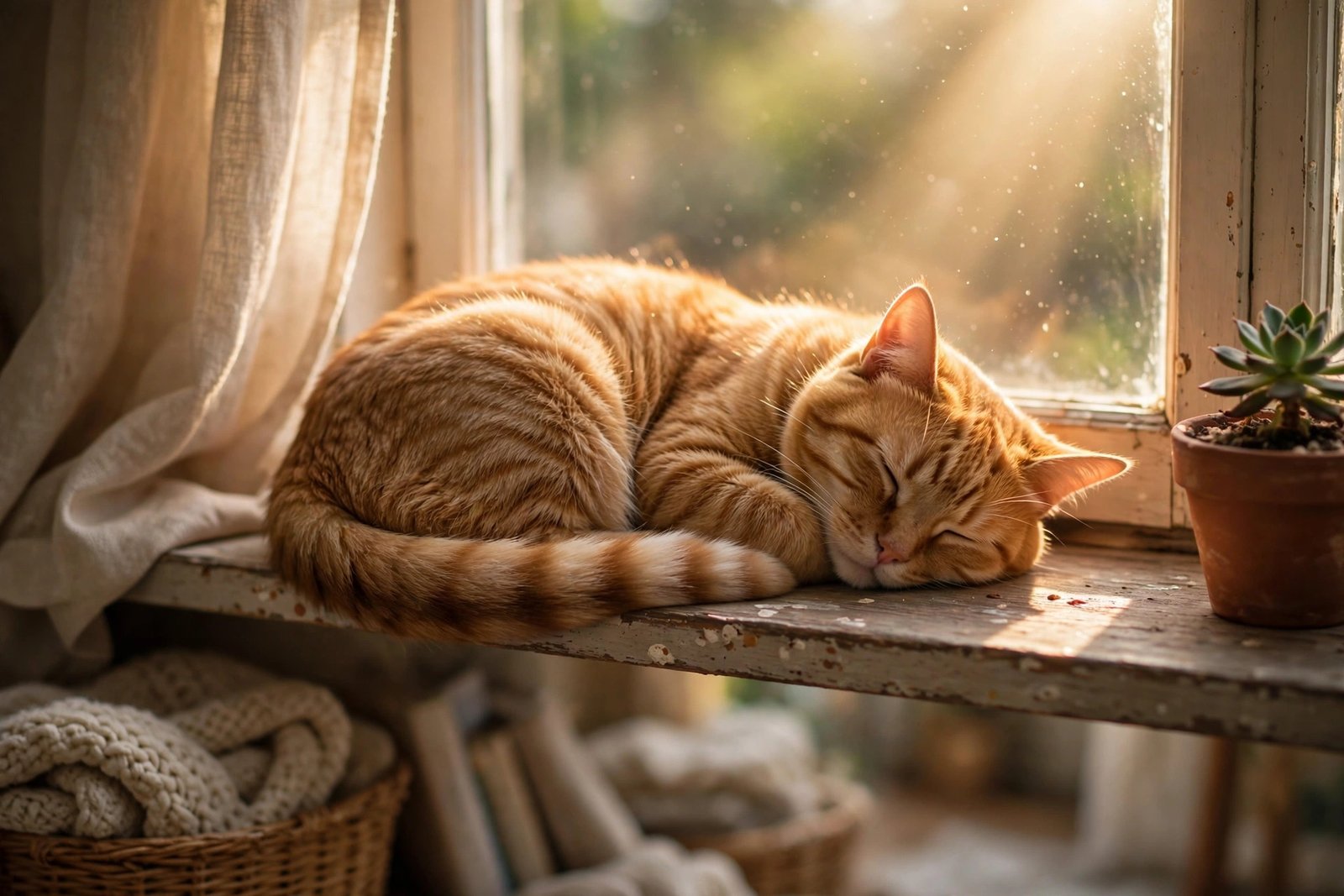
If you’ve ever watched your cat sleep through an entire afternoon — then sleep through the evening too — you’ve probably wondered: is this normal? Can any creature really need that much sleep? The answer is yes, and your cat is not being lazy. Cats are among the sleepiest mammals on the planet, and their marathon napping is deeply rooted in biology.
The average cat sleeps around 12 to 16 hours a day, and some cats push past that without anything being wrong. Kittens and seniors sleep even more. Understanding why cats sleep so much — and learning what’s normal versus what deserves a vet visit — will help you stop worrying about the naps and start appreciating one of the most endearing things about living with a cat.
Quick Tips
- 12–16 hours of daily sleep is normal for most adult cats; kittens and seniors often sleep more.
- Cats are crepuscular — most active at dawn and dusk, sleepy in between.
- Much of cat sleep is light “catnapping”; they can wake instantly if needed.
- Sudden increases or decreases in sleep, paired with other changes, warrant a vet check.
- Keep a sleepy cat enriched with play sessions during their natural active windows.
- Never wake a sleeping cat abruptly — let them wake on their own terms.
The Hunter’s Schedule: Why Evolution Made Cats Sleepy
Cats are predators by design, and their sleep patterns reflect it. In the wild, a cat’s ancestors spent short, intense bursts of energy hunting, followed by long stretches of rest to recover. Hunting takes enormous energy — the stalk, the chase, the pounce — and a predator that wastes energy between hunts goes hungry.
Domestic cats kept the software even though the lifestyle changed. Your indoor cat doesn’t need to hunt for dinner, but their body still runs the ancient program: conserve energy now, so you’re ready for the burst of activity later. That “later” might be the 3 a.m. zoomies rather than a hunt, but the biology doesn’t know the difference.
This is also why cats are crepuscular, meaning they’re naturally most active around dawn and dusk. Those are the prime hunting hours for small predators — when prey animals are active and light conditions favor the hunter. If your cat naps all day and turns into a maniac at 6 a.m. and 9 p.m., they’re not being weird. They’re being a cat.
Light Sleep vs. Deep Sleep: The Catnap Explained
Not all of your cat’s sleep is the same. Roughly three-quarters of a cat’s sleep time is light sleep — the famous “catnap.” During light sleep, a cat’s body rests but their senses stay on alert. You’ll notice the ears twitching at sounds, the nose wrinkling at smells, and the ability to snap fully awake in a fraction of a second if something interesting happens.
This light-sleep mode is a survival feature. A small predator is also potential prey for larger animals, so sleeping with one ear open (literally) was a life-saving adaptation. Even your pampered indoor cat, safe from all predators, keeps the system running.
The remaining quarter or so is deep sleep, including REM sleep — the dream phase. You can sometimes spot it: twitching whiskers, moving paws, little chirps or facial twitches. Cats in deep sleep are harder to wake and may look completely limp, which can be alarming the first time you see it. A deeply sleeping cat that eventually stretches, yawns, and wanders off to the food bowl is perfectly fine.
How Much Sleep Is Normal at Each Life Stage
Sleep needs shift across a cat’s life, and what’s normal for a kitten would be unusual for a young adult.
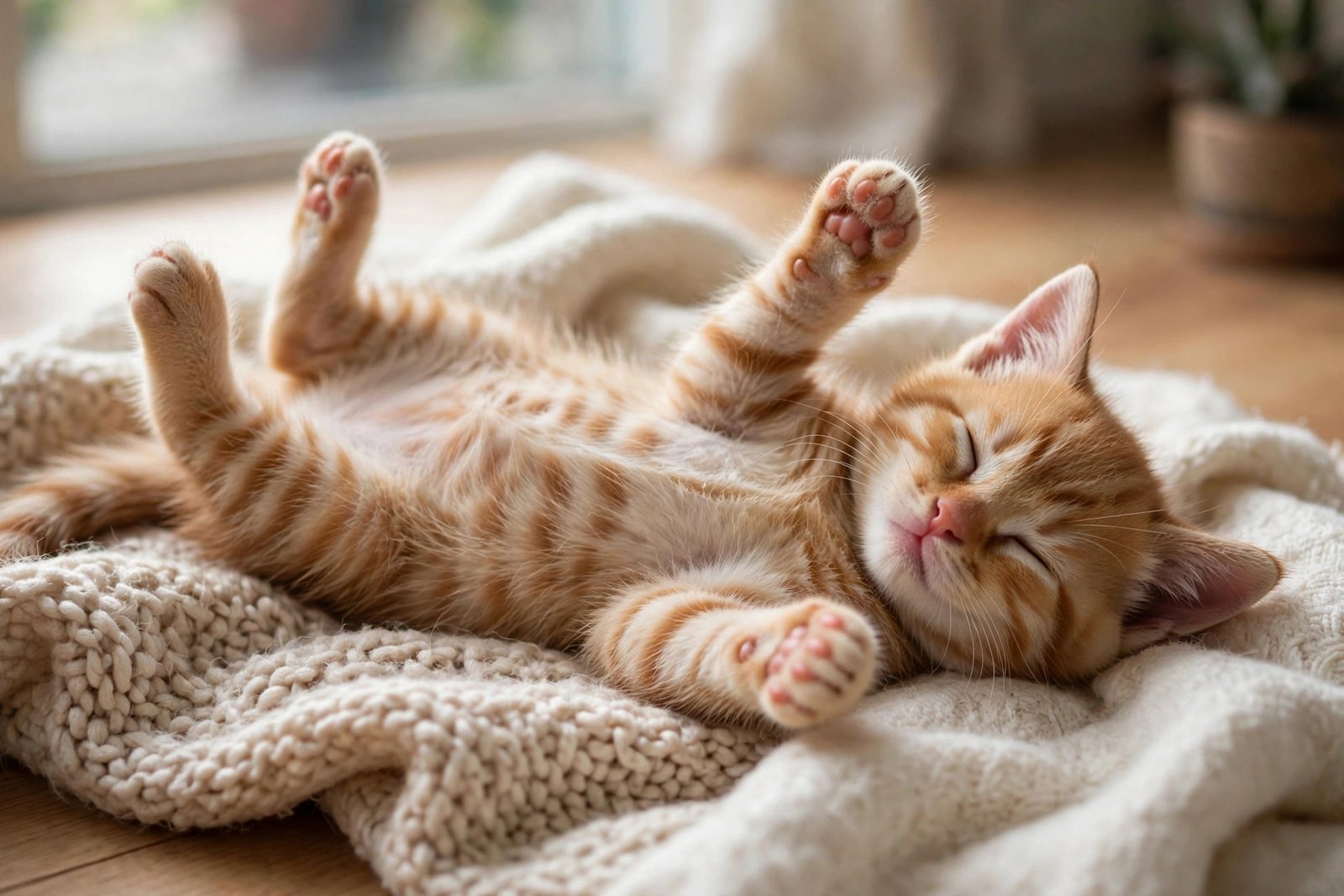
Kittens (under 6 months): Kittens are the champions of sleep, often logging 18 to 20 hours a day. Growing takes a tremendous amount of energy, and growth hormone is primarily released during sleep. A kitten that plays hard for twenty minutes then collapses into a deep sleep is doing exactly what kittens are supposed to do. The bursts of wild energy between naps are also normal — that’s the other half of the kitten equation.
Adult cats (1–10 years): This is the classic 12-to-16-hour range. Healthy adults usually settle into a rhythm of naps punctuated by active periods at dawn and dusk, plus whatever play and interaction you provide. Individual variation is wide — some adults are naturally nappier than others.
Senior cats (11+ years): Sleep often increases again in the senior years, sometimes reaching 18 hours or more. Older cats move less, play less intensely, and simply need more rest. Gradual increases in sleep with age are expected. What’s worth watching for is a sudden change rather than the total hours — a senior cat that’s always slept a lot is different from one that abruptly doubles their nap time.
Weather, Season, and Boredom
Biology isn’t the only factor. Cats, like people, tend to sleep more in cold or dreary weather — curling up in a warm spot beats patrolling a chilly house. Many owners notice their cats get sleepier in winter, which loosely mirrors the energy-conservation instincts of their wild ancestors.
Boredom is the other big one. An indoor cat with little stimulation will sleep simply because there’s nothing better to do. This is worth paying attention to, because a bored cat isn’t just a sleepy cat — boredom in cats is linked to overeating, weight gain, and stress-related behaviors like over-grooming. If your cat’s main hobby is napping and their second hobby is also napping, they may need more enrichment rather than more rest.
The fix isn’t to wake them up — it’s to make waking hours more interesting. Interactive play sessions, puzzle feeders, window perches with a view, and rotating toys can transform a cat’s day. Our guide to the best toys for bored indoor cats has plenty of ideas for luring even dedicated nappers into play. And since a well-played-with cat often purrs contentedly afterward, you might enjoy our piece on why cats purr too.
Making the Most of Waking Hours
Since you can’t (and shouldn’t) change how much your cat sleeps, the smart move is to make their awake time count. The highest-value thing you can do is schedule interactive play during their natural active windows — typically early morning and evening.
A good play session mimics hunting: a wand toy that darts, hides, and “escapes” triggers the stalk-chase-pounce sequence that satisfies deep instincts. Ten to fifteen minutes is plenty for most cats. Ending with a small meal taps into the natural hunt-eat-groom-sleep cycle — and many owners find an evening play session followed by dinner leads to a calmer night.
Environmental enrichment fills the gaps between play sessions. A window perch turns the outdoors into cat television. Cat trees let them climb and survey their territory. You don’t need much — even two or three enrichment options can noticeably reduce boredom-napping.
Let Sleeping Cats Lie (Really)
It’s tempting to wake a sleeping cat for cuddles or playtime. Resist the urge — being startled awake is stressful, and a cat that’s repeatedly woken may become grumpy or avoidant about their sleeping spots.
If you need your cat awake, rouse them gently — soft voice, light touch, no sudden grabbing. And respect deep sleep especially; it’s the restorative phase their body needs.
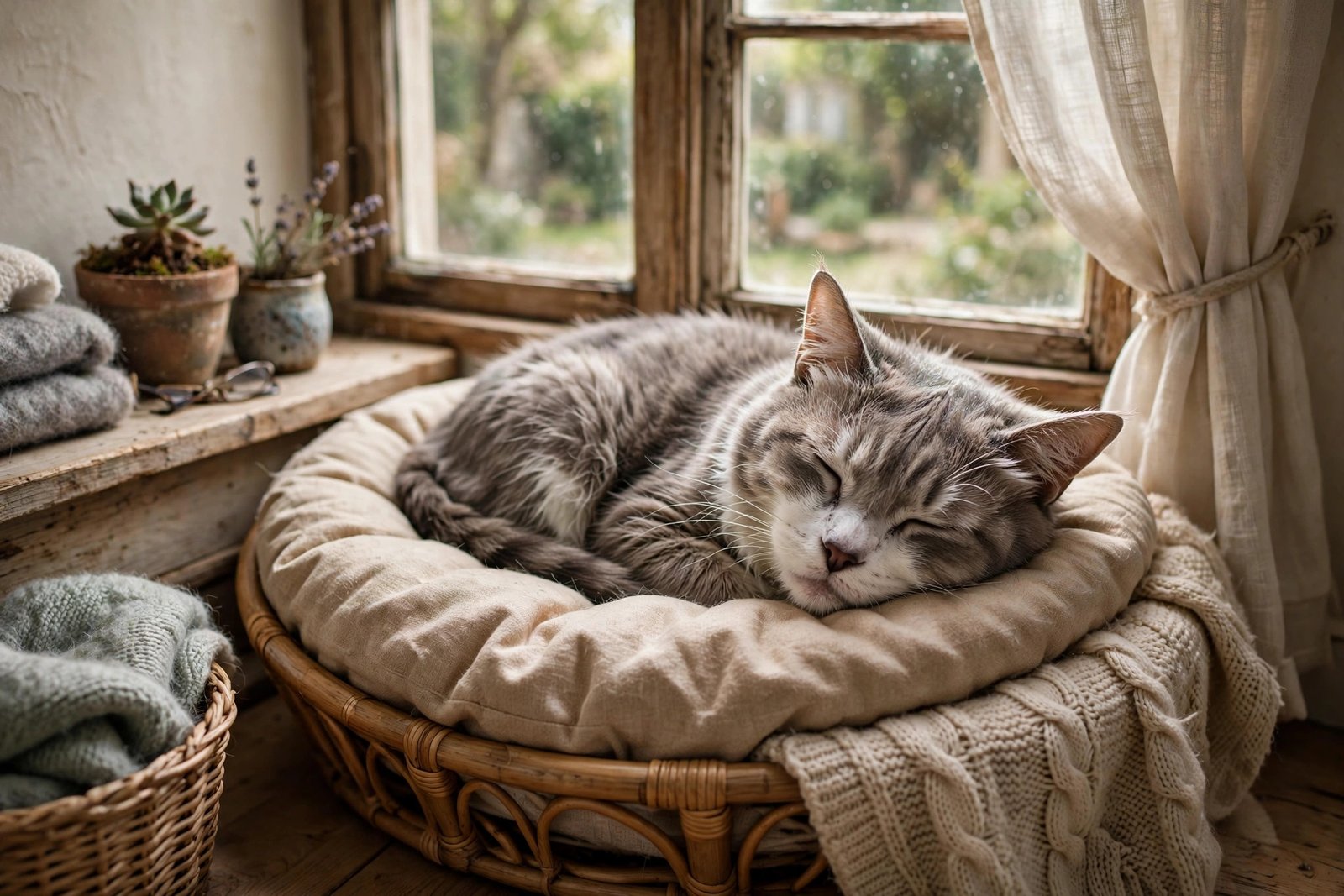
Also respect sleeping location choices. Cats pick spots based on warmth, safety, and vantage point. Providing a few good options — a sunny window spot, a cozy enclosed bed, a high perch — lets them choose. Don’t be offended if they ignore the expensive bed for the cardboard box.
When Sleep Changes Deserve a Vet Visit
Here’s the important part: while lots of sleep is normal, changes in sleep patterns can be meaningful. The key word is changes. You’re looking for deviations from your individual cat’s normal, not comparing to a universal number.
Sleeping significantly more than usual, especially if it comes on suddenly, can be worth checking. Increased sleepiness paired with other changes — eating less (or much more), drinking more water, hiding, reduced grooming, weight changes, or litter box changes — is a combination your vet would want to hear about. Cats are masters at hiding illness, and lethargy is one of the few signs they can’t fully mask.
Sleeping much less than usual can also matter. A cat that’s suddenly restless, unable to settle, pacing, or vocalizing at night when they used to sleep soundly may be uncomfortable or stressed. Restlessness deserves the same attention as excessive sleepiness.
Difficulty waking or unusual sleep positions occasionally raise eyebrows. A cat that’s limp and unresponsive beyond normal deep sleep, or one that suddenly starts sleeping in odd hunched positions, may be in pain. Trust your instincts here — you know your cat’s normal better than anyone, and if something feels off, a vet visit is never the wrong call.
The general rule: gradual, age-appropriate changes in sleep are normal. Sudden changes, or changes paired with other symptoms, get a vet visit. When in doubt, call your vet’s office and describe what you’re seeing — they can help you decide whether it needs an appointment.
The 3 A.M. Zoomies: A Special Case
No article on cat sleep would be complete without addressing the phenomenon every cat owner knows: the midnight (or 3 a.m.) burst of insane energy. Your cat sleeps all day, then sprints around the house like a maniac in the middle of the night. What’s going on?
It’s the crepuscular schedule plus a day of conserved energy. Your cat has been banking energy all day, and the ancient hunting program says nighttime is go-time. Indoor cats with under-stimulating days have even more pent-up energy, which is why the zoomies are often most dramatic in cats that napped hardest.
You can’t eliminate the zoomies entirely — and you shouldn’t want to; they’re a sign of a healthy, energetic cat. But an evening play session followed by a meal makes a tired, fed cat much more likely to sleep through the night. Keeping a consistent routine also helps cats settle into a predictable rhythm.
Frequently Asked Questions
How many hours a day do cats normally sleep?
Most adult cats sleep 12 to 16 hours a day. Kittens and senior cats often sleep more — up to 18 to 20 hours. Individual variation is wide, so your cat’s personal normal matters more than any single number.
Is it normal for my cat to sleep all day and be active at night?
Yes. Cats are crepuscular, meaning they’re naturally most active at dawn and dusk and sleepy during the middle of the day. An evening play session followed by dinner can help shift more of their active time to hours that suit your household.
Why does my cat twitch in their sleep?
Twitching whiskers, paws, and ears usually mean your cat is in REM (dream) sleep. It’s normal and generally considered a sign of healthy, deep sleep. Let them dream in peace.
Do indoor cats sleep more than outdoor cats?
Often, yes. Outdoor cats spend energy patrolling and hunting, while indoor cats with limited stimulation may default to napping. That’s why enrichment — play, puzzle feeders, window perches — matters so much for indoor cats.