
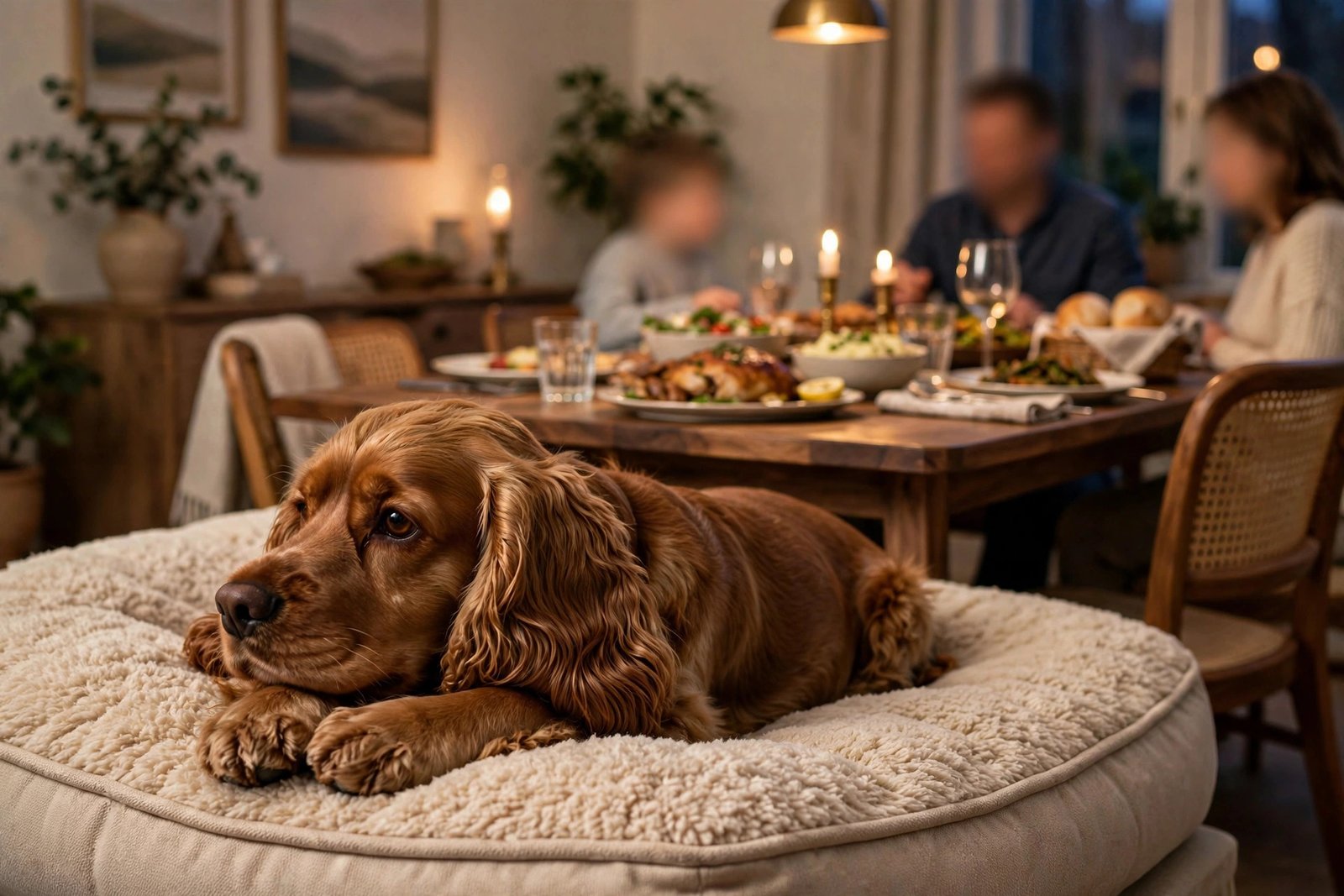

How to Stop Your Dog Begging at the Table
Those big pleading eyes, the cold nose nudging your elbow, the slow drool pooling by your chair — few things test a dog owner’s willpower like a determined beggar at dinner. If you’re wondering how to stop dog begging for good, the answer is simpler than you think: begging is a habit we accidentally teach, which means we can unteach it with a calm, consistent plan.
Begging isn’t your dog being naughty or dominant. It’s your dog being a very good economist: sitting by the table and staring has paid off before, so they keep investing. Once the food stops flowing, the behavior fades. This guide shows you exactly how to make that happen — without yelling, guilt, or banishing your dog from the room every night.
Quick Tips
- Stop all food sharing from the table — every family member and guest must follow the same rule.
- Give your dog a job during meals: a stuffed Kong or chew on a designated bed.
- Feed your dog their own meal before you sit down to eat.
- Reward calm, settled behavior near the table with praise and occasional treats after dinner.
- Never scold begging — it gives the behavior attention, which can accidentally reinforce it.
- Be patient: begging often gets worse for a few days before it disappears (that’s the “extinction burst”).
Why Your Dog Begs in the First Place
Here’s the uncomfortable truth: your dog begs because it has worked. Maybe once, months ago, someone slipped them a piece of chicken under the table. Maybe a guest felt sorry for them. Dogs don’t need much evidence — one payout is enough to keep them trying for weeks.
It helps to see begging from your dog’s perspective. You’re sitting there eating something that smells incredible, making happy sounds, and occasionally food falls near you. From their point of view, hanging around the table is the single best investment of their evening. They’re not being rude; they’re being logical. And that’s actually good news, because a logical behavior can be changed by changing the logic: no more payouts, plus a better alternative.
It’s also worth noting that intense begging can occasionally be tied to hunger or dietary issues — if your dog’s appetite suddenly skyrockets or they lose weight while eating normally, that’s a conversation for your vet. But for the vast majority of dogs, begging is purely a learned habit.
The Number-One Rule: Zero Table Food
This is the foundation everything else stands on, and it’s non-negotiable: nobody — not you, not your partner, not your kids, not your mother-in-law — gives the dog food from the table, ever. One “just this once” from a soft-hearted guest can undo a week of progress, because intermittent rewards create the strongest habits of all (think slot machines).
This doesn’t mean your dog can never enjoy human foods. It means those foods are delivered in their bowl, on their bed, after dinner — never from a hand at the table, never in response to staring. The location and timing matter enormously. Food that appears in the dog bowl is just dinner; food that appears from your plate is a reward for begging.
Have the conversation with your whole household before you start, and put guests on the same page too. A cheerful “we’re training him, so please don’t feed him from the table — you can give him this treat on his bed after dinner” handles most visitors without any awkwardness.
How to Stop Dog Begging With a Better Alternative
Telling a dog what NOT to do is only half a plan. The real secret to how to stop dog begging is giving your dog something better to do during meals. A dog with a job is a dog who isn’t staring at your plate.
Set up a “dinner station”
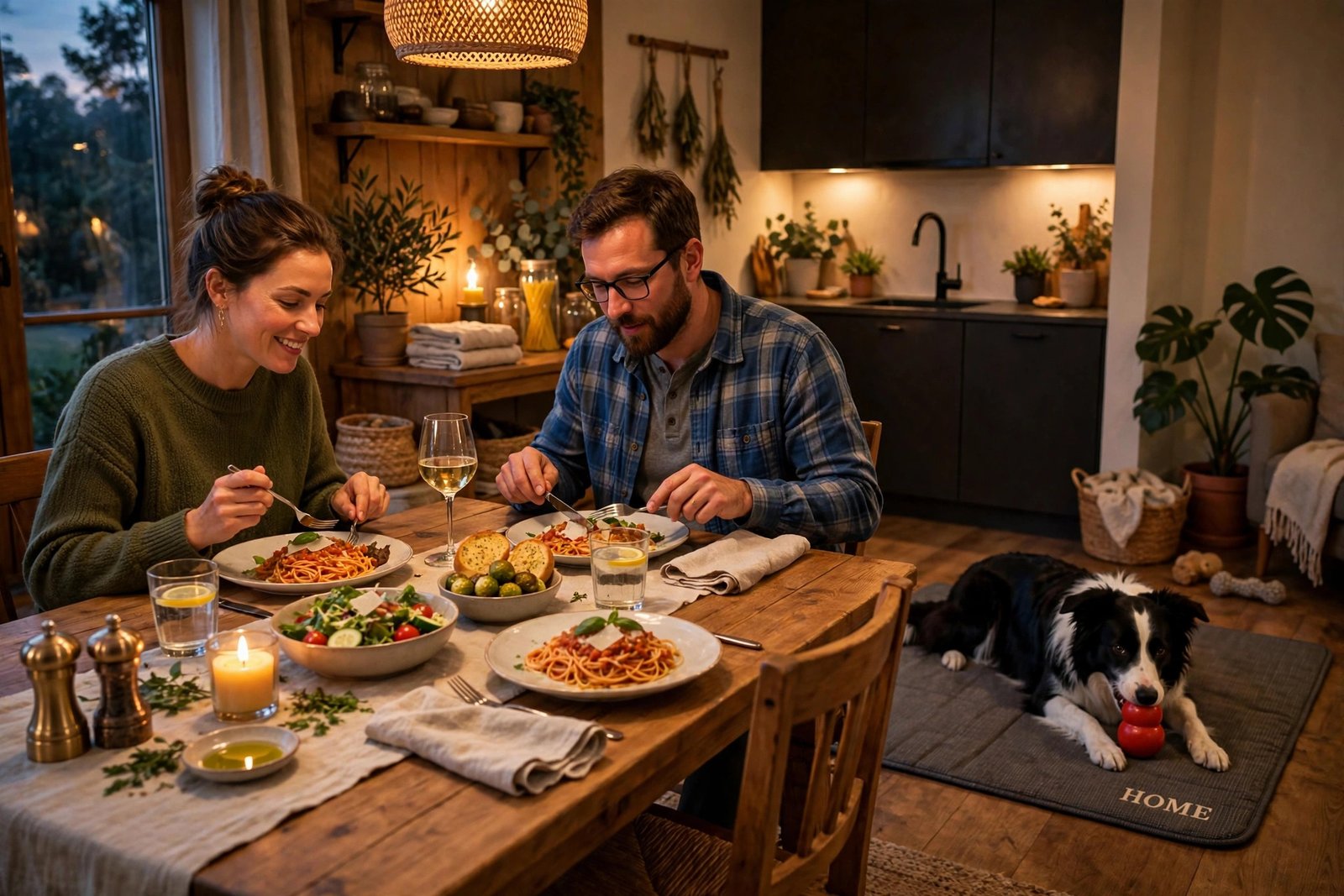
Choose a spot near (but not right under) the table — a dog bed, a mat, or a crate with the door open. This becomes your dog’s official mealtime place. Start training it outside of dinner time: toss treats onto the mat, reward your dog for going there, and build up the duration. Once the mat itself is a happy place, mealtimes become easy.
Deliver the good stuff before you eat
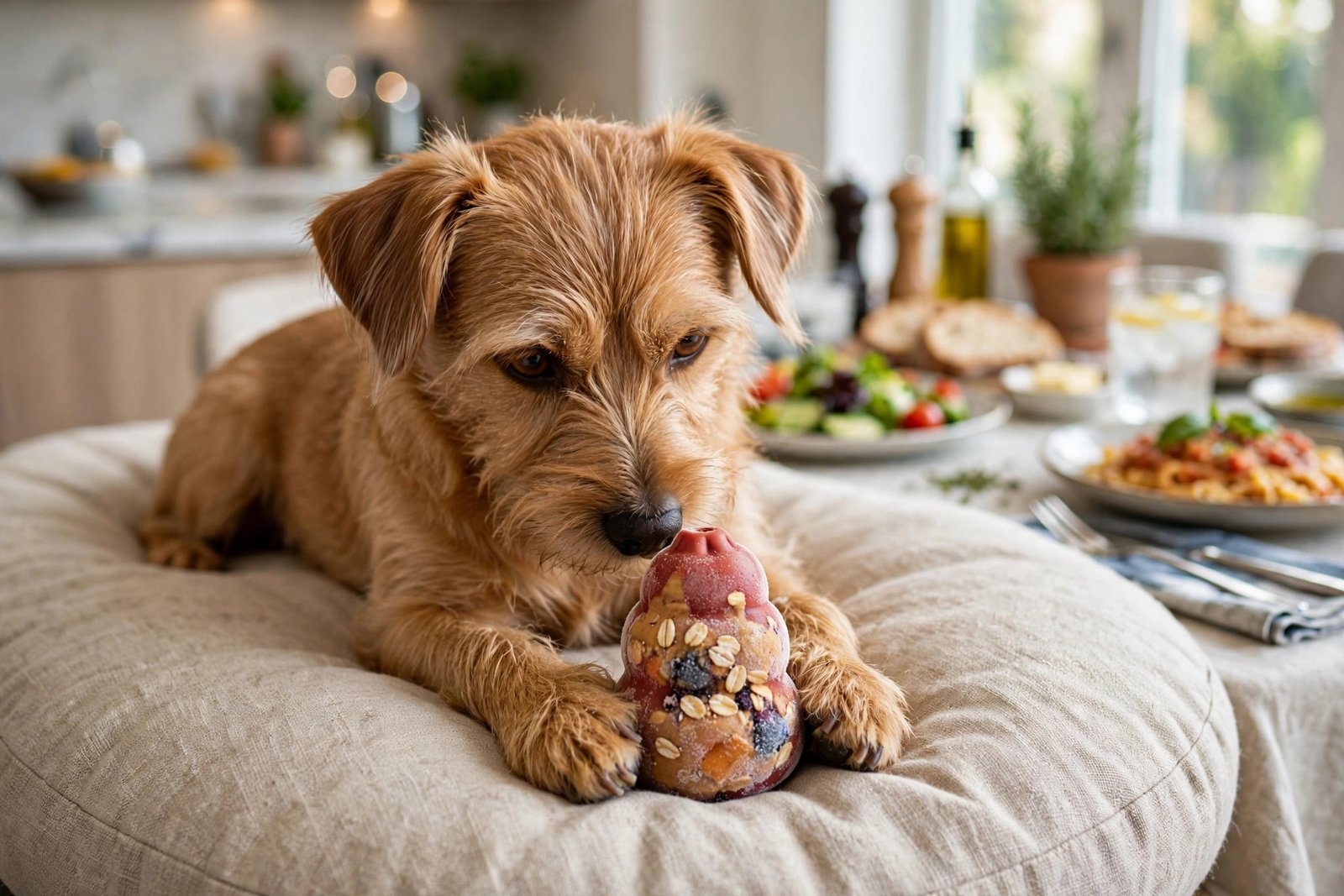
Right as you sit down, hand your dog a stuffed, frozen Kong or a long-lasting chew on their station. A frozen Kong stuffed with peanut butter (xylitol-free) and kibble can buy you 20–30 minutes of peaceful chewing. Your dog learns a beautiful equation: human dinner time = amazing chew time for me.
Reward the settle
After dinner, walk over and quietly praise or treat your dog for staying on their station. You’re marking the behavior you want — calm, settled, off the table zone. Over time, many dogs start going to their station on their own when they hear plates clinking, because they know the good stuff is coming.
What to Do When Begging Happens Anyway
While you’re retraining, your dog will still try the old routine — especially in the first week. What you do in those moments matters.
First: ignore it completely. No eye contact, no “no,” no pushing them away with your foot. All of those are attention, and attention is a reward. Turn your body slightly away and keep eating. It’s boring, and boring is exactly the point.
Second: if your dog is too persistent to ignore — pawing, whining, climbing — calmly lead them to their station or another room with a chew, without scolding. You’re not punishing; you’re managing. Then go back to your meal as if nothing happened.
Third: expect the extinction burst. When a behavior that used to work suddenly stops working, most dogs try harder before they give up — louder whining, more intense staring, new creative tactics. This is actually a sign your plan is working. If you cave during the burst, you teach your dog that persistence pays even better. Hold the line for a few days and the begging typically collapses.
Teach “Leave It” as a Backup Tool
A solid “leave it” cue is the perfect companion skill for mealtime manners. It gives you a polite way to redirect your dog if they do snatch at dropped food or investigate a guest’s plate, without any drama. Many owners find that once “leave it” is reliable, they barely need it at the table — the station routine handles most situations on its own.
Similarly, if your dog’s table manners are part of a bigger pattern of pushy, excited behavior — jumping up on guests, mouthing hands, counter-surfing — our guide on why dogs jump on people covers the same underlying principle: calmly rewarding the behavior you want instead of feeding the one you don’t.
Handling Special Situations
Real life isn’t a training lab, so let’s talk about the tricky scenarios.
Dinner parties and holidays
Guests are the number-one cause of begging relapses. Before people arrive, brief them kindly, set up your dog’s station with an extra-special long-lasting chew, and consider feeding your dog a slightly bigger meal beforehand so they’re genuinely full and sleepy. For big chaotic gatherings, there’s no shame in giving your dog a cozy spot in another room with a chew — management is a legitimate training tool.
Kids at the table
Little kids drop food constantly, and dogs know it. Teach children to eat over their plates and not hand food down (make it a game: “the dog gets his treats on his bed, not from your hands”). Until the kids are reliable, position your dog’s station a little farther from the table during family meals.
Dogs who beg from strangers
Some dogs generalize begging to picnics, park benches, and café patios. The same rules apply: no food from anyone outside the bowl, and bring the station (a portable mat works great) plus a chew whenever you eat out with your dog. Most dogs learn the context quickly — table rules apply at every table.
Frequently Asked Questions
Is it okay to feed my dog from the table if it’s healthy food?
The food itself isn’t the issue — the timing and location are. A piece of plain chicken given at the table teaches your dog that staring at the table produces chicken. The same piece of chicken dropped in their bowl after dinner teaches nothing about begging. If you want to share healthy foods, do it away from the table and outside of mealtimes.
How long does it take to stop a dog from begging?
With total household consistency, most dogs show clear improvement within one to two weeks, and the habit is usually gone within a month. The biggest variable is consistency — every slip (a guest sneaking a fry, a kid sharing pizza crust) resets the clock. Dogs who’ve been begging for years may take a little longer, but the process is the same.
Should I punish my dog for begging?
No. Scolding, spray bottles, or other punishments tend to make dogs anxious around food without teaching them what to do instead — and anxious dogs sometimes guard food, which is a much bigger problem than begging. Ignoring the begging and rewarding the alternative is kinder, and it actually works faster because your dog understands the game.
My dog only begs from one family member. Why?
Because that family member has paid out before — probably without realizing it. Dogs are brilliant at reading individuals: they beg from the soft touch and ignore the strict one. The fix is the same (zero table food from everyone), but it starts with an honest, blame-free conversation with the guilty party.
Can I ever feed my dog table scraps again?
You can share appropriate foods with your dog — just do it in their bowl, after your meal, when they’re calm and not begging. Many owners keep a small “dog tax” portion aside and deliver it to the bowl as a post-dinner bonus. Your dog still gets the treat; they just don’t learn to harass you for it.