
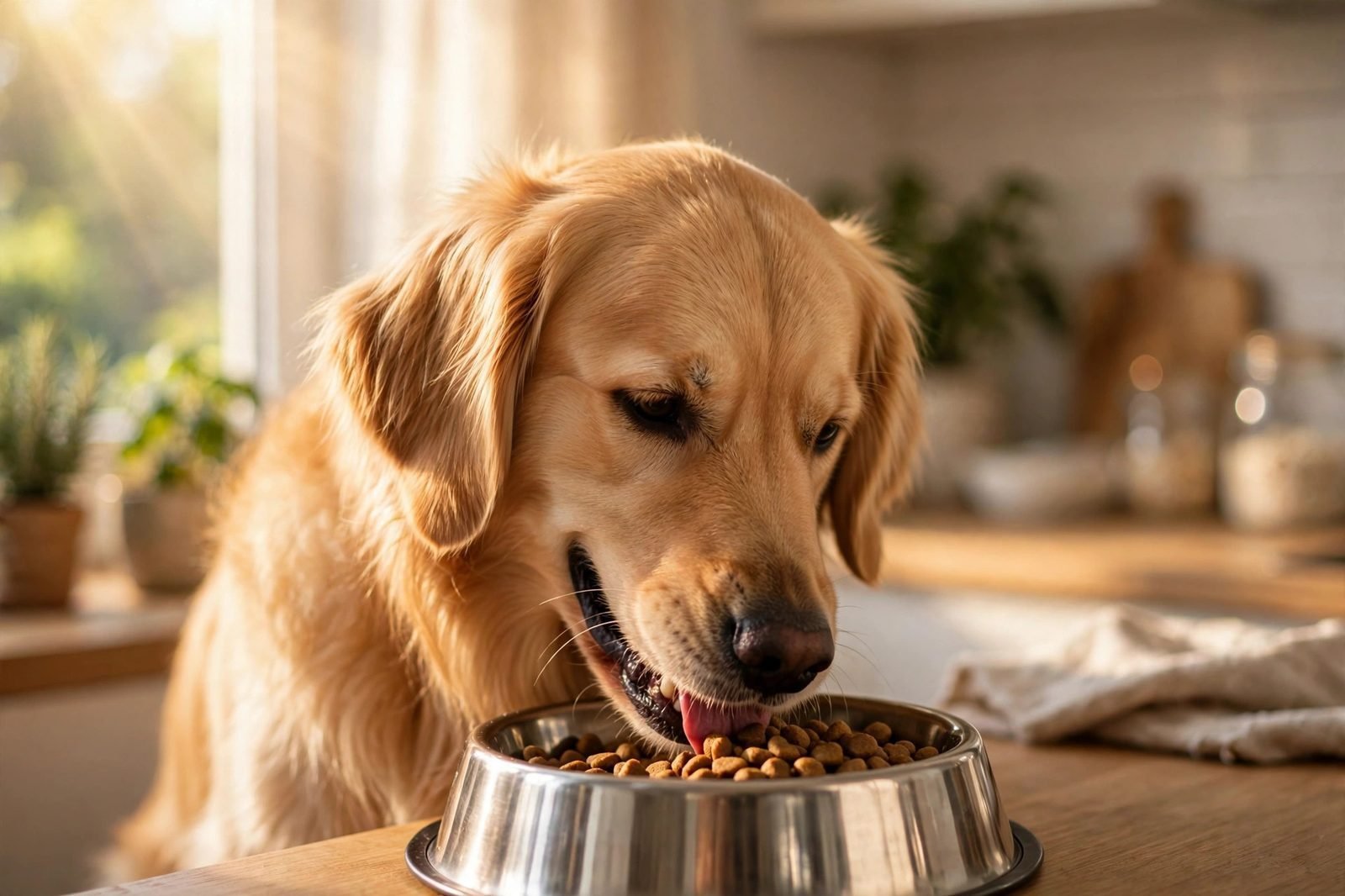

When I brought my first dog home — a lanky rescue lab named Milo — I thought feeding him would be the easy part. Food in the bowl, dog eats, done. Within the first week, Milo was begging at 6 AM like an alarm clock I never set, throwing up after scarfing one giant meal, and acting starving again by midnight. Turns out, when and how often you feed a dog matters just as much as what’s in the bowl.
After a couple of years, two dogs, and a lot of trial and error, I’ve landed on a feeding rhythm that actually works in a normal human life. Here’s everything I learned: how many meals adult dogs need per day, when to feed, and the little tricks that keep digestion happy and 6 AM wake-up barking to a minimum.
Published: May 3, 2026 | Last updated: May 3, 2026
Quick Tips
- Most adult dogs do best on two meals a day, roughly 10–12 hours apart.
- Feed at the same times every day — dogs thrive on routine.
- Pick up the bowl after 20 minutes so meals stay on schedule, not all-day grazing.
- Big, deep-chested breeds should eat smaller portions and rest before and after meals.
- Feed your dog after your own meals so they learn to wait their turn.
- Always keep fresh water available, no matter the schedule.
- Adjust portions slowly — never overhaul the schedule in one day.
How Many Meals Does an Adult Dog Actually Need?
Here’s the short answer first: two meals a day. Breakfast and dinner, roughly twelve hours apart. That’s the schedule most vets recommend for healthy adult dogs, and honestly, it’s the schedule that survived contact with my real life.
When I first got Milo, I fed him once a day because, well, that was easier. One bowl, morning, done. What I got instead was a dog who inhaled his food so fast he vomited half of it back up, then spent the entire evening whining by the kitchen. One big meal a day leaves too much stomach-empty time, especially for active dogs. I split it into two meals and the vomiting stopped within a week. Correlation isn’t always causation, but it was pretty convincing from where I stood.
Why two meals beats one or three
Two meals keeps energy steady. One meal tends to create a boom-bust cycle — big calorie dump, then hours of hunger. Three meals works fine if you’re home all day, but it gets annoying on days you’re out. Two meals is the sweet spot: simple and predictable.
What Time Should You Feed? Pick Times You Can Keep
This is the part where I see new owners overthink it. They find a schedule online that says 7:00 AM and 6:00 PM and then stress because they leave for work at 6:30. Here’s the truth: the exact clock times matter way less than consistency. Dogs don’t know what 7 AM means. They know the rhythm of your day.
My schedule, which has worked for years: breakfast around 7:30 when I get up, dinner around 6:30 when I start making my own food. Eleven hours apart. On weekends I sleep in and breakfast slides to 9 — and the dogs adjusted within a few weeks. A predictable evening meal also sets up a calm bedtime; I dug into the sleep side of the daily rhythm in my guide on how much sleep dogs need.
If you want a concrete starting template, try this: morning meal after the first potty break, evening meal before or with your own dinner, about 10–12 hours apart. Avoid feeding right before bed — a full stomach at 11 PM means a bathroom trip at 2 AM. I also keep at least 30–45 minutes between food and hard exercise, since a heavy meal sloshing around during a run can cause stomach trouble.
The Mistakes I Made So You Don’t Have To
Milo was my teacher, and he charged tuition in destroyed pillows. Here are the scheduling mistakes I actually made, so you can skip the tuition part.
Free-feeding (leaving the bowl down all day)
For about two months I left Milo’s bowl full all day because it seemed low-maintenance. The problem: I had zero idea how much he was eating, he grazed out of boredom instead of hunger, and he started gaining weight. Free-feeding also makes it nearly impossible to notice when a dog’s appetite drops — and appetite changes are one of the first signs a dog might be unwell. That’s when I switched to scheduled meals with a 20-minute window, and honestly it changed everything. If the bowl is untouched after 20 minutes, it gets picked up. Dogs figure out the drill within days.
Changing the schedule overnight
When I went from one meal to two, I did it cold turkey and Milo spent two days staring at me in genuine betrayal — and his stomach wasn’t thrilled either. Shift gradually instead: move a meal by an hour every few days until you land where you want.
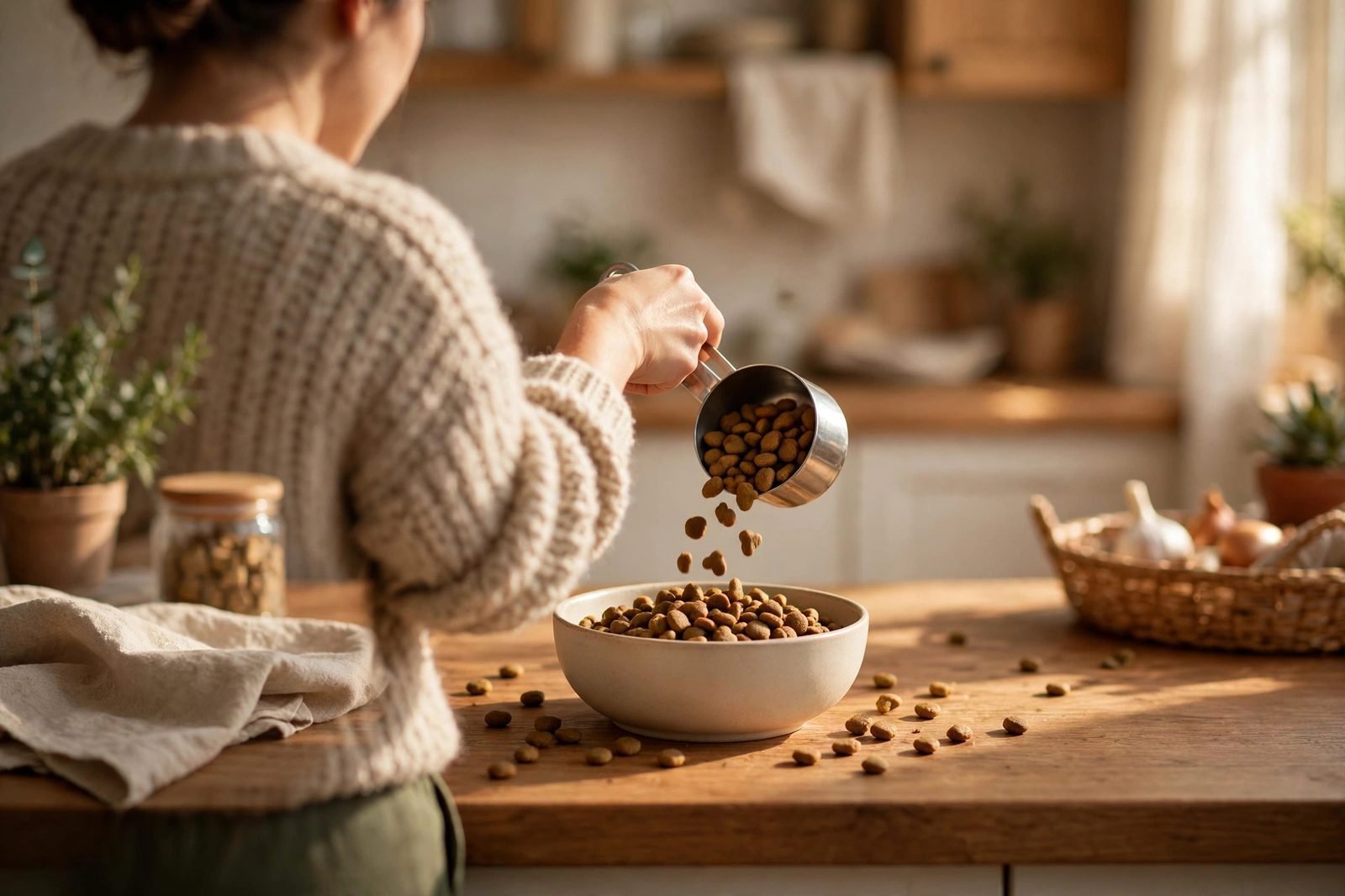
Portions: The Schedule Only Works If the Amount Is Right
A perfect schedule with wrong portions is just a well-timed way to overfeed your dog. The bag’s feeding chart is a starting point, not gospel — those charts tend to run generous because, well, the company selling the food is the one writing the chart.
What I do: start at the middle of the bag’s recommended range for my dog’s weight, then adjust based on body condition over a few weeks. Can I feel ribs with a light touch but not see them? Is there a visible waist from above? That’s the shape I’m aiming for. If weight creeps up, I trim portions by about 10% and give it two weeks. If you’re raising a puppy instead of feeding an adult, the approach is different — I covered the puppy side in detail in my guide on how much to feed a puppy, since growing pups have totally different needs from adult dogs.
Measuring beats eyeballing
Buy a measuring cup and keep it in the food bin. I used to scoop “about this much” with a mug and discovered I was overserving by nearly a third. A cheap kitchen scale is even better, but a measuring cup gets you 90% of the way there. This one tiny habit is probably the single biggest lever in the whole feeding routine.
Special Situations: Seniors, Gulping Dogs, and Multi-Dog Homes
Real life rarely gives you one uncomplicated dog. Here’s how the schedule bends for the common special cases.
Senior dogs
Older dogs often digest better with three smaller, lighter meals a day instead of two big ones. My neighbor’s 13-year-old shepherd switched at age 11 and her tummy settled noticeably. Sticking to the same clock times every day helps too. If your senior’s appetite changes suddenly, that’s a vet conversation, not a scheduling tweak.
Dogs who eat like a vacuum cleaner
Milo’s second major talent, after destroying pillows, was inhaling food in under a minute. Slow-feeder bowls — the ones with maze patterns — fixed this in one meal. A large cookie sheet spread with kibble works in a pinch too. The schedule angle: gulpers do better with slightly smaller, more frequent meals because there’s less food to inhale at once. For big, deep-chested breeds like Great Danes, this matters even more — those breeds face a higher risk of a dangerous stomach condition called bloat, and smaller meals plus rest before and after eating are the standard precautions vets suggest. Again, not my territory to diagnose or treat — just flagging it as something worth asking your vet about.
Two dogs, one schedule
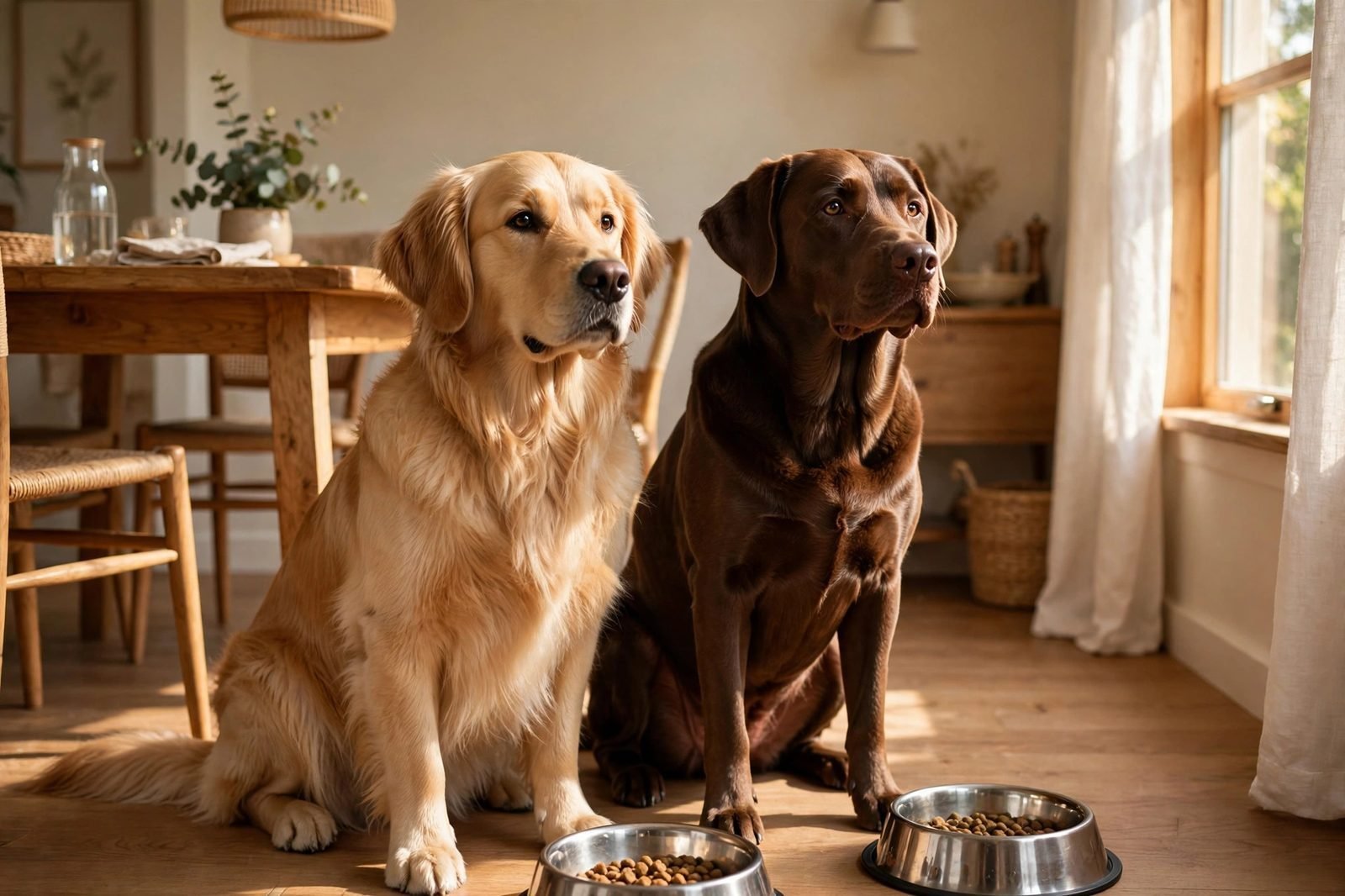
My second dog, Pip, is half Milo’s size and eats half the food. Same schedule — two meals at the same times — but separate corners of the kitchen, because Milo would happily “help” Pip with hers. Bowls picked up after 20 minutes, done. Feeding multiple dogs on the same schedule actually makes life easier, not harder.
Snacks and Treats: The Hidden Third Meal
Nobody talks about treats in feeding schedule articles, and that’s weird because treats are where most schedules quietly fall apart. I train my dogs with treats daily, I stuff a frozen Kong for them when I leave the house, and my mother-in-law considers it her sacred duty to slip them cheese. All of that is calories, and all of it counts against the day’s meals.
The rule of thumb most vets give: treats should stay under about 10% of daily calories. I don’t weigh cheese cubes, but I use pea-sized pieces for training instead of whole biscuits. And on heavy treat days, I shave a little off the evening meal. It’s not precision nutrition; it’s just staying roughly honest about the total.
Transitioning to a New Schedule (Without the Drama)
Switching from free-feeding to scheduled meals, from three meals to two, or just shifting the clock times — the process is the same: go slow. Move feeding times by about an hour every two or three days. Add the second meal as a small “bonus” portion that grows while the first shrinks. Give it a full week or two before judging whether it’s working. And remember: the perfect schedule is the one you can actually keep for years.
Frequently Asked Questions
Is it better to feed a dog once or twice a day?
For most adult dogs, twice a day is better. One meal can work for calm dogs that eat slowly, but many dogs get overly hungry between meals, gulp their food, and end up with an upset stomach. Two meals spaced 10–12 hours apart keeps digestion calmer. When in doubt, two meals is the safe default.
What time should I feed my dog in the morning and evening?
Consistency matters more than the clock. A common pattern: breakfast within an hour of waking, dinner in the early evening, 10–12 hours later. Avoid feeding right before bedtime or right before vigorous exercise. Pick times that fit your workday and stick to them, weekends included, give or take an hour.
Should I leave food out all day for my dog?
I don’t recommend it. Free-feeding makes it hard to track intake, encourages boredom snacking and weight gain, and hides appetite changes that can be early signs of illness. Scheduled meals with a 20-minute pickup window keep portions controlled and make changes obvious.
How do I know if I’m feeding the right amount?
Watch the body, not just the bag chart. You should be able to feel the ribs with a light touch and see a waistline from above and the side. Ribs hard to find? Trim portions about 10% and recheck in two weeks. Visible ribs with no fat cover? Increase a little. When in doubt, ask your vet at the next checkup — they judge body condition in seconds.
Can I feed my dog at different times on weekends?
A shift of an hour or two is fine — dogs adapt to a slightly looser weekend rhythm. What stresses them out is chaos: random times, skipped meals, surprise extra meals. Keep the basic structure (two meals, morning and evening) and nobody will be confused.
My dog skips breakfast sometimes. Is that a problem?
An occasional skipped meal in an otherwise healthy, energetic adult dog is usually nothing to worry about. If it becomes a pattern over several days, or comes with lethargy or vomiting, get the dog checked by a vet. Dogs that skip meals often become more regular once free-feeding stops and the 20-minute pickup rule starts, because the schedule builds genuine hunger.
[…] Peanut butter is a treat, not a food group. The general guideline vets give is that treats — all treats combined — should stay under about 10% of your dog’s daily calories. In practice: a pea-sized dab for training, a thin smear inside a Kong, a lick-mat spread as thick as butter on toast. For most medium-to-large dogs, a tablespoon total per day is plenty; small dogs need less. On heavy peanut butter days, I trim the evening meal slightly — the same honest accounting I talked about when covering the best feeding schedule for adult dogs. […]