
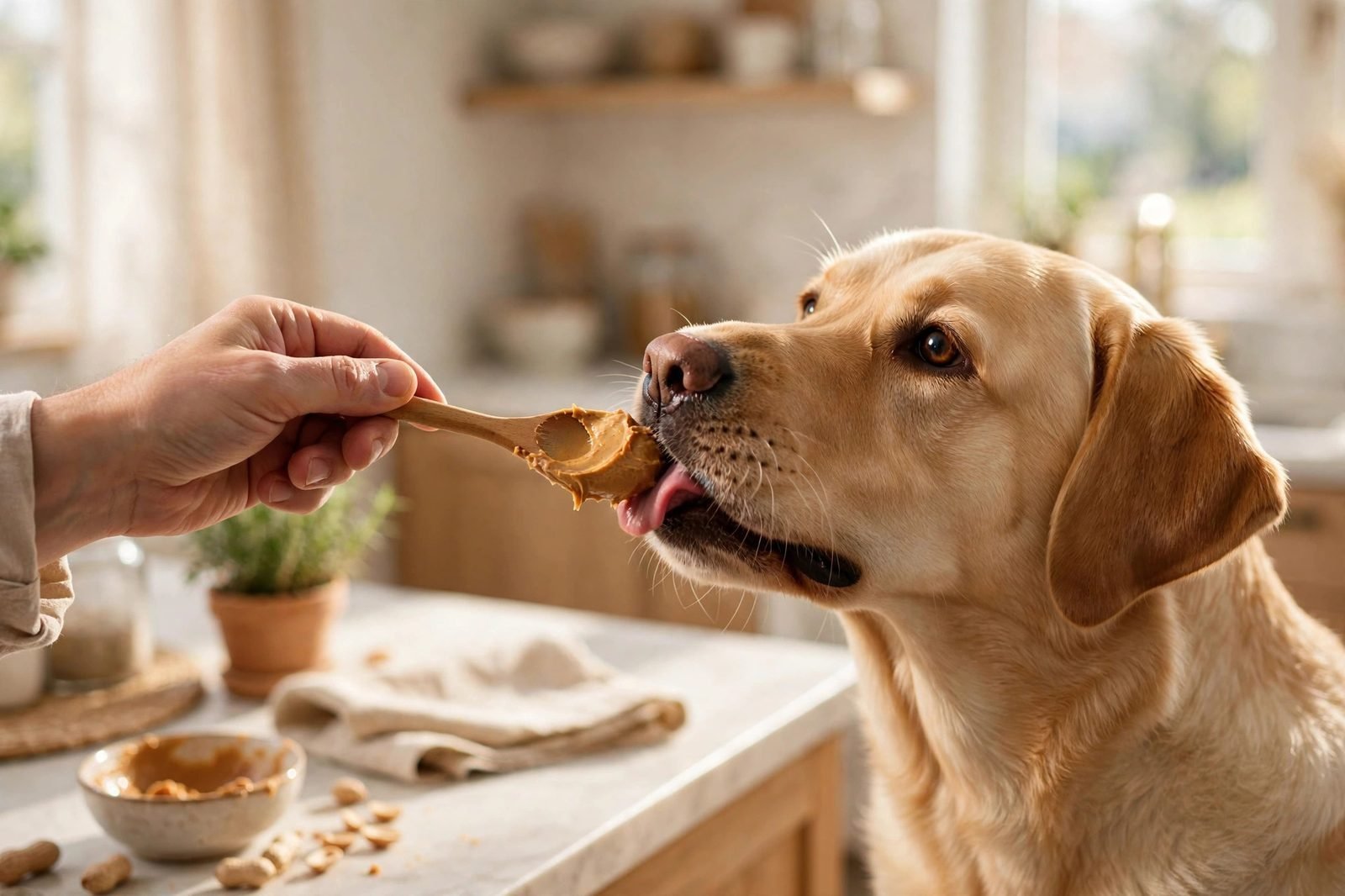

Peanut butter is basically a dog’s love language. The Kong ads, the viral videos of dogs licking it off spoons, the way my own lab Milo materializes from another room at the faint click of the jar lid — it feels like nature designed peanut butter for dogs. And mostly, it did. But there’s one ingredient hiding in some peanut butter brands that can genuinely hurt your dog, and most owners have never heard of it. That’s why this question deserves more than a yes-or-no answer.
Here’s my honest take after years of stuffing Kongs, smearing lick mats, and making peanut butter training treats: yes, dogs can eat peanut butter, and it’s one of the best treats out there — as long as you check the label. This guide covers what’s safe, what to avoid, how much to actually give (because this is where most of us go wrong), and the simple ways I use peanut butter that my dogs lose their minds over.
Published: May 4, 2026 | Last updated: May 4, 2026
Quick Tips
- Yes, most peanut butter is safe for dogs — check the label first.
- NEVER buy peanut butter containing xylitol (also called birch sugar) — it’s toxic to dogs.
- Choose plain, unsweetened peanut butter with just peanuts and maybe salt.
- Peanut butter is calorie-dense: use pea-sized amounts for training.
- A thin smear in a Kong or on a lick mat goes further than a big spoonful.
- Crunchy vs. smooth doesn’t matter — pick whichever your dog prefers.
- Introduce any new treat slowly to watch for tummy upset.
The Short Answer: Yes, With One Big Exception
Plain peanut butter — just peanuts, maybe a pinch of salt — is completely fine for dogs. It’s a good source of protein, healthy fats, and vitamins like B and E. Vets hand it out in clinics. Trainers use it constantly. I go through a jar every couple of weeks between two dogs and a very enthusiastic lick mat collection.
The exception is xylitol, a sugar substitute (also labeled as “birch sugar”) found in some “sugar-free,” “light,” or “natural” peanut butter brands. Xylitol is extremely toxic to dogs — even small amounts can cause a dangerous drop in blood sugar, and larger amounts can damage the liver. This isn’t a “maybe avoid it” situation. Check the ingredient list on every jar before it goes anywhere near your dog. If a brand contains xylitol and your dog eats it, call your vet or an emergency animal clinic immediately — don’t wait for symptoms. I’m not a vet and this isn’t medical advice; it’s just the one peanut butter rule I’d tattoo on my hand if I could.
How to read the label (30-second version)
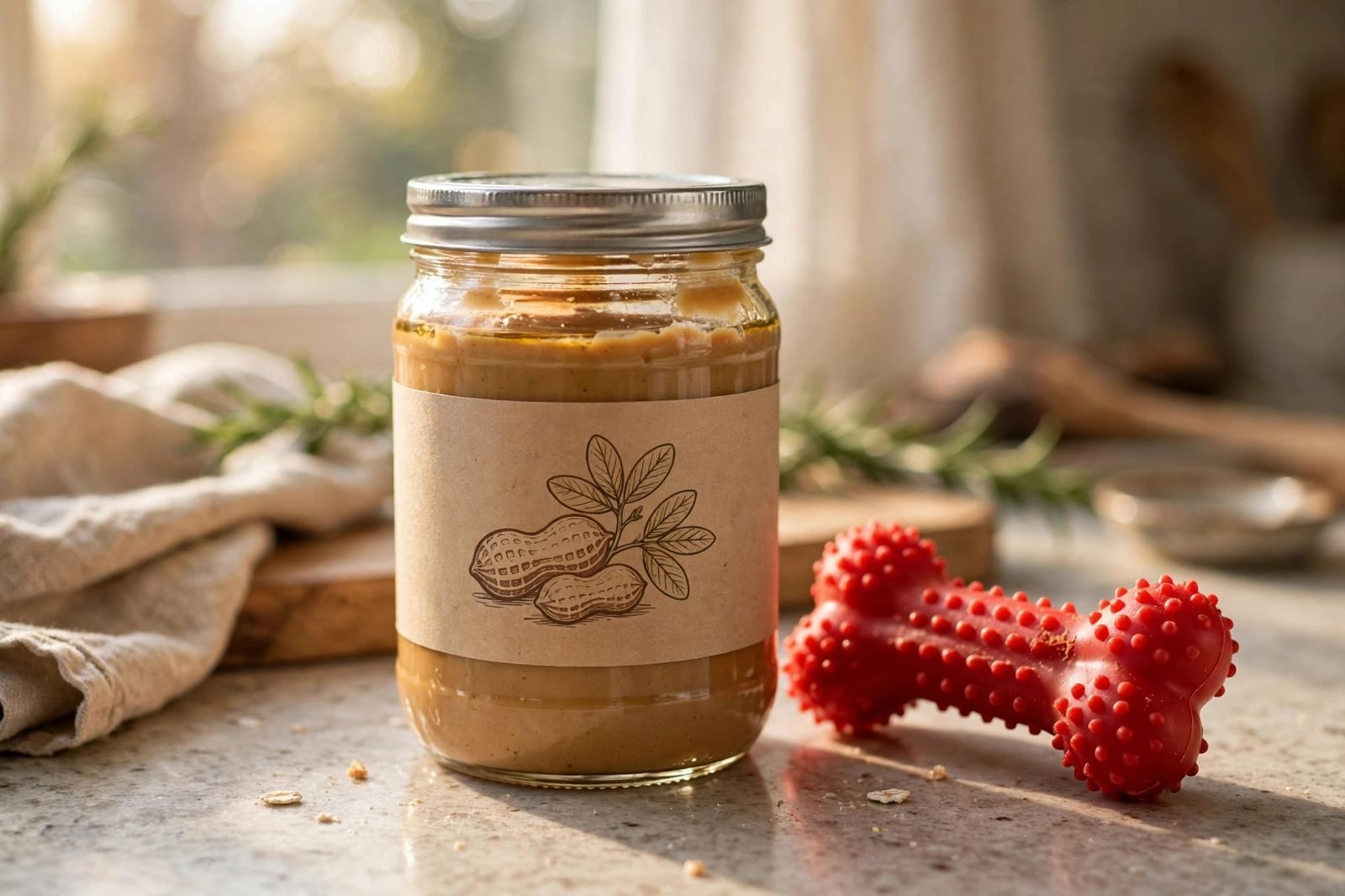
Flip the jar and look at ingredients. You want a short list: peanuts, salt. That’s it. Red flags include xylitol, birch sugar, and long lists of added oils, sweeteners, and stabilizers. Fancy “keto” or “sugar-free” peanut butters are the most likely to contain xylitol, so those deserve an extra-careful read. Standard supermarket peanut butter — the boring, regular kind — almost never has it. The cheap stuff your grandmother bought? Usually just fine.
How Much Peanut Butter Is Actually Okay?
This is the part where I have to confess something. When I first started giving Milo peanut butter, I gave him heaping spoonfuls because his joy was so pure and I am a weak man. Then I did the math and realized a single tablespoon has around 90–100 calories — for a medium dog, that’s a meaningful chunk of the day’s food. Milo gained about two pounds in a month. On peanut butter alone. The vet was very polite about it, but I got the message.
Peanut butter is a treat, not a food group. The general guideline vets give is that treats — all treats combined — should stay under about 10% of your dog’s daily calories. In practice: a pea-sized dab for training, a thin smear inside a Kong, a lick-mat spread as thick as butter on toast. For most medium-to-large dogs, a tablespoon total per day is plenty; small dogs need less. On heavy peanut butter days, I trim the evening meal slightly — the same honest accounting I talked about when covering the best feeding schedule for adult dogs.
Why fat content matters more than you’d think
Peanut butter is roughly half fat, and while healthy fats are fine in moderation, a sudden huge serving can upset a sensitive stomach or worse. Dogs prone to pancreatitis or weight issues need extra caution — small, infrequent amounts only, and a chat with your vet about whether peanut butter fits their diet at all. I always introduce any new treat in a tiny amount first and watch for soft stool or tummy grumbling over the next day. Boring? Yes. Effective? Also yes.
My Favorite Ways to Serve It
Plain spoonfuls get old fast. These are the peanut butter routines with permanent spots in my house.
The frozen Kong (the king of quiet afternoons)
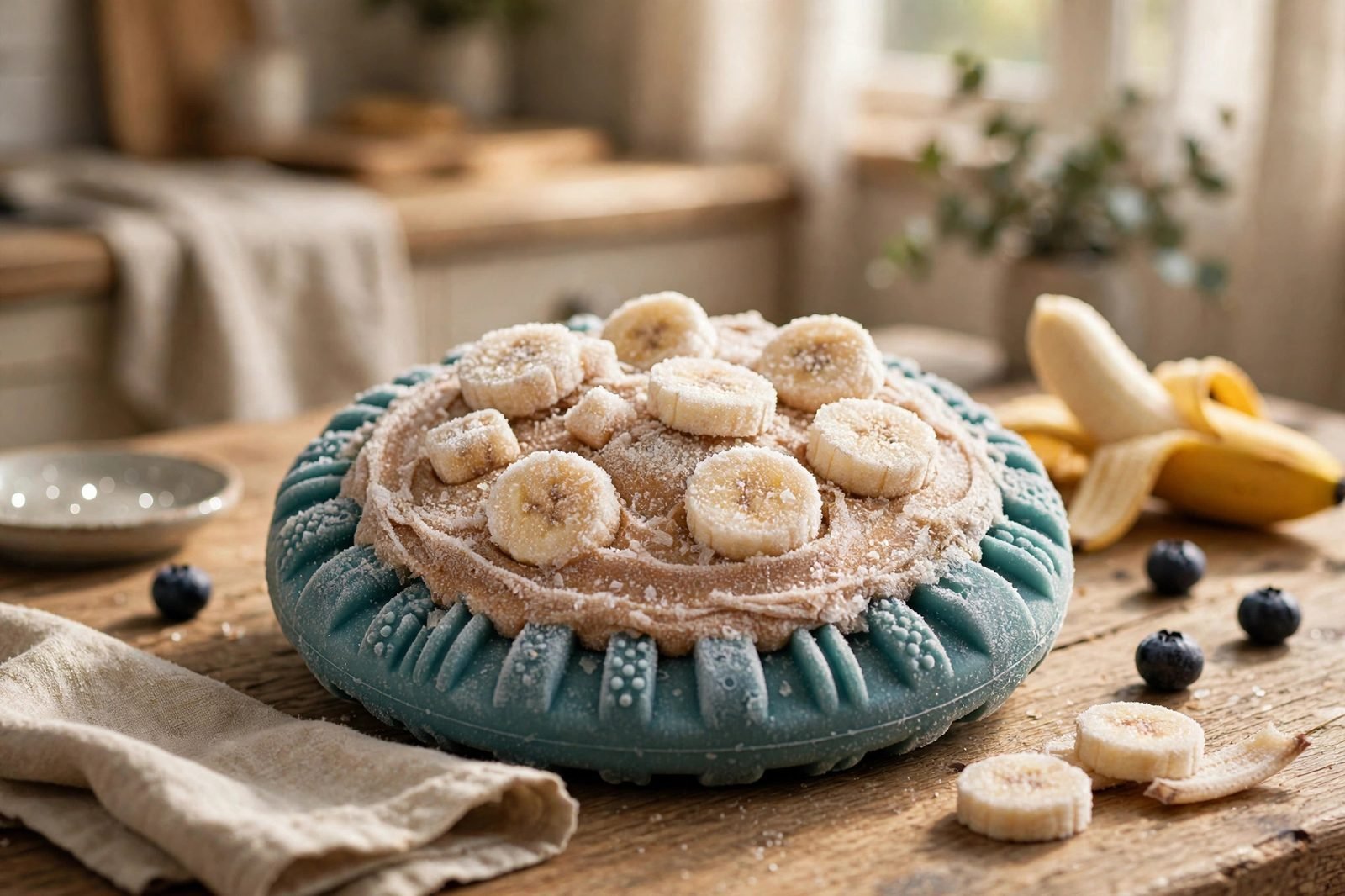
Smear a thin layer of peanut butter inside a Kong, add a few kibble pieces or banana slices, and freeze it overnight. A frozen Kong takes Milo about 40 minutes to work through, versus about 40 seconds unfrozen. It’s my go-to for rainy days, vet-visit recovery, or the twenty minutes I need to take a work call without a dog staring into my soul. Freezing also means you use less peanut butter overall, because a little goes a long way when it’s spread thin and frozen.
The lick mat (calming magic)
A silicone lick mat with a thin smear of peanut butter is weirdly soothing for dogs — the repetitive licking releases calming endorphins. I use one during thunderstorms, fireworks, and grooming sessions. Pip, my smaller dog, gets anxious during nail trims (honestly, who doesn’t), and a peanut butter lick mat stuck to the floor with a suction cup has made trims dramatically easier. Thin smear, that’s all it takes.
Training treats and pill pockets
A pea-sized dab of peanut butter is a high-value training reward — dogs will do algebra for it. It’s also the classic pill-hiding vehicle: a small ball around a pill, delivered with an enthusiastic “who wants a treat?!” Just confirm with your vet that the medication is okay to take with food.
Crunchy or Smooth? And What About Puppies?
Crunchy versus smooth is purely a preference question — nutritionally they’re the same, and no dog has ever lodged a formal complaint about texture. Milo likes smooth; Pip prefers crunchy, possibly because she enjoys the extra crunching sounds. If your dog tends to gulp, smooth is marginally safer since there’s nothing to cough on, but honestly either is fine.
Puppies can have peanut butter too, once they’re eating solid food — but start even smaller. A puppy’s stomach is a delicate ecosystem, and a big glob of rich peanut butter can cause a rough night for everyone. If you’re working through puppy feeding amounts in general, my guide on how much to feed a puppy covers the full picture, since treats fit into that bigger portion puzzle. One note: if your puppy hasn’t had peanut butter before a vet visit, skip the lick mat that day — some vets use peanut butter themselves during exams, and you don’t want a first taste to happen under stress.
Other nut butters: the quick rundown
Since the question always comes up — almond butter and cashew butter are generally safe in the same small-amounts way, though they’re pricier for no real benefit to the dog. Macadamia nuts are the one hard no: they’re toxic to dogs, so keep macadamia nut butter far away from the treat shelf. And as with peanut butter, check every label for xylitol. The xylitol rule applies to all nut butters, all “sugar-free” spreads, and honestly anything sweetened that a dog might get into.
Storing It and Keeping It Fresh
Natural peanut butter — the kind with just peanuts — separates, with oil pooling on top. That’s normal. Stir it once when you open the jar and store it upside down; the oil redistributes and it stays mixed longer. I keep the “dog jar” separate from the “people jar” in my house, partly for hygiene and partly because once Milo sees me reach for his jar, the performance of excitement begins and there’s no going back. Room temperature storage is fine; the fridge makes natural peanut butter rock-hard and hard to smear.
Signs You’ve Overdone It
Most peanut butter problems are portion problems. Soft stool or a dog suddenly uninterested in dinner after a big peanut butter session — usually just too much rich food at once. Cut back to a tiny amount, give the stomach a day to settle, and resume with smaller servings. If vomiting is repeated, or your dog seems genuinely unwell rather than just overindulged, call your vet. Rich foods can occasionally trigger more serious stomach issues, and I’d always rather make an unnecessary vet call than a necessary one too late.
Frequently Asked Questions
Can dogs eat peanut butter every day?
A small amount daily is fine for most healthy dogs — a thin Kong smear or a few pea-sized training dabs won’t hurt. The key word is small. Because peanut butter is calorie-dense, daily large servings lead to weight gain fast, as I learned the embarrassing way. Keep it to a tablespoon or less per day for medium-to-large dogs, less for small dogs, and trim the main meal slightly on heavy treat days.
What peanut butter brands are safe for dogs?
I’m not going to name specific brands because recipes change, and a brand that’s safe today might reformulate tomorrow. Instead, memorize the rule: ingredients should read “peanuts” and maybe “salt” — and it must not contain xylitol or birch sugar. Any plain, unsweetened peanut butter that passes that test is fine. Make label-checking a habit every time you buy a new jar, not just once.
Is crunchy peanut butter safe for dogs?
Yes. Crunchy and smooth are equally safe; it’s purely about what your dog enjoys. Some owners worry about choking on the peanut pieces, but dogs crunch through far more challenging things daily (ask my baseboards). If your dog is a frantic gulper, smooth spreads a little more evenly in toys anyway.
Can puppies eat peanut butter?
Yes, once they’re eating solid food — but start with a tiny taste, like a pea-sized dab, and watch for tummy upset over the next day. Puppies have sensitive stomachs, and rich foods can cause diarrhea if introduced too fast. It’s a great high-value training treat for puppies once they tolerate it, which is handy because puppy training goes through a lot of treats.
What should I do if my dog ate peanut butter with xylitol?
Call your vet or an emergency animal clinic immediately — do not wait to see if symptoms appear. Xylitol acts fast in dogs, and early treatment makes a huge difference. If you can, note the brand and how much was eaten so the vet has full information. This is the one peanut butter scenario where speed genuinely matters.
Are there alternatives if my dog is allergic to peanuts?
Peanut allergies in dogs exist but are uncommon. If your dog gets itchy skin, ear inflammation, or digestive upset consistently after peanut butter, stop giving it and mention it to your vet — they can help figure out whether it’s actually the peanuts. Pumpkin purée (plain, unsweetened) makes a great substitute for Kong stuffing, and most dogs love it just as much.
[…] The equipment list is gloriously short: treats, and a dog. But the kind of treats matters. You want small, soft, smelly bits your dog can swallow in a second — pea-sized. Big crunchy biscuits are terrible training treats because the dog spends ten seconds crunching while the training moment evaporates. I use tiny bits of cheese, hot dog, or commercial training treats, kept in a pouch so I’m never fumbling. Some owners use a dab of peanut butter as a jackpot reward — just make sure it’s xylitol-free, since xylitol is toxic to dogs; I covered label-checking in can dogs eat peanut butter. […]
[…] still researching food safety, it’s worth learning the specifics — like whether dogs can eat peanut butter safely, including the xylitol check that matters more than most people […]
[…] can appear within 30 minutes. Always check the ingredient label on peanut butter before sharing; my peanut butter safety guide explains exactly what to look for, since most peanut butter is fine but xylitol-containing brands […]