

Dog Water Safety: Keeping Dogs Safe Around Water
Most dogs love water. The first warm weekend of the year, half the neighborhood seems to head for the lake with a wet, grinning dog in tow. And honestly, swimming can be wonderful exercise — low impact, great for joints, and genuinely joyful for the dog. But dog water safety deserves more thought than most of us give it, because the same outing that looks idyllic in photos carries real risks: strong currents, hidden drop-offs, contaminated water, and the simple fact that not every dog can swim as well as it thinks it can.
This isn’t about wrapping your dog in cotton wool — it’s about knowing what to check before the swim, what gear helps, and which warning signs mean it’s time to get out. A little preparation makes lake afternoons, beach holidays, and garden pool time safer and more relaxed for everyone.
Quick Tips
- Use a well-fitted dog life vest for boating, deep water, and any dog that’s new to swimming.
- Never let your dog swim unsupervised — not in pools, lakes, or the sea.
- Check water quality first: avoid water with blue-green algae blooms or strong chemical smells.
- Bring fresh drinking water so your dog doesn’t gulp lake, pool, or seawater.
- Rinse your dog with clean water after swimming, especially after salt water or chlorinated pools.
- Know the exit: make sure your dog can see and reach the way out before they go in.
Not Every Dog Is a Natural Swimmer
One of the most persistent myths in dog water safety is that all dogs can swim. Many can learn, and plenty take to it immediately — but breed, body shape, age, and health all matter. Barrel-chested, short-legged breeds like bulldogs and dachshunds often struggle to stay afloat, and brachycephalic (flat-faced) breeds can have a harder time keeping their nose above water while paddling. Puppies are still building strength and coordination, and senior dogs may tire faster than they used to, even if they swam happily for years.
The practical takeaway: never assume. The first time your dog encounters real water, keep it shallow, keep the leash on, and stay close. Let them wade in at their own pace rather than tossing them in — being thrown into water is frightening for many dogs and can create a lasting fear of swimming. A gradual introduction on a gently sloping shore, with plenty of encouragement and treats, builds confidence that lasts. If your dog clearly doesn’t enjoy it, that’s fine too; not every dog has to be a swimmer.
Even confident swimmers have limits. A dog that’s strong in a calm pool may struggle with lake chop, river current, or sea waves — and cold water saps energy faster than warm. An excited dog often won’t notice fatigue, so watch for slowing strokes, a lower head, or drifting, and call them in well before they’re in trouble.
Dog Water Safety Gear That Actually Helps
Gear won’t replace supervision, but the right equipment makes supervised swimming considerably safer. Here’s what earns its place in the swim bag.
A proper dog life vest
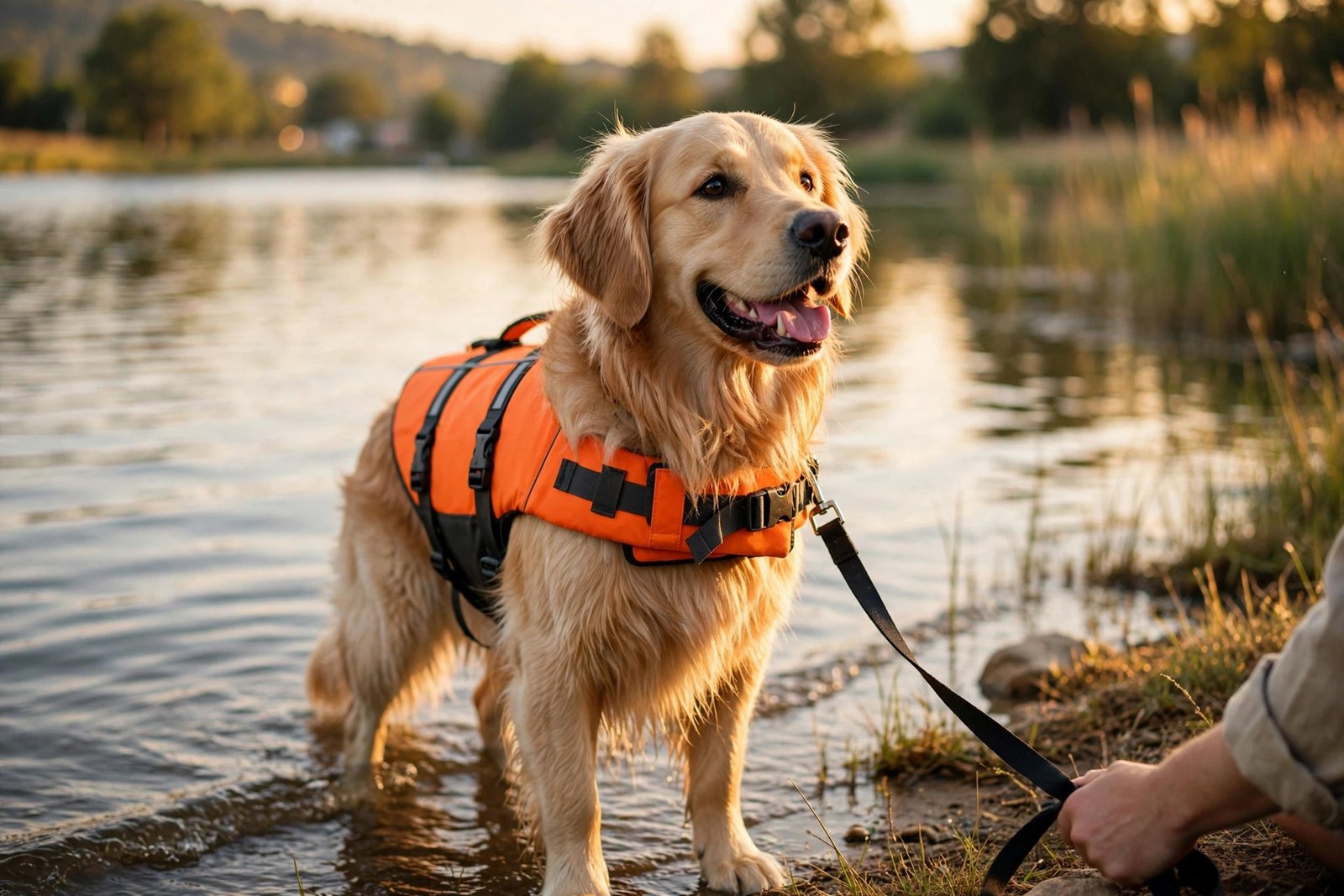
This is the single most useful piece of swim-safety equipment. A good vest fits snugly without restricting movement, has a sturdy handle on top (invaluable for lifting a tired dog out of the water), and provides enough buoyancy under the chin to keep the head up. Bright colors help you spot your dog at a distance. Fit matters more than brand: check the size chart against your dog’s weight and girth, and do a test float in shallow water before trusting it in deep water. Vests are especially worth it for boating, for breeds that swim poorly, for puppies, for seniors, and for any long swim.
Long line and fresh water
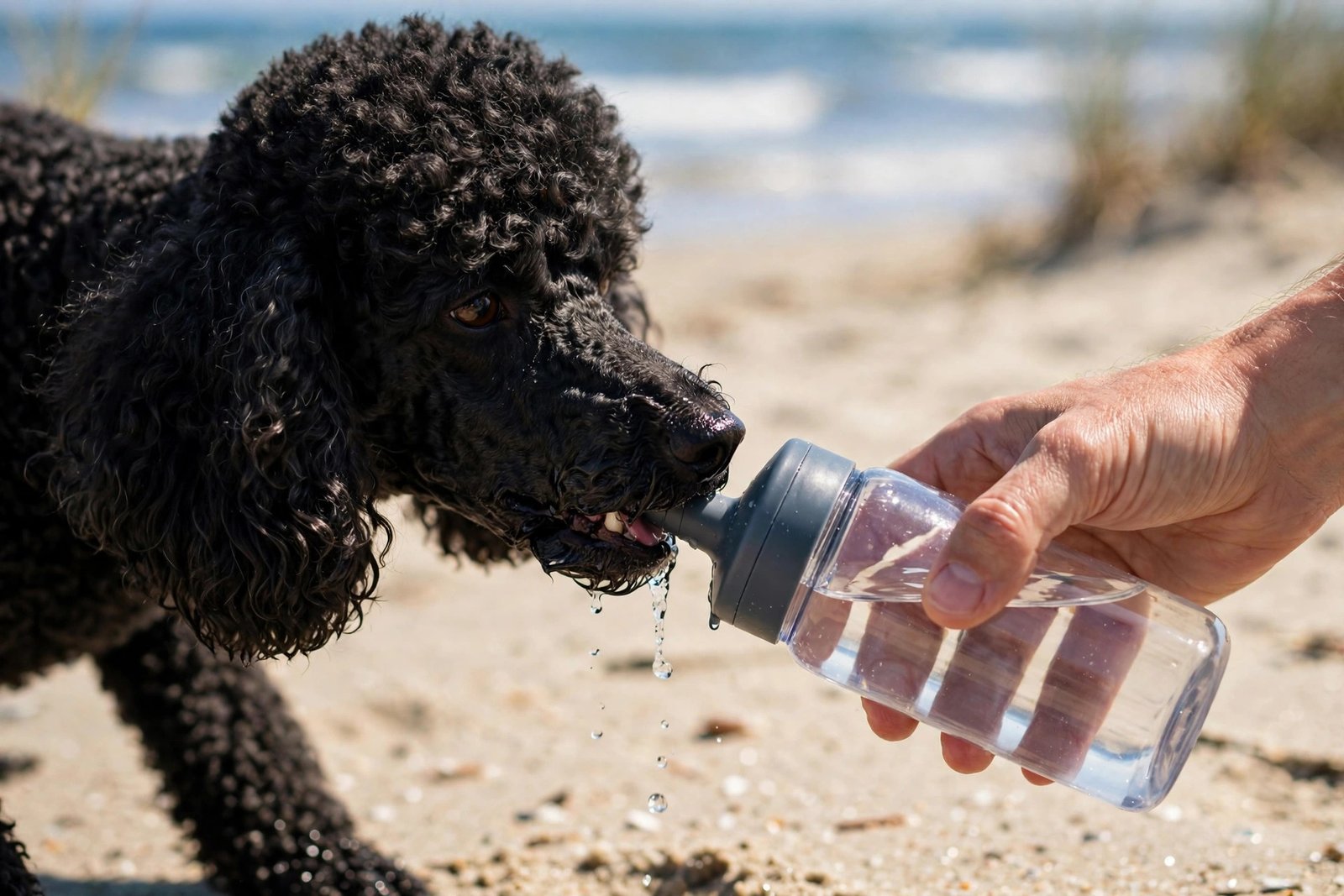
A long training lead (10–15 meters) gives a new swimmer freedom while keeping you in control — useful at unfamiliar lakes where you can’t be sure about currents or depth. Just never tie it to anything, and keep it from tangling around legs. Fresh drinking water is the other essential. Dogs that swim tend to gulp water as they go, and lake, river, pool, or sea water can all cause stomach upset in quantity. Offering fresh water before, during, and after the swim reduces the urge to drink the surroundings.
Rinse and dry supplies
Pack a towel and, if you can, a bottle of clean water for rinsing. Salt water dries on the coat and can irritate skin; chlorine can do the same; lake water may carry bacteria or algae residue. A quick rinse after the swim and a thorough towel-dry — especially around ears, paws, and skin folds — prevents a lot of minor post-swim itchiness. This is also a good moment to check paws for cuts from rocks or shells you couldn’t see underwater.

Reading the Water Before Your Dog Jumps In
Good dog water safety starts before anyone gets wet. Take two minutes to assess the spot, and you’ll avoid most of the common problems.
At lakes and ponds, look at the water itself. Blue-green algae blooms — which can look like green paint, pea soup, or scummy streaks on the surface — are a serious hazard; keep dogs completely out of water that looks like this, and don’t let them drink it. Toxins from some blooms can make dogs very ill, so when in doubt, skip the swim. Also watch for posted warnings about water quality, and avoid stagnant, foul-smelling water generally.
At the beach, check tide and current — dogs don’t understand rips, and even strong swimmers can get into trouble fast. Stay in familiar areas, keep the dog close, and be extra cautious after storms. Salt water in small splashes is harmless, but a dog that drinks a lot of it can become quite sick — another reason the fresh water bottle matters.
For rivers and streams, current speed is the main question. What looks gentle at the edge can be much stronger mid-channel, and underwater obstacles like branches can trap a swimming dog. If you can’t see the bottom, can’t gauge the current, or wouldn’t swim it yourself, don’t send the dog in.
And at home, pools need their own rules. Teach your dog where the steps or ramp are — many pool accidents happen because a dog falls or jumps in and then can’t find the way out, swimming along the edge in a panic. A pool alarm or fence is worth considering if your dog has unsupervised garden access. Never leave a dog alone in or around an open pool, even a strong swimmer; exhaustion and panic can overwhelm any dog.
Supervision: What “Watching” Really Means
“Never leave your dog unsupervised near water” sounds obvious, but in practice supervision degrades fast. The phone comes out, conversation starts, the dog drifts a little further along the shore — and suddenly nobody’s actually watching. Real supervision means one person has eyes on the dog, the way you’d watch a child in a pool.
Build in rest breaks — enthusiastic dogs will swim until they drop if you let them. Call the dog out every 15–20 minutes for water, shade, and a breather, especially on hot days, since heat plus exertion can lead to overheating fast. For more on managing heat, summer safety for pets covers shade, hydration, and warning signs in more detail.
Watch the dog, not just the water. Slowing strokes, a head riding low, whining in the water, or trying to climb on you are all signs of fatigue — get the dog out calmly and let them rest. A dog that’s shivering after a swim needs warming up, not another round. And keep an eye on what goes in the mouth: sticks thrown into water can cause nasty mouth and throat injuries if the dog swims into them; a soft floating toy is a much safer fetch object.
After the Swim: Rinse, Check, and Dry
The post-swim routine takes five minutes and prevents most of the common after-effects. Rinse the dog with clean fresh water, paying attention to the belly, armpits, ears, and paws where irritants collect. Towel-dry thoroughly — a damp dog left in a breezy car or a cool evening can get chilled, and damp ears are more prone to irritation.
Give the ears a gentle check and dry — floppy-eared dogs are more prone to lingering moisture, which can irritate the ear canal over time. No special products needed for a routine swim; just don’t leave ears sodden. Persistent head-shaking or scratching afterward is worth mentioning to your vet.
Offer fresh water and a rest. Most dogs will flop down happily, but keep an eye out for anything unusual over the next day or so — vomiting or diarrhea after a lake swim, excessive scratching, or lethargy. Most post-swim issues are mild and pass, but anything persistent or worrying deserves a vet call. If you’re heading further afield for your water adventures, how to travel with your dog has packing and planning tips that pair well with swim-day prep.
Frequently Asked Questions
Do all dogs know how to swim instinctively?
Not really — the “doggy paddle” is common but not universal, and some breeds genuinely struggle to stay afloat. Bulldogs, dachshunds, pugs, and other short-legged, heavy-chested, or flat-faced breeds often need a life vest even in calm water. Always introduce a dog to swimming gradually in shallow water, and never assume ability based on enthusiasm; an eager dog can get into trouble faster than a cautious one.
Is a dog life vest really necessary?
For boating, deep or moving water, poor swimmers, puppies, and seniors — yes, strongly recommended. For a strong swimmer paddling in a shallow calm lake under close supervision, many owners skip it. Think of the vest as cheap insurance: it buys buoyancy, visibility, and a grab handle. Given how inexpensive vests are compared to an emergency, most water-safety checklists treat them as default gear.
Can dogs get sick from drinking lake or pool water?
They can, particularly in quantity. Lake water may carry bacteria, parasites, or blue-green algae toxins; pool water contains chlorine and other chemicals; seawater’s salt can cause vomiting, diarrhea, and in large amounts more serious problems. A few accidental gulps usually cause nothing worse than mild stomach upset, but discourage drinking the surroundings and always offer fresh water instead. After swimming in questionable water, watch for vomiting or diarrhea and call your vet if it persists.
How do I teach my dog to use pool steps?
Start on-leash in the shallow end with the water calm. Guide your dog to the steps repeatedly, rewarding each successful exit with treats and praise, until they head for the steps on their own. Practice from different entry points so the dog learns the steps are always the way out, not just from one spot. Repeat the training across several sessions — one lesson rarely sticks. Until you’re confident, supervise every pool visit as if the training hadn’t happened.
What should I do if my dog gets caught in a current?
Stay calm and call your dog toward you or toward the nearest safe exit point, moving yourself to where you can help from shore. Do not jump in after a panicking dog unless you are a strong swimmer and certain you can manage it — drowning rescuers are a real and tragic phenomenon. A life vest with a handle makes shore-based rescue far easier. Once out, keep the dog warm and calm, and have a vet check them over if they swallowed a lot of water or seem distressed.