
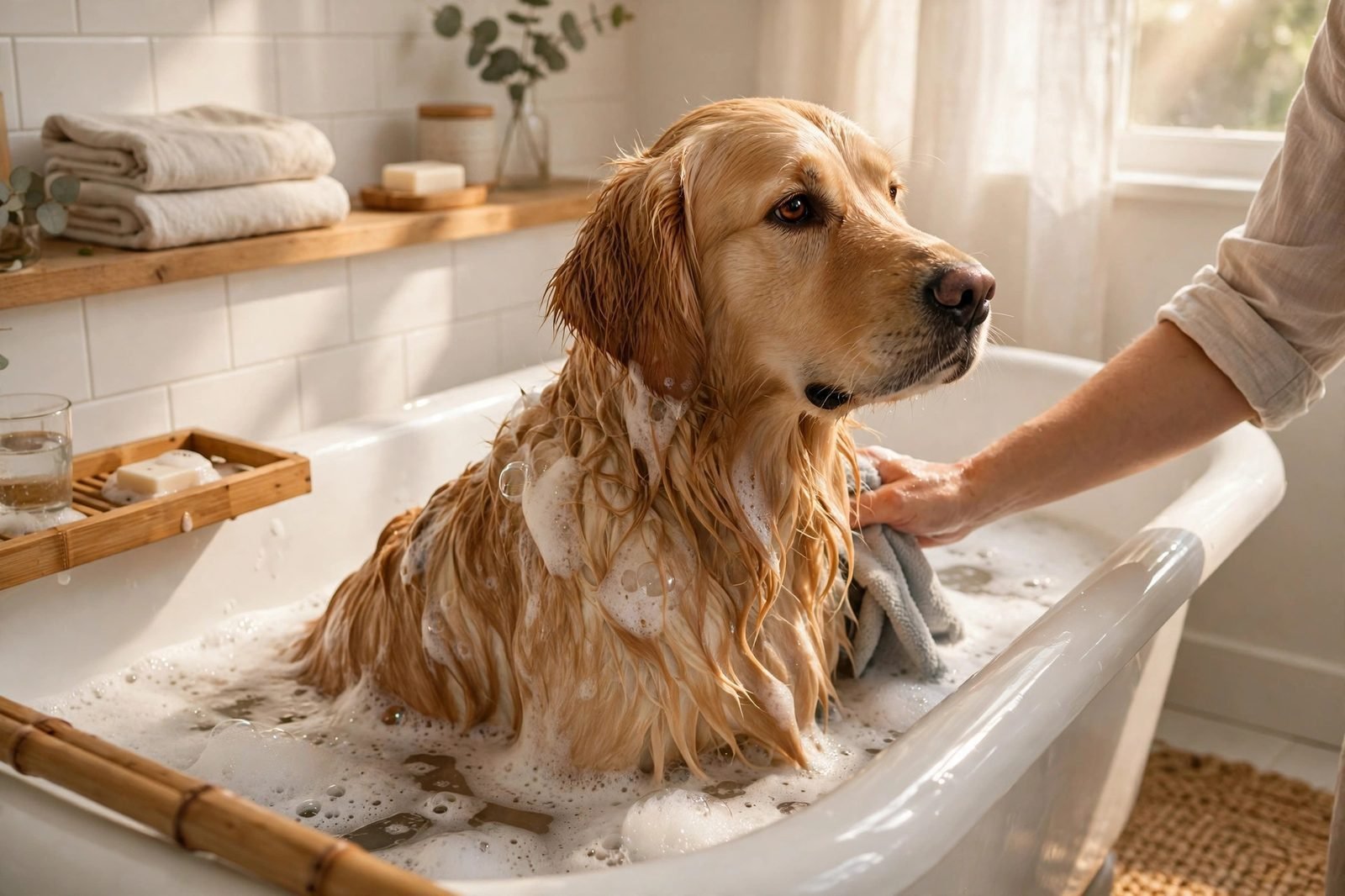

The first time I bathed Milo, my rescue lab, I did it the way I’d seen in movies: garden hose, dish soap, a sunny afternoon. Milo thought it was a game. My lawn thought otherwise. And Milo’s skin, itchy for a week afterward, filed a formal complaint. I had no idea how often to bathe a dog, what soap to use, or that “whenever he looks dirty” was a strategy with consequences.
Here’s what I know now, years and many baths later: most adult dogs only need a bath every one to three months. Some need it more, some less, and the smelly dog in front of you is usually a worse guide than you’d think. This guide breaks down the real factors — coat type, lifestyle, skin health — that set the right rhythm for your dog, plus the bathing technique that keeps it from being a wrestling match.
Published: May 5, 2026 | Last updated: May 5, 2026
Quick Tips
- Most dogs need a bath every 1–3 months — not weekly.
- Over-bathing strips natural oils and causes dry, itchy skin.
- Always use dog-specific shampoo, never dish soap or human shampoo.
- Lukewarm water, thorough rinsing, and a calm voice beat speed.
- Wipe paws after walks instead of full baths for everyday dirt.
- Puppies need their first bath only after settling in — and kept short and positive.
- When in doubt, the sniff test plus visible dirt is your cue.
The General Rule: Every 1 to 3 Months
For a healthy adult dog with normal skin, bathing every four to twelve weeks is the standard guidance most vets give. I landed on roughly every six to eight weeks for Milo, and Pip gets about the same. Between baths, regular brushing does most of the actual cleaning — it pulls out loose dirt, distributes natural oils, and keeps the coat from developing that stale dog smell.
Why not more often? A dog’s skin is thinner and more alkaline than ours, and it’s coated in natural oils that protect against dryness and irritation. Every bath strips some of that oil away. Bathe weekly “just because” and you’ll often create the exact problem you’re trying to solve: dry, flaky, itchy skin, sometimes with a dull coat on top. I learned this the hard way during Milo’s dish-soap era — his scratching got worse the more I bathed him, which felt completely backwards until the vet explained the oil-stripping cycle.
The sniff test is real
Honestly, the most reliable bathing cue in my house is my nose plus my eyes. Can I smell the dog from the couch? Is the coat visibly dull or greasy? Time for a bath. Faintly dog-scented but otherwise fine? That’s not a bathing emergency — that’s a dog existing. New owners tend to over-bathe because they’re comparing their dog to a freshly groomed ideal. Dogs aren’t supposed to smell like shampoo.
What Changes the Schedule
The 1-to-3-month rule is a starting point. Real dogs have real lives, and several things legitimately move the needle.
Coat type matters most
Short-coated breeds like labs, beagles, and boxers have skin close to the surface and tend to stay cleaner — they often stretch to the full three months easily. Long or double-coated breeds (golden retrievers, huskies, shepherds) trap more dirt and oil in the undercoat and usually sit in the 4-to-8-week range. Hairless breeds are the exception that proves the rule — they need weekly baths because they have no coat absorbing oil at all. Oily-coated breeds like basset hounds can also need more frequent bathing. When I adopted Pip, a spaniel mix with a feathered coat, I assumed her schedule would match Milo’s. It didn’t — her longer coat picks up twice the grime, so she gets bathed a bit more often.
Lifestyle: the mud factor
A dog who hikes, swims, and rolls in unidentified substances needs more baths than a dog whose biggest adventure is the couch. Milo’s record is three baths in one week during a particularly ambitious mud season — and that was fine, because each bath had a reason. Swimming in clean water doesn’t automatically demand a bath, but swimming in a pond or the ocean does deserve a rinse at minimum, since algae, salt, and sand irritate skin left sitting in the coat. If your routine involves a lot of outdoor time, paw wipes after walks (which I also mention in my guide on how often to walk your dog) cut down on full baths enormously — most daily dirt lives on the paws, not the whole body.
Skin conditions and allergies
Some dogs are on medicated bath schedules prescribed by their vet — certain skin conditions genuinely need weekly or biweekly medicated baths. Follow the vet’s instructions exactly. Dogs with dry or sensitive skin may need fewer baths than average, with a moisturizing dog shampoo when bath day comes. If your dog is constantly itchy, don’t just bathe more — ask your vet whether the schedule is helping or hurting.
Bathing Puppies: Keep It Rare and Positive
Puppies barely need baths at all in the first months — they’re small, mostly indoors, and their skin is extra sensitive. Milo was about four months old at his first real bath, and it could have waited longer. Don’t bathe a brand-new puppy on day one; let them settle in for a few days first. I wrote more about early-days timing in my guide on when puppies can go outside — same principle: new experiences, introduced gently, one at a time.
When puppy bath day comes, keep it short, warm, and cheerful. Lukewarm water, a tiny amount of gentle puppy shampoo, lots of treats and praise, and get them out before the novelty wears off. The goal of the first few baths isn’t cleanliness — it’s teaching the puppy that baths are safe and boring. A puppy who learns “bath = treats and warm water” becomes an adult dog who walks into the bathroom willingly. A puppy who learns “bath = scary” becomes a 70-pound dog you have to chase around the house. Ask me how I know. (Milo. It was Milo.)
How to Give a Good Bath (Without the Wrestling Match)
Technique matters as much as frequency. A calm, thorough bath every two months beats a frantic, half-rinsed bath every two weeks. Here’s the routine that works in my bathroom.
Before the water: brush first
Brush the coat thoroughly before it gets wet. Water tightens mats and tangles, turning a small knot into a felted mess that has to be cut out. Five minutes of brushing saves twenty minutes of regret. This is doubly true for long-coated dogs.
Water, shampoo, rinse, rinse again
Lukewarm water — test it on your inner wrist like you would for a baby. Wet the whole dog, avoiding a direct stream into ears and eyes. Work in the shampoo with your fingers or a rubber curry brush, going with the coat’s direction, and don’t forget the belly, armpits, and paws where grime hides. Then rinse. Then rinse again. Leftover shampoo residue is one of the most common causes of post-bath itching — keep rinsing until the water runs clear.
Drying: the part everyone rushes
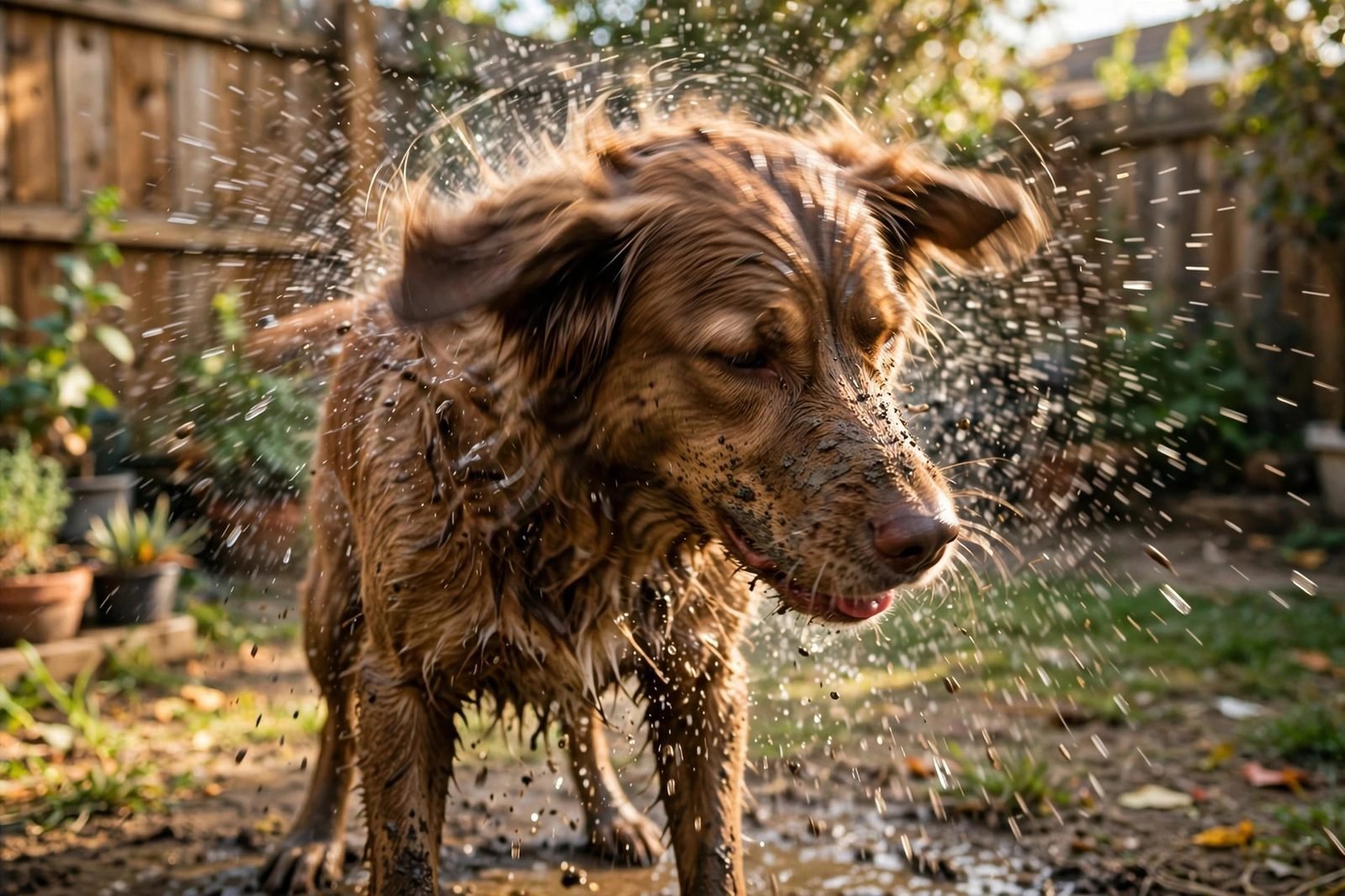
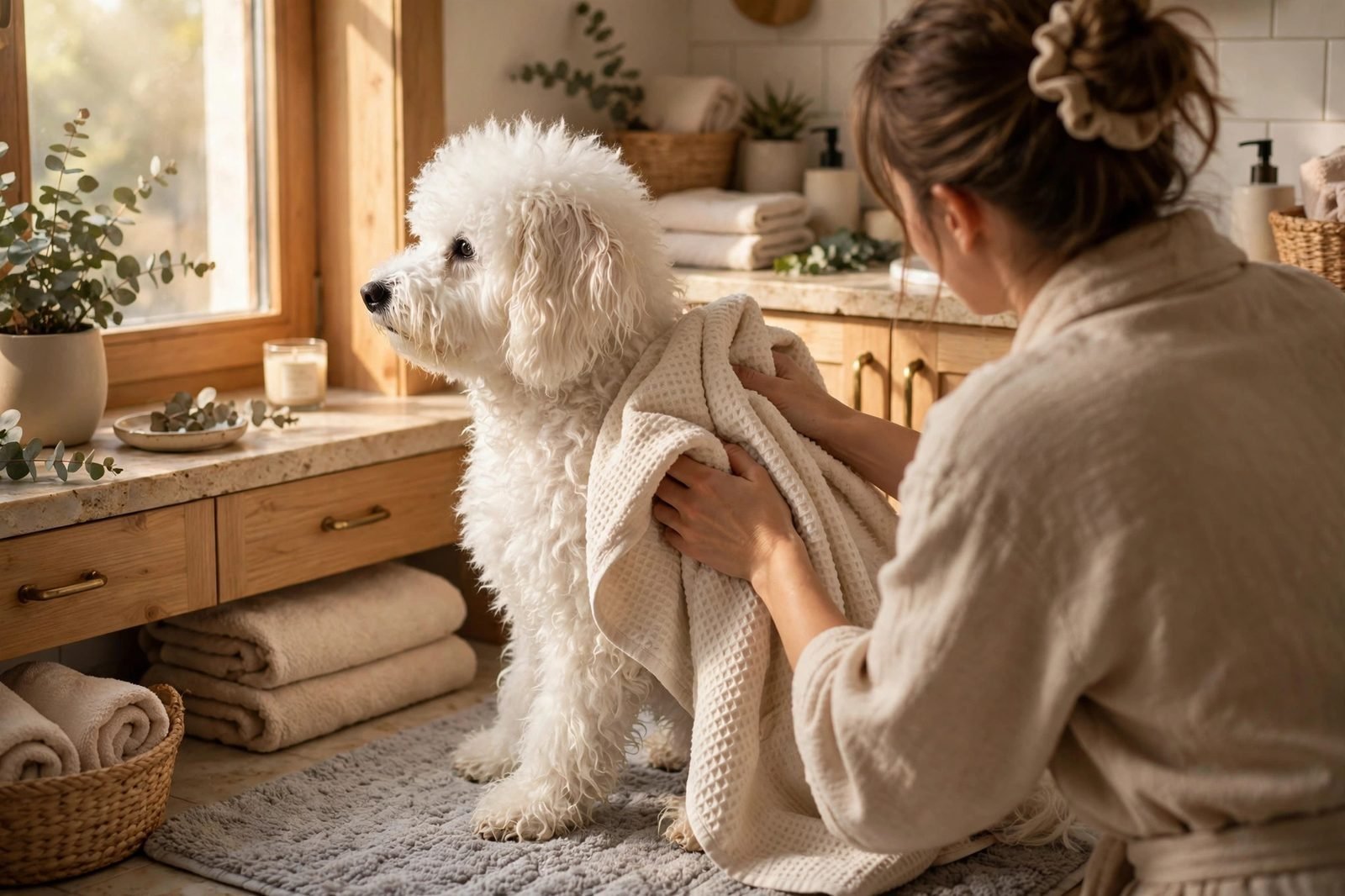
Towel dry first — most dogs enjoy a vigorous towel rub. Then air dry in a warm room, or use a dryer on the lowest, coolest setting at a distance if your dog accepts it. Never use high heat. Keep the dog inside until fully dry in cold weather. Milo’s post-bath zoomies are his self-drying system. I’ve learned to clear the furniture and let it happen.
Between Baths: Staying Clean Without Water
Most “my dog is dirty” situations don’t require a full bath. A damp cloth or unscented pet wipe handles muddy paws, a dusty belly, or a face full of dinner. Regular brushing — a few minutes a couple of times a week — removes loose dirt before it works into the coat and is honestly the single biggest factor in how long you can stretch between baths. Washable dog bedding matters too: I wash the dogs’ beds monthly, and it makes a noticeable difference to how the dogs themselves smell. A surprising amount of “dog smell” is actually “dog bed smell” that transfers back onto a clean dog.
Signs You’re Bathing Too Much (or Too Little)
Too much: dry, flaky skin; dull coat; scratching that started or worsened after you increased bath frequency. Too little: persistent greasy coat, strong odor that brushing doesn’t fix, visible dirt buildup, or skin-fold irritation in wrinkly breeds. If skin problems persist regardless of schedule, that’s vet territory — skin complaints deserve professional attention, not more shampoo experiments.
Frequently Asked Questions
Can I bathe my dog once a week?
You can, but most dogs shouldn’t be bathed that often. Weekly bathing strips natural oils and typically leads to dry, itchy skin within a month or two. The exception is dogs on a vet-prescribed medicated bath schedule for a skin condition — in that case, follow the vet’s plan exactly. For a healthy dog, weekly baths are overkill; try brushing and paw wipes between proper baths instead.
What happens if I never bathe my dog?
Honestly, some low-maintenance dogs go many months without a bath and do fine, especially short-coated indoor dogs that get brushed regularly. But “never” eventually catches up: oils and dirt build up, odor gets strong, and skin-fold or ear issues can develop unnoticed under a dirty coat. Most dogs need at least a few baths a year. Think of it as maintenance, not a punishment.
Can I use human shampoo on my dog?
No — and this is one of the few grooming hills I’ll die on. Human shampoo is formulated for our more acidic skin pH; on dogs it disrupts their skin barrier and causes dryness and irritation. Dish soap is even worse — it strips everything. A basic dog shampoo costs little and lasts months. If you’re in a pinch and the dog rolled in something truly foul, one emergency wash with a gentle baby shampoo is better than leaving the mess, but buy proper dog shampoo the next day.
Should I bathe my dog in winter?
Yes, when they need it — just manage the drying. Bathe indoors with warm water, towel dry thoroughly, and keep the dog in a warm room until completely dry. Cold, damp dogs are miserable, and going outside wet in freezing weather is genuinely uncomfortable for them. Some owners stretch the interval a bit in deep winter and rely more on brushing and wipes, which is perfectly reasonable.
How do I bathe a dog that hates water?
Go slow and make it rewarding. Start with just treats in the empty tub, then treats with a little water, building up over days — not all in one stressful session. Peanut butter smeared on the tub wall is a classic for a reason. Keep early baths short and end on a good note, even if the dog isn’t perfectly clean. For truly terrified dogs, a professional groomer with experience in fearful dogs is worth every penny; forcing a panicking dog through baths teaches them that baths are as bad as they feared.
Do I need conditioner for my dog?
Most dogs don’t. A good-quality dog shampoo and thorough rinsing is enough for normal coats. Dogs with long, tangle-prone, or dry coats can benefit from a dog-specific conditioner — it makes brushing afterward much easier. Skip human conditioner for the same pH reasons as shampoo.
[…] as the closing act of bath time. If you’re still figuring out bath frequency, my guide on how often you should bathe a dog breaks down what actually matters (spoiler: it’s less often than most new owners […]
[…] against the tooth. If you want to see what a full grooming routine looks like beyond teeth, my dog bathing guide covers the rest of the hygiene basics in the same beginner-friendly […]
[…] hair than a week of dry brushing. If you need a refresher on bathing frequency and technique, my dog bathing guide has the full […]