
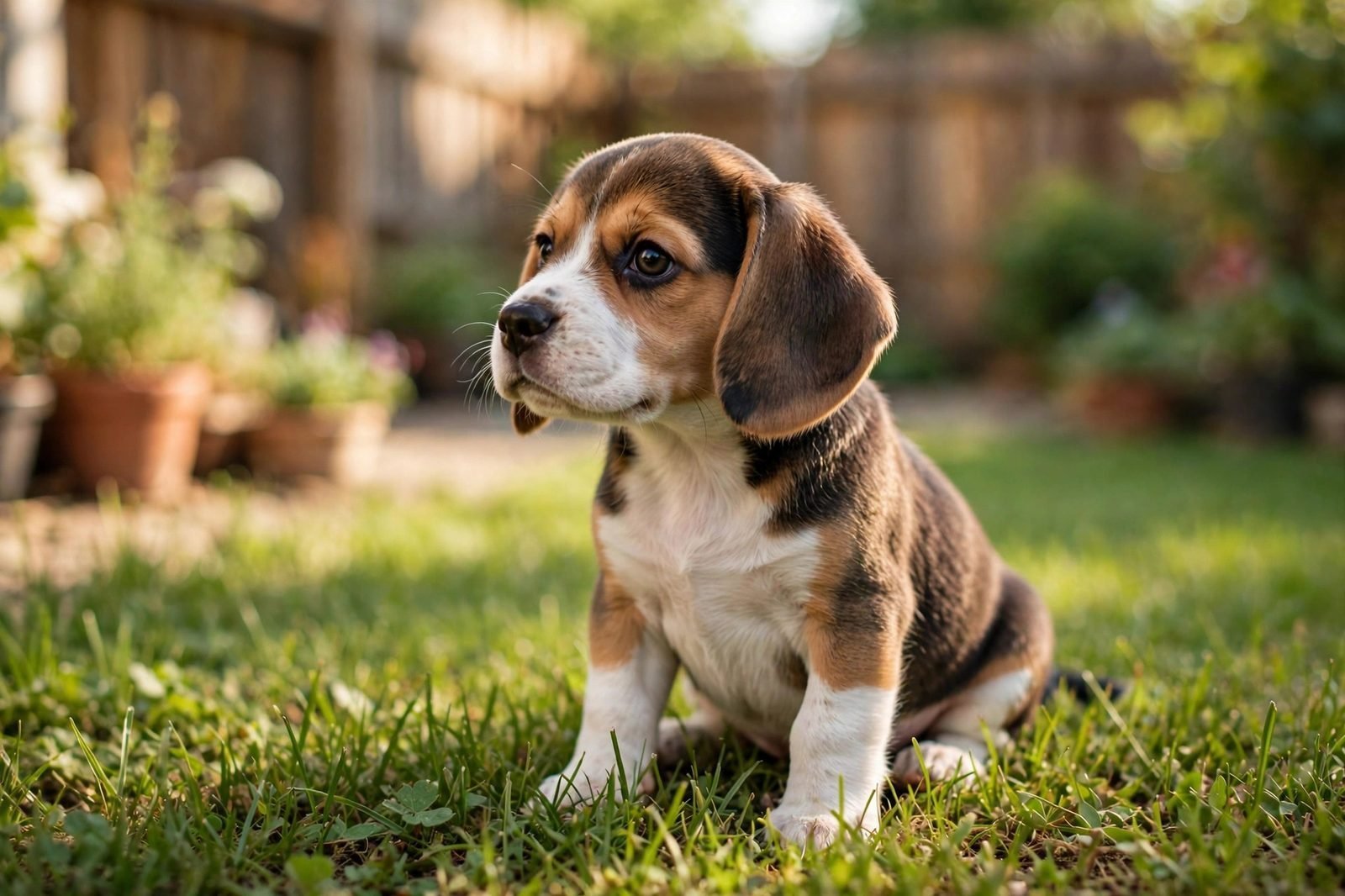

There is a special kind of torture known only to new puppy owners: you have this tiny creature with legs like pipe cleaners, the sun is shining, and every instinct screams take the puppy outside — while your vet, your breeder, and half the internet scream absolutely not. When Biscuit came to me at nine weeks old, I spent a full week carrying her to the garden gate and Googling “when can puppies go outside” at midnight like it was a medical emergency.
The short version: most puppies can go out for real walks about one to two weeks after their final vaccinations, usually around 12–14 weeks old — but keeping a puppy locked indoors until then wastes the most important learning window of its life. Here is how to keep your puppy safe from disease without raising an undersocialized land-shark.
Published: April 26, 2026 | Last updated: April 26, 2026
Quick Tips
- Real ground walks usually start 1–2 weeks after final vaccinations (around 12–14 weeks).
- Your own garden is safe from day one — start there immediately.
- Carry your puppy everywhere before then: socialization does not require paws on pavement.
- Avoid dog parks, unknown dogs, and high-traffic dog areas until fully vaccinated.
- Controlled meetings with healthy, vaccinated dogs are fine and valuable.
- Always follow your own vet’s timeline — local disease risk varies.
Why Vets Say “Not Yet”
The restriction is not vets being killjoys. Young puppies are vulnerable to a handful of genuinely nasty diseases — parvovirus, distemper, and leptospirosis chief among them — and maternal antibodies (the immunity passed from mum) fade at unpredictable rates between 6 and 16 weeks. Vaccinations bridge that gap, but immunity is not instant: it takes roughly a week or two after the final jab for full protection to kick in.
Parvo is the one that keeps vets up at night. It survives in soil for months, spreads through infected feces you cannot see, and can be fatal to an unvaccinated puppy frighteningly fast. High-traffic dog areas — dog parks, popular walking routes, pet store floors — are where the risk concentrates. So the rule is simple: until the vet gives the all-clear, your puppy’s paws stay off public ground where unknown dogs have been.
But here is what took me far too long to understand: “paws off public ground” is not the same as “locked in the house.” The first is disease prevention. The second is a socialization disaster. And you can absolutely do the first without doing the second.
The Vaccination Timeline (Typical)
Schedules vary by country and vet, but the common pattern looks like this. Treat this as orientation, not gospel — your vet’s schedule for your area is the one that counts. For the full shot-by-shot timeline, see my puppy vaccination schedule.
6–8 weeks: first vaccination
Usually given by the breeder before the puppy comes home. This starts building immunity but protection is partial — the puppy is still largely relying on fading maternal antibodies.
10–12 weeks: second vaccination
The booster that builds on the first. After this, protection is getting serious, but most vets still want a final round before declaring the puppy safe for the wider world.
12–16 weeks: final vaccination, then the all-clear
After the last jab, most vets advise waiting one to two weeks, then — freedom. Real walks, parks (the sensible kind), puppy classes. In the US, the final parvo/distemper shot often lands around 14–16 weeks; in the UK, many puppies are cleared around 12 weeks after their second jab plus a week’s wait. Your vet knows the local disease landscape; their word overrides any article, including this one.
What “Outside” Means at Each Stage
This is the part that untangles the confusion. “Outside” is not one thing — it is a ladder, and your puppy can be climbing it from day one.
Your own garden: yes, from day one
A private garden that unknown dogs do not access is safe territory. Let your puppy explore it freely from the moment they arrive home — grass, soil, rain, leaves, weird garden ornaments. Garden time also does the heavy lifting for housetraining. If you do not have a private garden, a balcony turf patch or regular carried trips to a quiet, low-dog-traffic spot for toilet breaks will do — ask your vet what is sensible for your area.
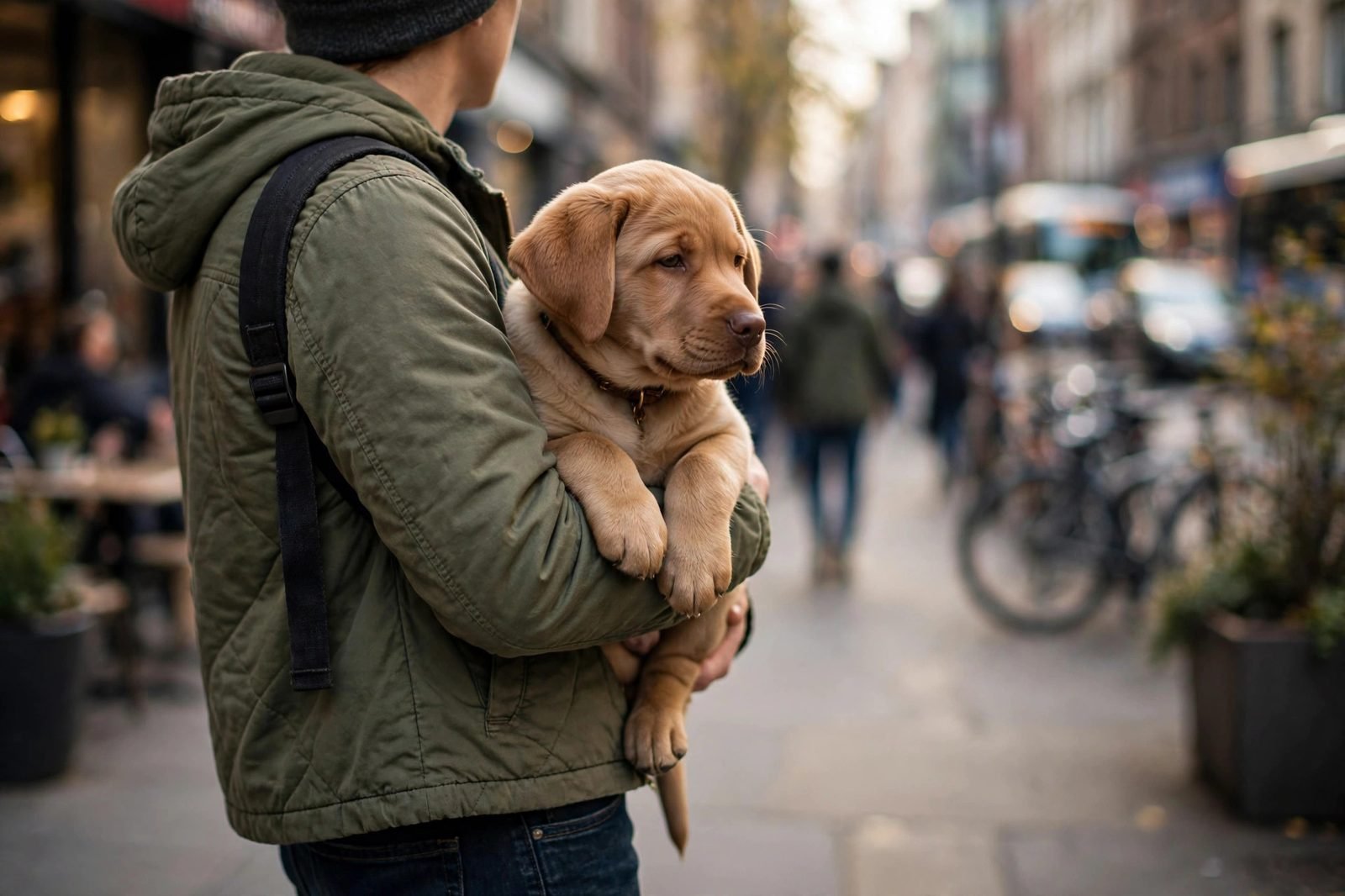
Carried outings: yes, immediately, everywhere
This is the cheat code. In your arms, in a carrier, in a car with the window down — your puppy can safely experience the entire world. Traffic, buses, sirens, crowds, umbrellas, skateboards, the chaos outside a school at pickup time. Every calm, positive exposure now is a deposit in the confidence bank.
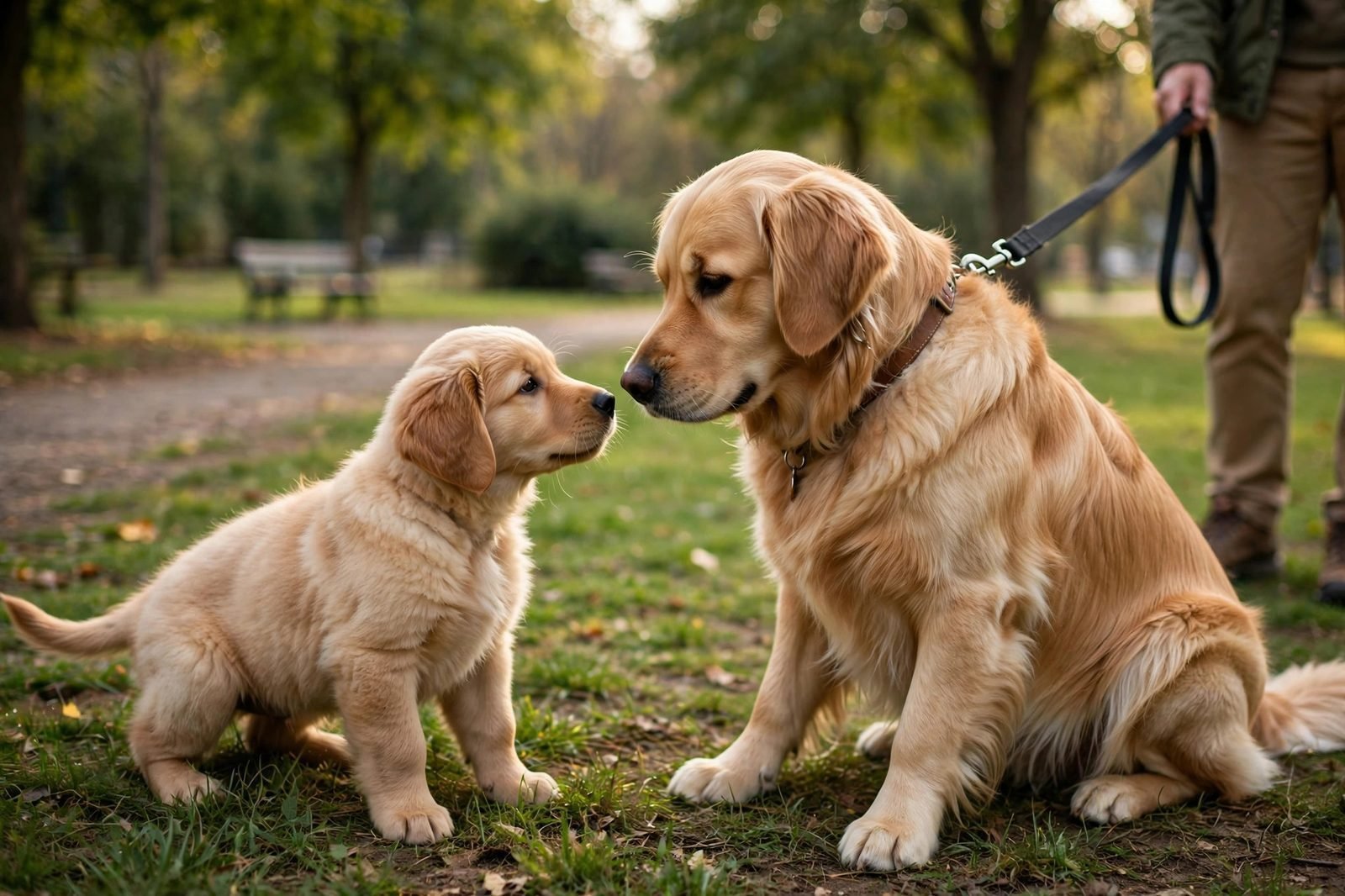
Friends’ gardens and known dogs: yes, with care
Visiting a friend with a healthy, vaccinated, puppy-tolerant dog in their private garden is one of the best things you can do. Puppy socialization classes run by a reputable trainer (who requires vaccinations and health checks) are similarly worthwhile. The key in every case: known health status, controlled environment, no random-dog roulette.
Public pavements and parks: after the all-clear
This is the final rung. Once your vet says go — usually a week or two after the last vaccination — start with short, positive walks. And even then, ease in: a quiet street before a busy one, a calm park corner before the dog park. The world’s most exciting place is overwhelming in large doses; build up.
Socialization: The Clock Is Ticking
Here is why the carried-outings business matters so much. Puppies have a critical socialization window that slams shut around 14–16 weeks. During this period, their brains are deciding what counts as “normal.” Things encountered positively now — people of all shapes and ages, traffic, other animals, weird noises, umbrellas opening — get filed under “fine.” Things never encountered may get filed under “suspicious” for life.
The old advice was “keep the puppy home until vaccinations are done, then socialize.” The problem: by the time vaccinations are done, the window is closing. Most vet behaviorists now say the risk of an undersocialized, fearful adult dog outweighs the small, managed disease risk of careful early socialization. A fearful adult dog is a bite risk and a quality-of-life problem for a decade — a far bigger danger, statistically, than a carefully managed carried outing.
So the real formula is: maximize safe exposure, minimize disease risk. Carry the puppy. Choose clean, controlled environments. Avoid unknown dogs and high-dog-traffic ground. Wash your hands after handling other dogs before handling your puppy. It is not complicated — it just requires thinking in shades of gray instead of “inside” versus “outside.”
The First Real Walk: Making It Count
When the vet finally says the magic words, it is tempting to march straight to the park for an hour. Do not. The first walks should be short, sweet, and confidence-building.
Gear up right
A well-fitting harness (puppies slip collars with embarrassing ease), a lightweight leash, treats, and poop bags. Skip the retractable leash — they teach pulling and give you no control if something spooks the puppy.
Keep it short and sniffy
Fifteen minutes is plenty for a first outing. Let the puppy lead with its nose — every lamppost is a novel; let them read. If the puppy freezes at something scary, do not drag or coddle. Stay calm, let them watch from a distance, treat for curiosity, and move on when they are ready. Once those first walks are going well, my puppy exercise guide shows how to build stamina safely, month by month.
Build the habit
Same sort of time each day, gradually extending the route. Pair walks with good things: a treat at the start, a game halfway. Within a couple of weeks you will have a puppy that loses its mind with joy at the sight of the leash. If you are piecing together the whole daily routine, the dog care basics section covers walking, feeding, and everything around it.
Mistakes to Avoid
I made several of these with Biscuit; learn from my tuition fees.
The dog park too soon
Dog parks are wonderful and also the highest-risk environment for both disease (pre-vaccination) and bad experiences (post-vaccination). Even after the all-clear, a tiny puppy in a chaotic off-leash park can get bowled over and develop a lasting fear of big dogs. Start with controlled one-on-one play dates and quiet park times first.
Waiting until “fully safe” to socialize at all
The all-or-nothing trap. I have met owners who kept puppies essentially indoors until 16 weeks “to be safe,” then wondered why the dog panics at traffic. The socialization window does not pause for your comfort — carried outings are safe, so use them.
Overwhelming the puppy
The opposite error: taking a ten-week-old to a fireworks display “for exposure.” Socialization means positive exposure at the puppy’s pace. Watch the body language: loose and wiggly means keep going; tucked tail or cowering means you have gone too far — increase distance, add treats, try again another day.
Skipping the vet’s local advice
Disease risk is local. Parvo outbreaks happen in specific areas; leptospirosis risk depends on wildlife and standing water near you. Your vet knows what is circulating in your neighborhood right now. A generic internet timeline cannot — local knowledge wins.
Frequently Asked Questions
Can I take my 8-week-old puppy outside?
Into your own private garden — absolutely, from day one. Into the wider world on its own paws — not yet. But you can and should carry your 8-week-old puppy everywhere: streets, parks (in your arms), shops that allow dogs, friends’ houses. The puppy experiences the world safely while its paws stay off risky ground.
How long after the second vaccination can puppies go out?
It depends on your vet’s protocol and your country’s schedule. In the UK, many vets clear puppies about a week after the second vaccination (around 11–12 weeks). In the US, where the final jab often comes at 14–16 weeks, the all-clear usually follows one to two weeks after that. Ask your vet specifically: “when can we start pavement walks?”
Can my puppy meet other dogs before vaccinations are finished?
Yes — with the right dogs. Healthy, fully vaccinated, calm adult dogs in a private setting are safe and genuinely beneficial; puppies learn manners best from stable adults. What to avoid: unknown dogs, dog parks, and any dog whose health and vaccination status you cannot verify. Puppy classes run by reputable trainers (with health requirements) are another good controlled option.
Is it safe to take my puppy in the garden before vaccinations?
In a private garden that stray or unknown dogs cannot access, yes — this is considered safe by most vets. The diseases you are guarding against spread through infected dogs’ feces and urine, so a secure private garden is low risk. If foxes or unknown animals pass through your garden, mention it to your vet; they may adjust the advice slightly. Front gardens bordering busy pavements are a gray area — ask.
What happens if I take my puppy out too early?
The main risk is parvovirus, which can be fatal in unvaccinated puppies and survives in soil for months — your puppy does not need to meet a sick dog, just walk where one has been. Distemper and leptospirosis are also concerns depending on area. One careful carried outing is not the issue; it is repeated paw-on-ground exposure in high-dog-traffic areas before immunity is established. If it already happened, do not panic — just call your vet, explain, and follow their guidance.
Can puppies go outside in winter before vaccinations are done?
The vaccination rules do not change with the season, but winter adds practical concerns: young puppies chill fast, so keep carried outings short and use a coat for tiny or short-coated breeds. Garden toilet trips are fine — quick out and back in.