

How to Brush Your Dog’s Teeth (Beginner Guide)
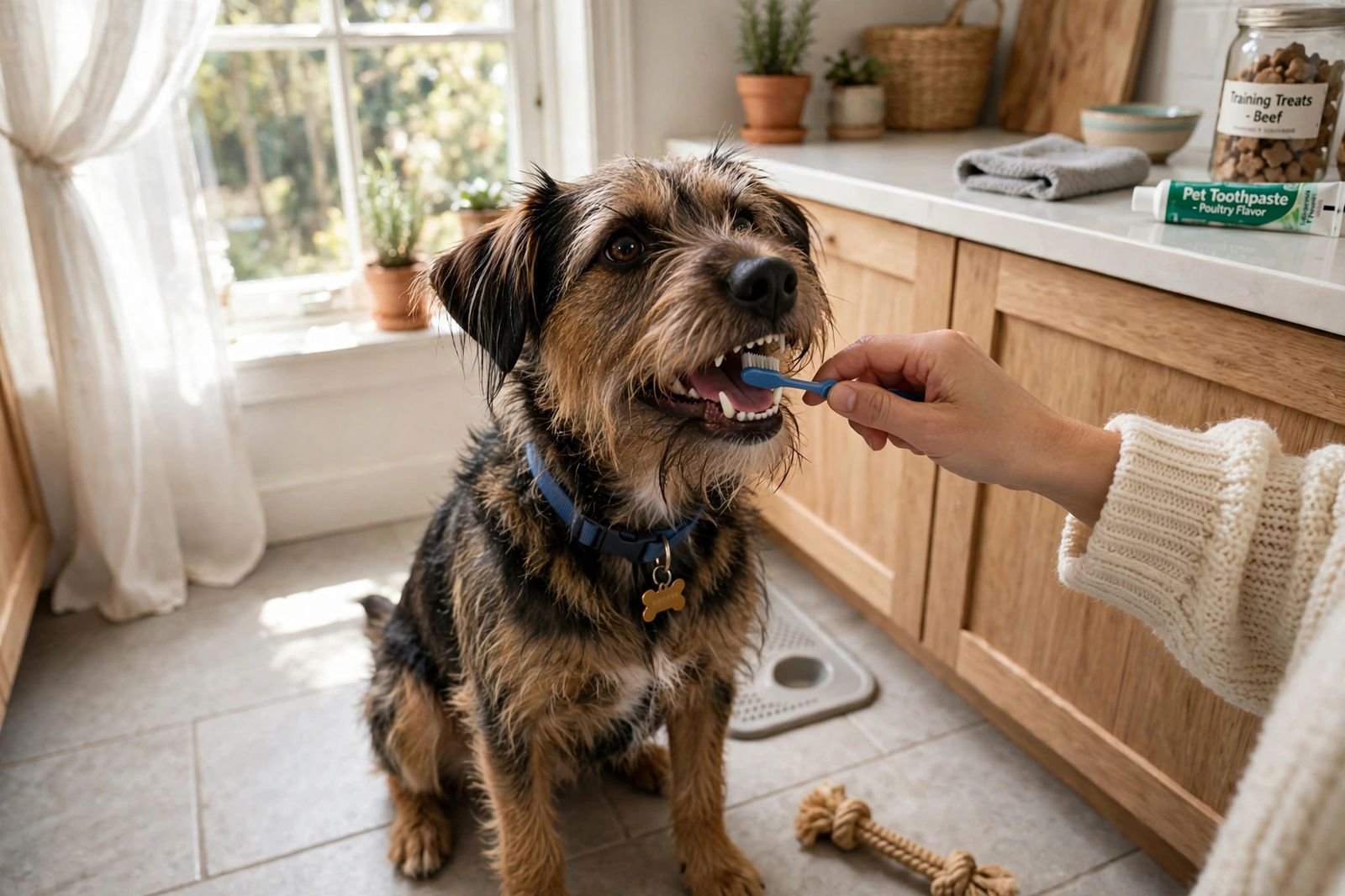
The first attempt at brushing a dog’s teeth usually ends with the owner wearing more toothpaste than the dog. The tutorial videos make it look like a two-minute spa treatment. In reality, it is ninety seconds of a terrier mix squirming like a fish, apologies offered to nobody in particular, and a tube of poultry-flavored toothpaste doing most of its work on the owner’s jeans. Many people give up for a month. Then, at a routine checkup, the vet points out the yellow film creeping along the gum line and notes, in the calm way vets have when they know guilt is incoming, that dental disease is one of the most common health problems in dogs over three. That is usually the turning point.
Here is the good news: learning how to brush your dog’s teeth is a skill, not a talent, and almost every dog can be taught to accept it. Most owners fail because they skip straight to the brush, or because they try to do the whole mouth on day one. This guide is the slow, beginner-friendly route — the one that actually works — built around the mistakes beginners most often make.
Published: June 4, 2026 | Last updated: June 4, 2026
Quick Tips
- Use a dog-specific toothbrush and enzymatic dog toothpaste — never human toothpaste, which can contain xylitol and foaming agents dogs shouldn’t swallow.
- Aim for daily brushing, but 3–4 times a week still makes a real difference if daily isn’t realistic.
- The outer surfaces of the upper teeth (especially the back ones) matter most — that’s where tartar builds fastest.
- Build up gradually: let your dog lick the paste first, then lift the lip, then brush for a few seconds per side.
- Always end on a positive note with a treat or play, even if the session was short or clumsy.
- If you see red, swollen, or bleeding gums, or a tooth that looks broken, talk to your vet before brushing resumes.
Why Brushing Actually Matters
Many people grew up thinking dogs just… had dog breath, and that was the end of the story. But dental disease in dogs is genuinely common — by middle age, a large share of dogs show signs of gum disease, and it tends to creep in quietly. Plaque hardens into tartar within a couple of days, and once tartar sets, only a professional cleaning can remove it. The stuff you can influence at home is the plaque before it hardens.
This isn’t about vanity or minty-fresh kisses, though fresher breath is a nice bonus. Chronic gum inflammation is uncomfortable — dogs are just stoic about hiding it — and severe dental disease can make eating painful. A toothbrush is one of the cheapest, most effective tools in your whole grooming kit. It takes two minutes a day once you have the routine down, which is a pretty good trade compared to the alternative.
None of this is meant to scare you. The goal isn’t perfection from day one — it’s a dog who lets you near his mouth without drama, most days of the week.
What You’ll Need (and What You Can Skip)
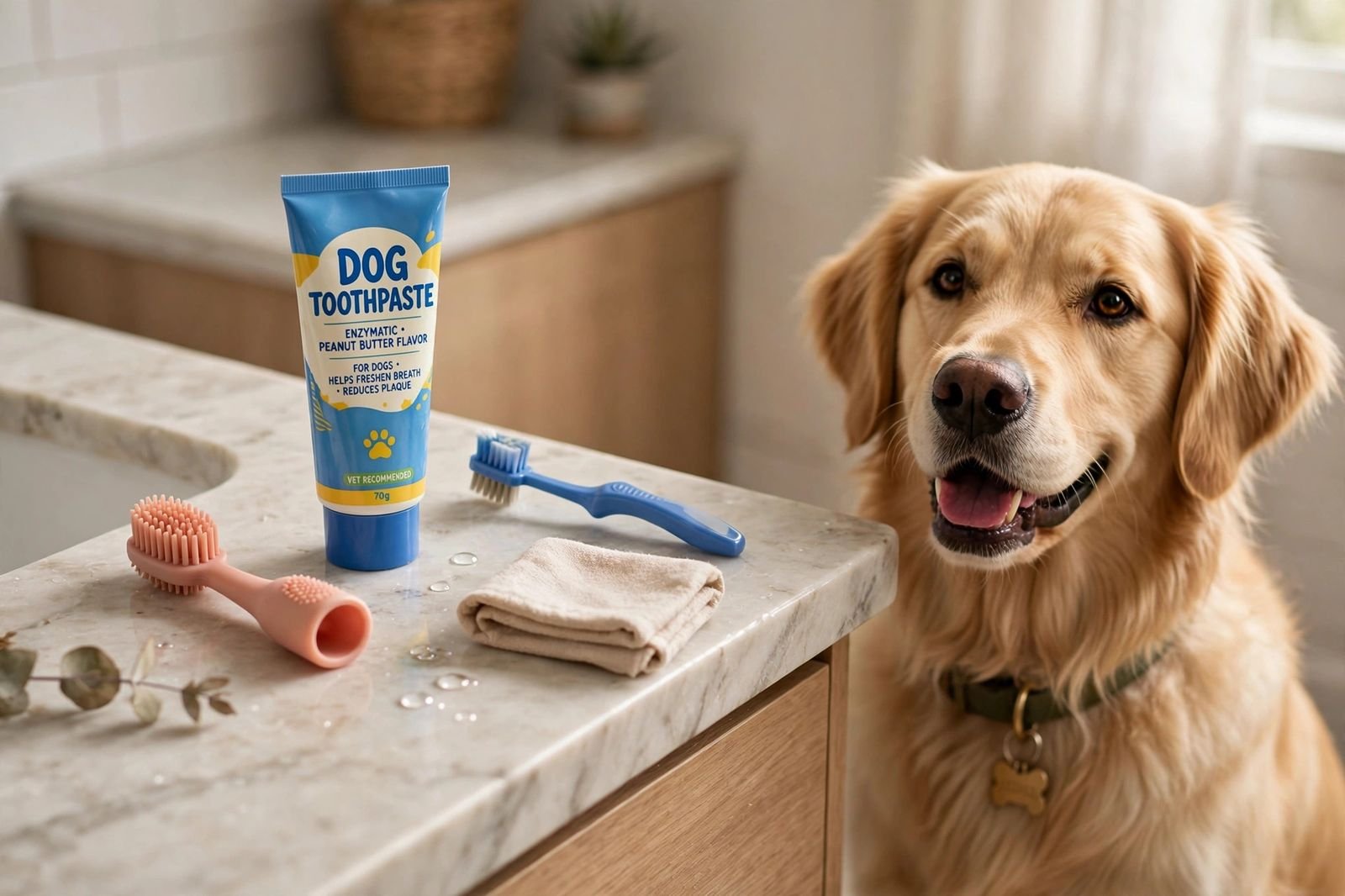
The pet store aisle will try to sell you seventeen dental products. You need two: a toothbrush and toothpaste made for dogs. That’s the whole mandatory list. A small angled brush or a finger brush both work — finger brushes are often easier for beginners because you have better control and your dog feels your finger, which is already familiar. As your dog gets used to the routine, you can switch to a longer-handled brush to reach the back molars comfortably.
Dog toothpaste is enzymatic, meaning it keeps working a little after you stop brushing, and it comes in flavors dogs actually like — poultry, peanut butter, vanilla mint. Let your dog pick by offering a dab on your finger and seeing which tube gets the tail wag. Never use human toothpaste. Dogs can’t spit, and ingredients like xylitol and heavy foaming agents are not meant to be swallowed.
Everything else is optional. Dental chews and water additives can be decent supporting acts, but they are not substitutes for the mechanical action of a brush against the tooth. If you want to see what a full grooming routine looks like beyond teeth, my dog bathing guide covers the rest of the hygiene basics in the same beginner-friendly style.
Phase One: Make the Mouth a Friendly Place
This is the step everyone skips and the step that decides whether the whole project succeeds. Before a brush ever touches a tooth, spend a few days just getting your dog comfortable with the idea that hands near the mouth are fine. Rush this and you create a dog who hides under the table at the sight of the toothpaste tube.
Day one is embarrassingly simple: put a pea-sized dab of dog toothpaste on your fingertip and let your dog lick it off. That’s it. Praise, treat, done. You’re not brushing anything — you’re teaching the association that toothpaste equals good things. Repeat for a day or two until your dog lights up at the sight of the tube.
Next, with toothpaste on your finger, gently rub it along your dog’s front teeth and gums for a few seconds. Then lift one side of the lip and run your finger along the outer surface of the upper teeth. Keep sessions under a minute. The moment your dog pulls away or gets fidgety, you’ve gone about ten seconds too long — end with a treat and try again tomorrow. A few days to a week at this stage is completely normal.
Phase Two: The Actual Brushing, Step by Step
Once your dog is relaxed about your finger in his mouth, it’s time to introduce the brush. Put a little toothpaste on it and let him lick it off the bristles first, so the brush itself becomes a treat dispenser in his mind. The whole routine takes about two minutes once you’re both practiced.
Step 1: Position yourself calmly
Pick a quiet moment — not right after a walk when your dog is wired, and not right before dinner when he’s thinking about food. A good window is after the evening wind-down, when the dog is already lying on its bed. Kneel beside him rather than looming over him. A calm, matter-of-fact energy works better than either cheerleading or wrestling.
Step 2: Start with the easy teeth
Lift one side of the upper lip and brush the outer surfaces of the upper teeth in small circles, working from front to back. The upper canines and the big molars at the back are the tartar hotspots — give those a few extra seconds. Use gentle pressure; you’re not scrubbing grout. About 15–20 seconds per side is plenty at first.
Step 3: Do the other side, then the lower teeth
Switch sides and repeat. The lower teeth matter less than the uppers (saliva does more of the work down there), but give them a quick pass anyway while you’re in there. The inner surfaces of the teeth — the tongue side — are the hardest to reach and the least important; skip them without guilt if your dog won’t tolerate it. Vets will tell you the same.
Step 4: End like it was the best part of his day
Finish with enthusiastic praise and a small treat. This is the mechanism that makes tomorrow’s session easier than today’s — many dogs learn to trot to the bathroom when they hear the toothpaste cap click.
Mistakes Beginners Make (And How to Avoid Them)
The first big one: going too long on day one. Trying to brush every tooth for a full two minutes the very first time gets exactly the response you would expect — the dog decides toothbrushes are the enemy. Start with ten seconds. Seriously. Build up over a week or two. Slow feels inefficient; it is actually the fastest route.
Second: brushing while frustrated. Dogs read your mood better than your technique. If you’re tense, your dog learns that tooth time is stress time. If a session is going badly, abort early, treat anyway for the cooperation you did get, and try tomorrow.
Third: neglecting the gums versus scrubbing them raw. You want the bristles angled slightly toward the gum line, where plaque hides — but gentle. If the gums bleed a little the first few times, that often settles as the gums get healthier, much like when people start flossing. Persistent bleeding, though, is a vet conversation, not a keep-brushing situation.
Fourth: only brushing the front teeth because they’re easy. The front teeth look great and the back molars rot — that’s the classic beginner pattern. The back upper molars are where tartar throws its parties, so always make time for them.

What If Your Dog Just Won’t Have It?
Some dogs — especially older rescues who never had their mouths handled — will put up serious resistance. That doesn’t mean you’re out of options; it means you slow down further. Go back to the finger-licking stage for a week. Try a different flavor of toothpaste, or try brushing in a different room or position.
If your dog snaps or shows real aggression around mouth handling, don’t push through it. That’s beyond a DIY training project — ask your vet or a professional trainer for guidance. There’s no shame in it; some dogs have mouth pain or past experiences that make this genuinely hard, and forcing it can damage trust.
And if brushing truly isn’t happening despite your best slow efforts, talk to your vet about alternatives. Dental chews with proven efficacy, prescription dental diets, and regular professional cleanings can all be part of a plan B. They’re not as good as brushing, but they’re infinitely better than nothing. If you’re building out your dog’s whole care routine from scratch, the first-time dog owner checklist is a good companion read for everything else that tends to slip through the cracks.
Frequently Asked Questions
How often should I brush my dog’s teeth?
Daily is the gold standard, because plaque hardens into tartar within 24–72 hours. But be realistic: brushing 3–4 times a week consistently beats a daily routine you abandon after two weeks. Start with whatever frequency you can sustain, then build up.
Can I use human toothpaste on my dog?
No — never. Human toothpaste often contains xylitol (toxic to dogs) and foaming agents meant to be spat out, and dogs swallow everything. Dog-specific toothpaste is enzymatic, safe to swallow, and flavored to make the job easier. It’s inexpensive and lasts for months.
My dog’s gums bled a little during brushing. Should I worry?
Light bleeding in the first week or two is fairly common, especially if the gums were already inflamed — it’s similar to gums bleeding when people start flossing. It should decrease as the routine continues. If bleeding is heavy, persistent, or the gums look very red and swollen, pause brushing and check in with your vet.
Are dental chews a replacement for brushing?
No. Chews can help reduce some plaque and they’re better than nothing, but the mechanical scrubbing of a brush is far more effective, especially along the gum line where it matters most. Think of chews as a supplement to brushing, not a substitute.
At what age should I start brushing my dog’s teeth?
As early as possible — puppyhood is ideal, because everything is a game at that age and mouth handling becomes normal. But it’s genuinely never too late. Older dogs can learn the routine too; you just go slower through the getting-used-to-it phase.