
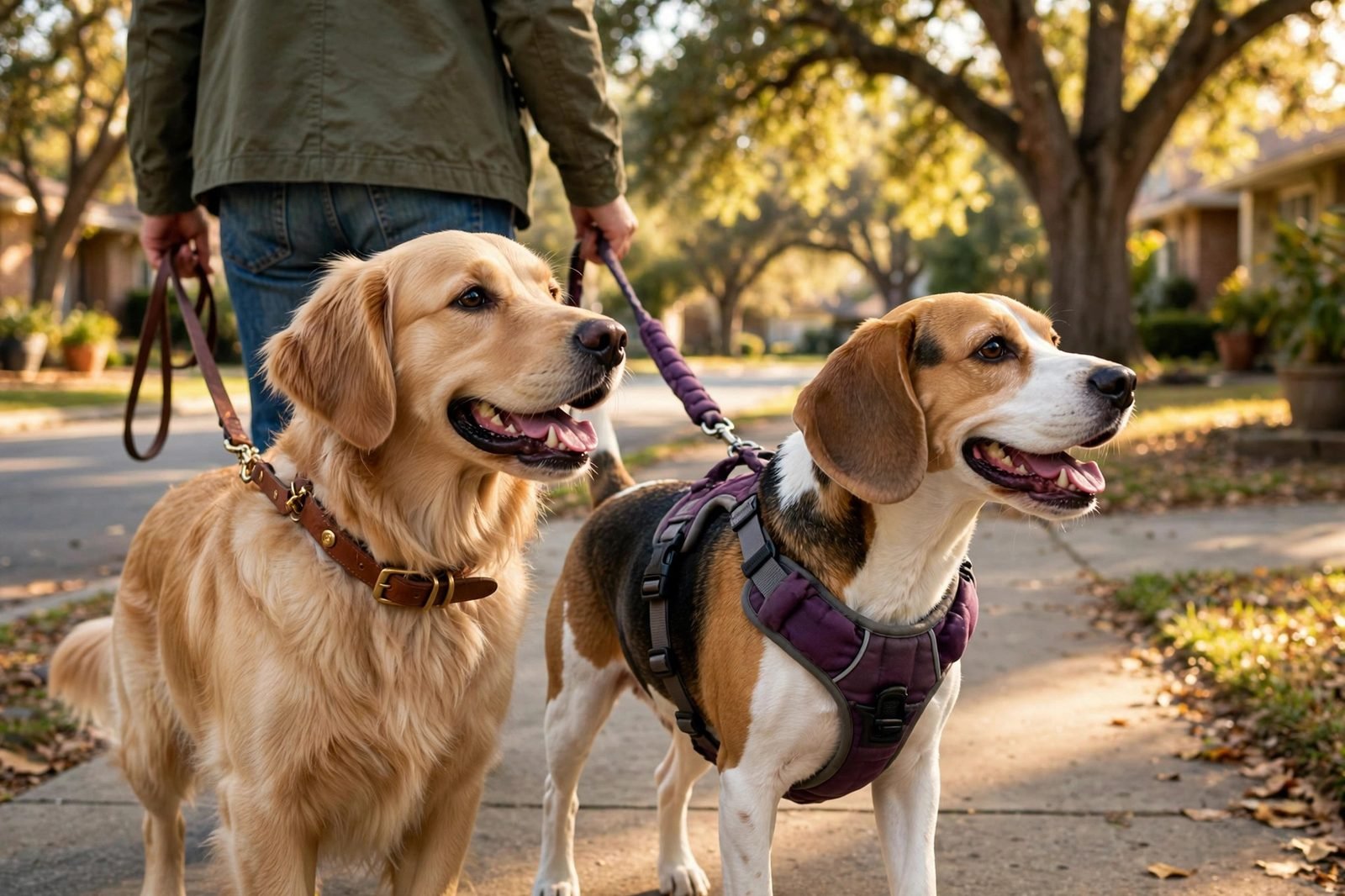

When I got my first dog, I bought a collar because that’s what dogs wear. It was blue, it had a little bone pattern on it, and I felt very accomplished. It took exactly one walk — one enthusiastic, squirrel-adjacent walk — to discover the flaw in my plan: my dog pulled like a sled team, choked himself on the collar, coughed for the rest of the walk, and looked at me like this was somehow my fault. Which, to be fair, it was.
That walk sent me down the collar-vs-harness rabbit hole, and I emerged weeks later with strong opinions and a dog who walks like a gentleman. The truth is less dramatic than the internet makes it sound: neither option is universally better. But one of them is almost certainly better for your specific dog, and figuring out which one comes down to your dog’s size, breed, health, and walking style. Here’s how to think it through.
Published: May 17, 2026 | Last updated: May 17, 2026
Quick Tips
- Most dogs benefit from both: a collar for ID tags, a harness for walks.
- Harnesses are kinder on the neck — best for pullers, small breeds, and flat-faced dogs.
- Collars are simpler and fine for calm walkers who don’t pull.
- Fit matters more than type: you should fit two fingers under any collar or strap.
- Never leave a harness on unsupervised — it’s a chewing and tangling hazard.
- Front-clip harnesses help with pulling; back-clip is best for trained loose-leash walkers.
- Re-check the fit monthly — dogs grow, gain, and lose weight.
The Case for Collars
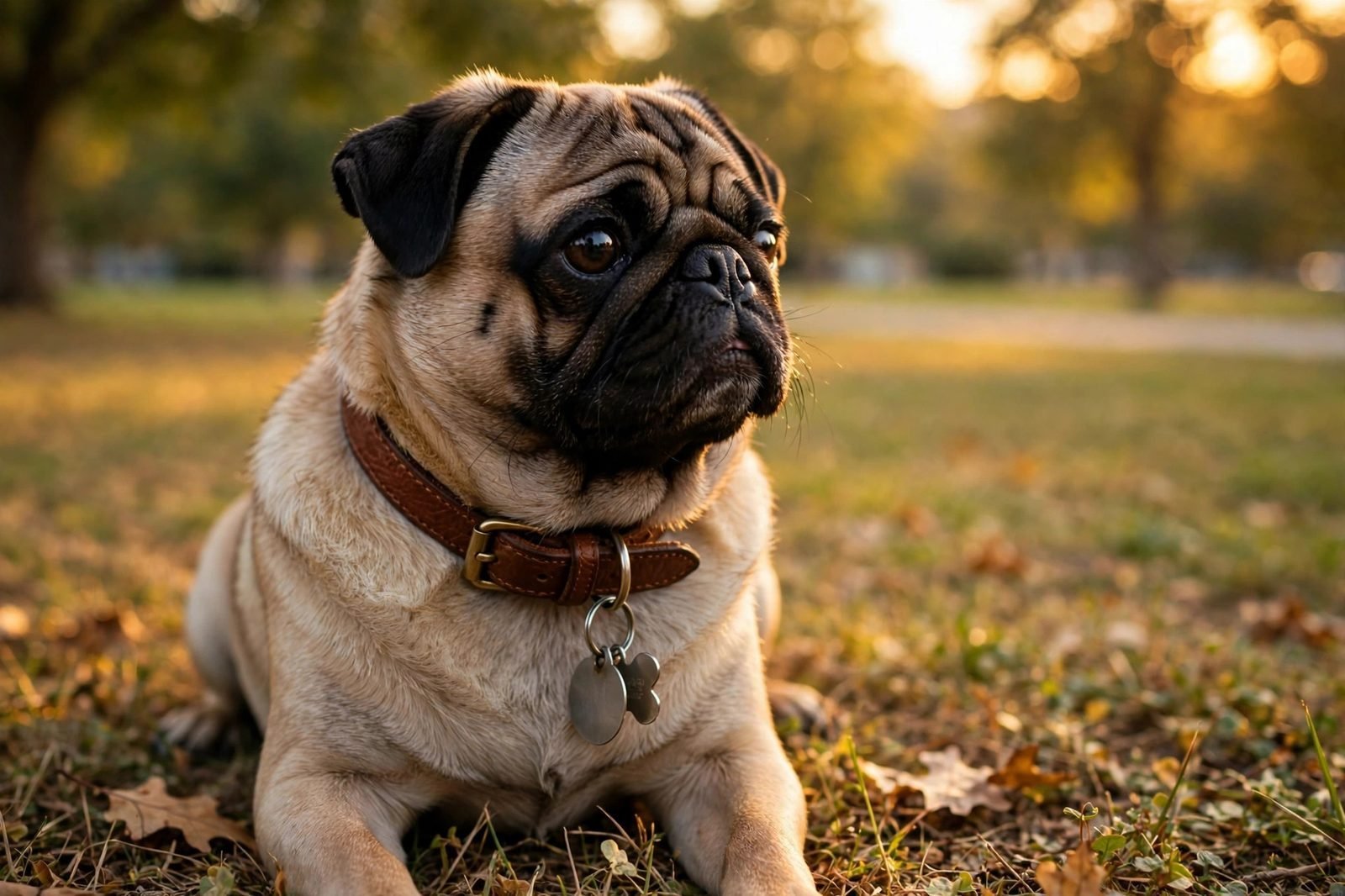
Let’s give the humble collar its due, because collars do a lot of quiet work. A flat collar is simple, lightweight, cheap, and every dog should wear one — at minimum as the thing that carries ID tags. If your dog ever gets lost, the collar with tags is the fastest route home that doesn’t depend on someone finding a microchip scanner. That alone makes the collar non-negotiable in my book, whatever you walk your dog on.
For walking, collars work well for dogs who walk calmly on a loose leash. If your dog doesn’t pull, a flat collar is perfectly comfortable. It’s also the lowest-fuss option: clip the leash, go. No straps to adjust, no wrestling a wiggly puppy into a harness at 6 a.m. in the rain.
Collars are also the standard for training contexts where precise leash communication matters, and many trainers prefer them for dogs who already have solid leash manners. Practically speaking, a collar is what your dog wears all day — for ID, for the quick backyard outing, for hanging around the house.
Where Collars Fall Short
The problem is physics. A collar puts all the leash pressure on the neck — on the trachea and cervical spine. For a dog who pulls, that’s a lot of force in exactly the wrong place. Chronic pulling on a collar can contribute to tracheal irritation and neck strain. My first dog’s coughing fit on that inaugural walk was his trachea complaining, and I felt terrible once I understood it.
Certain dogs should basically never be walked on a collar alone: toy and small breeds with delicate tracheas (Yorkies, Chihuahuas, Pomeranians and friends), flat-faced breeds like pugs and bulldogs who already work harder to breathe, dogs with neck or spinal issues, and enthusiastic pullers of any size. For these dogs, a collar is for tags; walks happen on a harness.
There’s also the escape factor. Dogs with narrow heads — greyhounds, whippets, some terriers — can back out of a flat collar with an ease that’s alarming the first time you see it. If your dog has ever slipped a collar, that’s your sign.
The Case for Harnesses
A harness distributes leash pressure across the chest and shoulders instead of the neck, which is kinder by design. For pullers, that’s the whole game: the dog can lean into the leash without choking himself. When I switched my first dog to a harness, the coughing stopped immediately, and walks got dramatically more pleasant for both of us within a week.
Harnesses also give you more control over the dog’s body, which matters for strong dogs. Steering a 70-pound dog by the neck is a losing proposition; steering by the chest works. And for small or fragile dogs, a harness removes the trachea from the equation entirely — a meaningful safety upgrade for breeds prone to collapsing trachea.
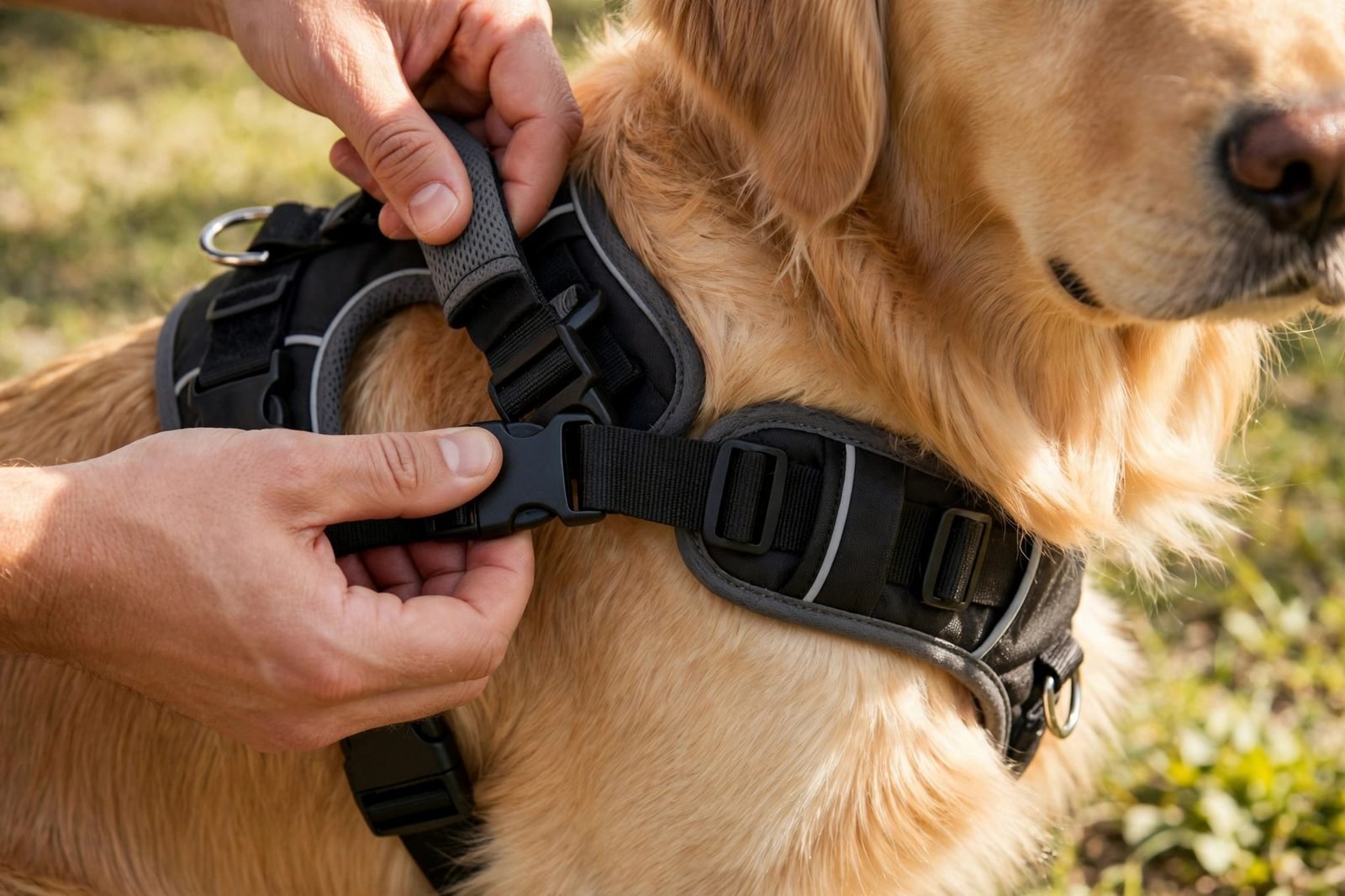
The variety is a feature, not a bug. Back-clip harnesses (leash attaches between the shoulder blades) are comfortable and tangle-free — great for calm walkers and activities like hiking. Front-clip harnesses (leash attaches at the chest) gently redirect a pulling dog sideways when they lunge, discouraging pulling without pain. For most owners starting out, a well-fitted front-clip or dual-clip harness is the sweet spot.
Where Harnesses Fall Short
Harnesses aren’t magic, and the internet oversells them. A back-clip harness on a determined puller can actually make pulling worse — it turns the dog into a sled dog, distributing the load perfectly for maximum hauling efficiency. If your dog pulls hard, a back-clip harness alone won’t fix it; you want a front-clip design plus training.
Fit is fussier with harnesses. A badly fitted harness chafes — behind the front legs is the classic rub spot — or the dog wriggles out of it. You have to adjust straps, check for rubbing, and re-check as the dog grows. They’re also bulkier, warmer in summer, and more of a production to put on, especially with a puppy who treats getting dressed as a wrestling match.
And the safety rule: harnesses come off at home. A harness left on an unsupervised dog is a chewing hazard (dogs will gnaw the straps), a tangling hazard (a leg through a strap is a panic situation), and a matting hazard for long-coated breeds. Harness for walks and outings; collar for everyday wear.
So Which One for Your Dog?
Here’s my practical decision framework, refined over several dogs and many walks. Start with your dog’s pulling: if your dog pulls, walk on a harness — front-clip while you’re training, back-clip once the leash manners are solid. If your dog walks calmly on a loose leash, a flat collar is fine and simpler.
Then layer in breed and health. Small breeds, flat-faced breeds, dogs with trachea or neck issues, and seniors with arthritis: harness, regardless of pulling. Escape artists with narrow heads: a properly fitted harness or a martingale-style collar designed for the purpose. Puppies: harness for walks, because puppies pull, lunge, and have zero self-preservation instincts — and those early walks are when you’re building the habits that last a lifetime. Speaking of early days, getting the walking gear right pairs naturally with knowing how much exercise a puppy needs so you’re not overdoing it while the joints are still developing.
Consider the activity too. Hiking, jogging, long walks: harness, for comfort and control. Quick potty break in the yard: collar is fine. Car travel: a harness (ideally one designed for car use, or a crash-tested restraint) beats a collar for safety. Dog sports, swimming, rough play with other dogs: collar off or breakaway, to avoid snagging.
And honestly? Most experienced owners end up with both, used for different jobs. My current setup: flat collar with tags worn all day, harness for walks. It’s the most common answer among trainers I know: collar for identity, harness for walking.
What About No-Pull and Training Collars?
You’ll run into prong collars, choke chains, and shock collars in this debate. I don’t recommend them for beginners, and most modern trainers don’t either: they work through discomfort, they require precise technique to use safely, and in inexperienced hands they cause injury and fear. A front-clip harness plus consistent loose-leash training gets you to the same destination — a dog who walks nicely — without the risk. If pulling is severe enough that you’re considering aversive tools, work with a qualified positive-reinforcement trainer instead of buying harsher gear. If barking is part of the walk-time chaos, the underlying issue is often arousal and training, not equipment — worth reading up on why dogs bark so much before blaming the gear.
Getting the Fit Right
The best gear in the world fails if it doesn’t fit, and this is where most people go wrong. For a collar: you should be able to fit two fingers snugly between the collar and your dog’s neck — not two fingers loosely, not one finger, two fingers snug. Too loose and the dog slips it; too tight and it’s uncomfortable and can damage the coat and skin. Check the fit every couple of weeks for puppies, monthly for adults. Dogs gain and lose weight, grow winter coats, and collars stretch.
For a harness: the same two-finger rule applies to every strap. The chest strap should sit behind the front legs without rubbing the armpits — chafing there is the number one harness complaint and it’s purely a fit issue. The harness shouldn’t rotate around the dog’s body or slide sideways. Have your dog walk, sit, and lie down in it before you commit; a harness that looks fine standing still can shift badly in motion.
Measure your dog before ordering online — don’t guess by breed. A tape measure around the neck and the broadest part of the chest takes thirty seconds and saves you a return. When in doubt between sizes, most manufacturers will tell you which way to go.
Frequently Asked Questions
Can my dog wear both a collar and a harness?
Yes — and most owners do. The standard setup is a flat collar with ID tags worn all day, plus a harness put on for walks. Clip the leash to the harness for the walk, and the collar stays on as backup identification. Just remove the harness when you get home.
Is a harness better for a puppy?
For walks, yes. Puppies pull, lunge, and have delicate developing necks, so a harness protects the trachea during the months when leash manners are still a work in progress. Pair it with loose-leash training from day one — the harness manages the pulling humanely while the training actually solves it.
Will a harness stop my dog from pulling?
A front-clip harness reduces pulling by redirecting the dog’s momentum, but it doesn’t train the dog — only training does that. Think of the harness as making walks pleasant and safe while you teach loose-leash walking. Dogs who “need” a no-pull harness forever usually just need a few weeks of consistent training.
Are harnesses bad for a dog’s shoulders or gait?
A poorly fitted harness — especially one with a strap across the front of the shoulders — can restrict movement over time. A well-fitted Y-shaped harness that sits below the throat and leaves the shoulders free avoids this. Fit and design matter more than the harness-vs-collar question itself.
How often should I replace collars and harnesses?
Inspect gear monthly: look for fraying, cracked buckles, stretched straps, and rust on hardware. Replace anything worn — a snapped buckle mid-walk is how dogs get loose near traffic. Puppies may outgrow gear every few months; adult gear typically lasts a year or more with normal use.